
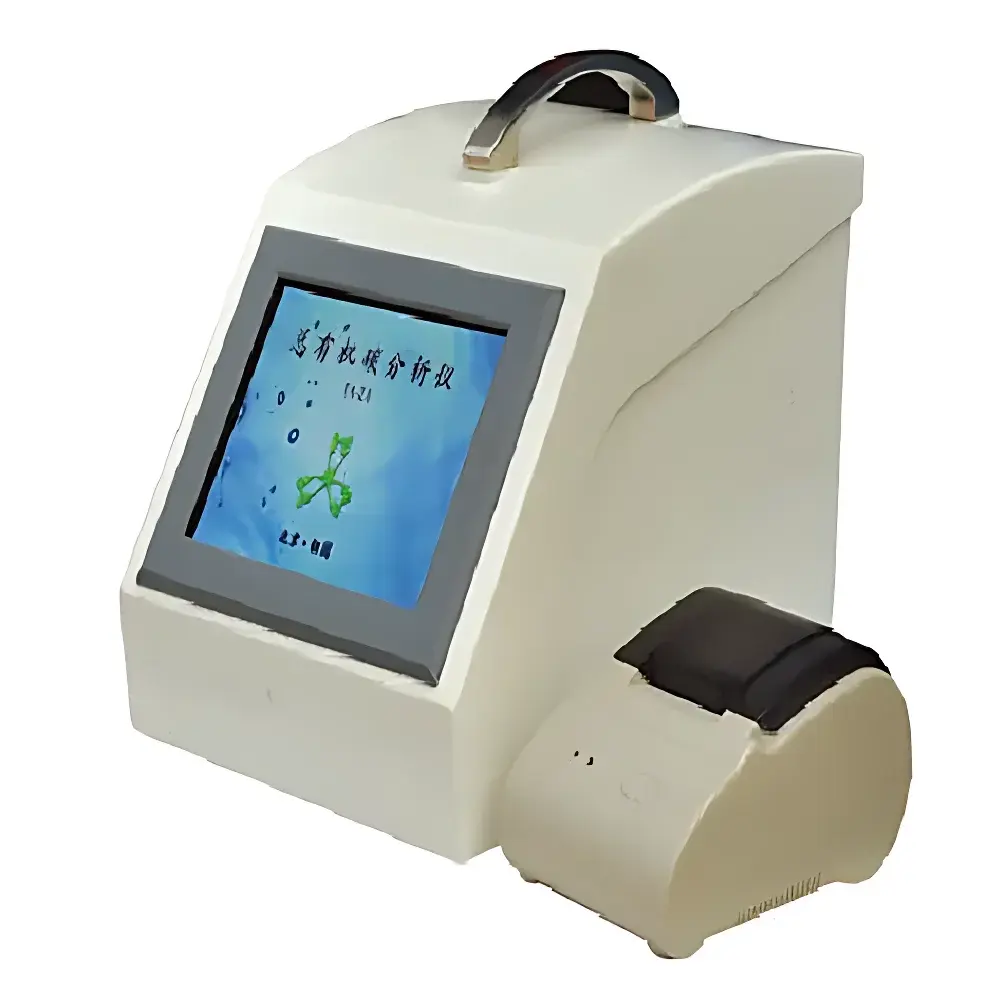
North Guang Precision Instrument BC-20A Offline Total Organic Carbon (TOC) Analyzer
| Brand | North Guang Precision Instrument |
|---|---|
| Origin | Beijing, China |
| Manufacturer Type | Direct Manufacturer |
| Product Category | Domestic |
| Model | BC-20A |
| Instrument Type | Laboratory TOC Analyzer |
| Detection Principle | Direct Conductivity Method |
| Oxidation Method | UV/Persulfate Oxidation |
| Measurement Range | 0.001–1.5 mg/L (1–1500 ppb) |
| Accuracy | ±3% |
| Resolution | 0.001 mg/L |
| Detection Limit | 0.001 mg/L |
| Repeatability | ±3% |
| Power Supply | 100–240 VAC, 50 Hz, 120 W |
| Sample Temperature Range | 1–99 °C |
| Data Storage Capacity | >5000 records |
| Audit Trail | 16-event log (optional) |
| User Access Control | 4-tier password authentication |
| Compliance | FDA 21 CFR Part 11, Chinese Pharmacopoeia (2020 Edition), GLP/GMP-ready |
Overview
The North Guang Precision Instrument BC-20A Offline Total Organic Carbon (TOC) Analyzer is a laboratory-grade analytical instrument engineered for precise quantification of non-purgeable organic carbon in ultrapure water systems. It employs the direct conductivity detection principle following high-efficiency oxidation—utilizing dual-stage UV irradiation (185 nm and 254 nm) combined with sodium persulfate catalysis—to fully mineralize organic compounds into CO₂, which is then dissolved and measured as conductive bicarbonate ions. This method eliminates interference from inorganic carbon species through acidification and sparging prior to oxidation, ensuring specificity for total organic carbon. Designed for regulatory compliance in highly controlled environments, the BC-20A supports both offline batch analysis and optional integrated online monitoring (up to three sampling points), making it suitable for routine QC testing, system validation, and continuous process water surveillance in GxP-regulated facilities.
Key Features
- UV/persulfate oxidation system with TiO₂-coated rotating quartz reactor—enhancing photon utilization and oxidative efficiency across diverse organic matrices
- Direct conductivity detection with temperature-compensated dual-electrode sensor—delivering stable baseline performance and minimal drift over extended operation
- Pump-free fluidic architecture—eliminating peristaltic tubing, pressure regulators, and associated maintenance; enabling consistent flow control and reduced consumable cost
- High-performance embedded CPU with real-time data processing—supporting rapid response (<5 min analysis cycle) and on-device statistical evaluation (mean, SD, RSD)
- 12.1-inch color capacitive touchscreen interface—providing intuitive navigation, graphical trend visualization, and multi-language support (English, Simplified Chinese)
- Comprehensive data integrity framework—including electronic signatures, 4-level user permission hierarchy, and configurable audit trail (16 event types, timestamped and immutable)
Sample Compatibility & Compliance
The BC-20A is validated for analysis of pharmaceutical water streams including Purified Water (PW), Water for Injection (WFI), and Ultrapure Water (UPW), as specified in USP , EP 2.2.44, JP 2.59, and Chinese Pharmacopoeia (ChP) Volume IV, General Chapter 0682. It meets ISO 8573-1 (compressed air purity) and ASTM D5997 (standard test method for TOC in water by direct conductivity) requirements when configured per application note NG-TOC-AN01. All firmware and software modules comply with FDA 21 CFR Part 11 Annex 11 (EU GMP) and ICH GCP guidelines for electronic records and signatures. The instrument’s hardware design conforms to IEC 61010-1 safety standards and EMC Directive 2014/30/EU.
Software & Data Management
Data acquisition, reporting, and archival are managed via NG-TOC Studio v3.2—a Windows-based PC application supporting CSV, PDF, and XML export formats. Raw conductivity waveforms, calibration logs, system diagnostics, and user activity records are stored with SHA-256 hash integrity verification. Historical datasets (>5000 entries) reside onboard flash memory and can be exported via USB 2.0 port. Optional Ethernet connectivity enables integration with LIMS or SCADA platforms using Modbus TCP or OPC UA protocols. All reports include mandatory metadata: analyst ID, instrument serial number, calibration certificate ID, environmental conditions (temperature/humidity), and timestamped audit trail references.
Applications
- Pharmaceutical manufacturing: Routine TOC verification of PW/WFI distribution loops, clean-in-place (CIP) rinse water, and bioburden control validation
- Semiconductor fabrication: UPW quality assurance in wafer cleaning, photolithography, and etching processes where organic contamination below 1 ppb impacts yield
- Power generation: Monitoring condensate polishing systems and boiler feedwater purity to prevent organic-induced corrosion and deposit formation
- Academic and contract research laboratories: Method development for low-carbon matrix analysis, including buffer solutions, cell culture media, and chromatographic eluents
- Medical device sterilization validation: Quantifying residual organics on surfaces post-rinse to demonstrate cleaning efficacy per ISO 15883 and AAMI ST98
FAQ
Does the BC-20A require daily calibration?
No—calibration is performed semi-annually using certified NIST-traceable potassium hydrogen phthalate (KHP) standards. Daily system suitability checks (SSC) verify oxidation efficiency and detector linearity.
Can the instrument operate without a PC connection?
Yes—the BC-20A functions autonomously with full local data storage, touchscreen reporting, and built-in thermal printer support (optional external unit).
Is method transfer supported between BC-10A and BC-20A platforms?
Yes—backward-compatible assay parameters, calibration curves, and report templates ensure seamless migration from legacy BC-10A installations.
What sample volume is required per analysis?
50 mL minimum; automated syringe aspiration ensures reproducible draw volume and minimizes carryover risk.
How is carryover mitigated during high-concentration sample runs?
The system implements programmable post-analysis purge cycles with ultra-high-purity nitrogen gas and triple-rinse sequences using blank water, validated per USP specificity criteria.
Related Products







