North Guang Precision Instruments BUV-810 Dedicated Melt Flow Indexer for PP Meltblown Feedstock
| Brand | North Guang Precision Instruments |
|---|---|
| Origin | Beijing, China |
| Manufacturer Type | Direct Manufacturer |
| Country of Origin | China |
| Model | BUV-810 |
| Price | USD 3,200 (FOB Beijing) |
| Test Methods | Mass Flow Rate (MFR) & Volume Flow Rate (MVR) |
| Temperature Range | 0–450 °C |
| Temp. Stability | ±0.2 °C |
| Temp. Uniformity | ±1 °C |
| Temp. Resolution | 0.1 °C |
| Time Resolution | 0.1 s |
| Die Diameter | Φ2.095 ±0.005 mm or Φ1.05 ±0.005 mm |
| Die Length | 8.000 ±0.025 mm |
| Barrel ID | Φ9.550 ±0.025 mm |
| Load Weights | 8 standard masses (±0.5% tolerance) |
| Displacement Sensor | Omron optical rotary encoder |
| Displacement Accuracy | 0.01 mm |
| MFR Range | 0.1–150 g/10 min |
| MVR Range | 50–800 cm³/10 min |
| Power Supply | AC 220 V ±10%, 50 Hz |
Overview
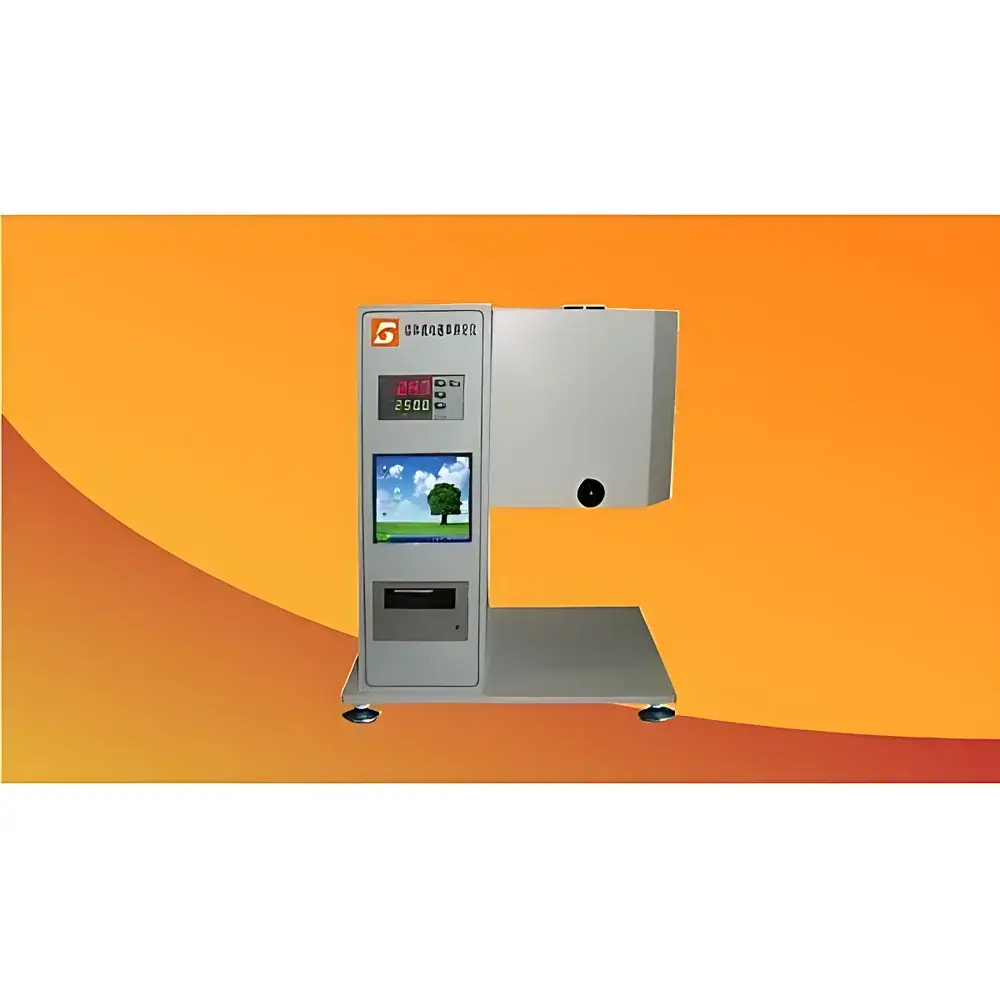
The North Guang Precision Instruments BUV-810 Dedicated Melt Flow Indexer is engineered specifically for the rheological characterization of ultra-high-flow polypropylene (PP) resins used in meltblown nonwoven production for medical face masks. Unlike conventional mass-based melt flow indexers (ASTM D1238, ISO 1133), which fail to capture accurate flow behavior above ~300 g/10 min due to rapid extrusion and inconsistent cut timing, the BUV-810 integrates a high-resolution volumetric measurement system (MVR) as its primary mode—enabling precise, reproducible quantification of materials with flow rates spanning 50–800 cm³/10 min. Its dual-mode architecture supports both MFR (mass-based) and MVR (volume-based) determinations under standardized test conditions, allowing direct calculation of melt density (ρm = MFR / MVR) at defined temperatures and loads—a critical parameter for process validation and raw material qualification in regulated medical textile manufacturing.
Key Features
- Dual independent temperature control circuitry with dual imported heating cartridges and dual PT100 platinum resistance sensors ensures thermal stability ≤ ±0.2 °C and uniformity ≤ ±1 °C across the barrel and die zone—essential for minimizing thermal gradients during high-speed extrusion.
- Integrated high-precision optical rotary encoder (Omron) with 0.01 mm displacement resolution enables real-time volumetric flow tracking without manual cutting, eliminating operator-dependent error and enabling continuous MVR output per ASTM D1238-22 Annex A3.
- Intelligent hybrid cut control: fully programmable auto-cut function with 0.1 s time resolution and adjustable cut intervals; manual override via tactile membrane keypad for emergency intervention or method development.
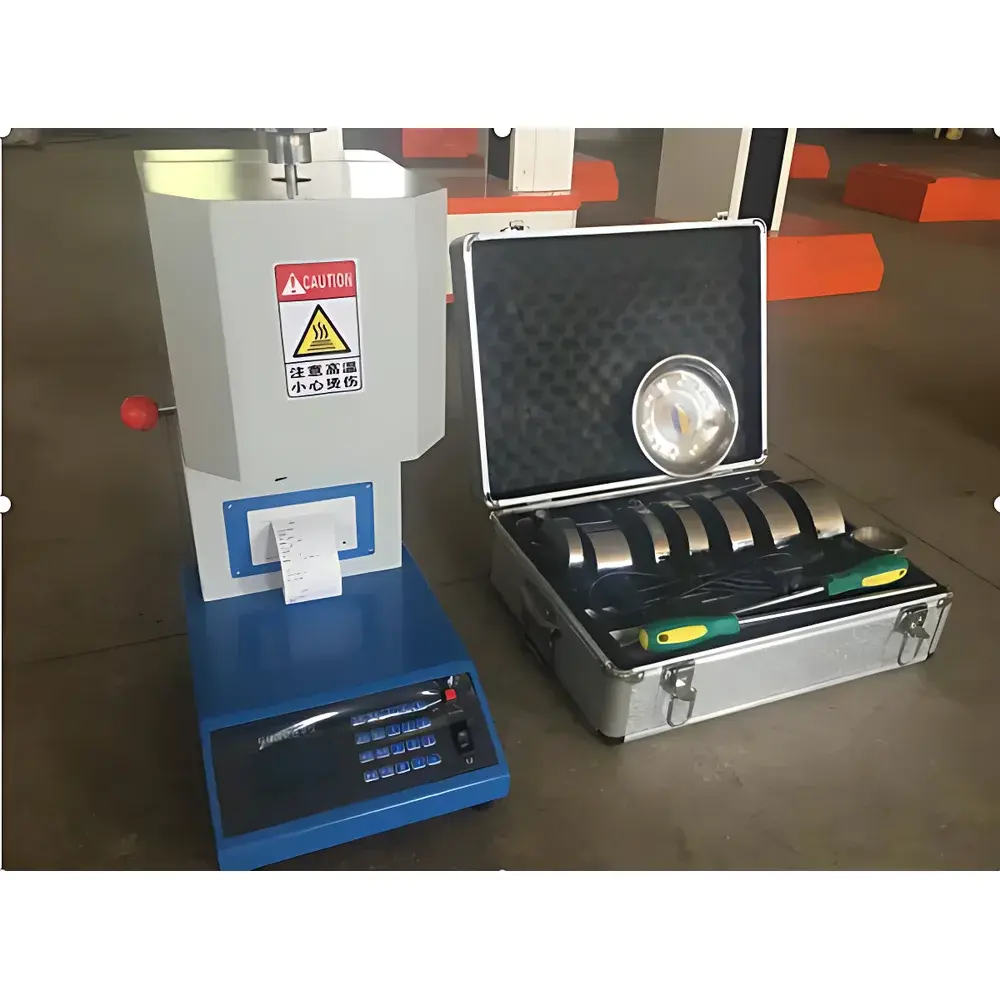
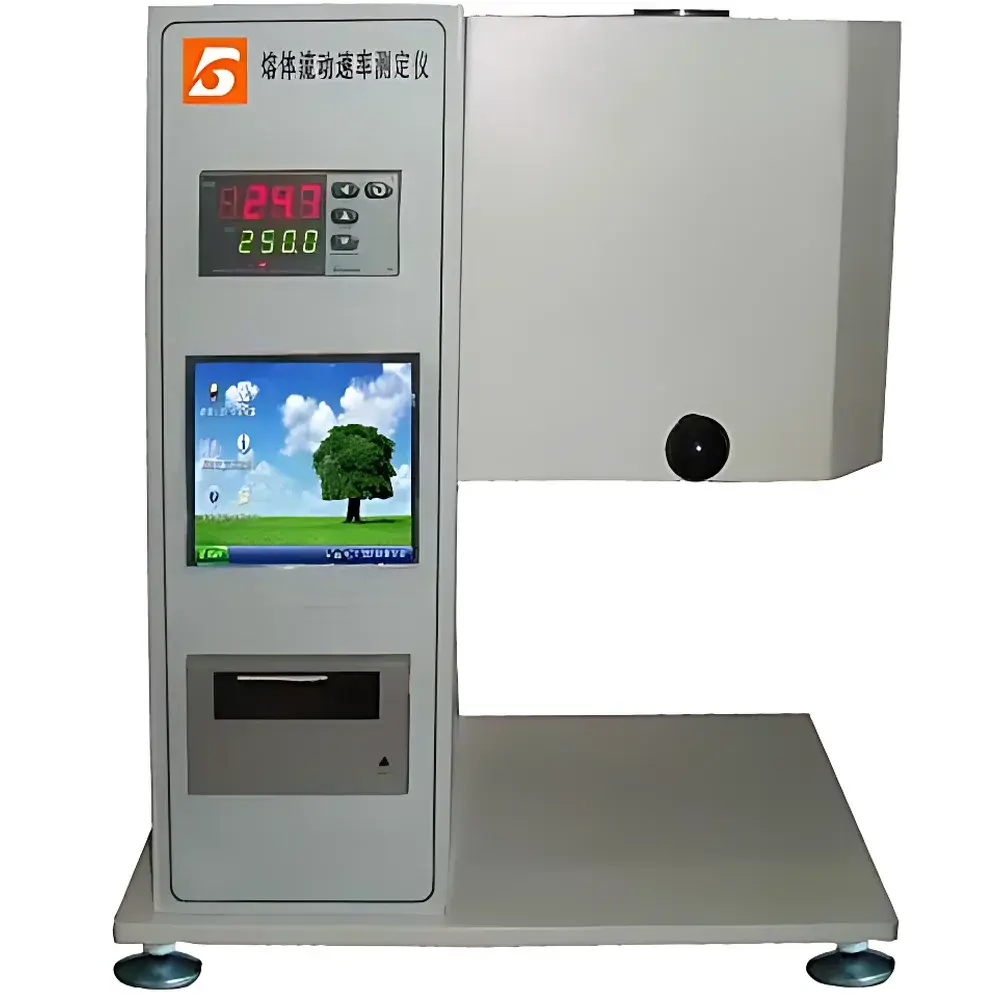
- Full-color English-language LCD interface with intuitive navigation and on-device data logging; embedded thermal printer provides immediate hardcopy of test reports including date/time stamp, load, temperature, MFR/MVR values, and calculated melt density.
- Modular load configuration: eight calibrated weight sets compliant with ISO 1133-1:2019 Annex C tolerances (±0.5%), covering standard test conditions for PP meltblown grades (e.g., 2.16 kg @ 230 °C, 5.0 kg @ 230 °C).
Sample Compatibility & Compliance
The BUV-810 accommodates standard ISO 1133 and ASTM D1238-compliant sample geometries—including 1.05 mm and 2.095 mm diameter dies with 8.000 mm land length—and accepts feedstock pellets or granules within the specified mass range (3.5–6.0 g). It is validated for use with isotactic PP homopolymers and impact copolymers exhibiting MFR values from 1000–2000 g/10 min (equivalent to MVR ≈ 120–240 cm³/10 min at 230 °C/2.16 kg). The instrument meets mechanical and electrical safety requirements per IEC 61010-1 and supports GLP-compliant operation through audit-trail-capable USB data export (optional software package). All thermal and dimensional specifications align with ISO 1133-1:2019, ASTM D1238-22, and GB/T 3682.1–2018.
Software & Data Management
An optional PC-based control and analysis software suite (BUV-DataLink v2.1) connects via USB 2.0 to enable remote experiment setup, real-time MVR curve visualization, automated report generation (PDF/CSV), and long-term database archiving. The software enforces user-level access control, timestamps all parameter changes, and logs full calibration history—supporting FDA 21 CFR Part 11 readiness when deployed in GMP environments. Raw displacement vs. time datasets are exportable for third-party rheological modeling (e.g., Carreau-Yasuda fitting) and comparative benchmarking against reference materials.
Applications
- Quality control of PP meltblown feedstock in ISO 13485-certified medical fabric facilities.
- R&D screening of peroxide-controlled degradation batches for targeted MFR optimization.
- Process validation of extrusion line settings using MVR-derived shear rate profiles.
- Raw material supplier qualification against contractual MFR/MVR limits and melt density tolerances.
- Regulatory documentation support for 510(k) submissions requiring traceable flow property data.
FAQ
Why is volumetric measurement (MVR) required for PP meltblown resin?
Because ultra-high-flow PP grades extrude too rapidly for reliable mass-cut timing; MVR eliminates human reaction delay and delivers higher repeatability for materials >500 g/10 min.
Can the BUV-810 comply with ASTM D1238 Condition L (230 °C / 2.16 kg)?
Yes—the instrument supports all standard ASTM and ISO test conditions, including Condition L, with certified die geometry and traceable load weights.
Is the built-in printer compliant with 21 CFR Part 11 record retention?
The printer provides contemporaneous hardcopy; for electronic records, use the optional software with audit trail and electronic signature modules.
What maintenance is required for the displacement sensor?
The Omron optical encoder requires no routine calibration; periodic inspection for dust accumulation on the encoder wheel is recommended every 200 test cycles.
Does the BUV-810 support multi-temperature ramp testing?
No—it operates at a single stabilized temperature per test cycle; sequential isothermal tests at different temperatures are supported via manual reconfiguration.
Related Products