
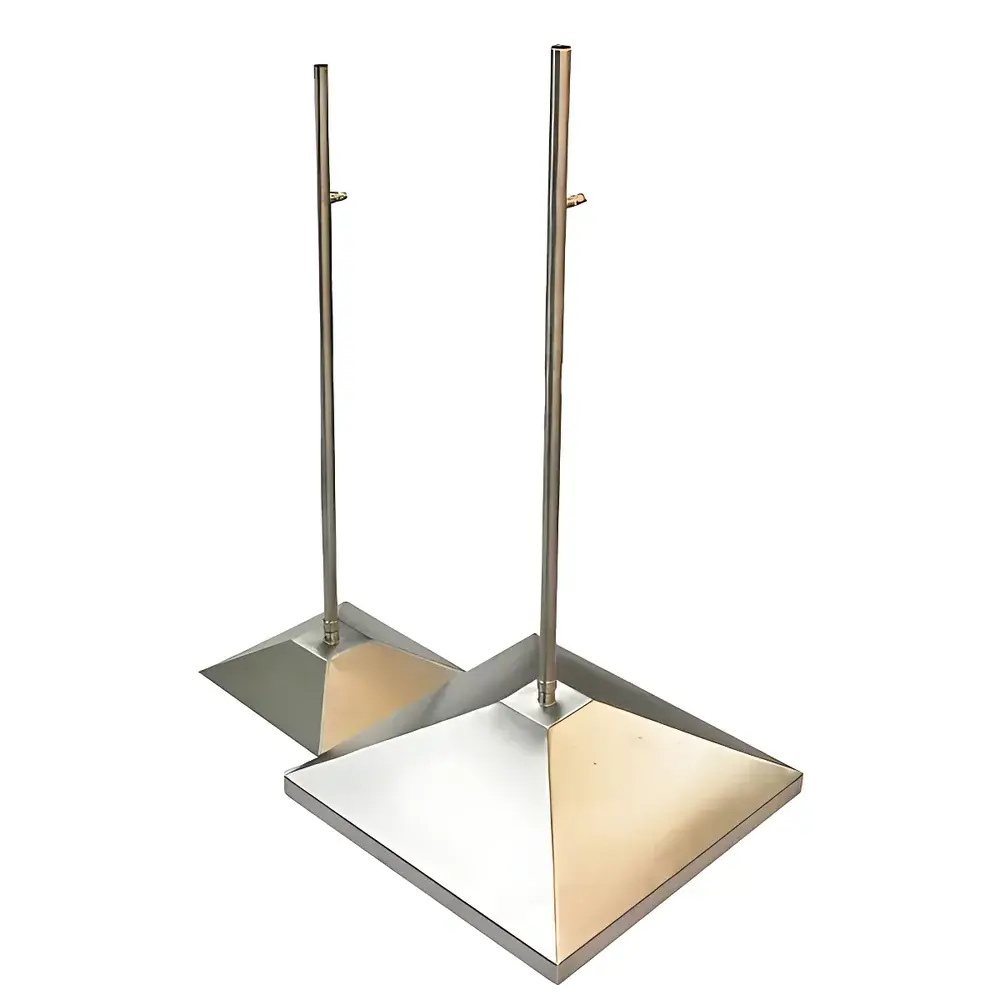
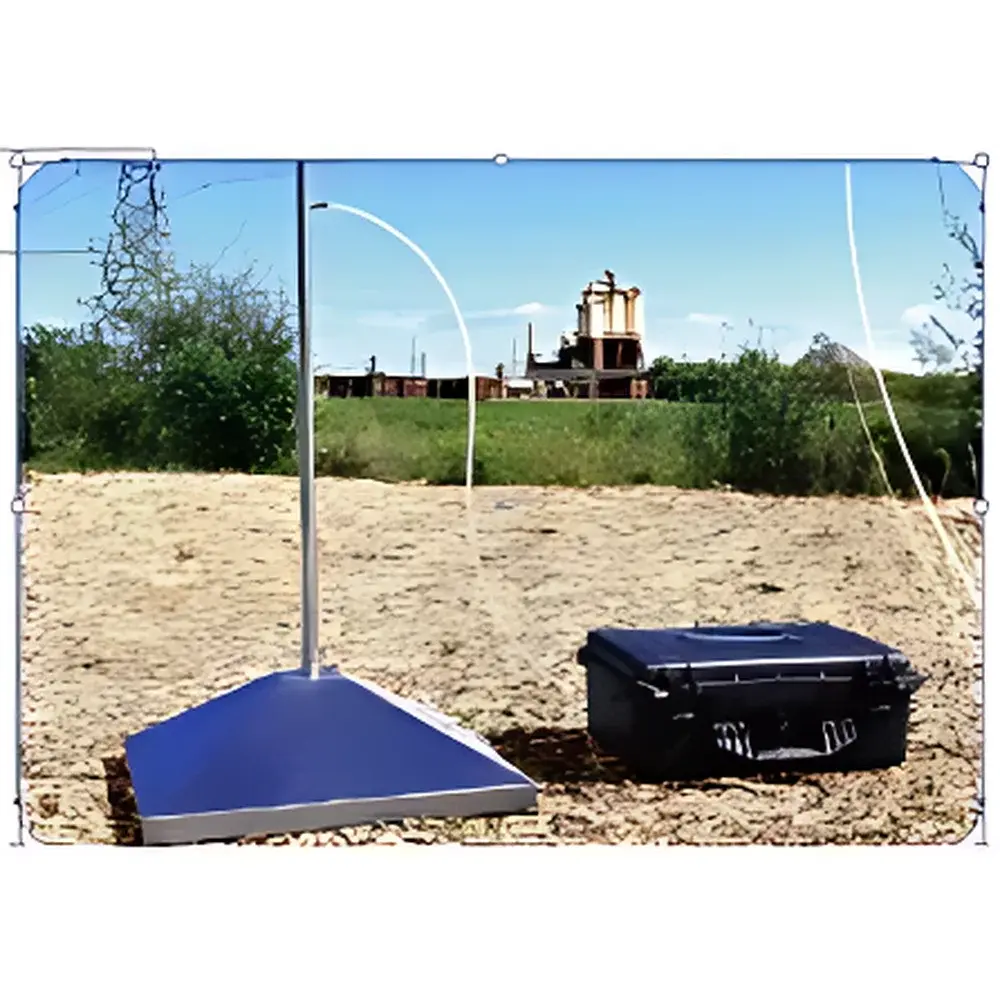
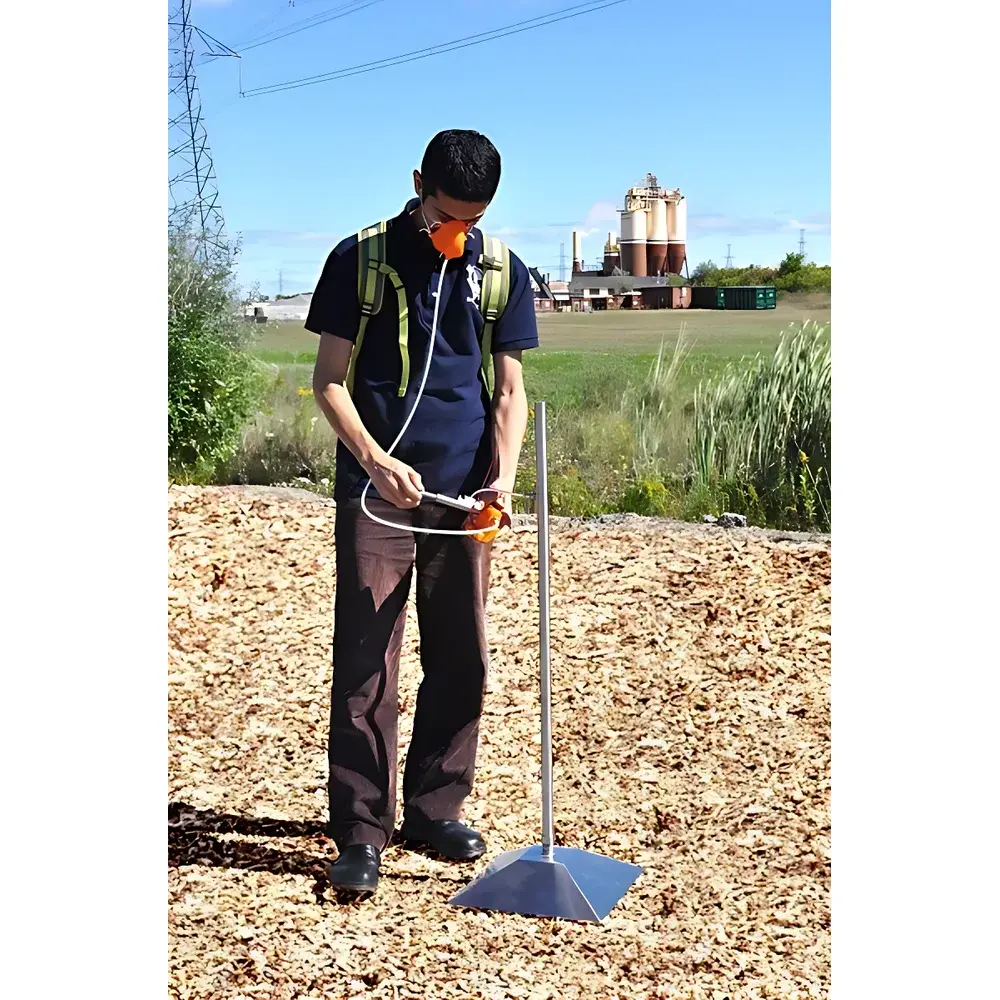
Odor Emission Static Chamber Sampler (IDES Model 1015)
| Brand | IDES |
|---|---|
| Origin | Canada |
| Manufacturer Type | Authorized Distributor |
| Origin Category | Imported |
| Model | 1015 |
| Pricing | Available Upon Request |
Overview
The IDES Model 1015 Odor Emission Static Chamber Sampler is an engineered field-deployable system designed for standardized, quantitative measurement of odorant flux from diffusive or semi-diffusive environmental surfaces—particularly biofilters, compost piles, soil covers, and other odor-emitting solid-phase treatment media operating under positive airflow conditions. It implements the static chamber method in accordance with internationally recognized protocols including ASTM D8173–22 (“Standard Practice for Determining Odor Emission Rates from Surface Sources Using Static Flux Chambers”) and EN 13725:2022 (“Air Quality — Determination of Odour Concentration by Dynamic Olfactometry”). The device operates on the principle of controlled enclosure: a sealed, non-intrusive stainless-steel chamber is placed directly onto the emission surface, allowing headspace air to accumulate over a defined time interval (typically 10–30 minutes). Concentration gradients are monitored via integrated sampling ports, enabling calculation of emission flux (µg/m²·s or OUE/m²·s) using mass balance equations under quasi-steady-state assumptions.
Key Features
- Monolithic 316 stainless-steel construction—fully weld-seamless and electropolished—to resist corrosion, minimize adsorption artifacts, and support rigorous decontamination between sampling events (e.g., ozone purge, ethanol wipe, or thermal bake-out).
- Modular base ring design: detachable bottom chamber segment facilitates rapid transport, on-site assembly, and adaptation to uneven terrain; gasketed interface ensures leak-tight sealing against variable surface topography.
- Three standardized base area options: 0.25 m² (500 × 500 mm), 0.5 m² (707 × 707 mm), and 1.0 m² (1000 × 1000 mm)—all calibrated to ±0.5% geometric accuracy per ISO/IEC 17025-accredited dimensional verification.
- Integrated dual-port manifold with Swagelok® SS-4-SS threaded fittings: one port for timed syringe or canister sampling (per EPA TO-15 or ASTM D5504), the other for real-time pressure/temperature monitoring to correct for barometric drift and thermal expansion effects.
- Optional accessory compatibility: supports integration with portable GC-MS olfactometry interfaces, PID sensors (for H₂S, NH₃, VOC screening), and data loggers compliant with IEC 61508 SIL2 for continuous environmental monitoring deployments.
Sample Compatibility & Compliance
The Model 1015 is validated for use across heterogeneous, biologically active matrices—including matured compost, woodchip-based biofilter media, anaerobic digestate surfaces, and municipal landfill daily cover soils. Its inert surface contact minimizes catalytic interference during volatile organic compound (VOC) and reduced sulfur compound (RSC) collection. The system conforms to regulatory frameworks governing odor impact assessment in North America and the EU: it satisfies method requirements for submissions under Ontario Regulation 347 (Odour Emissions), California Air Resources Board (CARB) AB 2588 reporting, and EU Industrial Emissions Directive (IED 2010/75/EU) Annex VII monitoring obligations. All units ship with a traceable calibration certificate referencing NIST-traceable dimensional standards and undergo helium leak testing at ≤1 × 10⁻⁶ mbar·L/s prior to dispatch.
Software & Data Management
While the Model 1015 is a hardware-only passive sampling platform, IDES provides optional companion software (ChamberFlux v3.2, Windows/Linux/macOS) for post-sampling flux computation, uncertainty propagation (GUM-compliant), and automated report generation aligned with ISO 17025 documentation requirements. The software accepts input from certified analytical labs (e.g., dynamic olfactometry labs accredited to EN 13725 or ASTM E679), calculates emission rates using first-order accumulation kinetics, and applies temperature- and pressure-corrected ideal gas law conversions. Audit trails, user access controls, and electronic signatures comply with FDA 21 CFR Part 11 and EU Annex 11 for regulated environmental data integrity.
Applications
- Performance validation of biofiltration systems in wastewater treatment plants and rendering facilities.
- Baseline odor emission profiling during landfill capping and post-closure monitoring programs.
- Regulatory compliance testing for industrial composting operations subject to local air quality ordinances.
- Research-grade flux quantification in environmental microbiology studies examining odor precursor metabolism (e.g., sulfate-reducing bacteria activity under varying moisture and pH conditions).
- Design verification of odor mitigation barriers (e.g., geotextile covers, activated carbon overlays) via before-and-after static chamber trials.
FAQ
What surface types are compatible with the Model 1015 chamber?
It is validated for porous, granular, and semi-compacted organic substrates—including biofilter media, compost windrows, soil amendments, and stabilized biosolids—with surface moisture content up to 60% w/w.
Can the chamber be used under negative-pressure conditions?
No—the static chamber methodology assumes negligible convective exchange; use is restricted to surfaces exhibiting net positive or neutral pressure relative to ambient (e.g., forced-aeration biofilters, not vacuum-assisted soil vapor extraction zones).
Is third-party certification available for method validation?
Yes—IDES partners with ILAC-MRA accredited laboratories to provide full method validation packages per ISO/IEC 17025, including detection limit studies, repeatability (within-chamber) and reproducibility (inter-laboratory) assessments.
How is chamber leakage verified in the field?
A dedicated helium leak-check kit (IDES P/N LK-1015-H) is available, enabling on-site verification to <1 × 10⁻⁵ mbar·L/s using handheld sniffer probes calibrated annually to ISO 10012 standards.
Does the system meet GLP requirements for regulatory submissions?
When used with IDES-certified accessories and documented procedures (SOP-ID-1015-REV4), the Model 1015 satisfies OECD GLP Principles for environmental fate and effects studies requiring odor emission quantification.







