
OETECH OBF-07-200919 Single-Ring Anti-Resonant Hollow-Core Fiber
| Brand | OETECH |
|---|---|
| Origin | Beijing, China |
| Manufacturer Type | Authorized Distributor |
| Product Origin | Domestic (China) |
| Model | OBF-07-200919 |
| Price Range | USD 280 – 700 |
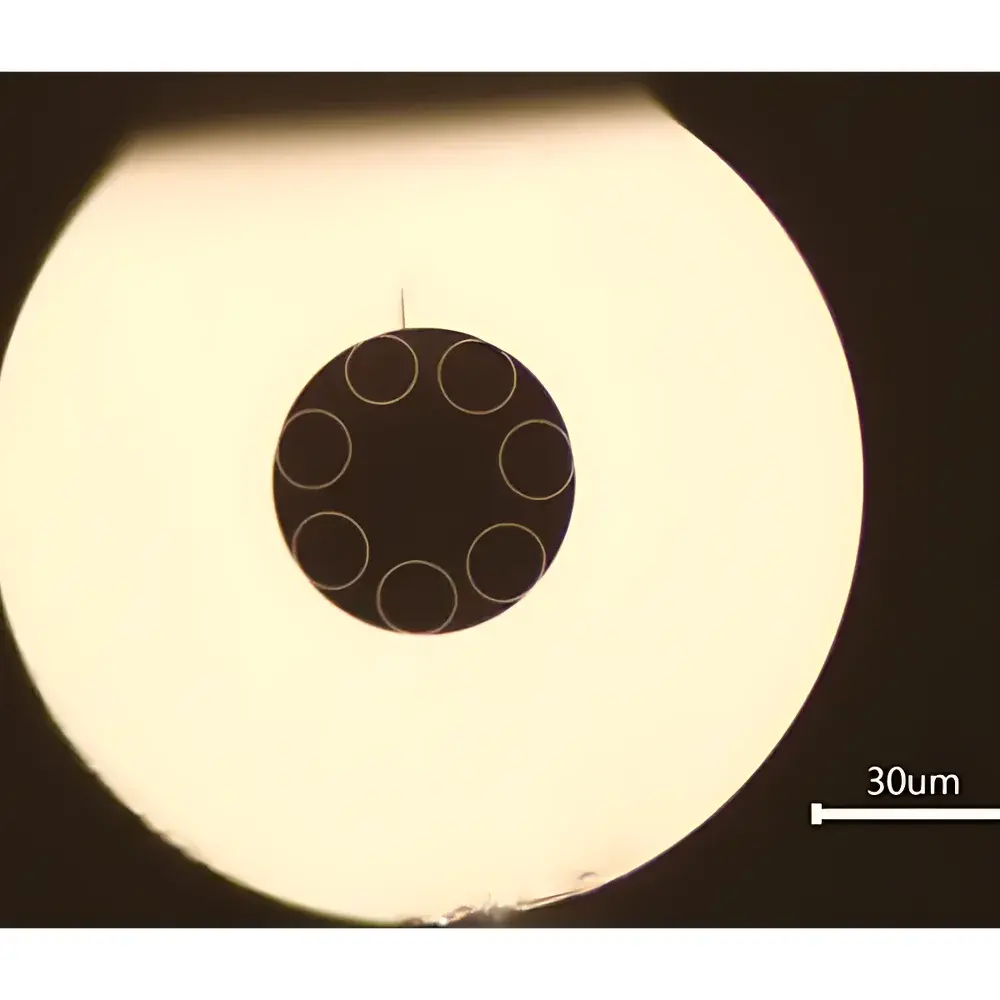
| Core Diameter | ~25 µm |
| Cladding Hole Diameter | ~12 µm |
| Bare Fiber OD | ~145 µm |
| Coated Fiber OD | ~260 µm |
| Transmission Band | 550–1100 nm |
| Attenuation | <0.2 dB/m (typ.), ~0.013 dB/m @ 655 nm, ~0.05 dB/m @ 920 nm |
| Material | Pure Fused Silica |
| Coating | Single Acrylate |
Overview
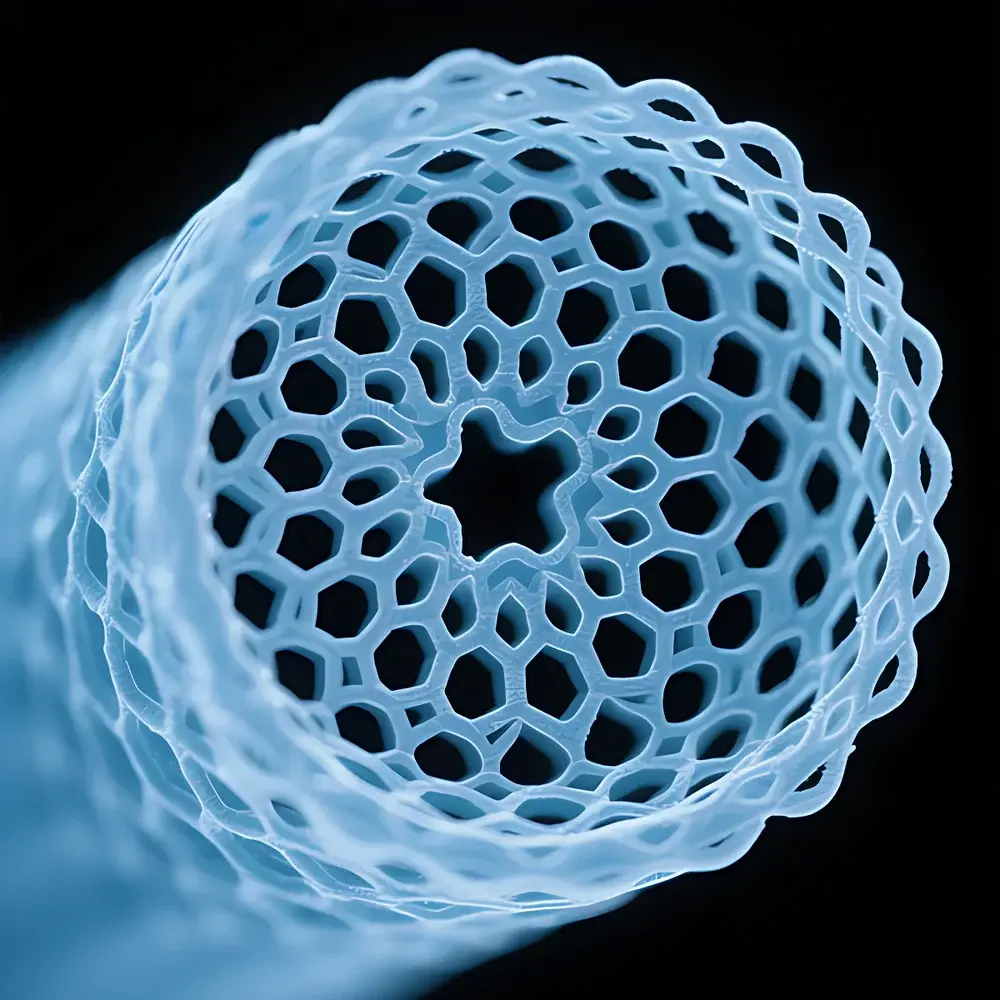
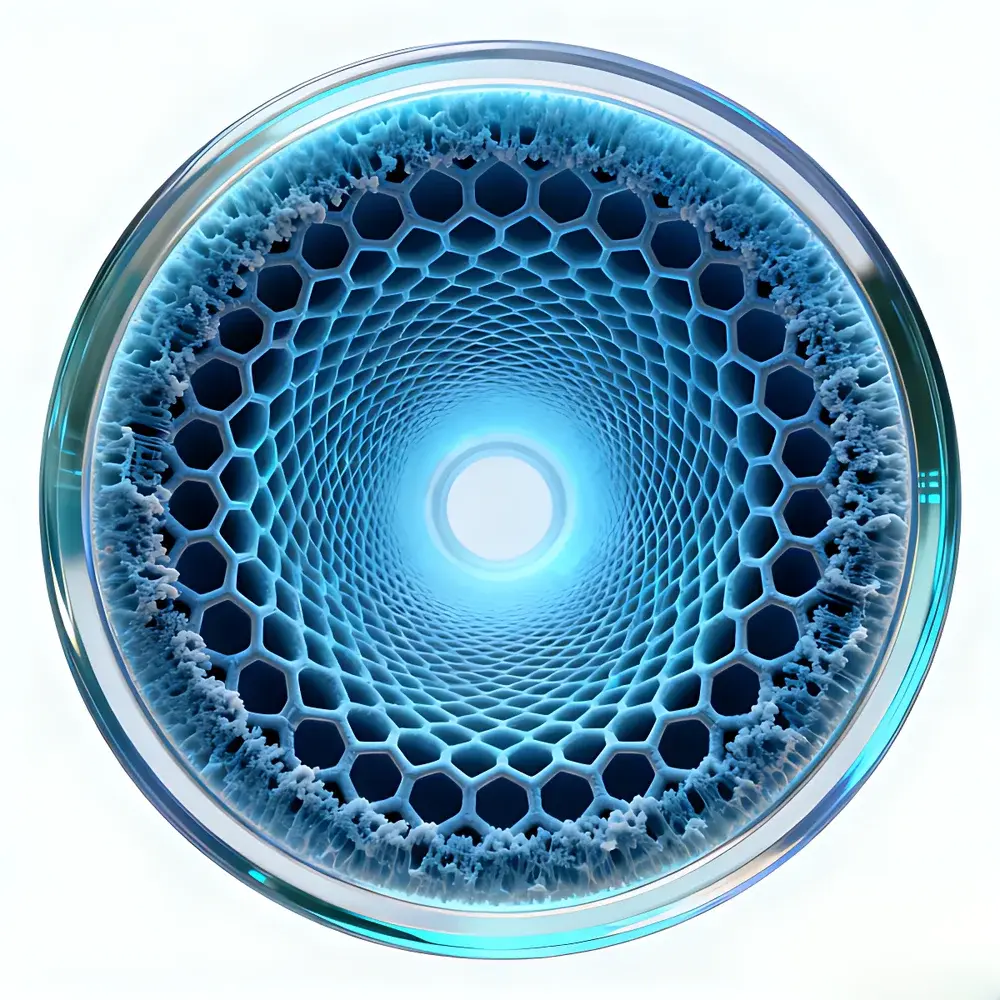
The OETECH OBF-07-200919 is a single-ring anti-resonant hollow-core fiber (AR-HCF) engineered for low-loss, high-fidelity guidance of optical radiation in the visible to near-infrared spectrum. Unlike conventional solid-core silica fibers, this AR-HCF confines light within a central air-filled core via spectrally selective suppression of cladding modes—achieved through destructive interference at the silica/air interfaces of a single concentric ring of capillary tubes. This anti-resonant reflection mechanism enables propagation with intrinsically low nonlinearity, minimal material dispersion, and exceptional resistance to optical damage—critical attributes for high-peak-power ultrafast pulse delivery and precision gas-phase photonic interactions.
Key Features
- Single-ring anti-resonant geometry optimized for mechanical robustness and mode control across 550–1100 nm
- Ultra-low attenuation: ≤0.013 dB/m at 655 nm and ~0.05 dB/m at 920 nm—validated via cut-back measurement per IEC 60793-1-40
- Core-guided transmission with effective single-mode behavior (M² < 1.3) over broad bandwidths, supporting diffraction-limited beam quality
- High laser-induced damage threshold (>10 GW/cm² for 100-fs pulses at 800 nm), enabled by >99.9% power confinement in air
- Pure fused silica structure ensures compatibility with UHV environments and thermal stability from −60 °C to +85 °C
- Standard acrylate primary coating provides mechanical protection while maintaining bend insensitivity down to 15 cm radius
Sample Compatibility & Compliance
This fiber is compatible with standard FC/PC and SMA-905 connectors when cleaved and polished using fiber preparation protocols aligned with Telcordia GR-326-CORE. Its all-silica construction and absence of polymer dopants ensure compliance with ISO 10110-3 (optical material homogeneity) and ASTM F2732 (laser safety labeling for optical components). While not certified to ITU-T G.652.D or G.657.A1, its transmission window and dispersion profile support use in research-grade free-space coupling setups, gas cell integration, and pump-probe configurations compliant with GLP documentation requirements. No hazardous substances are used in manufacturing; RoHS 2011/65/EU and REACH SVHC declarations are available upon request.
Software & Data Management
As a passive optical component, the OBF-07-200919 requires no embedded firmware or proprietary software. However, its performance parameters are fully integrable into optical simulation workflows including Lumerical MODE, COMSOL Multiphysics (Wave Optics Module), and Python-based tools (e.g., PyMMF, scikit-fiber) for modal analysis, dispersion mapping, and nonlinear coefficient estimation. Experimental characterization data—including spectral loss scans, mode field diameter (MFD) profiles, and polarization extinction ratio (PER) measurements—can be exported in CSV or HDF5 format for traceable laboratory records. When deployed in regulated environments (e.g., medical laser delivery systems), fiber batch IDs and test reports support audit-ready documentation under FDA 21 CFR Part 11–compliant electronic record systems.
Applications
- Delivery of femtosecond and picosecond pulses from Ti:sapphire, Yb-fiber, and optical parametric amplifiers—minimizing temporal broadening and self-phase modulation
- Gas-filled hollow-core platforms for coherent Raman spectroscopy, cavity-enhanced absorption, and high-harmonic generation in noble gases
- Low-latency, low-nonlinearity interconnects in quantum optics experiments requiring preservation of photon statistics and entanglement fidelity
- Reference arms in interferometric sensing systems where thermal drift and birefringence must be suppressed
- Beam transport in industrial laser machining setups operating at 920 nm (e.g., frequency-doubled Yb fiber sources) where silica bulk absorption limits solid-core alternatives
FAQ
What is the recommended bending radius for long-term reliability?
A minimum static bend radius of 15 cm is specified for continuous operation; dynamic bending should not exceed 25 cm radius to avoid microcrack initiation.
Can this fiber be spliced to standard SMF-28 using fusion splicing?
Yes—using a modified arc program with reduced power and extended pre-fuse time—but mode-field mismatch results in ~1.2 dB splice loss; we recommend butt-coupling with index-matching gel for critical applications.
Is the fiber suitable for vacuum-compatible applications?
Yes—the pure silica structure and acrylate coating (outgassing rate <1×10⁻⁹ Pa·m³/s per ISO 15735) enable use in UHV chambers up to 10⁻⁷ mbar without degradation.
Does OETECH provide test reports for individual fiber reels?
Yes—each shipment includes a certificate of conformance listing measured cutoff wavelength, attenuation at 655/920 nm, proof-test tension (100 kpsi), and visual inspection results per IEC 60793-2-50.
How does temperature affect the transmission window?
Thermal tuning of the anti-resonant condition shifts the band edges by ~0.015 nm/°C; operational stability is maintained between −20 °C and +60 °C without active compensation.





