
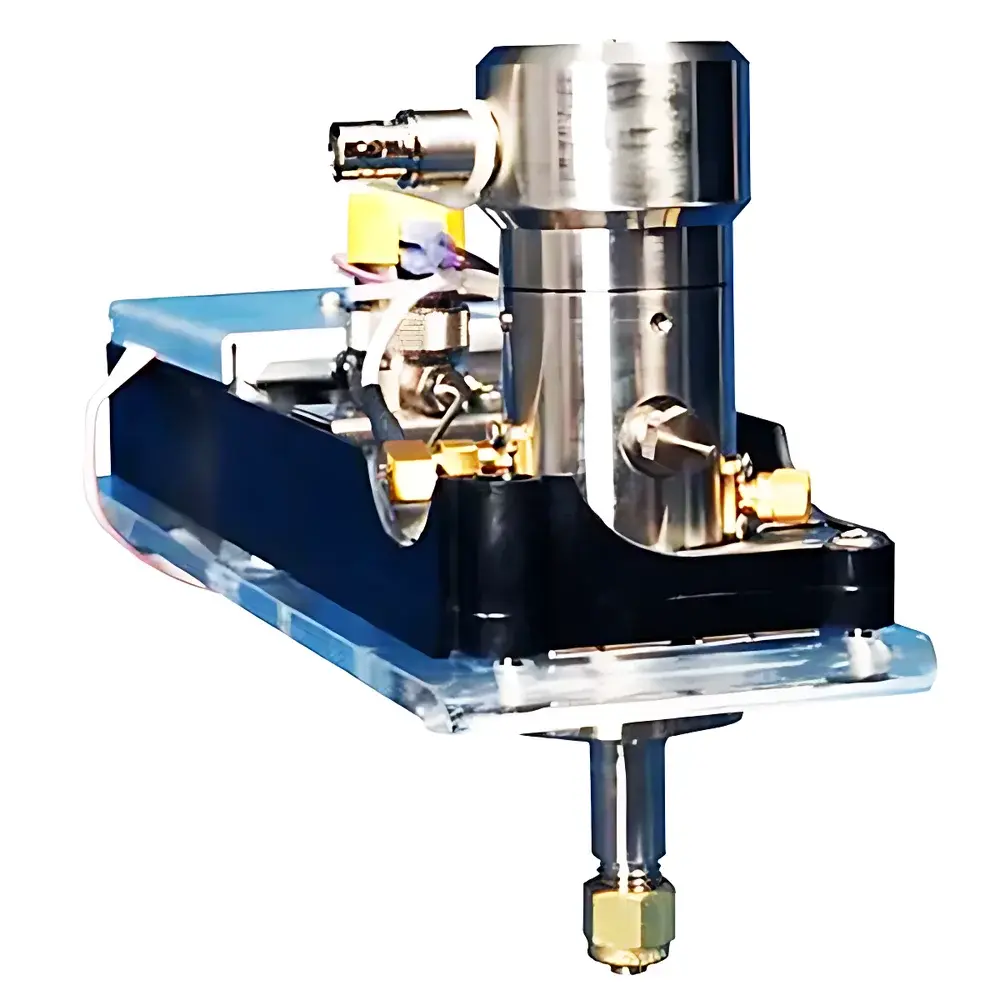
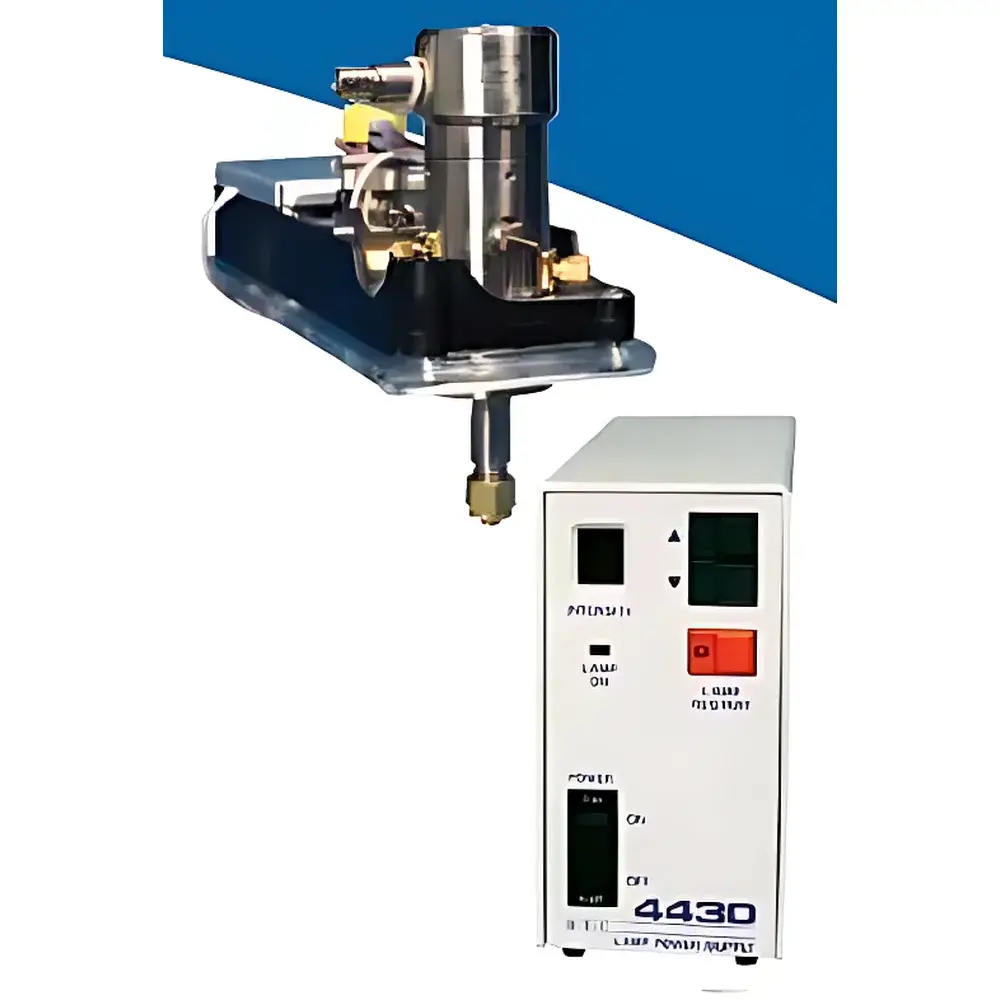
OI Analytical 4430 PID Photoinonization Detector for Gas Chromatography
| Brand | OI Analytical |
|---|---|
| Origin | USA |
| Model | 4430 PID Photoinonization Detector |
| Detector Type | Photoionization Detector (PID) |
| Ionization Source | UV Lamp (10.6 eV standard) |
| Design Feature | Window Purge Technology |
| Compatibility | Universal GC Mounting Interface |
| Power Supply | Dedicated High-Voltage Module |
| Application Scope | Selective Detection of Aromatics, Alkenes, and Other VOCs with Ionization Potentials < 10.6 eV |
Overview
The OI Analytical 4430 PID Photoinonization Detector is a high-sensitivity, selective detection module engineered for integration with gas chromatography (GC) systems to quantify volatile organic compounds (VOCs) that possess ionization potentials below the photon energy of its ultraviolet lamp—typically 10.6 eV. Unlike universal detectors such as flame ionization (FID) or thermal conductivity (TCD), the 4430 PID operates on the principle of photoionization: analyte molecules eluting from the GC column enter an ionization chamber where they are exposed to vacuum-ultraviolet (VUV) photons. Molecules with ionization energies lower than the lamp’s photon energy absorb photons and eject electrons, generating positive ions and free electrons. These charged species are collected by electrodes under a defined electric field, producing a current proportional to analyte concentration. This mechanism delivers inherent selectivity toward unsaturated hydrocarbons—including benzene, toluene, xylene (BTX), styrene, butadiene—and other VOCs such as aldehydes, ketones, and sulfur-containing compounds, while exhibiting minimal response to saturated alkanes (e.g., methane, propane) and permanent gases. The detector is widely deployed in environmental air monitoring, industrial hygiene, remediation site assessment, and regulatory compliance testing where compound-class specificity and low detection limits (sub-ppb range for many aromatics) are critical.
Key Features
- Patented window purge technology: Continuous inert gas flow across the UV lamp quartz window prevents condensable VOCs and reactive species from depositing, eliminating window fouling and maintaining stable lamp output over extended operation.
- Optimized ionization chamber geometry: Ensures uniform photon flux distribution and efficient ion collection, contributing to high signal-to-noise ratio and reproducible peak area response (RSD < 3% for repeated injections).
- Dedicated high-voltage power supply: Provides stable, ripple-free voltage to the UV lamp, minimizing baseline drift and enabling precise control of lamp intensity—critical for quantitative accuracy and long-term calibration stability.
- Universal GC interface design: Compatible with major GC platforms including Agilent, Thermo Fisher Scientific, Shimadzu, and PerkinElmer via standardized mechanical mounting and electrical signal output (0–1 V or 0–5 V analog, TTL-compatible trigger).
- Robust thermal management: Integrated temperature stabilization minimizes sensitivity drift during ambient fluctuations, supporting reliable operation in field-deployable or laboratory benchtop configurations.
Sample Compatibility & Compliance
The 4430 PID is validated for use in methods aligned with U.S. EPA Methods TO-15, TO-17, and Method 25A for ambient and stack gas VOC analysis. It supports compliance with ISO 16000-6 (indoor air quality), ASTM D5504 (sulfur compounds in natural gas), and OSHA Method 1005 (benzene in workplace air). Its selective response profile makes it especially suitable for applications requiring differentiation between aromatic and aliphatic hydrocarbon fractions—such as leak detection in petrochemical facilities, landfill gas characterization, and fugitive emission screening. The detector does not respond to CO₂, H₂O vapor, or most chlorinated solvents (e.g., chloroform, CCl₄), reducing interference in complex matrices. Sample introduction is limited to thermally stable, non-polymerizing VOCs with IP < 10.6 eV; compounds with higher IPs (e.g., methanol, formaldehyde) require alternative lamp energies or detection strategies.
Software & Data Management
The 4430 PID outputs analog signals compatible with all major GC data systems (e.g., OpenLab CDS, Chromeleon, GCsolution). When paired with OI’s optional digital interface module, it supports direct communication via RS-232 or USB, enabling real-time lamp status reporting (intensity, operating hours), automatic zero/span verification logging, and audit-trail-capable calibration history. All operational parameters—including purge gas flow rate, lamp voltage, and chamber temperature—are configurable and stored in non-volatile memory. Data integrity features align with FDA 21 CFR Part 11 requirements when used within validated laboratory information management systems (LIMS) or electronic lab notebooks (ELN), supporting GLP and GMP workflows through user-access controls, electronic signatures, and immutable event logs.
Applications
- Environmental monitoring: Quantification of BTEX and other priority VOCs in ambient air, soil vapor, and groundwater headspace per EPA protocols.
- Industrial hygiene: Real-time personal exposure assessment for workers handling solvents, monomers, or chemical intermediates.
- Remediation site characterization: Rapid screening of plume boundaries and treatment efficiency in soil vapor extraction (SVE) and air sparging systems.
- Product safety testing: Residual solvent analysis in pharmaceutical excipients, packaging materials, and consumer goods per ICH Q3C guidelines.
- Research & method development: Selective detection in multidimensional GC (GC×GC) and GC-MS confirmation workflows where PID serves as a complementary orthogonal detector.
FAQ
What compounds can the 4430 PID detect?
It responds selectively to VOCs with ionization potentials below 10.6 eV—including aromatics (benzene, ethylbenzene), alkenes (isoprene, butadiene), heteroatom-containing compounds (acetone, acetaldehyde), and certain sulfur species (methyl sulfide). Alkanes (e.g., hexane, octane) and highly chlorinated compounds generally show negligible response.
Can the 4430 PID be used with capillary GC columns?
Yes—the detector accepts standard 0.53 mm ID or 0.32 mm ID fused silica columns via its universal tail-pipe adapter and supports split/splitless injection modes without modification.
Does the 4430 PID require routine lamp replacement?
UV lamps have a typical service life of 1,500–2,000 hours under continuous operation; output degradation is monitored via built-in intensity diagnostics, and replacement is a field-serviceable procedure requiring no system recalibration.
Is the detector compatible with hydrogen carrier gas?
Hydrogen is acceptable as a carrier or makeup gas, provided appropriate safety interlocks and leak mitigation protocols are implemented per local regulations and GC manufacturer guidelines.
How is baseline stability maintained during long-duration runs?
Through active thermal regulation of the ionization chamber, continuous window purge, and low-noise high-voltage regulation—enabling stable baselines over multi-hour unattended analyses typical in environmental monitoring protocols.
Related Products




