
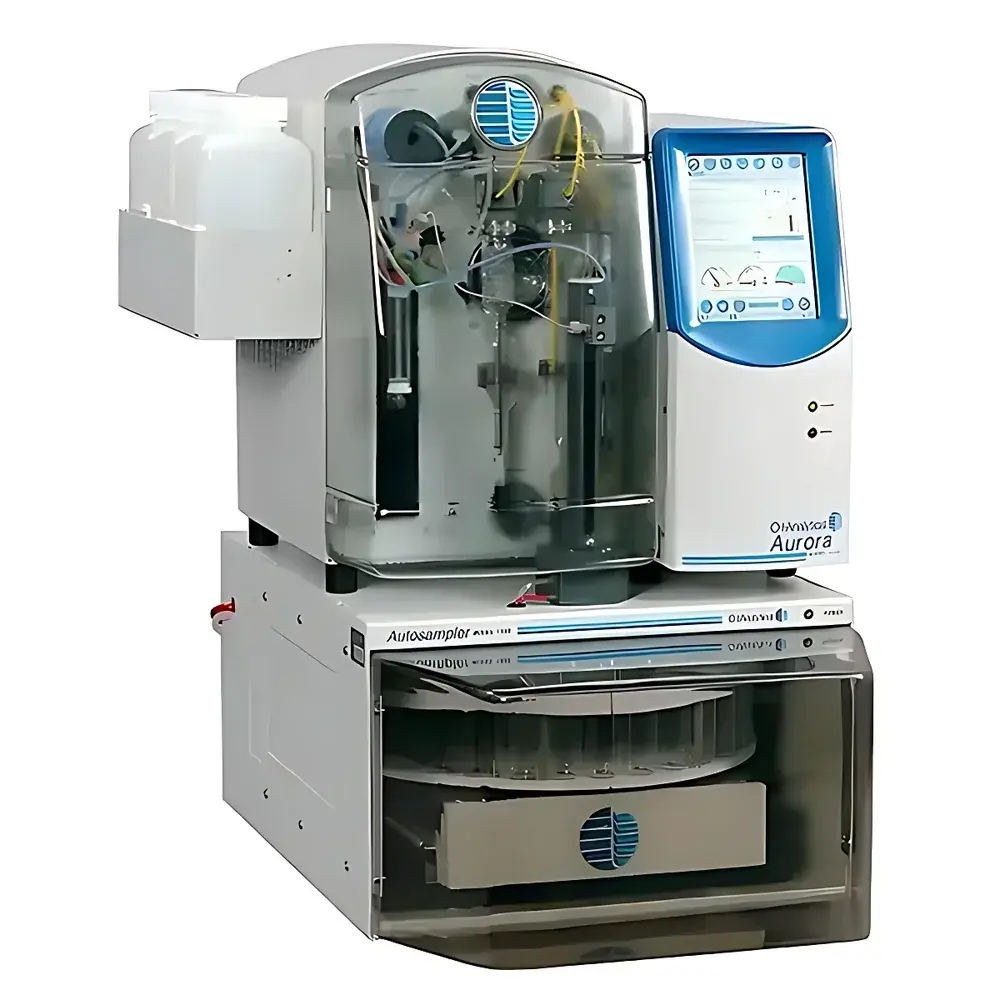
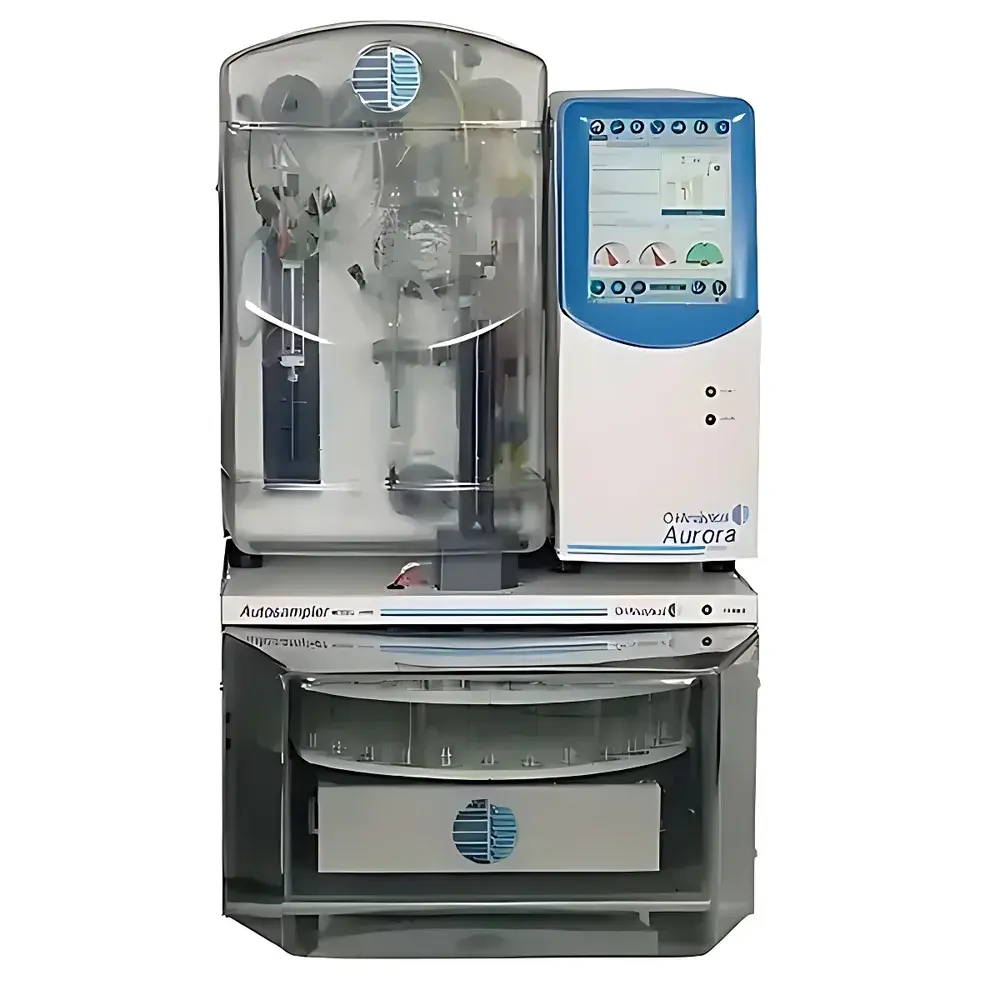
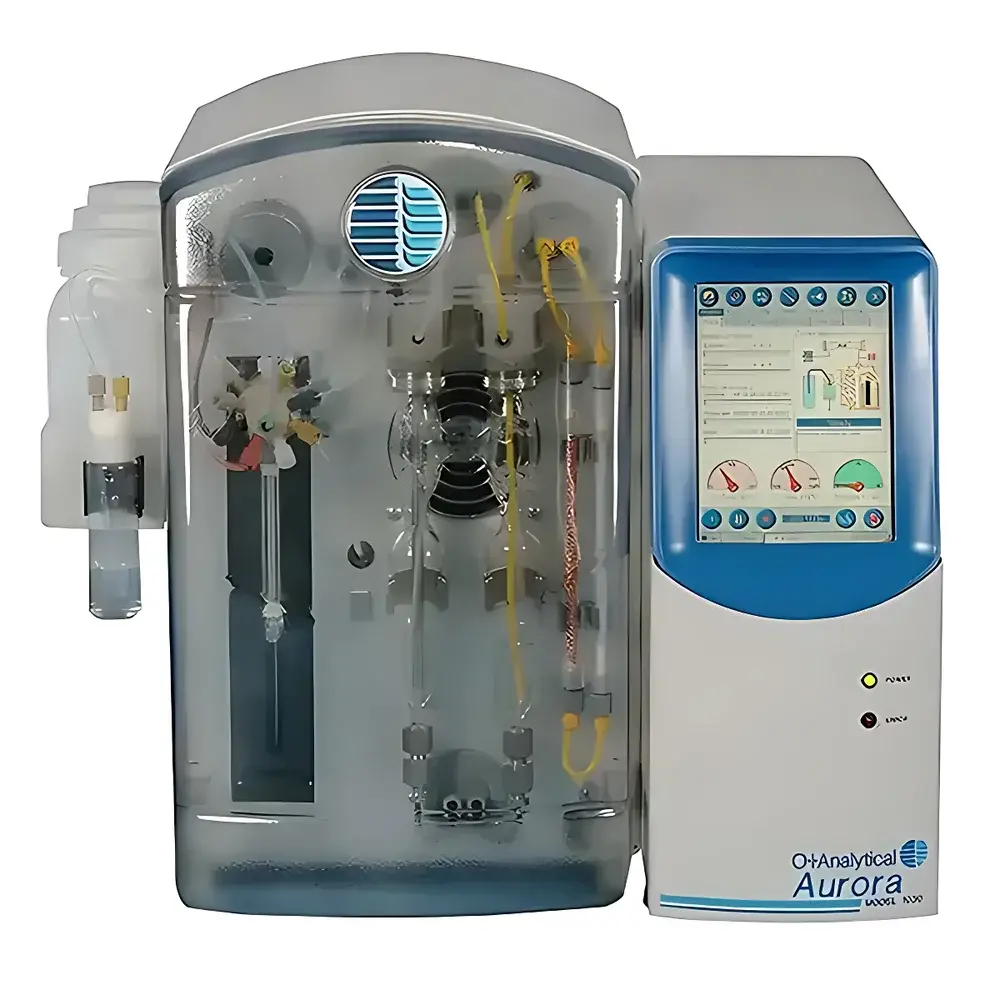
OI Analytical TOC 1030W Total Organic Carbon Analyzer
| Brand | OI Analytical |
|---|---|
| Origin | USA |
| Model | 1030W |
| Detection Principle | High-Temperature Catalytic Oxidation (680 °C) + Solid-State Nondispersive Infrared (SSNDIR) Detection |
| Measurement Range | 2 ppb to 30,000 ppm C |
| Sample Types | Liquid aqueous matrices including suspended solids |
| Oxidation Method | Dual-channel wet chemical oxidation (optional) |
| Regulatory Compliance | FDA 21 CFR Part 11, GLP/GMP-ready audit trail |
| Interface | Integrated Windows CE OS with touchscreen GUI |
| Connectivity | Ethernet-enabled for LAN integration |
| Automation | Optional 88-position rotary autosampler with magnetic stirring or >96-position XYZ autosampler with priority/random sampling |
| Optional Features | Electronic Pressure Control (EPC), Electronic Flow Control (EFC), NPOC/TC/TIC/TOC quantification modes |
Overview
The OI Analytical TOC 1030W is a high-precision, laboratory- and process-capable Total Organic Carbon Analyzer engineered for rigorous regulatory and research environments. It employs high-temperature catalytic oxidation at 680 °C—coupled with solid-state nondispersive infrared (SSNDIR) detection—to achieve trace-level carbon quantification across an exceptionally broad dynamic range (2 ppb to 30,000 ppm C). Unlike UV-persulfate or low-temperature combustion systems, the 1030W’s dual-stage thermal oxidation ensures complete mineralization of recalcitrant organic compounds—including humic substances, surfactants, and pharmaceutical residues—without requiring acid sparging or catalyst replacement during routine operation. Its heritage traces directly to space-grade instrumentation: the core SSNDIR detector architecture was flight-qualified for NASA’s International Space Station (ISS) mission aboard Space Shuttle Endeavour in 2008, validating its long-term stability, zero-drift performance, and immunity to vibration and thermal cycling.
Key Features
- Electronic Pressure Control (EPC) system for carrier gas (high-purity air or oxygen), delivering consistent flow and pressure regulation—critical for baseline stability and reproducibility across extended run sequences.
- Proprietary solid-state nondispersive infrared (SSNDIR) detector with no moving parts, eliminating optical alignment drift and reducing calibration frequency compared to traditional NDIR cells.
- Dual-channel wet chemical oxidation module (optional): enables alternating oxidation cycles between two independent reaction chambers, effectively doubling throughput while maintaining method equivalence per ASTM D5903 and ISO 8245.
- Full TC/TIC/TOC/NPOC mode support with automated in-sequence acidification, sparging, and oxidation steps—fully programmable via embedded Windows CE interface.
- Integrated Ethernet port supporting TCP/IP communication; compatible with LIMS, SCADA, and enterprise data historians without middleware.
- Robust sample handling architecture: accepts turbid, particulate-laden, and high-salinity water matrices (e.g., wastewater effluent, seawater, pharmaceutical process streams) without pre-filtration when configured with the high-flow oxidation module.
Sample Compatibility & Compliance
The TOC 1030W is validated for use with drinking water, ultrapure water (UPW), wastewater, groundwater, surface water, and industrial process streams—including those containing suspended solids up to 100 mg/L. Its oxidation efficiency meets or exceeds requirements of EPA Method 415.3, ASTM D7573, USP , and Ph. Eur. 2.2.44. The instrument’s firmware and data management framework are designed to satisfy FDA 21 CFR Part 11 compliance, including electronic signatures, role-based access control, immutable audit trails, and secure user authentication. All method parameters, calibration logs, and raw detector outputs are timestamped and cryptographically hashed to support GLP and GMP audits.
Software & Data Management
The embedded Windows CE operating system hosts a dedicated TOC acquisition and reporting application with intuitive touchscreen navigation. Users configure multi-step methods—including acid addition volume, sparge duration, oxidation temperature ramp profiles, and integration windows—via graphical workflow editors. Data files are stored in vendor-neutral CSV and XML formats with embedded metadata (operator ID, instrument serial number, environmental conditions). Optional software modules enable automated report generation compliant with ISO/IEC 17025 templates, trend analysis across historical batches, and real-time SPC charting using control limits derived from ICH Q2(R2) guidelines.
Applications
The TOC 1030W serves critical roles in pharmaceutical manufacturing (water-for-injection and clean-in-place rinse monitoring), semiconductor UPW certification (per SEMI F63), environmental compliance (NPDES discharge reporting), and academic research on carbon cycling in aquatic ecosystems. Its ability to quantify non-purgeable organic carbon (NPOC) without manual intervention supports method validation studies under ICH Q5C and regulatory submissions to EMA and PMDA. In municipal utilities, it enables continuous verification of advanced oxidation process (AOP) efficiency and disinfection by-product precursor removal.
FAQ
Does the TOC 1030W require daily calibration?
No—its SSNDIR detector exhibits <0.5% signal drift over 72 hours; calibration verification is recommended every 24 hours for regulated environments, but full multi-point calibration is typically required only weekly or after maintenance.
Can it analyze seawater or brine samples?
Yes, when equipped with the optional high-salt oxidation module and corrosion-resistant fluidic path components; method adjustments for chloride interference mitigation are pre-programmed.
Is remote diagnostics supported?
Yes—via secure SSH or HTTPS connection; service engineers can initiate diagnostic routines, review system logs, and verify sensor health without physical access.
What autosampler options meet 21 CFR Part 11 requirements?
Both the 88-position rotary and >96-position XYZ autosamplers include hardware-enforced sample ID tracking, tamper-evident sequence logging, and electronic chain-of-custody records synchronized with the main audit trail.
How is oxidation efficiency verified for complex matrices?
The instrument supports spiked recovery tests using sucrose and 1,4-benzoquinone standards per USP ; recovery acceptance criteria (85–115%) are enforced automatically during method execution.







