
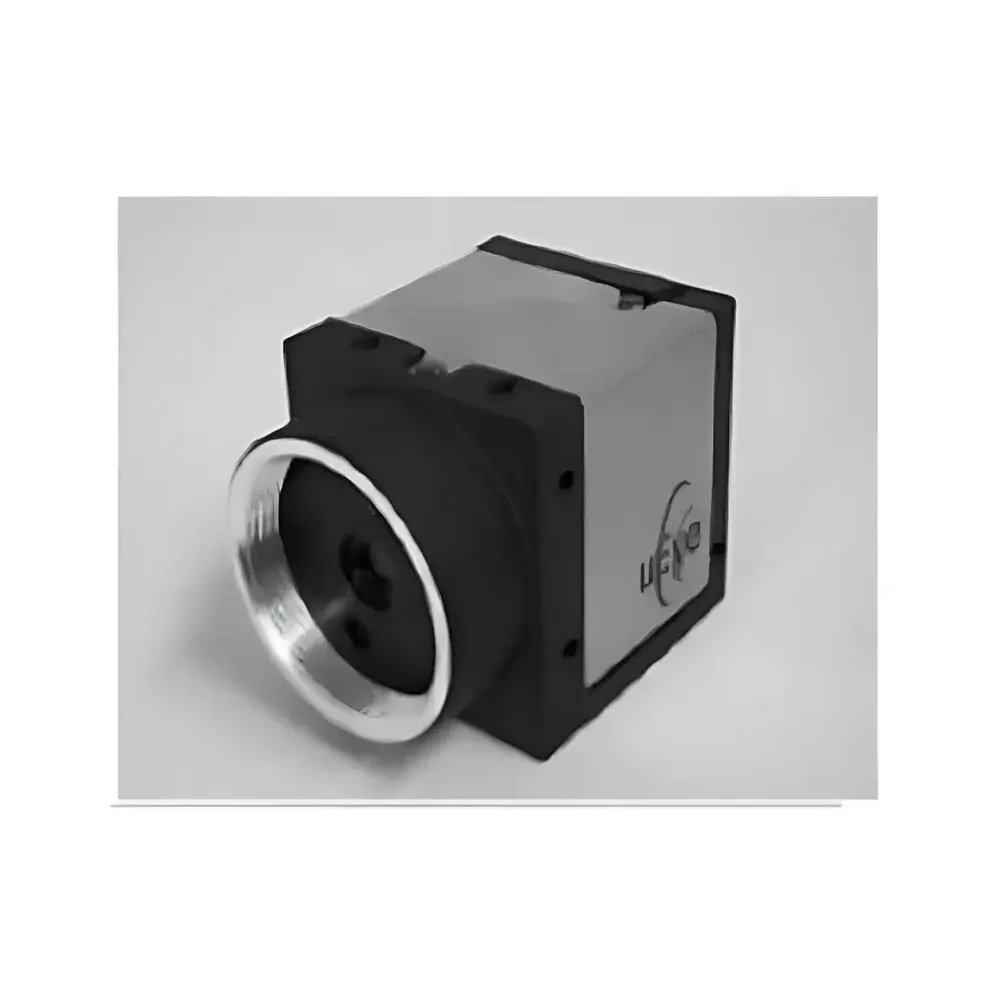
OKO Adaptive Optics System
| Brand | OKO / Flexible Optical B.V. |
|---|---|
| Origin | Netherlands |
| Manufacturer Type | Authorized Distributor |
| Import Status | Imported |
| Model | OKO Adaptive Optics |
Overview
The OKO Adaptive Optics System is a high-precision, modular platform engineered for real-time wavefront sensing and correction in demanding optical applications. Built upon the Shack–Hartmann principle, the system integrates a calibrated wavefront sensor with a high-speed, low-hysteresis deformable mirror to enable closed-loop aberration compensation. This architecture supports dynamic optical path correction in environments where thermal drift, mechanical vibration, or sample-induced phase distortions degrade image fidelity or measurement accuracy—common challenges in confocal microscopy, astronomical adaptive optics, ophthalmic imaging, and ultrafast laser beam shaping. The system operates as a complete electro-optical subsystem, designed for seamless integration into OEM instruments or custom laboratory setups requiring diffraction-limited performance under non-ideal optical conditions.
Key Features
- Shack–Hartmann wavefront sensor with interchangeable micro-lens arrays—enabling optimization for varying aperture sizes, focal lengths, and dynamic range requirements
- High-resolution CCD-based detection with programmable exposure time and gain control for signal-to-noise ratio optimization across low-light and high-flux regimes
- Electrostatically actuated deformable mirror with 37, 140, or 409 actuators (configurable per model), offering sub-nanometer stroke resolution and response times < 500 µs
- Real-time control electronics supporting up to 2 kHz closed-loop bandwidth (dependent on sensor frame rate and correction algorithm)
- Fully programmable control interface via TCP/IP and USB 2.0, compatible with LabVIEW, MATLAB, Python (PyOKO API), and C/C++ SDKs
- Modular mechanical design with standard kinematic mounting interfaces (e.g., SM1, SM2, M6 threads) for alignment stability and system scalability
Sample Compatibility & Compliance
The OKO Adaptive Optics System is compatible with a broad spectrum of optical wavelengths—from deep ultraviolet (250 nm) through visible to near-infrared (1100 nm)—subject to appropriate sensor coating and mirror reflective layer selection. Wavefront sensing and correction are independent of sample transparency or scattering properties, making the system suitable for both transmission and reflection geometries. It complies with CE marking requirements for electromagnetic compatibility (EMC Directive 2014/30/EU) and low-voltage safety (LVD Directive 2014/35/EU). While not certified as medical device hardware per ISO 13485, the system meets key design controls referenced in ISO 10110-5 (surface form tolerances) and ISO 21254 (laser damage threshold testing protocols), supporting validation pathways for regulated R&D environments.
Software & Data Management
The system ships with OKO Control Suite—a cross-platform application providing real-time wavefront visualization, Zernike mode decomposition, closed-loop PID tuning, and data logging in HDF5 and CSV formats. All software modules support audit-trail functionality, including timestamped parameter changes, user login tracking, and exportable configuration snapshots—facilitating compliance with GLP and internal QA documentation standards. The SDK includes deterministic memory management and thread-safe callback registration, enabling deterministic timing in automated test sequences. Raw sensor frames and mirror voltage maps are stored with metadata (exposure time, gain, actuator calibration matrix), ensuring full traceability for post-acquisition reprocessing or metrology-grade analysis.
Applications
- High-resolution retinal imaging: Compensation of ocular aberrations in adaptive optics scanning laser ophthalmoscopy (AOSLO)
- Microscopy enhancement: Restoration of point-spread function integrity in multiphoton and STED systems operating in thick tissue
- Laser beam conditioning: Pre-compensation of thermal lensing and spatial mode distortion in ultrafast amplifier chains
- Astronomical instrumentation: Laboratory validation of wavefront control algorithms prior to telescope integration
- Optical testing: In-situ characterization of aspheric lenses, freeform optics, and EUV mirror substrates under operational loading
- Quantum optics: Mode matching and cavity alignment stabilization in single-photon interference experiments
FAQ
What is the typical latency between wavefront measurement and mirror actuation in closed-loop operation?
System latency—including sensor readout, centroid calculation, control computation, and DAC update—is typically 1.2–2.8 ms, depending on region-of-interest size and processing load.
Can the wavefront sensor be used independently of the deformable mirror?
Yes. The sensor operates as a standalone diagnostic tool with full SDK access to raw spot images, centroid coordinates, and reconstructed wavefronts in Zernike or modal basis.
Is firmware upgrade supported in the field?
Yes. Firmware updates are delivered via signed binary packages and applied through the OKO Control Suite without requiring hardware service intervention.
Does the system support synchronization with external triggers (e.g., laser pulses or camera frames)?
Yes. Dedicated TTL I/O lines enable hardware-triggered acquisition and mirror update cycles, with jitter < 100 ns.
What calibration documentation is provided with the system?
Each unit ships with a factory calibration report including micro-lens array pitch verification, mirror actuator coupling matrix, wavefront repeatability (RMS < 0.015 λ @ 633 nm), and sensor linearity over ±5 µm defocus range.






