
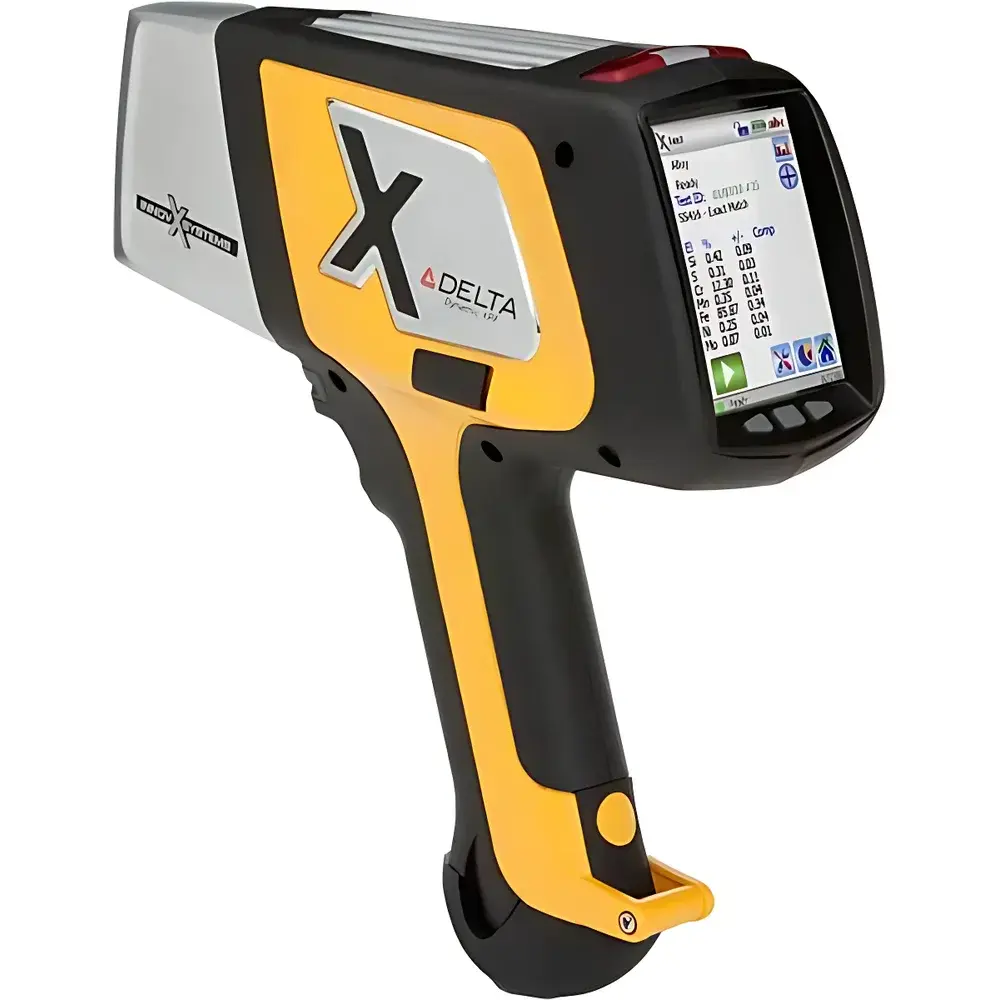
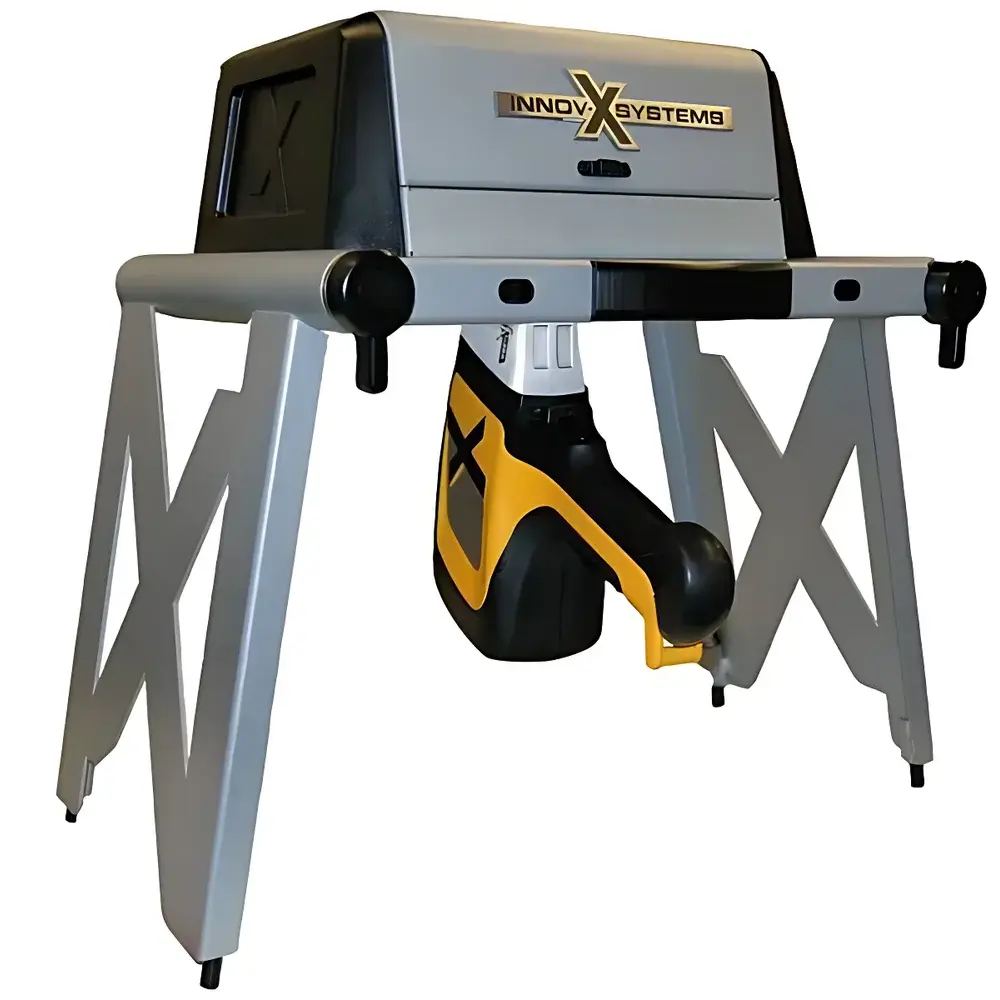
Olympus DELTA DP2000 Handheld Energy Dispersive X-Ray Fluorescence (EDXRF) Spectrometer
| Brand | Olympus |
|---|---|
| Origin | USA |
| Model | DP2000 |
| Application | Handheld/Portable |
| Industry Type | Non-Ferrous Metals |
| Elemental Range | Na (11) – U (92) |
| Concentration Range | 1 ppm – 100% |
| Energy Resolution | <140 eV |
| Repeatability | 0.1% |
Overview
The Olympus DELTA DP2000 is a field-deployable, handheld energy dispersive X-ray fluorescence (EDXRF) spectrometer engineered for rapid, non-destructive elemental analysis of metallic alloys and industrial materials. Based on fundamental XRF physics—where primary X-rays excite atoms in the sample, inducing characteristic secondary (fluorescent) X-ray emission—the DP2000 quantifies elemental composition by measuring energy spectra with high statistical fidelity. Developed from the legacy Innov-X Systems platform (founded Boston, 1993) and integrated into Olympus’ analytical portfolio following its 2010 acquisition, the instrument meets rigorous industrial demands for Positive Material Identification (PMI), QA/QC verification, and scrap sorting. Its architecture complies with ISO 9001 quality management standards and NATO AQAPI requirements, supporting traceability and audit readiness in regulated environments including ASME B31.3, ASTM E1558, and API RP 578.
Key Features
- High-performance 30 mm² silicon drift detector (SDD) enabling fast count rates and improved peak-to-background ratio for low-concentration detection down to 1 ppm.
- Micro-focus X-ray tube with selectable kV range (8–40 kV) and eight programmable filter positions for optimized excitation across light and heavy elements.
- Peltier-based thermoelectric cooling system maintaining detector stability at –35 °C operating temperature, ensuring consistent resolution under ambient thermal drift.
- Ruggedized industrial design: IP54-rated enclosure, drop-tested to 1 m, operating temperature range –10 °C to +50 °C, and humidity tolerance up to 95% RH non-condensing.
- Hot-swappable dual lithium-ion battery system permitting uninterrupted operation; supports simultaneous charging of host and battery without shutdown.
- Integrated environmental sensors—including barometer and accelerometer—for real-time atmospheric pressure correction during light-element (e.g., Mg, Al, Si) analysis and motion-compensated measurement stability.
Sample Compatibility & Compliance
The DP2000 is validated for direct analysis of solid metallic samples—including castings, forgings, welds, pipes, valves, and sheet metal—without surface preparation beyond routine cleaning. It supports certified reference materials (CRMs) traceable to NIST SRMs for calibration verification. Alloy identification adheres to ASTM E2857 (Standard Practice for Calibration of Handheld XRF Equipment) and ISO 21043-1 (XRF — General principles). The embedded library contains over 500 standardized alloy grades (e.g., ASTM, UNS, EN, JIS, GB), with user-definable custom grade templates compliant with internal QA protocols. For weld analysis, the optional Weld Grade Library enables compositional mapping across fusion zones and heat-affected zones per AWS D1.1 and ASME Section IX requirements.
Software & Data Management
Running Windows CE 6.0, the DP2000 features an intuitive touchscreen interface with context-aware workflows for PMI, sorting, and quantitative mode. Data acquisition, spectral review, and report generation are supported via Olympus’ proprietary Delta PC Software—compatible with Windows 10/11—enabling remote instrument control, batch calibration updates, and spectral library synchronization. All measurements include timestamp, GPS coordinates (optional), operator ID, and instrument configuration metadata. Audit trails comply with FDA 21 CFR Part 11 requirements when configured with electronic signature and role-based access controls. Raw spectra and processed results export in CSV, PDF, and .dxp formats; SD card storage accommodates >100,000 records with automatic cyclic overwrite protection.
Applications
- Positive Material Identification (PMI): Verification of alloy grade conformity in piping systems, pressure vessels, turbine blades, and aerospace fasteners to prevent catastrophic failure due to material substitution.
- Scrap Metal Sorting: On-site differentiation of stainless steels (304 vs. 316), nickel superalloys (Inconel 625 vs. 718), titanium grades (Gr 2 vs. Gr 5), and precious metal-bearing components in e-waste streams.
- QA/QC in Manufacturing: Incoming raw material inspection, in-process weld verification, and final product certification across foundries, fabrication shops, and OEM supply chains.
- Regulatory Compliance Screening: RoHS (Pb, Cd, Hg, Cr⁶⁺, Br), ELV, and CPSC testing for restricted substances in consumer goods and industrial hardware.
- Field Archaeometry & Geoscience: In situ analysis of ore samples, slag fragments, and historical artifacts where laboratory access is impractical.
FAQ
What regulatory standards does the DP2000 support for audit-ready reporting?
It supports 21 CFR Part 11 compliance with optional software configuration for electronic signatures, audit trail logging, and secure user authentication.
Can the DP2000 analyze light elements such as magnesium or aluminum in aluminum alloys?
Yes—its optimized low-energy excitation, Peltier-cooled SDD, and atmospheric pressure compensation enable reliable quantification of Mg, Al, Si, and P in non-ferrous matrices.
Is calibration transfer possible between multiple DP2000 units?
Yes—calibration models and grade libraries can be exported/imported via SD card or USB, ensuring method consistency across fleet deployments.
Does the instrument require annual recalibration by an authorized service center?
While daily verification using check standards is recommended, full recalibration intervals are determined by usage frequency and criticality per ISO/IEC 17025 or internal SOPs—typically every 6–12 months.
How is radiation safety managed during operation?
The DP2000 incorporates interlocked beam shuttering, real-time dose monitoring, and compliance with ANSI N43.3 and IEC 62495 for handheld XRF devices; no external shielding is required for routine use.





