
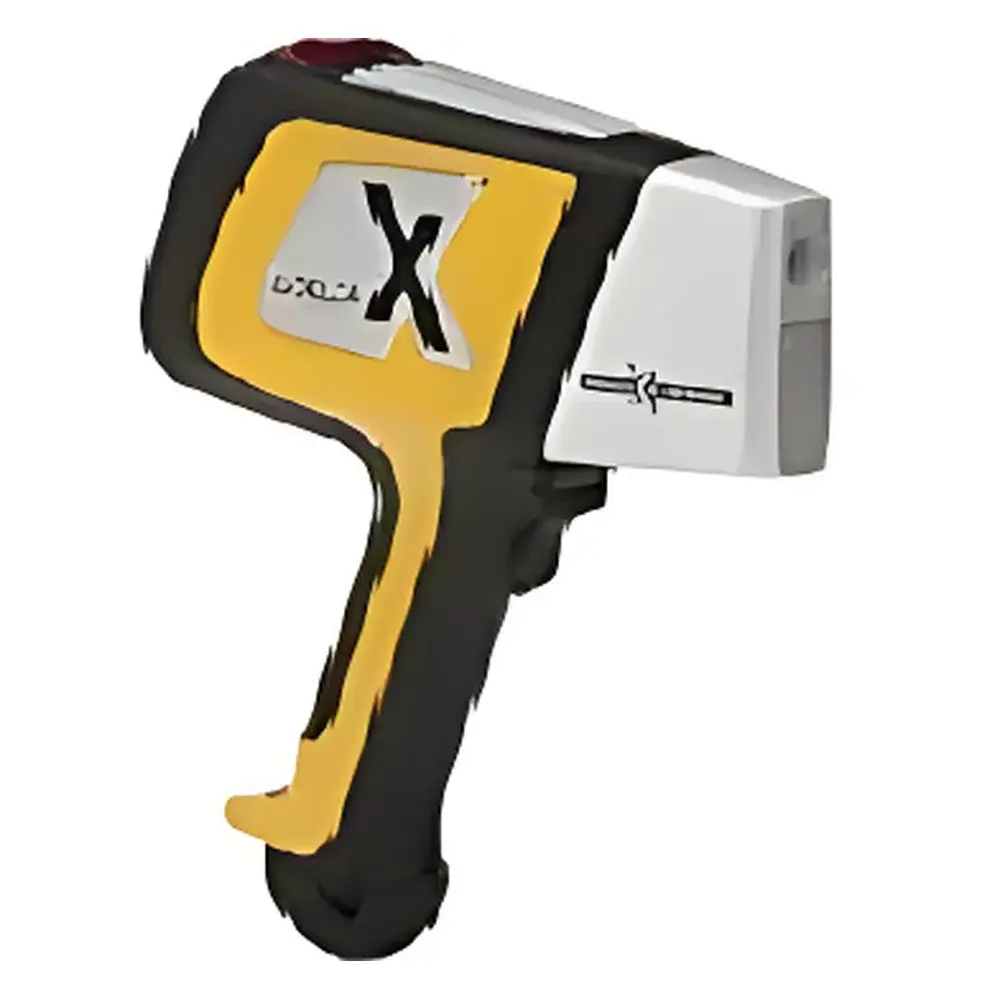
Olympus DELTA Premium DP4000 Handheld Energy Dispersive X-Ray Fluorescence (EDXRF) Spectrometer
| Brand | Olympus |
|---|---|
| Origin | USA |
| Manufacturer Type | Authorized Distributor |
| Origin Category | Imported |
| Model | DP4000 |
| Application | Handheld / Field-Portable |
| Industry-Specific Use | Soil and Environmental Monitoring |
| Elemental Range | Na (Z=11) to U (Z=92) |
| Detection Range | 1 ppm – 100% w/w |
| Energy Resolution | <140 eV (Mn Kα) |
| Repeatability | ≤0.1% RSD (at 1000 ppm, 60 s count time) |
Overview
The Olympus DELTA Premium DP4000 is a field-deployable, high-performance handheld energy dispersive X-ray fluorescence (EDXRF) spectrometer engineered for rapid, non-destructive elemental analysis of heterogeneous solid matrices—particularly soils, sediments, sludges, core samples, and mixed waste materials. Based on the fundamental principle of X-ray fluorescence emission, the instrument irradiates a sample with primary X-rays from a high-stability Au-target microfocus X-ray tube (4 W), inducing characteristic secondary X-ray emission from constituent elements. These emitted photons are resolved by a large-area (30 mm²) silicon drift detector (SDD), enabling high-count-rate spectral acquisition with sub-140 eV energy resolution at Mn Kα—critical for resolving overlapping peaks in complex environmental matrices. Designed specifically for regulatory soil screening and site characterization, the DP4000 delivers laboratory-grade precision under field conditions, supporting quantitative and semi-quantitative analysis across 31 pre-optimized elements—from sodium (Na) through uranium (U)—with detection limits as low as 1 ppm for key heavy metals (e.g., Pb, As, Cr, Cd) under standardized test protocols.
Key Features
- Triple-beam Soil Mode: Optimized excitation geometry and spectrum deconvolution algorithms tailored for low-Z to high-Z element quantification in variable-moisture, high-iron, and organic-rich soil matrices.
- Large-Area SDD Detector: 30 mm² active area enables >50% higher count rate versus conventional detectors, improving statistical precision and reducing measurement time without compromising resolution.
- Hot-Swappable Battery System: Enables uninterrupted operation—battery replacement completed in <30 seconds without powering down; dual-channel charger supports simultaneous charging of instrument and spare battery with real-time state-of-charge display.
- Ergonomic, Self-Supporting Design: Balanced center-of-gravity and contoured grip eliminate need for manual stabilization during analysis—reducing operator fatigue and minimizing motion-induced spectral artifacts.
- Rugged Aluminum Alloy Housing: Provides structural integrity, electromagnetic shielding, and passive thermal management—validated for continuous operation in ambient temperatures from –10 °C to 50 °C.
- Single-Touch Trigger Interface: One-button activation initiates full-spectrum acquisition, calibration verification, and result reporting—minimizing user error and training requirements.
Sample Compatibility & Compliance
The DP4000 is validated for direct analysis of unprepared or minimally prepared solid environmental samples—including air-dried soils, sediment cores, filter media, fly ash, and construction debris—without homogenization or pelletization. Its analytical performance meets or exceeds requirements defined in multiple U.S. federal regulatory methods: EPA Method 6200 (field portable XRF for soil metals), RCRA Waste Characterization Guidance, NIOSH Method 7702 (Pb in air filters), and OSHA ID-125G/OSIDELTA (Pb in paint chips). Instrument firmware and data handling workflows support GLP-compliant operation, including audit-trail-enabled user authentication, timestamped spectral logging, and method-specific calibration certificate generation. All factory calibrations are traceable to NIST SRM reference materials (e.g., SRM 2710a, 2711a, 1645), and system performance checks comply with ASTM E2857–22 (Standard Guide for Validation of Field Portable XRF Analyzers).
Software & Data Management
The integrated DeltaSync software platform provides real-time spectral visualization, multi-layer matrix correction (including grain-size and moisture compensation), and automated reporting compliant with EPA and ISO 17025 documentation standards. Data export supports CSV, XML, and PDF formats—with embedded metadata (GPS coordinates, operator ID, calibration version, acquisition parameters). Cloud-sync capability enables centralized fleet management, remote calibration updates, and cross-site data aggregation via secure TLS 1.2–encrypted connections. For regulated environments, optional 21 CFR Part 11 compliance modules provide electronic signature enforcement, role-based access control, and immutable audit trails for all analytical events.
Applications
- Environmental site assessment: Rapid screening of As, Pb, Cd, Cr, Hg, and U at brownfield and Superfund sites.
- Regulatory compliance monitoring: On-site verification of TCLP-extractable metal concentrations and RCRA hazardous waste classification.
- Agricultural soil health evaluation: Quantification of macro- (K, Ca, P, S) and micronutrients (Zn, Cu, Mn, Fe) alongside contaminant metals.
- Geotechnical and mining exploration: In-field lithological discrimination and pathfinder element mapping in soil overburden.
- Waste stream characterization: Sorting of construction/demolition debris, electronic waste, and industrial sludges based on elemental composition.
- Emergency response: Immediate identification of toxic metal hotspots following spills, fires, or natural disasters.
FAQ
Does the DP4000 require sample preparation before analysis?
No—soil and sediment samples may be analyzed directly in their native state, though removal of surface debris and light compaction improve reproducibility.
Is the instrument certified for use in intrinsically safe environments?
The DP4000 is not ATEX or IECEx certified; it is intended for general industrial and environmental field use outside classified hazardous locations.
Can the DP4000 quantify light elements such as carbon or oxygen?
No—the minimum detectable element is sodium (Na, Z=11); light elements below Z=11 are not accessible due to atmospheric absorption and detector window limitations.
How often must the instrument be recalibrated?
Factory calibrations remain stable for ≥12 months under normal use; daily verification using a supplied check standard (e.g., stainless steel or soil CRM) is recommended per EPA guidance.
What data security protocols are supported?
DeltaSync supports AES-256 encryption for stored spectra, password-protected user accounts, and configurable auto-erase policies for temporary files—aligned with NIST SP 800-53 controls.






