
Oosight Spindle Imaging System – LC-PolScope™-Based Polarized Light Microscopy Platform
| [Brand | Auniontech |
|---|---|
| Origin | Shanghai, China |
| Manufacturer Type | Authorized Distributor |
| Product Category | Domestic |
| Model | Oosight Biological Micro-Imaging System |
| Component Type | Polarization-Optics Imaging Module |
| Camera Sensor | 1024 × 1392 pixels, 12-bit scientific CMOS, ½" optical format (4.65 × 4.65 µm pixel size), binning support |
| Interface | USB 2.0 |
| Mount | C-mount compatible |
| Optical Modules | Liquid Crystal (LC) Compensator, Circular Polarizer & Interference Filter (CP/IF) assembly, anodized aluminum housing, microscope-specific configuration] |
Overview
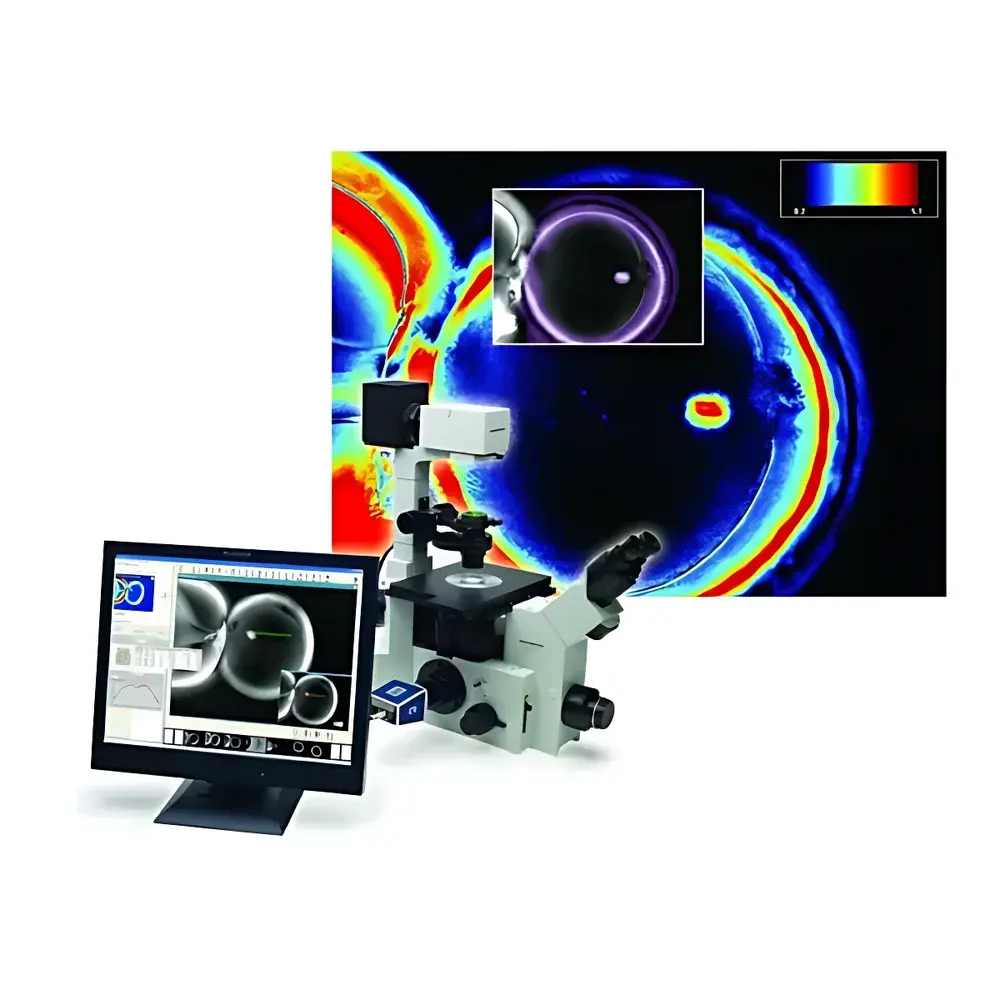
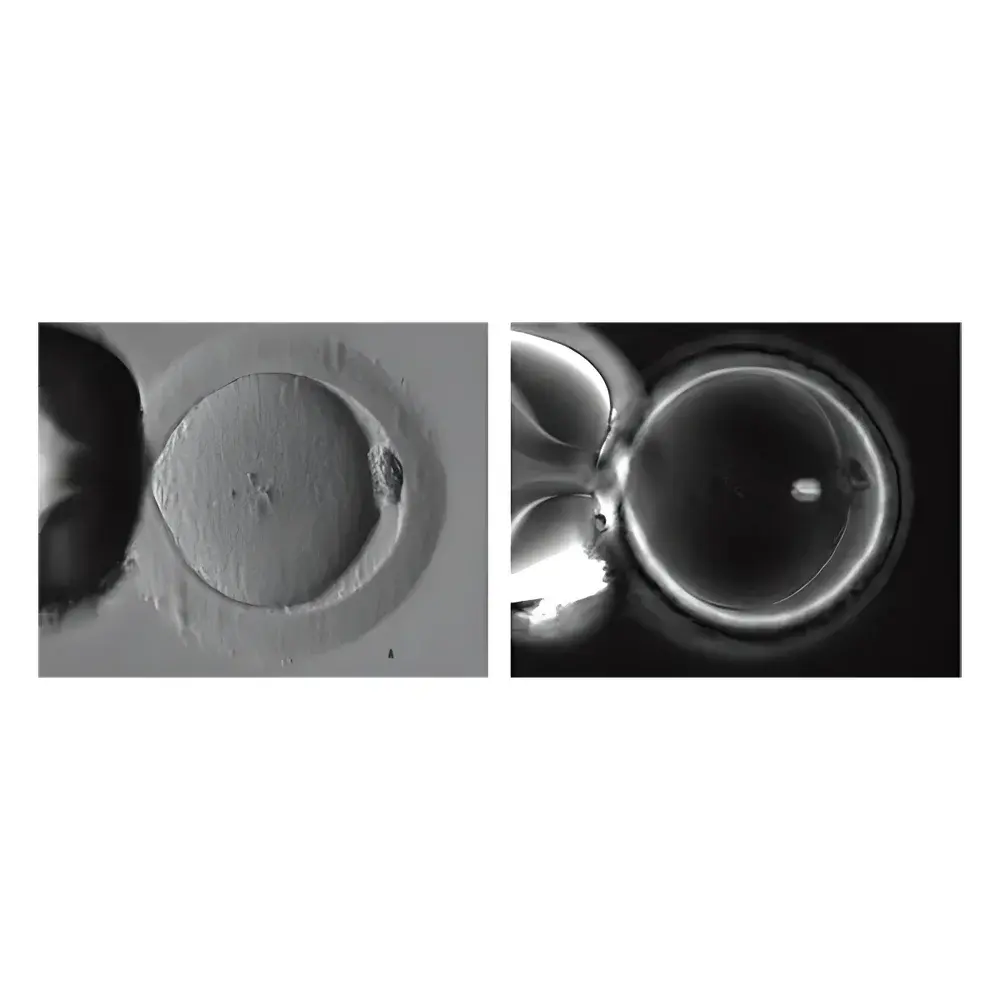
The Oosight Spindle Imaging System is a specialized polarization-based optical imaging platform engineered for non-invasive, label-free visualization and quantitative analysis of birefringent cellular structures—particularly the meiotic spindle apparatus and zona pellucida in mammalian oocytes. It operates on the physical principle of liquid crystal–controlled polarized light microscopy (LC-PolScope™), leveraging intrinsic molecular anisotropy rather than exogenous fluorophores or stains. The system integrates a high-sensitivity scientific-grade CCD camera with custom-designed, microscope-integrated polarization optics—including a programmable liquid crystal compensator (LC) and a matched circular polarizer/interference filter (CP/IF) unit—to dynamically modulate incident polarization states. Real-time image acquisition, contrast optimization, and quantitative birefringence mapping are performed via proprietary Oosight software, enabling precise spatial and temporal tracking of structural orientation, retardance magnitude, and optical path difference (OPD) across live, unstained specimens.
Key Features
- Label-Free Birefringence Imaging: Eliminates reliance on cytotoxic dyes or fixation protocols, preserving native spindle architecture, microtubule dynamics, and zona pellucida integrity during live-cell observation.
- Real-Time Quantitative Retardance Mapping: Delivers pixel-resolved birefringence data (nm-level optical path difference) synchronized with video capture, supporting longitudinal monitoring of spindle reorganization during maturation, cooling, or microinjection.
- High-Fidelity Optical Architecture: Features a 12-bit, 1024 × 1392 sensor with 4.65 µm square pixels, hardware binning modes, and C-mount compatibility for seamless integration with Leica, Nikon, Olympus, and Zeiss inverted and upright microscopes.
- Microscope-Specific Polarization Optics: LC compensator and CP/IF modules are mechanically and optically calibrated per microscope condenser design, ensuring optimal polarization purity, minimal wavefront distortion, and repeatable retardance calibration across instrument platforms.
- Integrated Workflow Automation: One-click acquisition, automated spindle localization, and batch-exportable metadata (including time-stamped retardance profiles, azimuthal orientation maps, and zona thickness metrics) support GLP-compliant documentation and audit-ready reporting.
Sample Compatibility & Compliance
The Oosight system is validated for use with unfixed, unstained oocytes from human, bovine, murine, porcine, and equine species under standard IVF laboratory conditions (37 °C, 5% CO2, humidified atmosphere). Its non-phototoxic imaging modality meets ISO 13485–aligned requirements for reproductive cell assessment tools and complies with key regulatory expectations for preimplantation diagnostic instrumentation, including traceability of measurement parameters (per ISO/IEC 17025), documented calibration procedures, and software validation frameworks aligned with FDA 21 CFR Part 11 for electronic records and signatures. All optical components undergo factory calibration using NIST-traceable retardance standards; user recalibration protocols are embedded in the Oosight software suite.
Software & Data Management
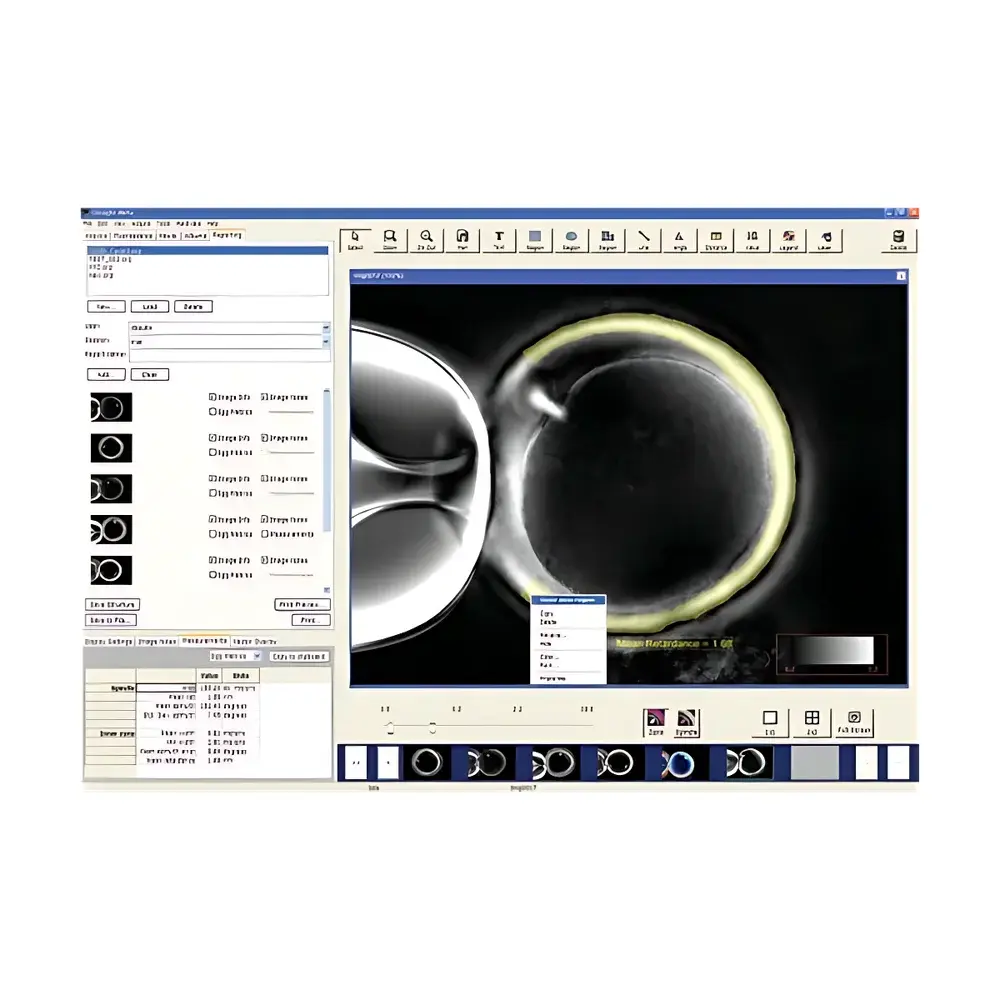
Oosight software (v5.2+) provides a dedicated environment for acquisition, real-time birefringence rendering, and post-hoc quantitative analysis. Core functions include dynamic polarization state sequencing control, background-subtracted retardance calculation, azimuthal angle decomposition, and multi-frame temporal registration. The Meta Package extension enables automated zona pellucida segmentation, layer-thickness profiling (inner/middle/outer band quantification), and spindle morphology classification (e.g., bipolar vs. multipolar, barrel-shaped vs. dispersed). Export formats include TIFF (16-bit signed), CSV (metadata + ROI statistics), and HDF5 (for large-scale time-series datasets). Audit trails record operator ID, timestamp, acquisition parameters, and software version—fully compliant with GMP/GLP documentation standards for clinical embryology labs.
Applications
- Intracytoplasmic Sperm Injection (ICSI) Guidance: Enables precise spindle localization prior to injection, reducing mechanical disruption and improving blastocyst formation rates. Clinical studies correlate spindle visibility and alignment with subsequent embryo developmental competence.
- Somatic Cell Nuclear Transfer (SCNT): Supports accurate enucleation by visualizing spindle position relative to the first polar body, minimizing inadvertent cytoplasmic removal and mitochondrial carryover.
- Zona Pellucida Structural Assessment: Quantifies layer-specific birefringence density and anisotropy—parameters shown in peer-reviewed literature to correlate with oocyte developmental potential and cryotolerance.
- Oocyte Cryopreservation Optimization: Monitors spindle depolymerization/reassembly kinetics and zona structural integrity across freezing/thawing protocols, facilitating selection of viable post-thaw oocytes and identification of cohorts at elevated aneuploidy risk.
- Maturity Screening: Distinguishes true MII-stage oocytes from morphologically similar but immature (GV or MI) oocytes—a capability critical for avoiding failed fertilization or chromosomal abnormalities in ART cycles.
FAQ
Does the Oosight system require fluorescent labeling or chemical fixation?
No. It relies exclusively on endogenous birefringence and requires no exogenous dyes, antibodies, or fixation steps.
Can the Oosight camera be used independently of the polarization optics?
Yes—the CCD module functions as a standalone USB 2.0 digital microscope camera with C-mount adaptability for general brightfield or phase contrast applications.
Is software validation documentation available for clinical lab accreditation?
Yes. IQ/OQ documentation packages, electronic signature validation reports, and 21 CFR Part 11 compliance statements are provided upon request for regulated environments.
How often must the LC compensator be recalibrated?
Factory calibration is stable for ≥24 months under normal usage; annual verification using the included reference slide is recommended and supported by in-software calibration wizards.
Which microscope models are supported out-of-the-box?
Pre-aligned LC and CP/IF modules are available for Leica DMi8/DMI6000, Nikon Ti2/Eclipse Ci, Olympus IX83/IX73, and Zeiss Axio Observer series; custom configurations are available for other platforms upon optical specification submission.




