
OPHIR PD-300 Photodiode Laser Power Sensor
| Brand | OPHIR |
|---|---|
| Origin | USA |
| Model | PD-300 |
| Wavelength Range | 200–1800 nm |
| Minimum Detectable Power | 10 pW |
| Detector Type | Silicon Photodiode with CIE Correction & Optional Integrating Sphere |
| Background Noise Suppression | Patented Auto-Nulling Circuitry |
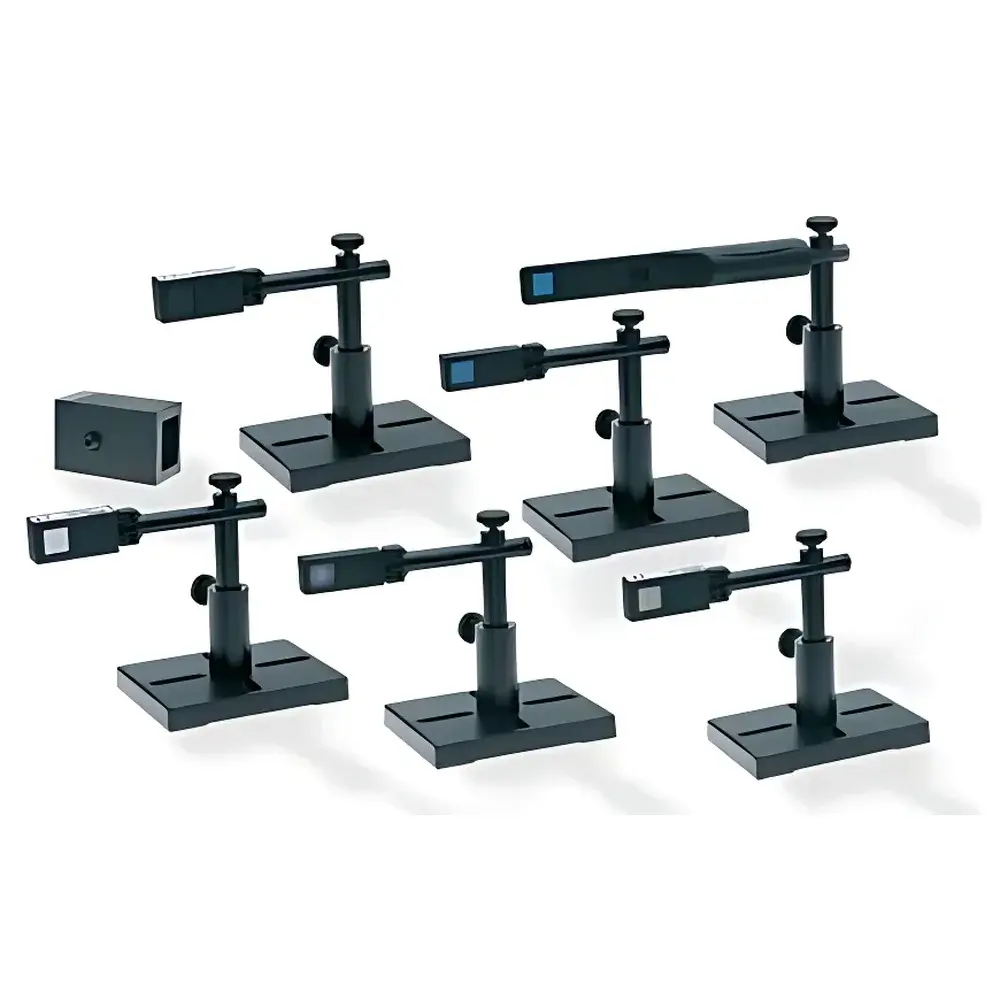
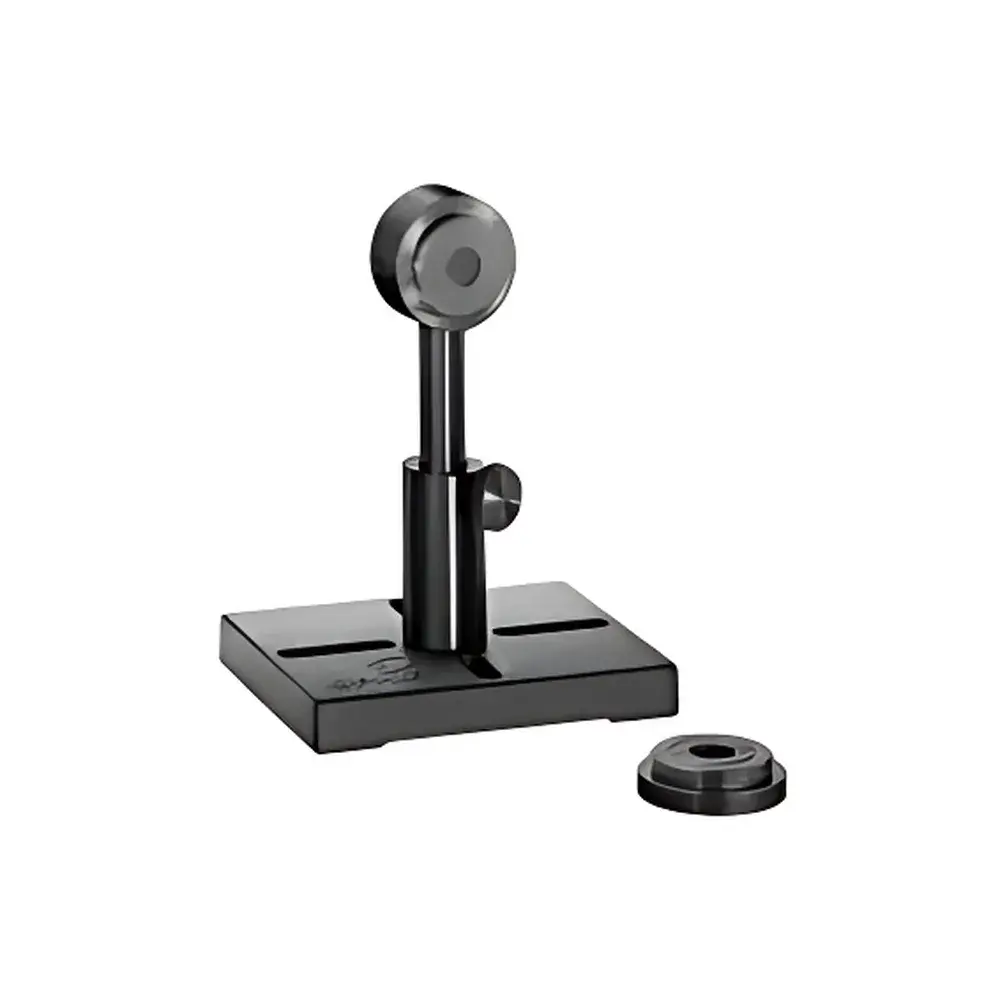
| Form Factor | Ultra-Thin, Compact Housing with Rotatable Mount and Fiber Adapter Option |
Overview
The OPHIR PD-300 is a high-precision photodiode-based laser power sensor engineered for traceable, low-power optical measurements across ultraviolet, visible, and near-infrared spectral bands (200–1800 nm). Unlike thermal sensors optimized for high-power CW or pulsed lasers, the PD-300 leverages a calibrated silicon photodiode architecture to deliver exceptional sensitivity—down to 10 pW—with sub-microsecond rise time and minimal linearity deviation (< ±0.5% over 6 decades of power range). Its measurement principle relies on photon-to-electron conversion under reverse-biased operation, followed by precision transimpedance amplification and analog signal conditioning. The sensor is designed for integration into OEM systems, laboratory metrology setups, and production-line verification stations where spatial constraints, spectral fidelity, and background immunity are critical. It complies with fundamental radiometric traceability frameworks aligned with NIST SRM reference standards and supports calibration certificates traceable to national metrology institutes.
Key Features
- Patented auto-nulling circuitry actively suppresses ambient light and dark-current drift, enabling stable DC and low-frequency AC power measurements without manual zeroing.
- Ultra-thin mechanical profile (≤8 mm depth) and modular rotatable mounting bracket facilitate installation in confined optical paths—including inside beam delivery arms, fiber-coupled enclosures, and handheld alignment tools.
- Optional FC/SC fiber adapters enable direct coupling of single-mode or multimode fibers, preserving NA-dependent responsivity calibration across wavelengths.
- CIE photopic correction filter integrated into select variants ensures luminous flux quantification (in lumens) compliant with CIE 1931 color-matching functions—essential for LED, display backlight, and human-centric lighting validation.
- Flat spectral responsivity (±2% variation from 400–1000 nm; ±5% from 200–400 nm and 1000–1800 nm) enables accurate broadband source characterization without wavelength-dependent correction factors.
- Available with optional 50-mm integrating sphere attachment (model PD-300-IS) for measuring highly divergent beams (up to ±60° full angle) and non-uniform spatial profiles typical of VCSEL arrays and edge-emitting diodes.
Sample Compatibility & Compliance
The PD-300 accommodates continuous-wave (CW), modulated, and quasi-CW sources including diode lasers, superluminescent LEDs (SLEDs), and pulsed lasers with repetition rates >1 kHz and pulse widths >1 µs. It is compatible with ISO 11554-compliant beam diameter and power density protocols when used with appropriate apertures and attenuators. For regulated environments, the sensor’s firmware and calibration documentation support audit-ready workflows aligned with ISO/IEC 17025, FDA 21 CFR Part 11 (when paired with OPHIR StarLab software with electronic signature and audit trail), and GLP/GMP documentation requirements. CE marking confirms compliance with EU Electromagnetic Compatibility Directive 2014/30/EU and RoHS 2011/65/EU.
Software & Data Management
The PD-300 interfaces seamlessly with OPHIR’s StarLab v3.x PC application via USB 2.0 or RS-232, supporting real-time data streaming at up to 400 Hz sampling rate. StarLab provides configurable averaging modes (linear, RMS, peak-hold), statistical analysis (min/max/mean/stdev), and automated pass/fail threshold reporting per user-defined limits. Raw voltage output (0–5 V analog) is available for integration into SCADA or LabVIEW-based control systems. Calibration files are stored internally in non-volatile memory and include wavelength-dependent responsivity tables, temperature compensation coefficients, and uncertainty budgets per ISO/IEC Guide 98-3 (GUM). Export formats include CSV, XML, and PDF reports compliant with ISO 17025 record retention guidelines.
Applications
- Calibration and verification of low-power laser sources used in barcode scanners, optical encoders, and proximity sensors.
- Luminous intensity mapping of micro-LED arrays and OLED test substrates using CIE-corrected variants.
- In-process monitoring of UV-LED curing systems (254–365 nm) in semiconductor packaging and adhesive dispensing lines.
- Characterization of tunable diode lasers and external cavity diode lasers (ECDLs) across broad tuning ranges.
- Beam profiling support for ultrafast oscillator outputs when combined with neutral density filters and synchronized acquisition.
- Research-grade photobiomodulation (PBM) dose quantification in preclinical studies requiring pW–mW dynamic range.
FAQ
Is the PD-300 suitable for measuring pulsed laser energy?
No—the PD-300 is a power sensor, not an energy sensor. It measures average power only; for pulse energy, use OPHIR’s PE series pyroelectric sensors.
Can I use the PD-300 with third-party meters or DAQ systems?
Yes—its analog 0–5 V output and standard RS-232/USB protocols ensure compatibility with most industrial data acquisition hardware and custom LabVIEW or Python-based controllers.
Does the CIE-corrected version maintain accuracy under non-standard illuminant spectra?
It provides best-match photopic response per CIE 1931; for highly saturated monochromatic sources (e.g., 450 nm blue lasers), additional chromatic adaptation corrections may be required per CIE 170-2.
How often does the PD-300 require recalibration?
OPHIR recommends annual recalibration under ISO/IEC 17025-accredited conditions; more frequent intervals are advised for high-use or mission-critical applications subject to mechanical shock or thermal cycling.





