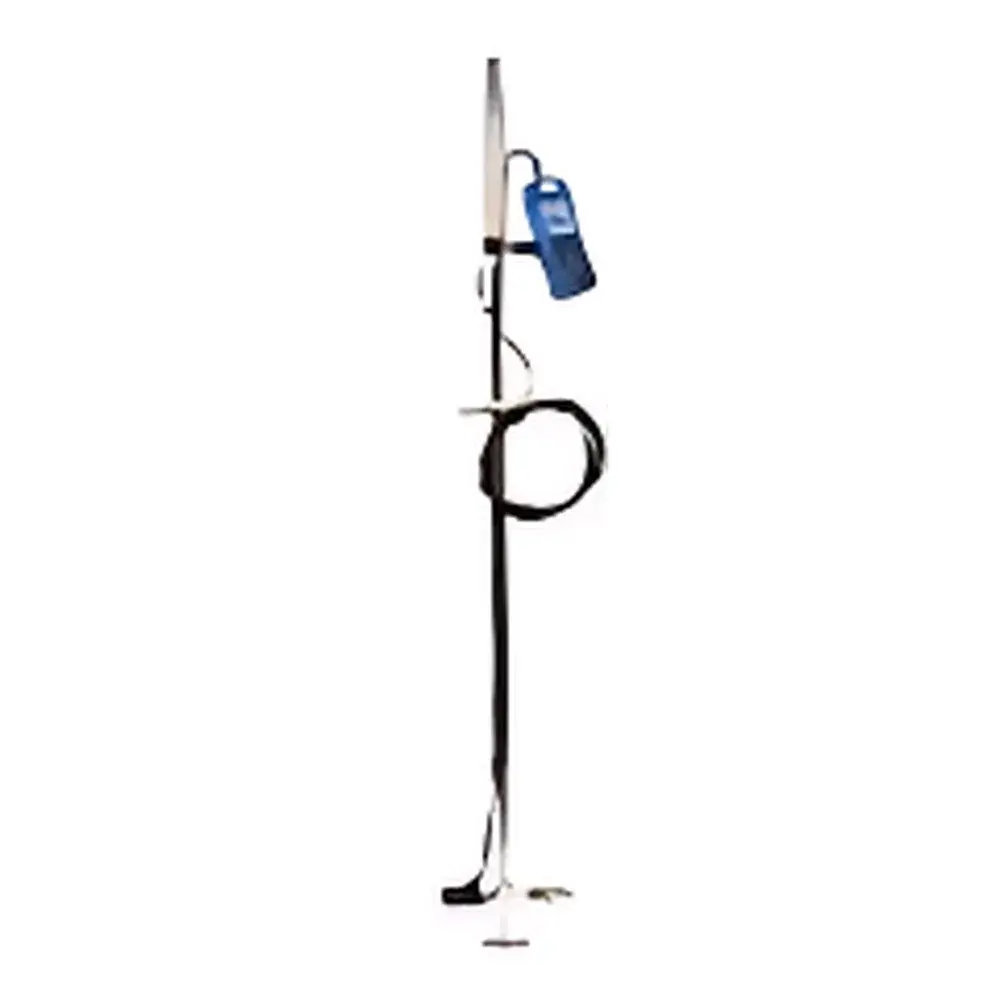
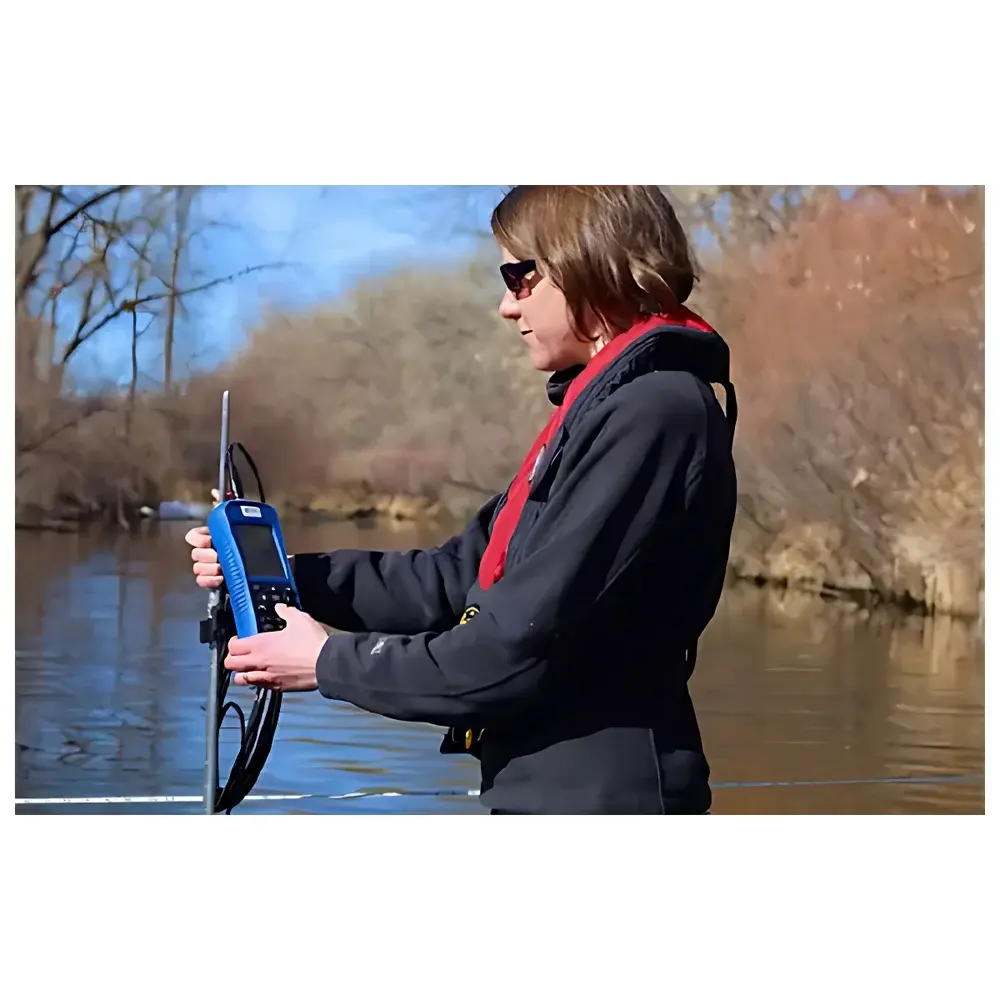
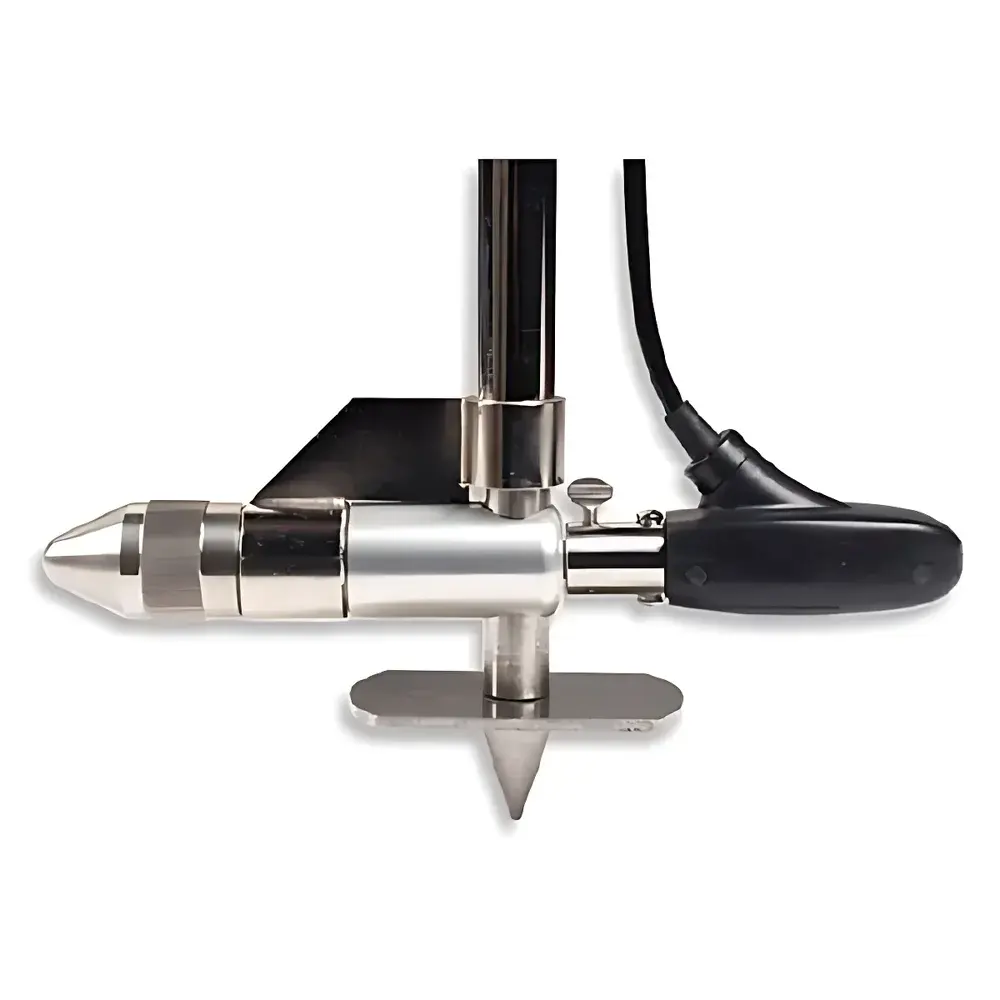
OTT Hydromet MFpro Portable Electromagnetic Flowmeter
| Brand | OTT Hydromet |
|---|---|
| Origin | Imported |
| Model | MFpro |
| Liquid Velocity Accuracy | ±2% of reading ±0.015 m/s (0–3 m/s) |
| Velocity Range | 0–6.09 m/s |
| Depth Measurement Range | 0–3.05 m |
| Depth Accuracy | ±2% of reading or ±0.015 m, whichever is greater (in still, temperature-stabilized water) |
| Resolution | Adaptive (3–0 decimal places based on magnitude) |
| Display | 3.5" QVGA transflective color LCD |
| Battery Life | >18 hours (rechargeable Li-ion) |
| IP Rating | Sensor IP68, Handheld IP67 |
| Operating Temperature | –20 °C to +55 °C |
| Probe Material | ABS with glass-fiber reinforcement |
| Handheld Housing | Polyethyl ester with shock-absorbing rubber molding |
| Probe Dimensions | 11.9 × 4.3 × 6.3 cm |
| Probe Weight | 0.5 kg (with 6 m cable) |
| Handheld Dimensions | 21.8 × 9.3 × 5.3 cm |
| Handheld Weight | 0.68 kg |
| Data Storage | Up to 50 files (75 readings/file) |
| Interface | USB |
Overview
The OTT Hydromet MFpro Portable Electromagnetic Flowmeter is a field-deployable, battery-powered instrument engineered for high-reliability velocity and depth measurement in open-channel and pipe flow applications. It operates on the principle of Faraday’s Law of electromagnetic induction: when an electrically conductive fluid (e.g., natural water, wastewater, or industrial effluent) flows through a magnetic field generated by the probe’s excitation coils, a voltage proportional to the average flow velocity across the sensing cross-section is induced in the fluid. This voltage is detected by electrodes embedded in the probe body and converted into a calibrated velocity signal via on-board signal conditioning and digital processing. Unlike mechanical current meters or acoustic Doppler devices, the MFpro is insensitive to sediment load, aquatic vegetation, turbidity, or biofouling—making it particularly suited for long-term deployment or rapid-response hydrological surveys in challenging field environments.
Key Features
- Integrated pressure-based depth sensor enabling simultaneous velocity and water level acquisition—critical for accurate stage-discharge relationship development and cross-sectional area calculation.
- Low-drag, streamlined probe geometry minimizes flow disturbance and ensures representative point-velocity measurement directly ahead of the sensor face.
- Adaptive resolution display and real-time velocity profile visualization on a sunlight-readable 3.5-inch QVGA transflective color LCD.
- On-device implementation of standardized vertical velocity integration methods (e.g., two-point, six-tenths, or multi-point averaging per ISO 748, ASTM D5766, and USGS TWRI 3-A1).
- Automated discharge computation using user-selected cross-section geometry (trapezoidal, rectangular, irregular) and configurable vertical spacing—fully traceable to international hydrometric protocols.
- USB interface compliant with CDC/ACM class standards for plug-and-play data export; no proprietary drivers required.
- Ruggedized housing: IP68-rated probe (submersible to 3.05 m indefinitely) and IP67-rated handheld unit (dust-tight and protected against temporary immersion).
- Extended operational autonomy (>18 h continuous use) powered by field-replaceable, lithium-ion rechargeable battery pack.
Sample Compatibility & Compliance
The MFpro is validated for use with aqueous media having minimum electrical conductivity ≥5 µS/cm—covering natural rivers, irrigation canals, stormwater conduits, wastewater channels, and treated effluent pipelines. Its electromagnetic sensing mechanism eliminates dependence on acoustic reflectivity or mechanical rotor engagement, ensuring stable performance in silt-laden, vegetated, or aerated flows where ultrasonic or mechanical meters fail. The instrument complies with fundamental metrological requirements outlined in ISO/IEC 17025 for field calibrations, and its discharge calculation algorithms align with ISO 748:2010 (Measurement of liquid flow in open channels — Velocity-area method), ASTM D5766/D5766M (Standard Test Method for Determining Discharge of Water in Open Channels Using Current Meters), and the U.S. Geological Survey’s Techniques of Water-Resources Investigations Book 3, Chapter A1. All measurement records include timestamped metadata (date, time, operator ID, site ID, probe orientation), supporting GLP-compliant data governance and audit readiness.
Software & Data Management
Data acquisition and post-processing are supported through the built-in guided workflow interface—designed for minimal training and error-resistant operation in remote or adverse conditions. Each measurement session generates a structured ASCII log file containing raw voltage, computed velocity, depth, temperature (optional external sensor), and geometric parameters. Files are stored internally (up to 50 sessions, 75 readings each) and exported via USB mass-storage mode to standard Windows/macOS/Linux systems. No cloud dependency or vendor-specific software installation is required. Exported datasets conform to CSV and plain-text formats compatible with Excel, MATLAB, Python (pandas), HEC-RAS, and other hydraulic modeling platforms. Audit trails—including parameter changes, calibration events, and firmware updates—are retained in non-volatile memory and accessible via diagnostic menu.
Applications
- Field verification and validation of permanent flume or weir installations.
- Rapid assessment of floodplain conveyance capacity during emergency response.
- Calibration and spot-checking of fixed ultrasonic or magnetic pipe flowmeters.
- Hydrological monitoring in ungauged basins and small watershed studies.
- Regulatory compliance sampling for NPDES permits and wastewater discharge reporting.
- Educational field labs in civil engineering, environmental science, and hydrology curricula.
- Construction dewatering and temporary bypass flow quantification.
FAQ
Does the MFpro require fluid conductivity calibration before use?
No. The instrument applies factory-applied electromagnetic gain coefficients and does not require user-performed conductivity calibration. However, reliable operation assumes minimum fluid conductivity ≥5 µS/cm—typical for most surface and groundwater sources.
Can the MFpro be used in pressurized pipes?
Yes—when inserted via access port or hot-tap fitting, provided the pipe remains full and the sensor is fully submerged. Pipe diameter must exceed 10× probe width for valid velocity profile representation.
Is depth measurement affected by temperature drift?
The integrated piezoresistive pressure transducer includes temperature compensation per IEC 60770, and depth accuracy specifications (±2% or ±0.015 m) are stated for temperature-stabilized static water conditions. Field thermal gradients may introduce minor offset (<0.5% of full scale), mitigated by zeroing at known datum prior to deployment.
How is traceability maintained for regulatory submissions?
Each data file contains embedded instrument serial number, firmware version, date/time stamp, and operator-defined site identifier. Full measurement logs meet ALCOA+ principles (Attributable, Legible, Contemporaneous, Original, Accurate, Complete, Consistent, Enduring, Available) and support FDA 21 CFR Part 11–aligned workflows when paired with controlled electronic signatures.
What pole and cable length options are available for river cross-section profiling?
Telescoping poles are offered in 2 m, 3 m, 4 m, 5 m, and 6 m configurations; cable lengths include 2 m, 6 m, 12 m, and 30 m variants—enabling single-person operation in channels up to ~25 m wide under typical bridge or bank-access conditions.