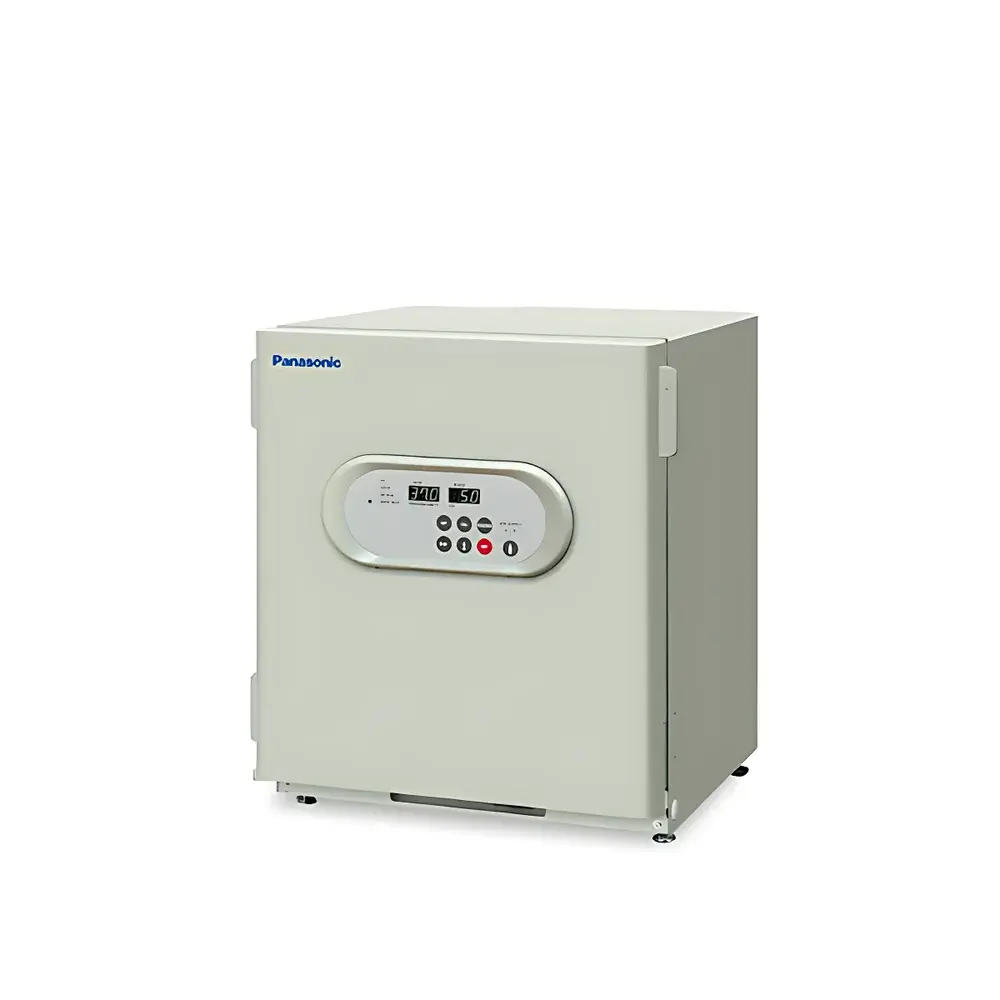
Panasonic MCO-5AC and MCO-18AC CO₂ Incubators
| Brand | Panasonic |
|---|---|
| Origin | Japan |
| Model | MCO-5AC, MCO-18AC |
| Temperature Control Range & Accuracy | +5°C to 50°C (ambient: 5°C–35°C) |
| Temperature Uniformity | ±0.25°C (at 25°C ambient, 37°C setpoint, 5% CO₂, 5% O₂, no load) |
| Humidity Control Method | Natural evaporation via stainless steel humidification pan |
| Internal Volume | 49 L (MCO-5AC), 170 L (MCO-18AC) |
| CO₂ Control | On/off control with TC sensor |
| CO₂ Range | 0–20% |
| CO₂ Stability | ±0.15% (at 25°C ambient, 37°C setpoint, 5% CO₂, no load) |
| Humidity Level | 95 ± 5% RH (at 20°C ambient, 60% RH) |
| UV Lamp | Optional 4 W ozone-free ultraviolet lamp |
| Filtration | 0.3 µm CO₂ inlet filter (99.97% efficiency) |
| Alarm Functions | High/low temperature, CO₂ deviation, door open, low water level (MCO-5AC), independent overheat protection |
Overview
The Panasonic MCO-5AC and MCO-18AC CO₂ incubators are precision-engineered environmental chambers designed for reliable, long-term cell culture under tightly controlled physiological conditions. Built on Panasonic’s legacy of laboratory-grade incubation systems—originally developed by Sanyo Electric Co., Ltd.—these models integrate Direct Heating Air-jacket (DHA) technology, copper-alloy antibacterial interior construction, and microprocessor-based PID temperature regulation to ensure exceptional thermal stability and contamination resistance. The DHA system employs three independent heating units surrounding the chamber, enabling rapid temperature recovery (<10 min from 25°C to 37°C after door opening) and minimizing thermal gradients across the working volume. Both models maintain a consistent 5% CO₂ environment critical for bicarbonate-buffered media, while humidity is sustained at ≥95% RH via natural evaporation from a stainless steel water pan—eliminating complex steam generators and associated maintenance overhead.
Key Features
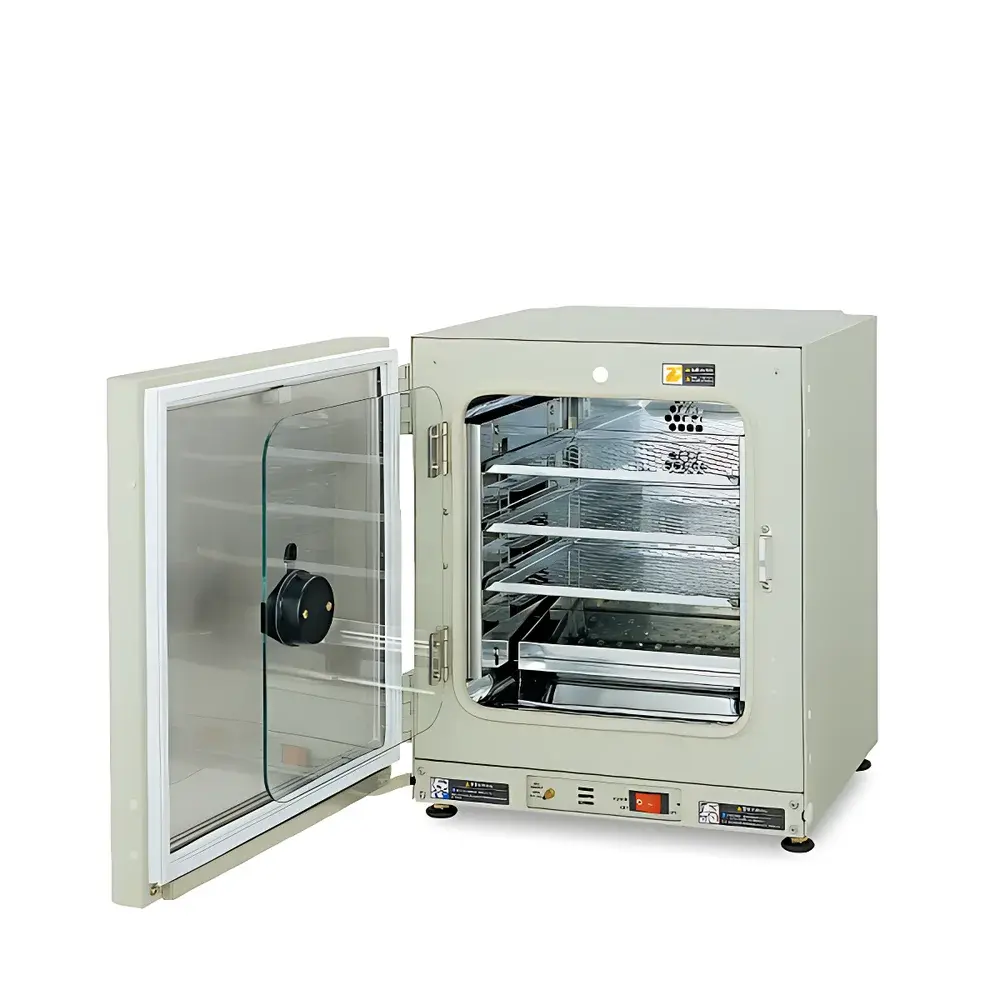
- Antimicrobial Copper-Alloy Interior (inCu saFe™): Entire inner chamber—including walls, floor, ceiling, and shelving—is fabricated from copper-alloy stainless steel. Its inherent oligodynamic properties inhibit bacterial adhesion and proliferation, validated per ISO 22196:2011 for sustained surface antimicrobial activity.
- DHA (Direct Heating Air-jacket) System: Eliminates water-jacket thermal lag and condensation risks. Provides ±0.1°C temperature fluctuation and ±0.25°C uniformity (measured per ASTM E1288-17) under standard operating conditions (37°C, 5% CO₂, no load).
- Ozone-Free UV Sterilization (Optional): A 4 W ultraviolet lamp operates automatically during non-culture periods to sterilize recirculated air and humidification pan vapor—reducing airborne microbial load without generating ozone, complying with OSHA PEL limits (0.1 ppm).
- Configurable Access & Ergonomics: MCO-18AC supports reversible left/right hinged double-door installation; both models feature recessed handles and full-radius internal corners to facilitate cleaning and minimize microbial niches.
- Robust Safety Architecture: Dual independent temperature sensors, mechanical overheat cutoff, door-open detection, CO₂ concentration deviation alarm, and optical water-level monitoring (MCO-5AC) meet IEC 61010-1:2010 safety requirements for laboratory equipment.
Sample Compatibility & Compliance
The MCO-5AC (49 L) and MCO-18AC (170 L) accommodate standard tissue culture formats including T-flasks (up to T-225), multi-well plates (6–96-well), Petri dishes, and roller bottles. Shelving is adjustable in multiple positions (3–15 shelves in MCO-18AC; 3–6 in MCO-5AC), with load-rated copper-alloy trays (7 kg/shelf for MCO-18AC; 4 kg/shelf for MCO-5AC). All materials contacting the chamber interior comply with USP Class VI biocompatibility standards. The CO₂ gas path includes a certified 0.3 µm particulate filter (99.97% efficiency at 0.3 µm, per ISO 14644-1 Class 5) and accepts standard medical-grade CO₂ supply lines (4–6 mm ID). The system supports GLP/GMP workflows through optional DAQ modules (MTR-480/MTR-5000) that provide time-stamped, audit-trail-capable data logging compliant with FDA 21 CFR Part 11 when paired with validated software.
Software & Data Management
While the base units operate via intuitive front-panel controls with LED display, expanded data integrity is achieved via optional Panasonic DAQ systems (MTR-480 for basic logging; MTR-5000 for multi-parameter trending and remote monitoring). These modules record temperature, CO₂ concentration, door status, and alarm events at user-defined intervals (1 sec–60 min), store >10,000 data points internally, and export CSV files compatible with LIMS and ELN platforms. When configured with validated firmware and electronic signatures, the MTR-5000 satisfies ALCOA+ principles for raw data retention, traceability, and change control—enabling use in regulated bioprocessing and clinical trial support environments.
Applications
These incubators serve core functions across academic research, pharmaceutical development, and diagnostic laboratories: mammalian cell line expansion (HEK293, CHO, HeLa), primary neuronal and stem cell culture, hybridoma maintenance, in vitro fertilization (IVF) embryo incubation, microbiological co-culture studies requiring precise O₂/CO₂ modulation (e.g., anaerobic or hypoxic modeling with optional O₂ control kits), and QC testing of biologics where environmental consistency directly impacts assay reproducibility (e.g., endotoxin assays, cytotoxicity screening per ISO 10993-5).
FAQ
What is the difference between DHA and traditional water-jacketed incubators?
DHA eliminates thermal inertia and condensation issues associated with water jackets, delivering faster temperature recovery, improved energy efficiency, and reduced risk of microbial growth in stagnant water reservoirs.
Is the copper-alloy interior compatible with common disinfectants like 70% ethanol or sodium hypochlorite?
Yes—the inCu saFe™ surface retains antimicrobial efficacy after repeated exposure to standard lab disinfectants, as confirmed by accelerated corrosion testing per ASTM G31-12.
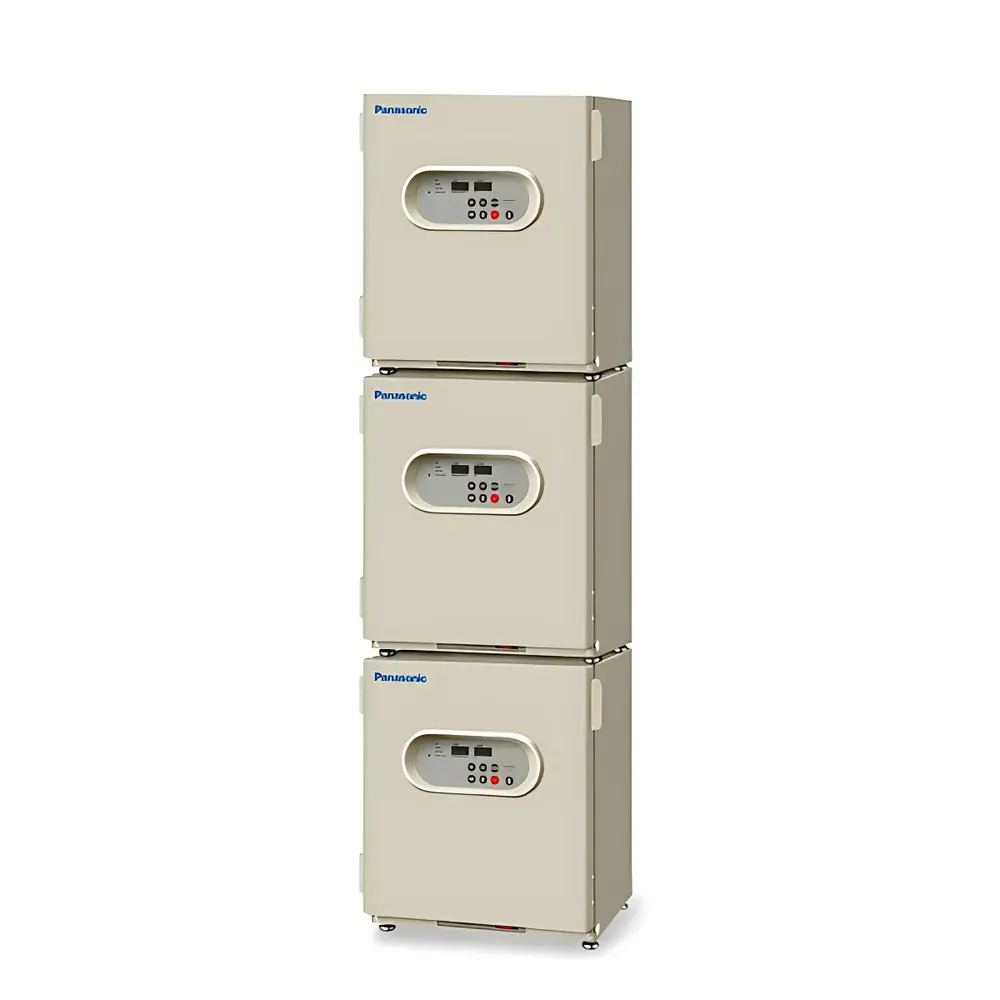
Can the MCO-5AC be stacked vertically?
Yes—its compact footprint (480 × 548 × 575 mm) and reinforced chassis allow secure three-tier stacking without structural compromise or airflow restriction.
Does the UV lamp require periodic replacement?
The 4 W ozone-free UV-C lamp has a rated service life of 8,000 hours; Panasonic recommends annual photometric verification and replacement per usage logs to maintain germicidal intensity.
Are calibration certificates available for temperature and CO₂ sensors?
Factory calibration reports are supplied with each unit; NIST-traceable field calibration services—including as-found/as-left documentation—are available through authorized Panasonic Life Science Service Centers.