Panasonic MPR-440F Dual-Zone Medical Refrigerator-Freezer
| Brand | Panasonic |
|---|---|
| Origin | Liaoning, China |
| Manufacturer Type | Authorized Distributor |
| Product Category | Domestic |
| Model | MPR-440F |
| Price Range | USD 7,000–14,000 |
| Instrument Type | Low-Temperature Refrigerator (≥ −60 °C) |
| Configuration | Upright |
| Total Effective Volume | 444 L (Refrigerator Compartment: 218 L |
| Freezer Compartment | 226 L) |
| Interior Dimensions (mm) | Refrigerator: 649 × 566 × 600 |
| Freezer | 649 × 614 × 600 |
| Exterior Dimensions (mm) | 793 × 770 × 1806 |
| Power Supply | 220 V AC, 50 Hz |
| Rated Power Consumption | 320 W |
| Refrigerants | R134a (refrigerator), R404A (freezer) |
| Safety Features | High/Low Temperature Alarm, Door-Open Alarm, Sensor Fault Detection, Overheat Protection, Setpoint Deviation Monitoring, Self-Diagnostic Function |
| Compliance | Designed to support GLP-compliant storage workflows |
Overview
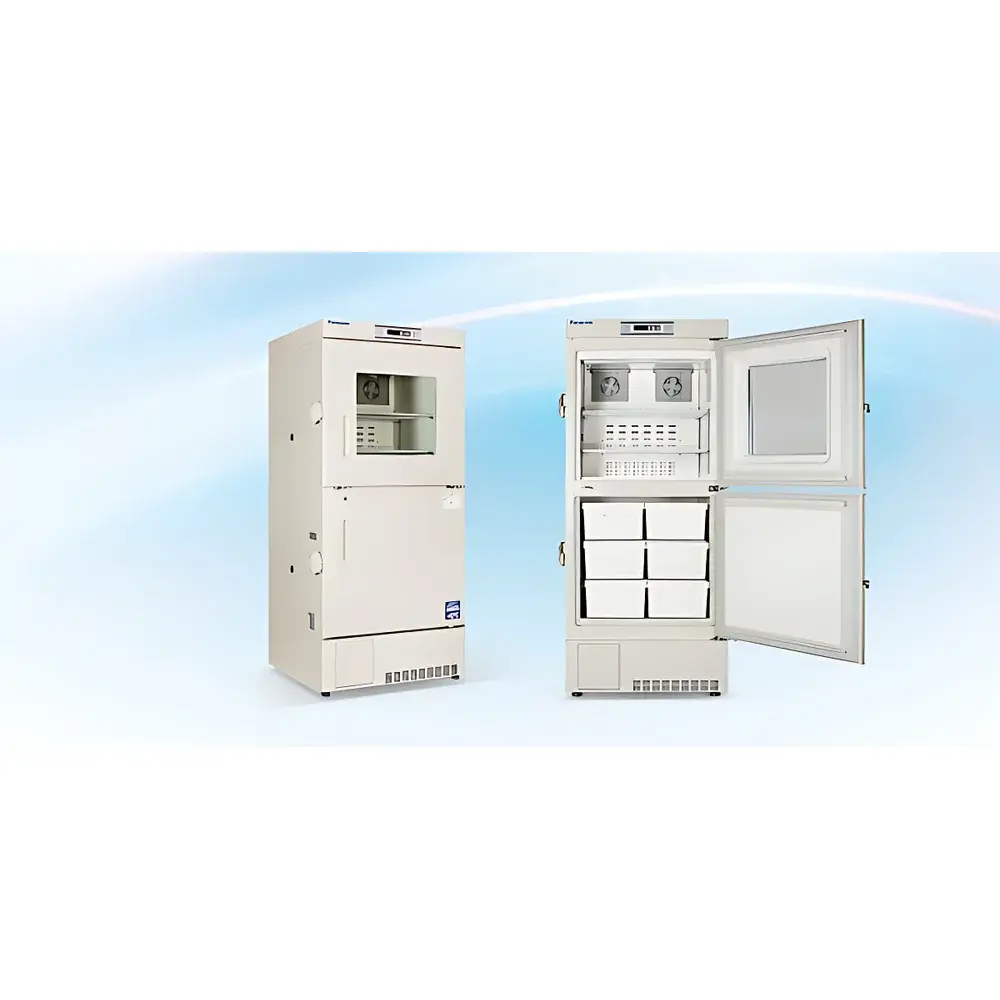
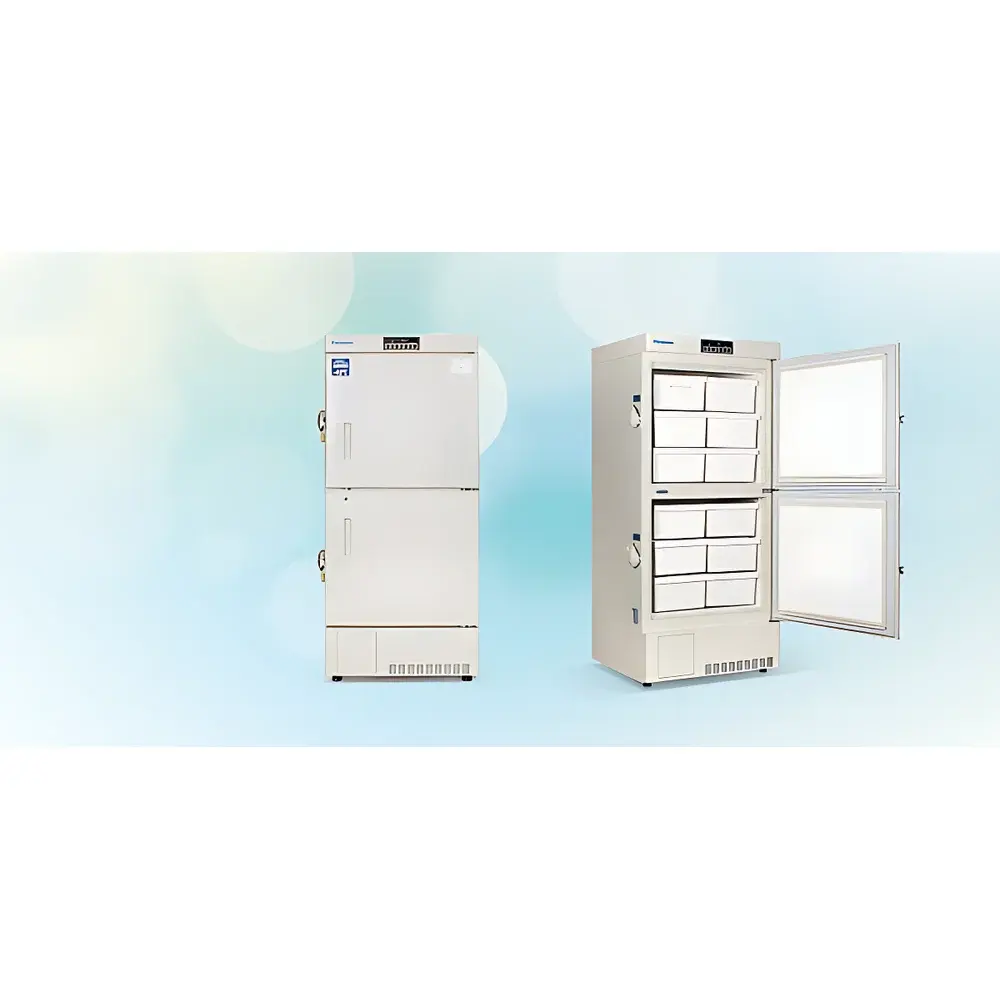
The Panasonic MPR-440F Dual-Zone Medical Refrigerator-Freezer is an upright, microprocessor-controlled cold storage system engineered for reliable, independent temperature management of sensitive biological reagents, clinical specimens, vaccines, and pharmaceuticals. Unlike conventional household or general-purpose laboratory refrigeration units, the MPR-440F implements two fully segregated cooling circuits—one optimized for refrigerator-grade stability (2 °C to 8 °C), the other for deep-freeze preservation (−20 °C to −40 °C)—ensuring zero thermal cross-contamination between compartments. Its dual-system architecture eliminates shared evaporator or compressor load, delivering consistent thermal performance even under fluctuating ambient conditions (5 °C to 35 °C). The unit complies with core design principles outlined in ISO 15197:2013 (in vitro diagnostic devices) and aligns with environmental control expectations defined in USP for refrigerated drug product storage. Temperature uniformity is maintained via forced-air circulation in the refrigerator section and optimized airflow distribution in the freezer compartment—critical for minimizing thermal gradients across shelf levels during door openings or frequent access.
Key Features
- Independent dual-refrigeration systems: Separate compressors, refrigerants (R134a for +2 °C/+8 °C zone; R404A for −20 °C/−40 °C zone), and evaporators ensure operational redundancy and eliminate inter-compartment temperature drift.
- Precision microprocessor controller with digital LED display for both zones, enabling real-time monitoring and ±0.5 °C setpoint accuracy (refrigerator) and ±1.0 °C (freezer) under standard test conditions.
- Forced-air convection in the upper refrigerator chamber enables rapid temperature recovery (<15 min after 60-sec door opening at 25 °C ambient), validated per IEC 61000-4-2 EMC immunity standards.
- Dedicated auto-defrost cycle for the refrigerator section only—prevents ice accumulation without interrupting freezer operation or compromising frozen sample integrity.
- Structural integrity: 70-mm polyurethane foam insulation (CFC-free), electrostatically coated steel exterior and interior, and reinforced glass door (upper compartment) with low-emissivity coating for minimized radiant heat transfer.
- Comprehensive safety suite: Audible/visual high/low temperature alarms, door-open detection with time-stamped logging, sensor fault diagnostics, overheat cutoff, and configurable remote alarm relay output (dry contact, 250 V AC / 1 A).
Sample Compatibility & Compliance
The MPR-440F supports long-term stability storage of temperature-sensitive life science materials including monoclonal antibodies, ELISA kits, PCR master mixes, lyophilized standards, and clinical blood derivatives. Its temperature uniformity profile (±1.5 °C max deviation across all shelf positions, per internal validation protocol) meets baseline requirements for CLIA-waived testing environments and ISO 13485-certified quality systems. While not certified as a Class II medical device under FDA 21 CFR Part 820, the unit’s architecture—including nonvolatile memory for alarm history, password-protected parameter adjustment, and timestamped event logs—facilitates alignment with GxP documentation practices. Optional lockable door hardware enables physical access control per institutional biosafety policies (e.g., NIH Guidelines Appendix B).
Software & Data Management
The MPR-440F operates without proprietary software but integrates seamlessly into facility-wide environmental monitoring networks via its standard 1× dry-contact alarm relay and optional RS-485 interface (available upon request). Logged events—including temperature excursions, door-open duration, and system faults—are retained in nonvolatile memory for ≥30 days and accessible via front-panel navigation. For institutions requiring electronic record retention compliant with FDA 21 CFR Part 11, third-party data loggers (e.g., Vaisala viewLinc, DicksonOne) may be deployed using the unit’s Φ30 mm access ports (left-side, one per compartment). All firmware updates are performed locally via USB port; no cloud connectivity or remote vendor access is implemented.
Applications
- Clinical laboratories: Storage of diagnostic reagents, calibrators, and controls requiring strict 2 °C–8 °C compliance (e.g., immunoassay substrates, hematology controls).
- Pharmaceutical QA/QC: Intermediate stability testing of APIs and finished dosage forms under ICH Q5C conditions.
- Biobanking: Short-to-medium term holding of plasma, serum, and tissue lysates prior to cryopreservation at −80 °C or liquid nitrogen.
- Vaccination centers: WHO-prequalified cold chain maintenance for thermolabile vaccines (e.g., mRNA-based formulations requiring 2 °C–8 °C transport buffers).
- Academic research cores: Multi-user access to segregated storage zones for shared resource facilities managing both chilled buffers and frozen cell stocks.
FAQ
Does the MPR-440F meet FDA 21 CFR Part 11 requirements for electronic records?
The unit itself does not provide Part 11–compliant audit trails or electronic signatures. However, its event logging capability—combined with validated third-party environmental monitoring systems—supports implementation of Part 11–aligned workflows when deployed within a documented quality management system.
Can the refrigerator and freezer compartments operate at different temperatures simultaneously?
Yes. Each compartment features independent temperature sensors, PID controllers, and refrigeration circuits, allowing concurrent operation at any setting within their respective ranges (2–8 °C and −20 to −40 °C) without mutual interference.
Is the unit suitable for storing flammable solvents?
No. The MPR-440F is not explosion-proof and lacks spark-free components. It is intended exclusively for biological, pharmaceutical, and diagnostic materials—not hazardous chemical storage.
What is the recommended calibration interval for temperature sensors?
Panasonic recommends annual verification against NIST-traceable reference probes per ISO/IEC 17025–accredited procedures. Internal self-diagnostics monitor sensor continuity and offset drift continuously.
How is defrost managed in the freezer compartment?
The freezer operates in manual-defrost mode. Defrost cycles must be initiated manually to preserve ultra-low thermal stability; no automatic defrost function is active in the −20 °C to −40 °C zone.