
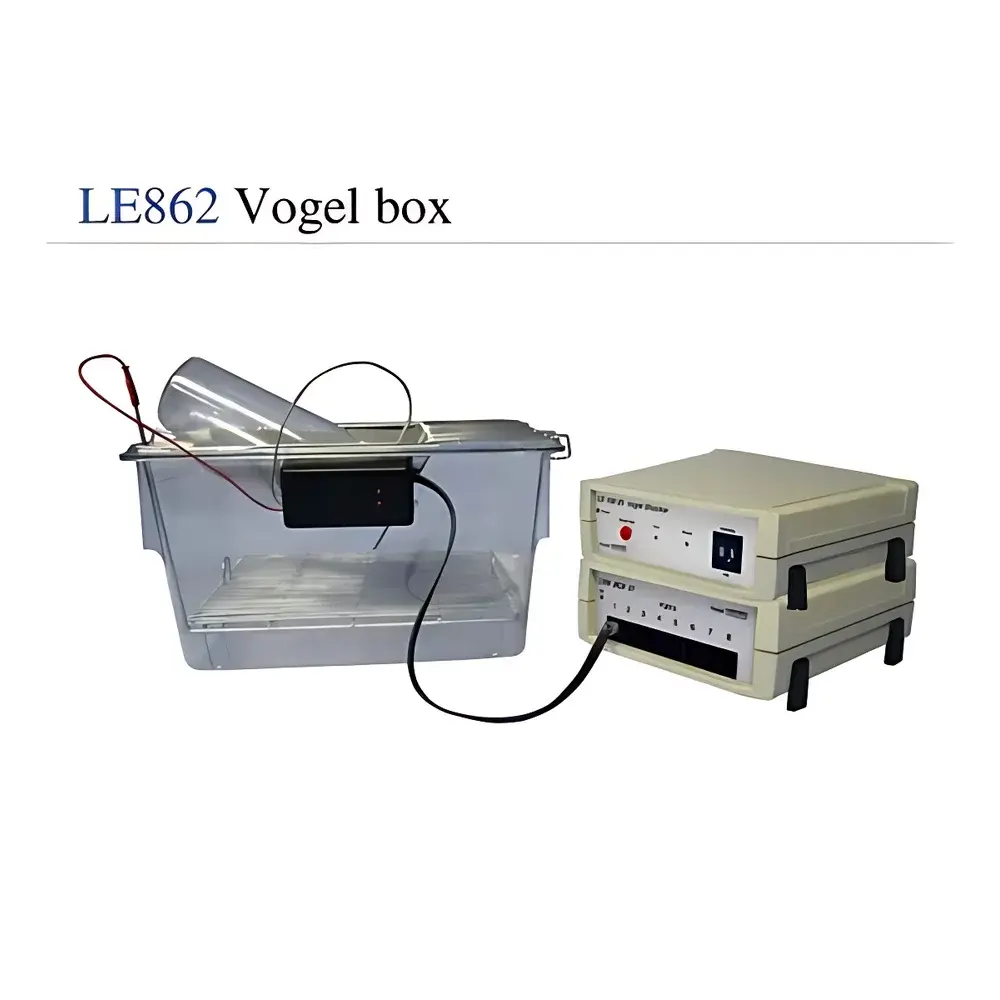
Panlab Drinko-Lick Anxiety Test System for Rodents
| Origin | Spain |
|---|---|
| Manufacturer Type | Authorized Distributor |
| Origin Category | Imported |
| Model | Panlab Drinko-Lick |
| Price | USD 13,800 (approx.) |
Overview
The Panlab Drinko-Lick Anxiety Test System is a validated, high-fidelity behavioral phenotyping platform engineered for quantitative assessment of anxiety-related drinking behavior in rodents. It operates on the principle of operant conflict-based paradigms—specifically, the “drink suppression” or “novelty-induced hypophagia/hydraphagia” model—wherein animals are required to overcome innate conflict (e.g., aversion to open, brightly lit, or electrified floor environments) to access water. This paradigm provides a sensitive, ethologically relevant readout of anxiety-like states and is widely accepted in preclinical psychopharmacology. The system integrates calibrated lick detection via proprietary capacitive-sensing sipper nozzles, grid-floor electroshock delivery (0.1–2 mA), and real-time event logging—enabling precise temporal resolution of licks, latency to first lick, inter-lick intervals, and suppression ratios under controlled environmental conditions.
Key Features
- Capacitive-sensing sipper nozzle technology: Discriminates intentional licking from incidental contact with >99.2% specificity—eliminating false positives caused by grooming, whisking, or cage exploration.
- Modular hardware architecture: Each test chamber includes integrated floor-grid electrodes, water bottle assembly, and embedded signal conditioning circuitry—no external PCI cards or proprietary data acquisition hardware required.
- Scalable channel capacity: A single LINKBOX controller supports up to 8 independent chambers; up to four LINKBOX units can be daisy-chained via RS232/USB interface for full 32-channel parallel monitoring.
- Portable deployment: Fully compatible with standard Windows laptops—no dedicated workstation or server infrastructure needed. All firmware and driver packages are digitally signed and WHQL-certified.
- Configurable shock delivery: Precision current source (0.1–2.0 mA, ±0.02 mA accuracy) with adjustable pulse duration (10–500 ms) and inter-stimulus interval—compliant with NIH and FELASA guidelines for humane stimulus titration.
Sample Compatibility & Compliance
The system accommodates both mice (≤30 g) and rats (≤300 g) using two standardized chamber configurations: LE86276-0316 (mouse-optimized) and LE86576-0621 (rat-optimized). All components—including sipper nozzles, floor grids, and water reservoirs—are autoclavable or disposable to ensure cross-subject sterility and prevent olfactory cue carryover. The platform adheres to OECD TG 425 and ICH S7A guidelines for behavioral safety pharmacology studies. Data acquisition meets ALPACO and AAALAC International standards for animal welfare documentation, and raw event logs include ISO 8601 timestamps, operator ID, and chamber metadata—supporting GLP-compliant audit trails.
Software & Data Management
PackWin v7.6 serves as the unified software platform, featuring FDA 21 CFR Part 11–ready user authentication, electronic signatures, and immutable audit logging. The Drinko-Lick Module (PACKWINVT76-0594) provides pre-configured protocols for baseline acclimation, habituation, and conflict-phase testing—including automated calculation of suppression index (SI = [licks during conflict phase] / [licks during baseline]), latency metrics, and burst analysis. All data export to CSV, HDF5, or MATLAB .mat formats; optional Custom Scripting Module (PACKWINCS76-0592) enables integration with third-party analysis pipelines (e.g., Python-based ethogram classifiers or R-based mixed-effects modeling).
Applications
- Preclinical evaluation of anxiolytic and anxiogenic compounds (e.g., benzodiazepines, SSRIs, CRF antagonists).
- Genetic screening of anxiety-related phenotypes in transgenic/knockout rodent models (e.g., 5-HT1A KO, BDNF Val66Met).
- Neurodevelopmental disorder modeling—particularly for disorders involving altered stress reactivity (e.g., Fragile X, Rett syndrome).
- Chronic stress paradigm validation: Combined use with restraint, social defeat, or unpredictable mild stress protocols to assess resilience biomarkers.
- Pharmacokinetic–pharmacodynamic (PK–PD) correlation studies requiring high-temporal-resolution behavioral endpoints aligned with plasma drug concentration time courses.
FAQ
What species and weight ranges are supported?
Mice (18–30 g) and rats (200–300 g) are validated. Chamber dimensions and grid spacing are optimized per species to minimize floor contact artifacts and maximize detection fidelity.
Is calibration required before each experiment?
No routine recalibration is needed. The sipper nozzle’s capacitive threshold is factory-set and drift-compensated in real time; only periodic verification using the included LE862476-0319 test bottle is recommended every 6 months.
Can the system integrate with existing video-tracking setups?
Yes—via PackWin’s TCP/IP API, synchronized timestamps allow frame-accurate alignment with EthoVision XT, ANY-maze, or custom OpenCV-based tracking systems.
Does the software support automated statistical reporting?
The Drinko-Lick Module generates compliant summary reports (mean ± SEM, ANOVA-ready tables, suppression index heatmaps) in PDF and Excel formats, including footnotes referencing OECD and USP validation criteria.
What maintenance is required for long-term reliability?
Annual firmware updates and biannual inspection of sipper nozzle contacts and grid electrode continuity—documented in the PackWin Maintenance Log module with auto-generated service reminders.





