Panlab LE8815/LE8816 Infrared Activity Monitoring System for Rodent Behavioral Phenotyping
| Origin | Spain |
|---|---|
| Manufacturer Type | Authorized Distributor |
| Origin Category | Imported |
| Model | Panlab LE8815 (45×45 cm, 2.5 cm beam spacing) / LE8816 (25×25 cm, 1.3 cm beam spacing) |
| Control Unit | LE8825 (supports up to 2 IR frames) |
| Data Logger Memory | 200 h |
| Communication | RS232 (with CONRS232USB adapter) |
| Software Options | SEDACOM V2.0 (instrument control & data export), ACTITRACK V2.7 (trajectory analysis across up to 32 frames) |
Overview
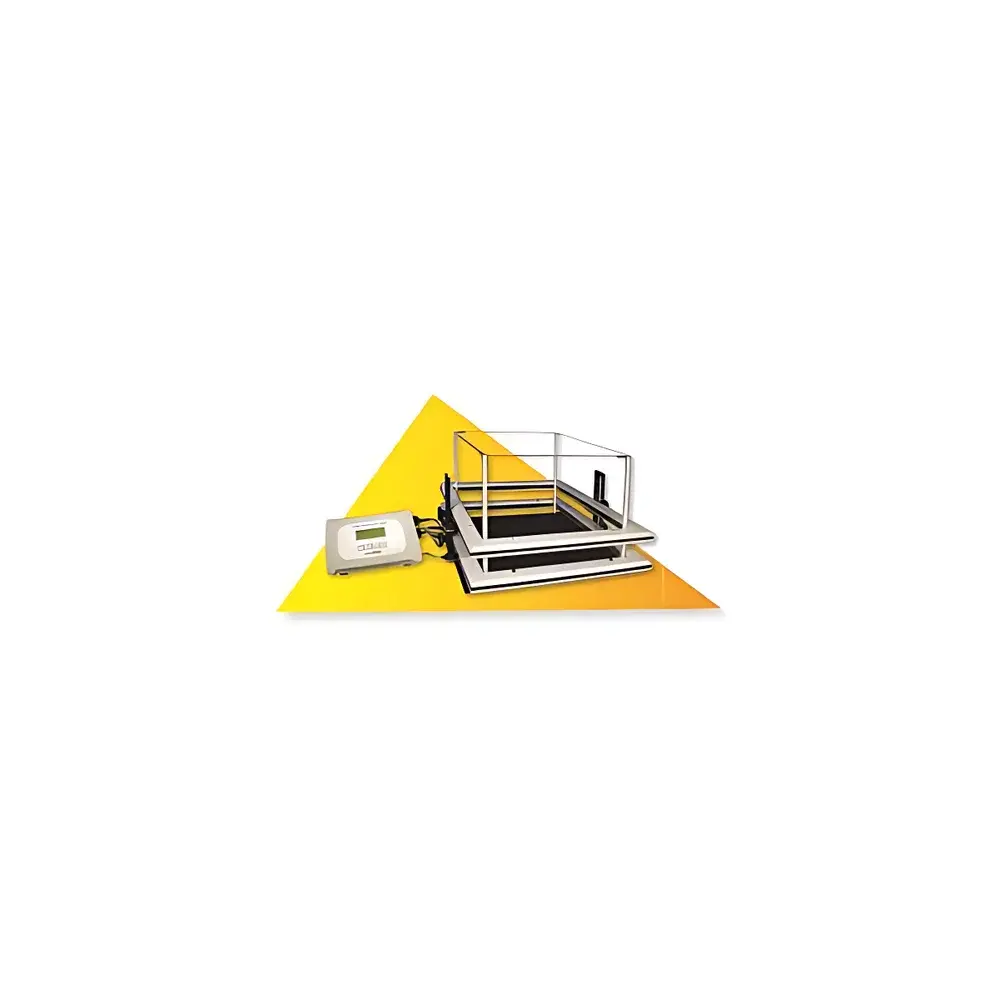
The Panlab LE8815 and LE8816 Infrared Activity Monitoring Systems are precision-engineered, non-invasive behavioral phenotyping platforms designed for quantitative assessment of spontaneous locomotor activity, rearing, exploration, and spatial distribution in rodents. Operating on the principle of two-dimensional (X–Y) infrared beam interruption detection, the system captures discrete event-based behavioral metrics with high temporal resolution and spatial fidelity. Each frame integrates a grid of 256 (16 × 16) individually addressable IR emitters and detectors, enabling unambiguous identification of animal position, movement onset/offset, and vertical posture changes (e.g., rearing). The dual-frame architecture—offering both standard (LE8815, 45 × 45 cm, 2.5 cm beam pitch) and high-resolution miniature configurations (LE8816, 25 × 25 cm, 1.3 cm beam pitch)—ensures experimental scalability from adult rats and standard mice to neonatal or genetically dwarfed strains. All hardware operates independently of ambient light conditions, supporting circadian rhythm studies under constant darkness, dim red light, or full-spectrum illumination without signal interference.
Key Features
- Modular, expandable architecture: Single control unit (LE8825) synchronously manages up to two independent IR frames, enabling parallel multi-cage experiments or within-subject longitudinal tracking.
- High-spatial-fidelity detection: 1.3 cm beam spacing in the LE8816 configuration delivers industry-leading resolution for juvenile or low-mass subjects, minimizing positional ambiguity during rapid movement or confined-space exploration.
- Standalone operation capability: Integrated 200-hour internal memory eliminates dependency on real-time computer connection; data is retained during power loss and retrievable via RS232 interface.
- Minimalist hardware footprint: No PCI slots, no external power bricks, and consolidated cabling reduce setup complexity and electromagnetic noise—critical for electrophysiology-integrated behavioral assays.
- Configurable arena options: Transparent open-field chambers (single- or dual-animal) with optically neutral acrylic walls ensure unobstructed beam transmission and compatibility with concurrent video tracking or photometry.
- Optional nose-poke integration: LE8820 18-hole operant baseplate (2.4 mm aperture, 1 cm depth) enables automated head-entry detection for cognitive paradigms such as habituation-dishabituation or attentional set-shifting.
Sample Compatibility & Compliance
The system is validated for use with C57BL/6, BALB/c, CD-1, Sprague-Dawley, and Wistar rodents across developmental stages—from postnatal day 14 through senescence. Frame dimensions and beam density align with OECD Test Guideline 425 (Acute Oral Toxicity) and EPA OPPTS 870.6200 (Neurotoxicity Screening Battery) requirements for locomotor assessment. Data acquisition protocols support ALARA-compliant minimal handling and adhere to ARRIVE 2.0 reporting standards. While the hardware itself carries CE marking per Directive 2014/30/EU (EMC) and 2012/19/EU (WEEE), software modules comply with GLP-relevant traceability: SEDACOM V2.0 logs operator ID, timestamp, session parameters, and firmware version; ACTITRACK V2.7 maintains immutable audit trails for all trajectory recalculations and region-of-interest (ROI) definitions.
Software & Data Management
SEDACOM V2.0 serves as the primary instrument control and raw-data acquisition interface. It supports real-time monitoring, session scheduling, and batch export of beam-break timestamps (ms resolution) into CSV or MATLAB-compatible formats. ACTITRACK V2.7 extends analytical rigor by reconstructing continuous 2D trajectories using centroid interpolation algorithms, computing path length, mean/peak velocity, time-in-zone (including center/periphery ratio), immobility bouts (>1 s), and rearing frequency via vertical beam-break clustering. Both applications generate FAIR-compliant metadata (ISO/IEC 11179-3) and permit direct linkage to LIMS environments via configurable ODBC drivers. Exported datasets include embedded calibration coefficients and frame-specific geometric correction matrices—essential for cross-laboratory reproducibility.
Applications
- Preclinical neuropharmacology: Dose–response characterization of psychostimulants (e.g., amphetamine-induced hyperlocomotion), anxiolytics (thigmotaxis quantification), and sedative-hypnotics (reduced ambulation latency).
- Genetic phenotyping: High-throughput screening of knockout/knockin lines for baseline activity deficits, circadian phase shifts, or sensorimotor gating abnormalities (e.g., prepulse inhibition co-assessment).
- Toxicology endpoints: Detection of subtle motor impairments following subchronic exposure to environmental neurotoxicants (e.g., organophosphates, heavy metals).
- Developmental neuroscience: Longitudinal mapping of motor maturation in pups using LE8816’s miniaturized frame and age-adjusted ROI templates.
- Behavioral pharmacokinetic–pharmacodynamic modeling: Temporal alignment of plasma drug concentrations with dynamic activity profiles derived from synchronized SEDACOM/ACTITRACK outputs.
FAQ
Can the system distinguish between locomotion and rearing events?
Yes. Rearing is identified by simultaneous interruption of ≥3 vertically aligned beams in the same X-column, with duration ≥0.3 s and absence of concurrent horizontal displacement exceeding 2 cm.
Is ACTITRACK compatible with third-party video tracking systems?
No—ACTITRACK processes native IR beam-break sequences only. For multimodal validation, synchronized timecode embedding (via TTL pulse output on LE8825) allows post-hoc alignment with Noldus EthoVision or DeepLabCut video data.
What is the maximum sampling resolution for beam-break detection?
Each beam channel is sampled at 100 Hz with hardware debouncing; timestamps are recorded with ±1 ms accuracy referenced to UTC-synced internal clock.
Does the system support IACUC-approved automated enrichment monitoring?
Yes. Customizable dwell-time thresholds and zone-transition frequency metrics enable objective quantification of environmental interaction patterns required for semi-automated cage enrichment assessments.
How is data integrity ensured during extended unattended runs?
The LE8825 control unit performs cyclic CRC-32 checksum verification on all logged entries; corrupted sectors trigger automatic fallback to redundant memory blocks and flag error codes in the session header.