
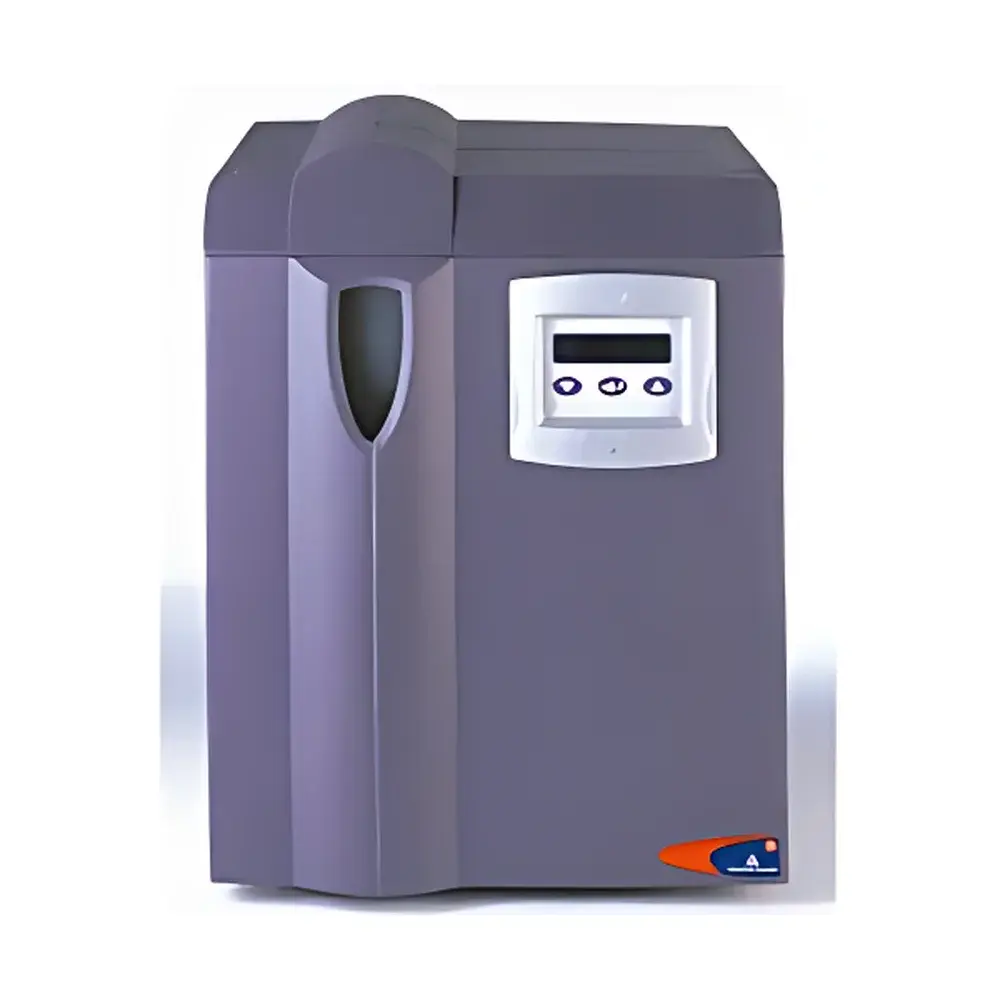
Parker Domnick Hunter 20H/40H/60H High-Purity Hydrogen Generator
| Brand | Parker |
|---|---|
| Origin | United Kingdom |
| Manufacturer Type | Authorized Distributor |
| Import Status | Imported |
| Model | 20H / 40H / 60H |
| Hydrogen Generation Principle | Pure Water Electrolysis |
| Output Flow Rate | 160–500 mL/min (model-dependent) |
| Output Pressure | 5–100 psi (adjustable) |
| Hydrogen Purity | ≥99.9999% |
| Power Consumption | 50 W (at nominal load) |
| Gas Outlet | 1/8″ Swagelok® compression fitting |
| Dimensions (W×H×D) | 245 × 643 × 724 mm |
| Weight | 34 kg |
| Dryer Type | Integrated desiccant-based purification module |
| Safety Certifications | CE, UKCA, UL-compliant design architecture |
| Compliance | Designed to meet ISO 8573-1:2010 Class 1 for gaseous impurities (H₂O, O₂, total hydrocarbons), compatible with GLP/GMP laboratory environments and FDA 21 CFR Part 11 data integrity requirements when integrated with validated software |
Overview
The Parker Domnick Hunter 20H/40H/60H Hydrogen Generator is an engineered solution for laboratories requiring continuous, on-demand, ultra-high-purity hydrogen gas—without reliance on high-pressure cylinders. Utilizing proton exchange membrane (PEM) electrolysis of deionized water, this generator produces hydrogen at purities exceeding 99.9999% (≤100 ppb O₂, ≤100 ppb H₂O, ≤100 ppb total hydrocarbons), meeting stringent analytical requirements for gas chromatography (GC), flame ionization detection (FID), thermal conductivity detection (TCD), electron capture detection (ECD), and pulsed discharge helium ionization detection (PDHID). Unlike conventional alkaline electrolyzers, the PEM-based architecture eliminates caustic electrolytes, ensures rapid start-up (<2 min), enables precise pressure regulation (5–100 psi), and delivers stable flow across the full operating range (160–500 mL/min). Its compact footprint, low power draw (50 W), and single-point utility interface—requiring only DI water (≥1 MΩ·cm resistivity) and AC power—make it suitable for integration into analytical workflows governed by ISO/IEC 17025, USP , and ASTM D3612-compliant methods.
Key Features
- Proton exchange membrane (PEM) electrolysis technology for contaminant-free H₂ generation without KOH or NaOH electrolyte handling
- Integrated dual-stage purification: catalytic recombination + desiccant drying for consistent ≥99.9999% purity under variable ambient conditions
- Seven-layer safety architecture: real-time internal/external H₂ leak detection, DI water quality monitoring, reservoir level sensing, overpressure relief, thermal cutoff, audible/visual alarm system, and optional remote emergency shutoff
- No warm-up delay: ready-to-use gas output within 120 seconds of activation; no gas storage—hydrogen is generated only on demand
- Low operational cost: estimated consumables cost < $0.02 per liter of H₂; annual maintenance limited to desiccant cartridge replacement (every 12–18 months)
- Modular scalability: three standardized models (20H, 40H, 60H) support seamless upgrade paths without infrastructure modification
- Remote operation capability: RS-232 and optional Ethernet interface for integration into LabVantage, Thermo Fisher Chromeleon™, or Agilent OpenLab CDS systems with audit-trail-enabled control
Sample Compatibility & Compliance
The generator supports all standard GC detectors requiring fuel or carrier gas, including FID, TCD, NPD, FPD, and ECD. It is certified for use as both combustion gas and carrier gas in EPA Method 8260, ASTM D1319, and ICH Q2(R2)-aligned validation protocols. The system complies with ISO 8573-1:2010 Class 1 for compressed gas purity, and its electronic controls adhere to IEC 61000-6-2/6-4 electromagnetic compatibility standards. When operated with a validated LIMS-integrated monitoring script, it satisfies FDA 21 CFR Part 11 requirements for electronic records and signatures—including time-stamped event logs, user-access controls, and immutable audit trails for gas delivery parameters.
Software & Data Management
Local status monitoring is provided via a high-contrast OLED display showing real-time flow, pressure, water level, purity status, and fault codes. For centralized oversight, the optional Parker SmartLink™ software (Windows/Linux compatible) enables remote configuration, predictive maintenance alerts, historical trend analysis, and CSV-exportable performance reports. All communication channels support TLS 1.2 encryption. Data retention complies with ALCOA+ principles: attributable, legible, contemporaneous, original, accurate, complete, consistent, enduring, and available. Firmware updates are digitally signed and require multi-factor authentication to prevent unauthorized modification.
Applications
- GC carrier gas replacement for increased resolution and shortened run times versus helium—particularly beneficial in petrochemical, environmental, and pharmaceutical QC labs
- Fuel gas supply for FID and TCD in routine hydrocarbon analysis, residual solvent testing, and stability-indicating assays
- Reaction gas for ELCD (electron capture with hydrogen) in halogenated compound quantification
- Zero-air generator auxiliary gas in ozone-generating systems requiring trace H₂ for calibration
- On-site hydrogen source for portable FTIR and laser-based gas sensors requiring ppm-level background stabilization
- Research-grade H₂ supply for electrochemical cell testing, catalyst screening, and hydride synthesis where cylinder-derived impurities compromise reproducibility
FAQ
What is the minimum water resistivity required for optimal operation?
Deionized water with resistivity ≥1.0 MΩ·cm (≤1 µS/cm conductivity) is mandatory; lower purity accelerates PEM degradation and increases O₂ carryover.
Can this generator serve as carrier gas for capillary GC columns?
Yes—when configured with pressure-regulated flow control and paired with a laminar flowmeter, it meets USP carrier gas specifications for isothermal and temperature-programmed separations.
Is routine calibration required?
No scheduled calibration is needed; however, quarterly verification using a certified H₂ purity analyzer (e.g., Agilent 7890B with TCD) is recommended per ISO/IEC 17025 Clause 6.5.
How often must the desiccant cartridge be replaced?
Under typical lab conditions (23°C, 50% RH), replacement is required every 12–18 months—or sooner if moisture breakthrough is detected via integrated dew point sensor alert.
Does the system support integration with building management systems (BMS)?
Yes—via Modbus RTU over RS-485 (optional module), enabling interlock with fume hood airflow monitors, fire suppression systems, and HVAC shutdown protocols.



