PERIC Customized H₂/O₂ Composite Unit Monitoring Analyzer
| Brand | PERIC |
|---|---|
| Origin | Hebei, China |
| Manufacturer Type | OEM Manufacturer |
| Product Category | Domestic |
| Model | Customized 3 |
| Pricing | Available Upon Request |
| Measurement Species | H₂, O₂ |
| Dimensions (L×W×H) | ≤1100×550×2100 mm (including nozzles and mounting brackets) |
| H₂ Range | 0–5% vol |
| Low-range H₂ | 0–0.5% vol |
| O₂ Range | 0–2.5% vol / 0–25% vol (switchable) |
| Low-range O₂ | 0–1% vol |
| H₂ Accuracy | ±2% FS |
| O₂ Accuracy | ±1% FS (for 0–2.5% / 0–25% ranges), ±2% FS (for 0–1% range) |
| Measurement Principles | Tunable Diode Laser Absorption Spectroscopy (TDLAS) for O₂ |
Overview
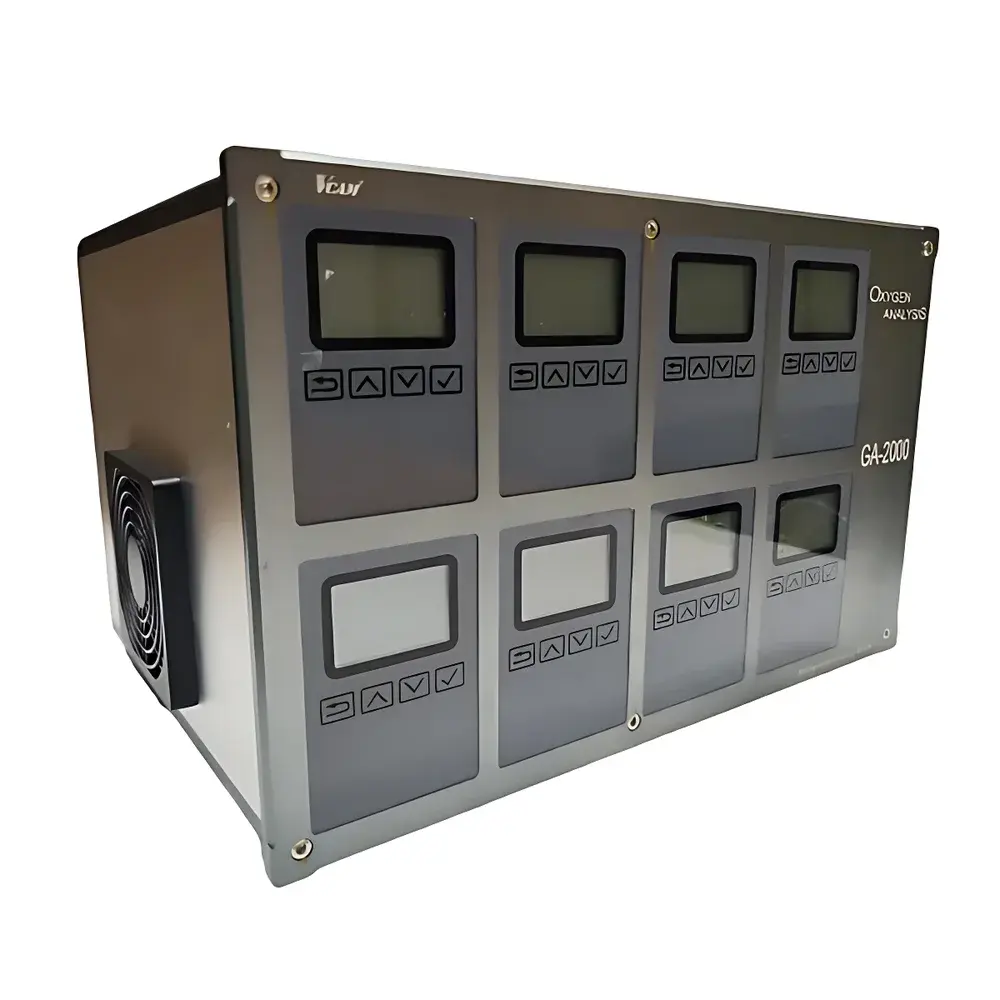
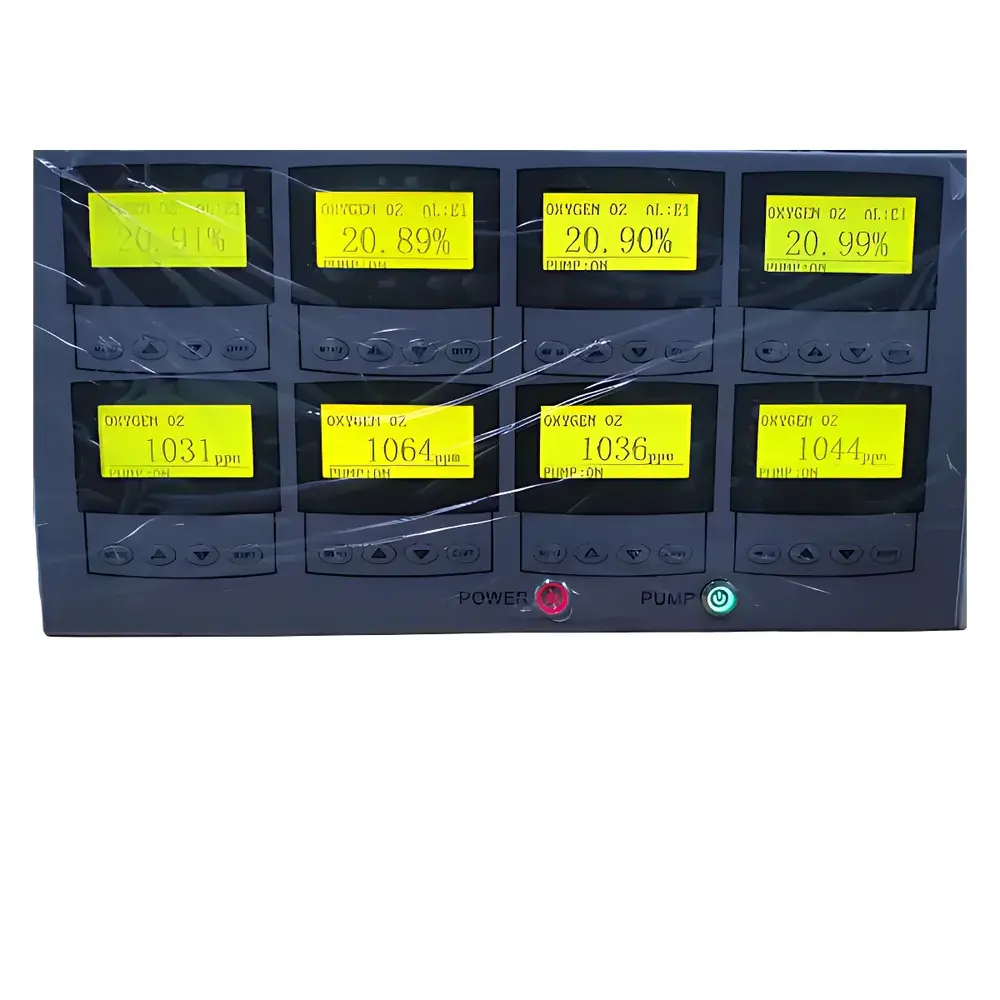
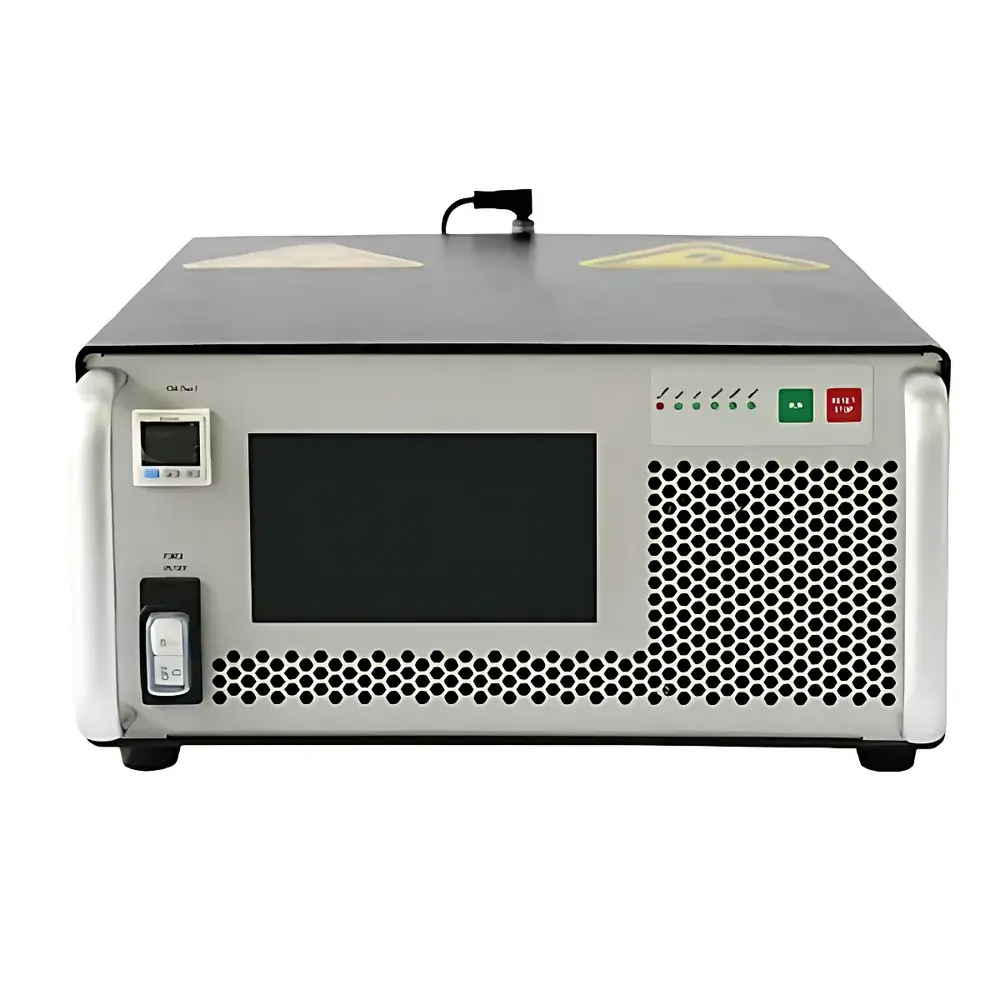
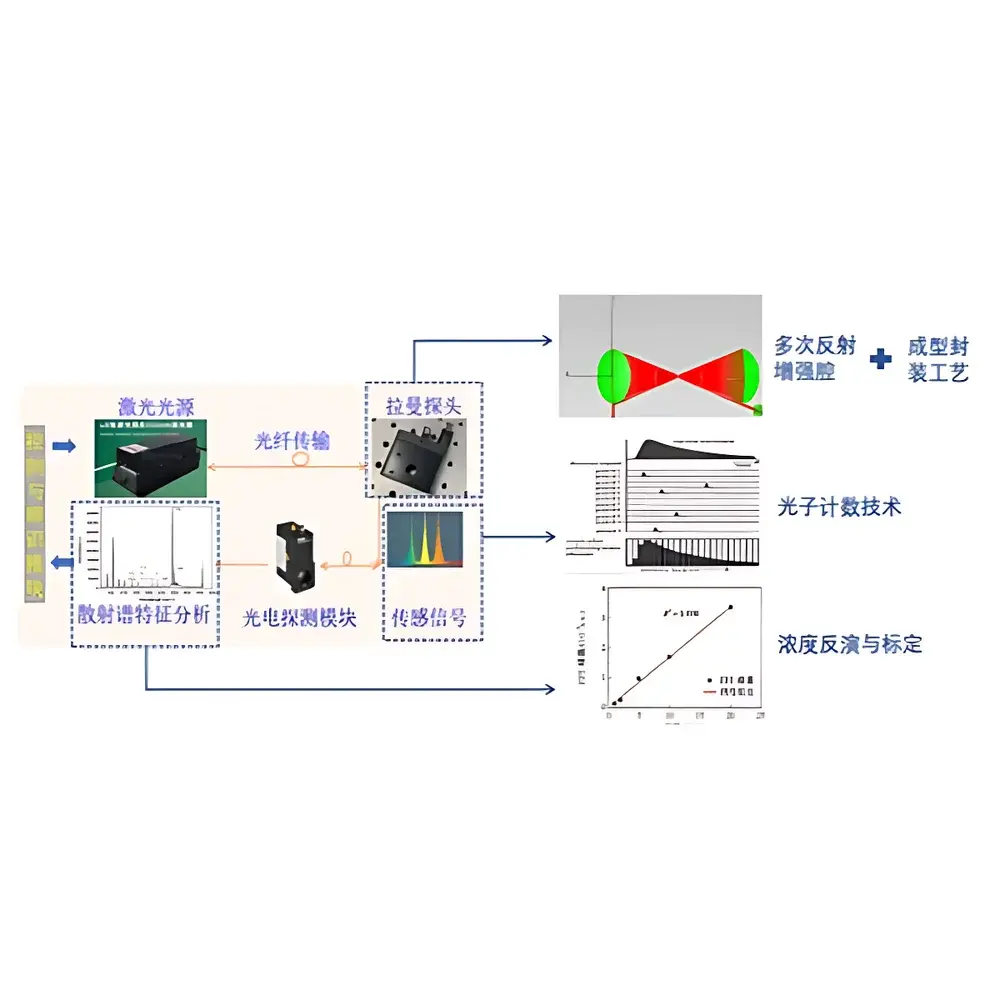
The PERIC Customized H₂/O₂ Composite Unit Monitoring Analyzer is a purpose-built online gas analyzer engineered for real-time, dual-species concentration measurement in nuclear safety-critical hydrogen-oxygen recombination systems. Designed specifically to support the operational integrity of hydrogen-oxygen composite units deployed in Generation III+ nuclear power plants—including the Hualong One (HPR1000) reactor—the analyzer delivers continuous, trace-level monitoring of both hydrogen (H₂) and oxygen (O₂) concentrations upstream and downstream of catalytic recombiners. Its core function is to quantify recombination efficiency by comparing inlet and outlet gas compositions, thereby enabling closed-loop feedback control and ensuring compliance with stringent nuclear safety requirements for combustible gas management. The system integrates two complementary, physics-based detection technologies: tunable diode laser absorption spectroscopy (TDLAS) for selective, interference-free O₂ quantification, and thermal conductivity detection (TCD) for robust, drift-resistant H₂ measurement across multiple concentration ranges. This hybrid architecture eliminates cross-sensitivity between species while maintaining high reproducibility under variable temperature, pressure, and humidity conditions typical of containment venting or inerted purge streams.
Key Features
- Dual-technology sensing platform: TDLAS for O₂ (with wavelength-specific absorption line targeting near 760 nm for O₂; optimized for low ppm–% level detection) and TCD for H₂ (leveraging differential thermal conductivity contrast between H₂ and background matrix gases such as N₂, CO₂, or steam-diluted air)
- Configurable dual-range operation: Automatic or manual switching between standard (H₂: 0–5%, O₂: 0–2.5%/0–25%) and low-range (H₂: 0–0.5%, O₂: 0–1%) modes to maintain optimal signal-to-noise ratio across process transients
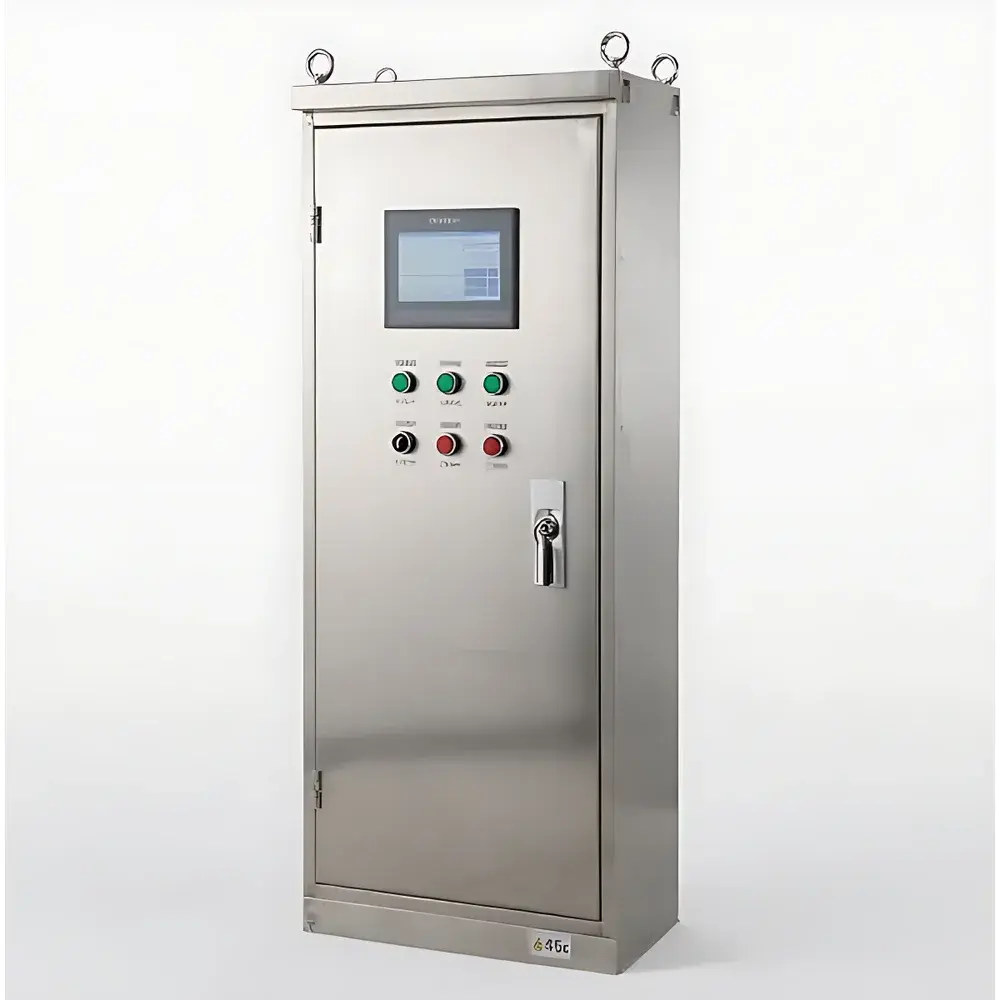
- Compact industrial enclosure: All-in-one analyzer housing ≤1100 × 550 × 2100 mm (L×W×H), including integrated sample conditioning manifold, heated sample lines, and flanged process connections compliant with ANSI B16.5 Class 150
- Process-hardened design: IP65-rated enclosure with internal temperature stabilization (±0.5 °C), pressure-compensated flow control, and corrosion-resistant 316L stainless steel wetted parts suitable for humid, mildly acidic, or radiolytically conditioned atmospheres
- Self-diagnostic capability: Real-time validation of laser wavelength lock, detector responsivity, reference cell integrity, and TCD bridge balance—each logged with timestamps for regulatory audit trails
Sample Compatibility & Compliance
The analyzer is validated for use with non-corrosive, particulate-free gas streams containing up to 95% relative humidity and trace condensables (e.g., water vapor, boric acid aerosols), provided inlet sample conditioning includes coalescing filtration, Peltier-based dew point suppression (<5 °C), and optional catalytic scrubbers for hydrocarbon interference mitigation. It meets mechanical and electrical requirements per IEC 61508 SIL 2 for safety-related instrumentation and conforms to IEEE 383-2019 for nuclear plant cable and enclosure qualification. While not certified to ASME NQA-1, its documentation package supports integration into NQA-1–governed QA programs through full traceability of calibration records, material certifications (EN 10204 3.1), and FAT/SAT protocols aligned with ISO/IEC 17025 principles. All firmware and configuration files are version-controlled and timestamped to satisfy GLP/GMP data integrity expectations.
Software & Data Management
Embedded Linux-based firmware provides Modbus TCP and Profibus DP V1 interfaces for seamless integration into DCS/SCADA systems. The onboard web interface enables remote configuration of measurement ranges, alarm thresholds (high/low, rate-of-change), and diagnostic logging intervals. Raw spectral data (TDLAS) and bridge voltage outputs (TCD) are archived at 1 Hz resolution with embedded time stamping synchronized to NTP servers. Export formats include CSV and XML, compatible with third-party historian platforms (e.g., OSIsoft PI, Emerson DeltaV). Audit trail functionality complies with FDA 21 CFR Part 11 requirements: all parameter changes, calibration events, and user logins are digitally signed, immutable, and retain operator ID, timestamp, and pre-/post-change values. Optional OPC UA server module supports secure, encrypted data publishing for IIoT edge analytics.
Applications
- Real-time efficiency monitoring of passive autocatalytic recombiners (PARs) and forced-flow catalytic recombiners in nuclear containment buildings
- Feedforward control input for nitrogen injection or steam dilution systems during post-accident hydrogen management
- Verification of hydrogen concentration below 4% LFL (Lower Flammability Limit) per IAEA SSG-30 and WENRA Safety Reference Levels
- Commissioning and periodic functional testing of hydrogen mitigation systems per EPRI TR-102323 and NEI 08-09 guidelines
- Long-term trend analysis of catalyst aging through normalized recombination rate deviation from baseline performance curves
FAQ
What calibration standards are required for field verification?
Certified gas mixtures traceable to NIST SRMs: 0.5% H₂ in N₂ and 1.0% O₂ in N₂ for low-range validation; 3.0% H₂ in N₂ and 10.0% O₂ in air for standard-range checks. Zero gas: high-purity N₂ (99.999%).
Is the analyzer suitable for installation inside radiological controlled areas?
Yes—housing materials and electronics are qualified to withstand cumulative gamma doses up to 10 kGy (1 Mrad) over 20 years; optional lead-lined variants available for high-dose zones.
How is moisture interference mitigated in TDLAS O₂ measurement?
By employing second-harmonic wavelength modulation spectroscopy (WMS-2f) with phase-sensitive detection, combined with real-time water vapor absorption compensation using a secondary H₂O reference channel.
Can the system operate continuously during reactor refueling outages?
Yes—designed for 24/7 operation with redundant power inputs (24 VDC + 110/220 VAC), automatic switchover, and ≥72-hour battery-backed memory retention for critical logs.
Does the analyzer support predictive maintenance alerts?
Yes—embedded algorithms monitor TCD bridge resistance drift, laser output power decay, and spectral signal-to-noise degradation, triggering configurable maintenance advisories via DCS alarms or email gateway.