
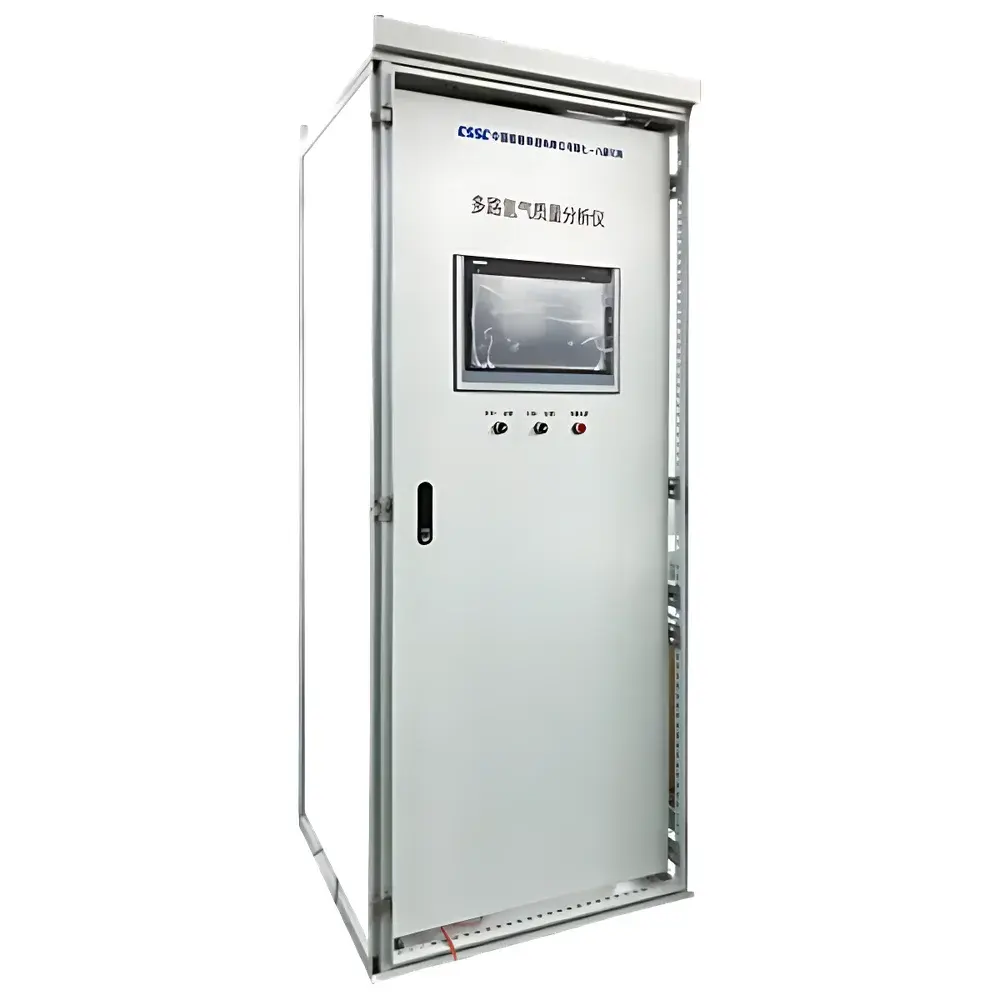
PERIC Customized Hydrogen Monitoring System for Exciters
| Brand | PERIC |
|---|---|
| Origin | Hebei, China |
| Manufacturer Type | Manufacturer |
| Product Category | Domestic |
| Model | Customized 4 |
| Pricing | Upon Request |
Overview
The PERIC Customized Hydrogen Monitoring System for Exciters is an engineered safety-critical instrumentation solution designed specifically for large-scale synchronous generators—particularly in nuclear power plants, thermal power stations, and other high-reliability energy infrastructure. It addresses the inherent risk of hydrogen leakage from exciter compartments, where hydrogen gas is used as a cooling medium in brushless excitation systems. Uncontrolled accumulation of hydrogen poses severe explosion hazards due to its wide flammability range (4–75% v/v in air) and low minimum ignition energy (0.017 mJ). This system employs dual-channel thermal conductivity detection (TCD), a robust, drift-resistant, and inherently intrinsically safe measurement principle well-suited for continuous, unattended monitoring in hazardous locations. Unlike catalytic bead or electrochemical sensors, TCD provides stable baseline performance without consumables or poisoning susceptibility, making it ideal for long-term deployment in generator halls with fluctuating ambient temperatures and electromagnetic interference.
Key Features
- Dual independent hydrogen sensing channels—one optimized for “cold hydrogen” (typically drawn from the exciter’s inlet or cooler return line) and one for “hot hydrogen” (sampled from the exciter housing or ventilation exhaust)—enabling real-time differential analysis and early anomaly detection.
- Intrinsically safe architecture compliant with GB 3836.1–2010 (equivalent to IEC 60079-0) and certified for Zone 1/21 hazardous areas; all field components—including sampling probes, solenoid valves, and signal conditioners—meet explosion-proof requirements (Ex d IIB T4 Gb / Ex tD A21 IP66 T100°C).
- Integrated programmable logic controller (PLC)-based control unit with HMI interface supports fully automated operational modes: continuous measurement, zero/span calibration, and emergency purge initiation—all accessible via single-button soft-switching with audit-trail logging.
- Onboard hydrogen alarm module with dual-stage threshold outputs (e.g., 10% LEL for warning, 25% LEL for shutdown trigger), relay contacts rated for SIL 2 per IEC 61508, and configurable delay timers to suppress false alarms from transient spikes.
- Integrated purge subsystem with dedicated compressed air inlet/outlet ports, pressure-regulated flow control, and timed auto-purge cycles triggered upon cabinet hydrogen concentration exceeding 0.5% vol—ensuring internal electronics remain within safe operating limits per IEEE C37.20.2 and NRC regulatory guidance on hydrogen mitigation.
Sample Compatibility & Compliance
The system is compatible with dry, oil-free hydrogen streams at pressures ranging from 0.1 to 0.5 MPa(g) and temperatures between −20 °C and +60 °C. Sampling lines are constructed from 316L stainless steel with electropolished interior finish (Ra ≤ 0.4 µm) to prevent adsorption and ensure representative gas transfer. Calibration traceability follows ISO/IEC 17025 requirements through certified reference gas mixtures (NIST-traceable H₂ in N₂, ±1% uncertainty). The design adheres to key industry standards including IEEE Std 115–2019 (IEEE Guide for Test Procedures for Synchronous Machines), IAEA Safety Standards Series No. SSG-30 (Hydrogen Safety in Nuclear Power Plants), and DL/T 573–2010 (Chinese national standard for power transformer and generator maintenance).
Software & Data Management
The embedded controller firmware supports Modbus RTU/TCP and OPC UA (PubSub over UDP) protocols for seamless integration into plant-wide DCS/SCADA systems. All measurement data—including raw TCD voltage outputs, temperature-compensated H₂ concentration (% vol), valve status, alarm timestamps, and purge event logs—are time-stamped with microsecond resolution and stored locally for ≥30 days. Audit trails comply with GLP/GMP principles and include user ID, action type, timestamp, and pre-/post-change parameter values—meeting documentation requirements for regulatory inspections under CNCA and NNSA frameworks. Remote diagnostics and firmware updates are supported via secure TLS 1.2 encrypted channel with role-based access control (RBAC).
Applications
- Continuous hydrogen concentration surveillance in brushless exciter enclosures of turbine generators (100–1500 MVA class)
- Preventive safety interlock for hydrogen-cooled generator sealing oil systems
- Real-time validation of hydrogen purity during commissioning and post-maintenance gas replacement procedures
- Integration with fire & gas (F&G) systems for coordinated emergency response (e.g., turbine trip, seal oil pump shutdown, ventilation fan activation)
- Compliance monitoring for periodic technical specification reviews mandated by nuclear regulatory bodies (e.g., NNSA Technical Specification 10CFR50 Appendix B)
FAQ
What detection principle does this system use, and why is it preferred for exciter applications?
Thermal conductivity detection (TCD) is employed due to its immunity to catalyst poisoning, absence of consumables, and stability across wide temperature gradients typical in generator halls. It delivers consistent accuracy for binary H₂/N₂ or H₂/air mixtures without cross-sensitivity to CO₂, moisture, or hydrocarbons.
Can the system be integrated with existing plant DCS without hardware modification?
Yes—native Modbus RTU and OPC UA support enables direct communication with most modern DCS platforms; no gateway or protocol converter is required for basic read/write functionality.
Is automatic calibration traceable to national standards?
Calibration uses NIST-traceable certified gas mixtures; each calibration event generates a digital certificate with gas lot number, expiration date, and uncertainty budget, archived in the system’s audit log.
How does the purge function respond to internal hydrogen accumulation?
Upon detecting ≥0.5% vol H₂ inside the instrument cabinet, the PLC initiates a timed purge cycle using externally supplied clean, oil-free compressed air (minimum 0.4 MPa), flushing the enclosure for up to 120 seconds before resuming normal operation.
Does the system meet cybersecurity requirements for critical infrastructure?
Firmware includes secure boot, TLS 1.2 encryption for remote access, disabled default credentials, and configurable password policies aligned with NIST SP 800-82 Rev. 2 and IEC 62443-3-3 Level 1.







