
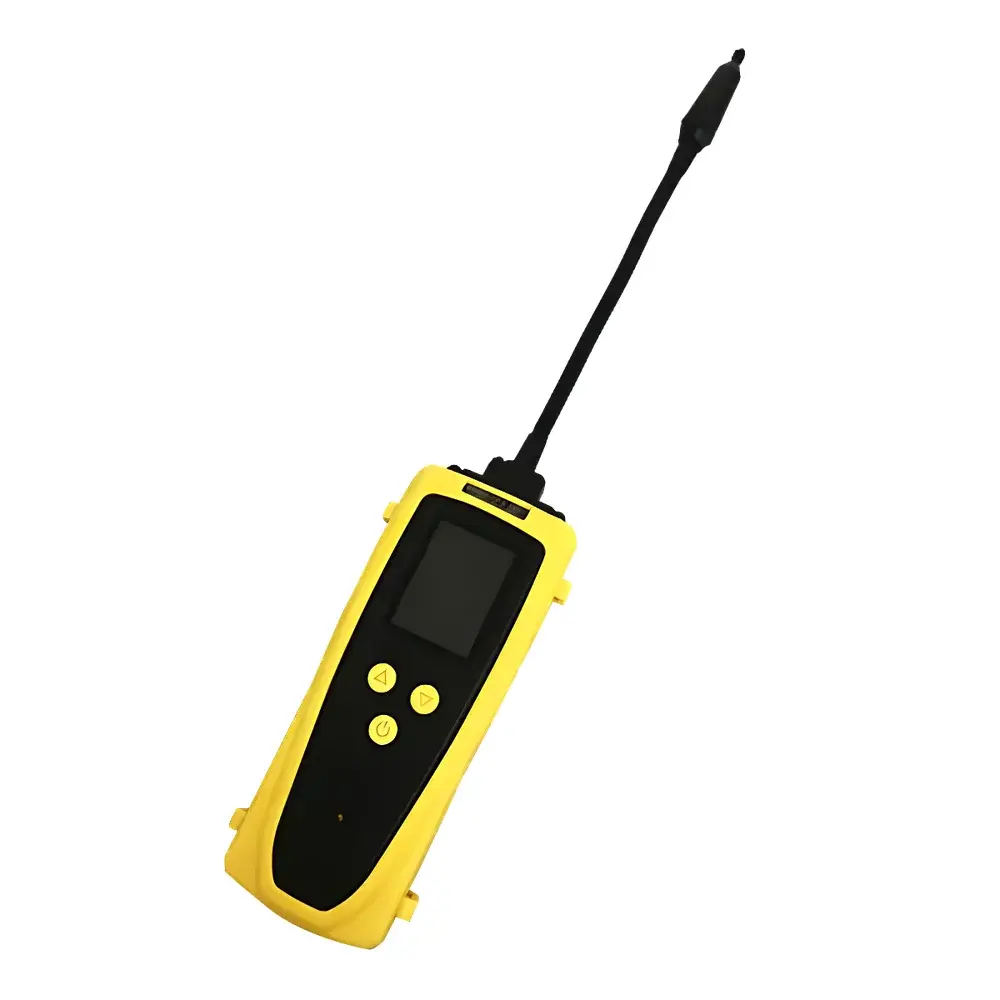
PERIC GAP X2 P Pump-Suction Multi-Gas Detector
| Brand | PERIC |
|---|---|
| Origin | Hebei, China |
| Manufacturer Type | Manufacturer |
| Country of Origin | Domestic (China) |
| Model | GAP X2 P |
| Price | Upon Request |
| Detection Gases | Combustible Gas (EX), Hydrogen Sulfide (H₂S), Carbon Monoxide (CO), Oxygen (O₂) |
| Measurement Ranges | 0–100% LEL (EX), 0–100 ppm (H₂S), 0–1000 ppm (CO), 0–30% VOL (O₂) |
| Accuracy | ≤±5% FS (EX), ±10% (CO), ±5 µmol (H₂S) |
| Response Time | ≤45 s |
| Operating Temperature | −20 °C to +50 °C |
| Dimensions & Weight | 160 × 80 × 60 mm / 0.4 kg |
| Display | 3.5″ IPS, 320 × 480 resolution, bilingual (English/Chinese) |
| Power | 4600 mAh Li-ion battery, standby >9 h |
| Ingress Protection & Certification | IP66, Ex ib IIB T3 Gb |
| Alarm Modes | Audible (≥85 dB), visual (high-brightness LED), and vibration |
| Data Logging | 3000-event alarm memory |
| Sampling Method | Integrated micro-diaphragm pump (pump-suction) |
| Charging Interface | Micro-USB, compatible with portable power banks |
Overview
The PERIC GAP X2 P is a certified intrinsically safe, pump-suction multi-gas detector engineered for reliable real-time monitoring of hazardous atmospheres in confined spaces and high-risk industrial settings. Unlike diffusion-based detectors, the GAP X2 P employs an integrated micro-diaphragm sampling pump to actively draw ambient air across electrochemical and catalytic bead sensors—ensuring rapid, representative gas sampling even in low-flow, stagnant, or obstructed environments such as underground utility vaults, sewer systems, reactor vessels, and storage tanks. Its core measurement architecture complies with international sensor performance standards including IEC 60079-29-1 (gas detection) and IEC 61508 (functional safety for electrical/electronic/programmable electronic safety-related systems). The device simultaneously monitors up to four target gases: combustible gas (expressed as %LEL), hydrogen sulfide (H₂S), carbon monoxide (CO), and oxygen (O₂)—each with independent calibration traceability and cross-interference compensation algorithms embedded in firmware.
Key Features
- Intrinsically safe design certified to Ex ib IIB T3 Gb per GB 3836.1–2021 and IEC 60079-11, suitable for Zone 1 hazardous areas containing Group IIB gases (e.g., ethylene, acetone, propane).
- IP66-rated enclosure ensures full protection against dust ingress and powerful water jets—validated per IEC 60529—enabling continuous operation in outdoor, wet, or high-particulate environments.
- Triple-alert system: 85 dB audible alarm (at 30 cm), dual-color status LEDs (red/amber/green), and tactile vibration feedback—configured independently per gas channel with adjustable thresholds aligned to OSHA PELs and ACGIH TLVs.
- High-fidelity 3.5-inch IPS LCD with 320 × 480 resolution delivers crisp, sunlight-readable visualization of real-time concentrations, trend graphs, battery status, pump flow indicator, and alarm history—all accessible without menu nesting.
- Field-replaceable modular sensor cartridges with pre-calibrated EEPROM chips support quick swap maintenance and eliminate manual span adjustment during routine bump testing.
- Embedded data logger stores up to 3,000 time-stamped alarm events (including gas type, concentration peak, duration, and timestamp) with UTC synchronization—exportable via USB for audit-ready reporting.
Sample Compatibility & Compliance
The GAP X2 P is validated for use in atmospheres containing hydrocarbon vapors (e.g., methane, propane), toxic gases (H₂S, CO), and oxygen-deficient or oxygen-enriched environments typical in petrochemical processing, wastewater treatment, and confined-space entry operations. Sensor response profiles meet ASTM D5402–18 (standard practice for evaluating gas detector response characteristics) and are calibrated using NIST-traceable reference standards. Device firmware supports configuration to regional regulatory thresholds—including OSHA 1910.120 (HAZWOPER), EU Directive 1999/92/EC (ATEX), and China’s AQ 3022–2008 (Safety Specifications for Confined Space Entry). All calibration and alarm logs retain immutable timestamps and user IDs—supporting GLP-compliant recordkeeping where required.
Software & Data Management
Data retrieval and instrument configuration are managed via PERIC’s PC-based ConfigTool v3.2 (Windows 10/11), which enables batch calibration certificate generation, alarm threshold programming, pump runtime diagnostics, and firmware updates over Micro-USB. Logged event files export in CSV format with ISO 8601 timestamps and are compatible with common EHS incident management platforms (e.g., Intelex, VelocityEHS). Audit trails include operator ID, action type (calibration, zeroing, alarm acknowledgment), and digital signature verification—meeting documentation requirements under ISO 45001:2018 Clause 7.5 and FDA 21 CFR Part 11 for electronic records where applicable.
Applications
- Confined space entry pre-testing and continuous atmospheric monitoring per OSHA 1910.146 and NFPA 350.
- Leak detection and perimeter monitoring in LNG terminals, refinery flare stacks, and pipeline right-of-ways.
- Emergency response by fire departments and HAZMAT teams during chemical spills or structural collapse incidents.
- Process safety verification during shutdown/startup (turnaround) activities in chemical manufacturing plants.
- Real-time ventilation validation in municipal wastewater lift stations and digesters where H₂S accumulation poses acute toxicity risk.
FAQ
What is the expected service life of the electrochemical sensors?
Typical operational lifespan is 24 months from first exposure to target gases; however, shelf life prior to activation is 18 months when stored at 20–25 °C and <60% RH.
Can the GAP X2 P be used in oxygen-deficient environments below 19.5% VOL?
Yes—the O₂ sensor is linearly calibrated from 0–30% VOL and triggers low-O₂ alarms at user-configurable setpoints (default: 19.5% VOL), supporting compliance with OSHA’s confined space entry criteria.
Is pump flow rate adjustable or monitored in real time?
The integrated diaphragm pump operates at a fixed nominal flow of 300 mL/min; actual flow is continuously monitored and displayed on-screen with diagnostic alerts if deviation exceeds ±15% due to filter clogging or pressure differential.
Does the device support Bluetooth or wireless data transmission?
No—wireless connectivity is intentionally omitted to maintain intrinsic safety integrity and electromagnetic compatibility (EMC) in explosive atmospheres per IEC 60079-14.
How often should bump testing be performed?
Daily bump testing is recommended before each shift per ISEA 107–2015 and manufacturer guidelines; full calibration is required every 6 months or after exposure to sensor-poisoning compounds (e.g., silicones, lead, sulfur).
Related Products







