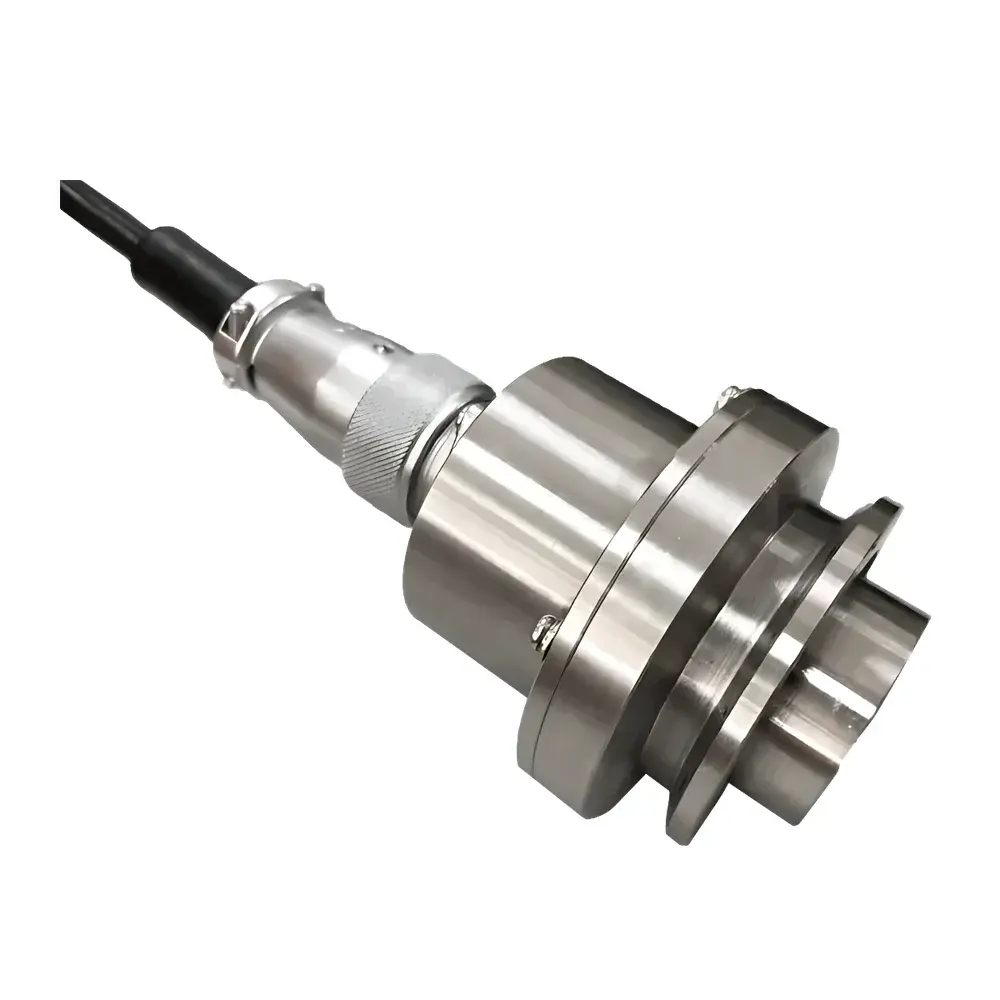
PERIC PG-TR-H2 In-Line Hydrogen Transmitter
| Brand | PERIC |
|---|---|
| Model | PG-TR-H2 |
| Measurement Gas | Hydrogen (H₂) |
| Output Signals | 4–20 mA, RS485, 0–3 V DC |
| Power Supply | 12–24 V DC |
| Measurement Ranges | 0–2000 µmol/mol or 0–5000 µmol/mol (selectable) |
| Response Time | ≤60 s |
| Resolution | 1 µmol/mol |
| Accuracy | ±5% FS |
| Enclosure Rating | Explosion-Proof (certified per GB 12358-2006) |
| Construction | Full 316L Stainless Steel |
| Sampling Method | In-situ diffusion through process pipeline wall |
| Compliance | GB/T 3369.1-2008, GB/T 19582.2-2008 (Modbus RTU), GB 12358-2006, GB/T 11606-2007 |
Overview
The PERIC PG-TR-H2 In-Line Hydrogen Transmitter is an intrinsically robust, explosion-proof gas concentration monitoring device engineered for continuous, real-time hydrogen (H₂) measurement directly within industrial process pipelines. Unlike extractive sampling systems requiring external sample conditioning, the PG-TR-H2 employs a diffusion-based in-situ sensing architecture—hydrogen molecules permeate through a precision-engineered, hermetically sealed stainless-steel sensing chamber mounted flush to the pipe wall, enabling direct contact with the process stream without flow interruption or bypass loops. The core sensor utilizes a high-stability electrochemical or catalytic bead transduction principle (configurable per application requirements), calibrated to deliver trace-level H₂ quantification in parts-per-trillion-equivalent µmol/mol units. Its design conforms to fundamental principles of process analytical technology (PAT), supporting closed-loop control integrity and safety-critical leak detection in hydrogen-intensive environments such as ammonia synthesis, chlor-alkali electrolysis, fuel cell feedstock lines, and semiconductor purge gas distribution.
Key Features
- True in-line installation: No sample extraction, no heated lines, no condensate traps—eliminates lag time and calibration drift associated with transport delay.
- Triple-output interface: Simultaneous analog (4–20 mA, 0–3 V DC) and digital (RS485 Modbus RTU) outputs enable seamless integration with DCS, PLC, and SCADA systems without signal converters.
- Explosion-proof certified housing (per GB 12358-2006): Rated for Zone 1/21 hazardous areas; pressure-rated up to 10 bar(g) with helium-leak-tested sealing integrity.
- Full 316L stainless steel wetted parts: Resistant to corrosion from humid H₂, trace halogens, and acidic condensates common in chemical processing environments.
- Low-power operation: Operates reliably across 12–24 V DC input range, compatible with standard industrial power supplies and redundant battery-backed controllers.
- Factory-calibrated traceability: Each unit ships with NIST-traceable calibration certificate (H₂ in N₂ matrix); field zero/span verification supported via built-in diagnostic mode.
Sample Compatibility & Compliance
The PG-TR-H2 is validated for use in dry to moderately humid hydrogen streams (dew point ≤ −20 °C) with particulate loading 1 ppm), high-CO syngas, or oxidizer-rich atmospheres unless specified in custom configuration. Regulatory compliance includes adherence to GB/T 11606-2007 (environmental testing for analytical instruments), GB/T 3369.1-2008 (standardized 4–20 mA current loop signaling), and GB/T 19582.2-2008 (Modbus RTU implementation over RS485). While not CE-marked or ATEX-certified, its mechanical and electrical design aligns with IEC 60079-0 general requirements for explosive atmospheres, facilitating third-party certification pathways for international deployment.
Software & Data Management
The transmitter operates autonomously without embedded firmware updates or host software dependencies. Configuration—including range selection, damping factor (0–30 s), alarm thresholds (high/low), and Modbus slave ID—is performed locally via rotary encoder or remotely via Modbus function codes 03h (read holding registers) and 06h (write single register). All operational parameters are stored in non-volatile memory with write-cycle endurance >100,000 cycles. Event logging (e.g., power-on reset, sensor timeout, out-of-range condition) is retained for 72 hours and accessible via Modbus register map. For auditability in regulated environments (e.g., pharmaceutical hydrogen purge validation), optional firmware extension supports timestamped data export compliant with FDA 21 CFR Part 11 principles when interfaced with validated data acquisition systems.
Applications
- Real-time monitoring of hydrogen purity in PEM electrolyzer outlet streams (ISO 8573-8 Class 2 compliance verification).
- Safety interlock triggering in hydrogen compression stations and storage manifold headers (per ISO/IEC 80079-36).
- Leak detection in glovebox inerting systems and vacuum chamber backfill lines in semiconductor fabrication.
- Process endpoint determination during catalytic hydrogenation reactions in fine chemical batch reactors.
- Verification of nitrogen purge effectiveness prior to reactor startup in refinery hydrotreaters.
FAQ
What is the maximum allowable process temperature for continuous operation?
The standard version is rated for ambient pipe wall temperatures between −20 °C and +60 °C. High-temp variants (up to +120 °C) are available under custom engineering order.
Can the transmitter be calibrated for hydrogen in air instead of nitrogen?
Yes—custom calibration matrices (e.g., H₂ in synthetic air) are supported; however, cross-sensitivity to O₂ must be evaluated per application and documented in the calibration report.
Is the Modbus protocol implementation compatible with standard industrial gateways?
Yes—compliant with Modbus RTU v1.1 over RS485 (2-wire, half-duplex); baud rates configurable from 9.6 kbps to 115.2 kbps; parity options include none, even, and odd.
Does the device support HART communication?
No—HART is not implemented; only 4–20 mA (analog-only), 0–3 V DC, and RS485 Modbus RTU interfaces are provided.
How frequently is sensor replacement required under typical operating conditions?
Electrochemical sensors exhibit a typical service life of 24 months in stable H₂ environments; catalytic bead variants last ≥36 months. Lifetime is extended by avoiding exposure to silicone vapors, sulfides, and heavy metal aerosols.