
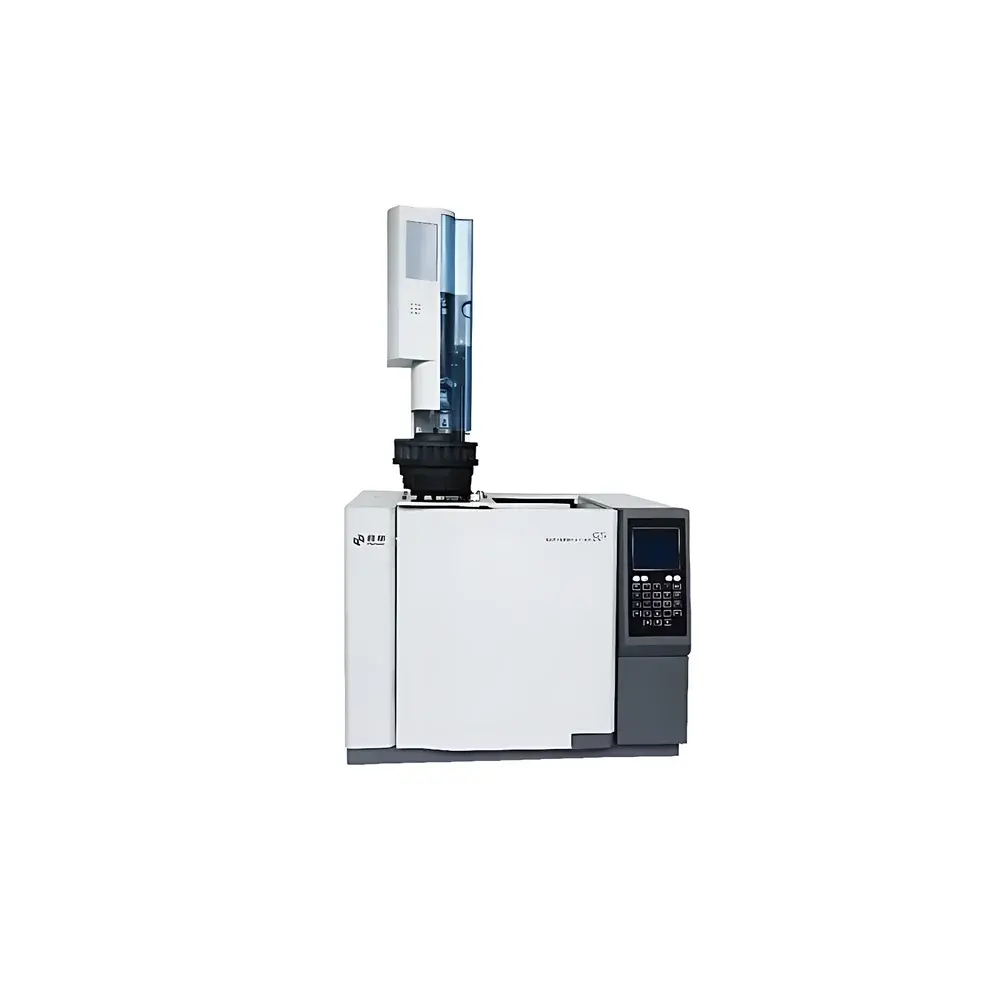
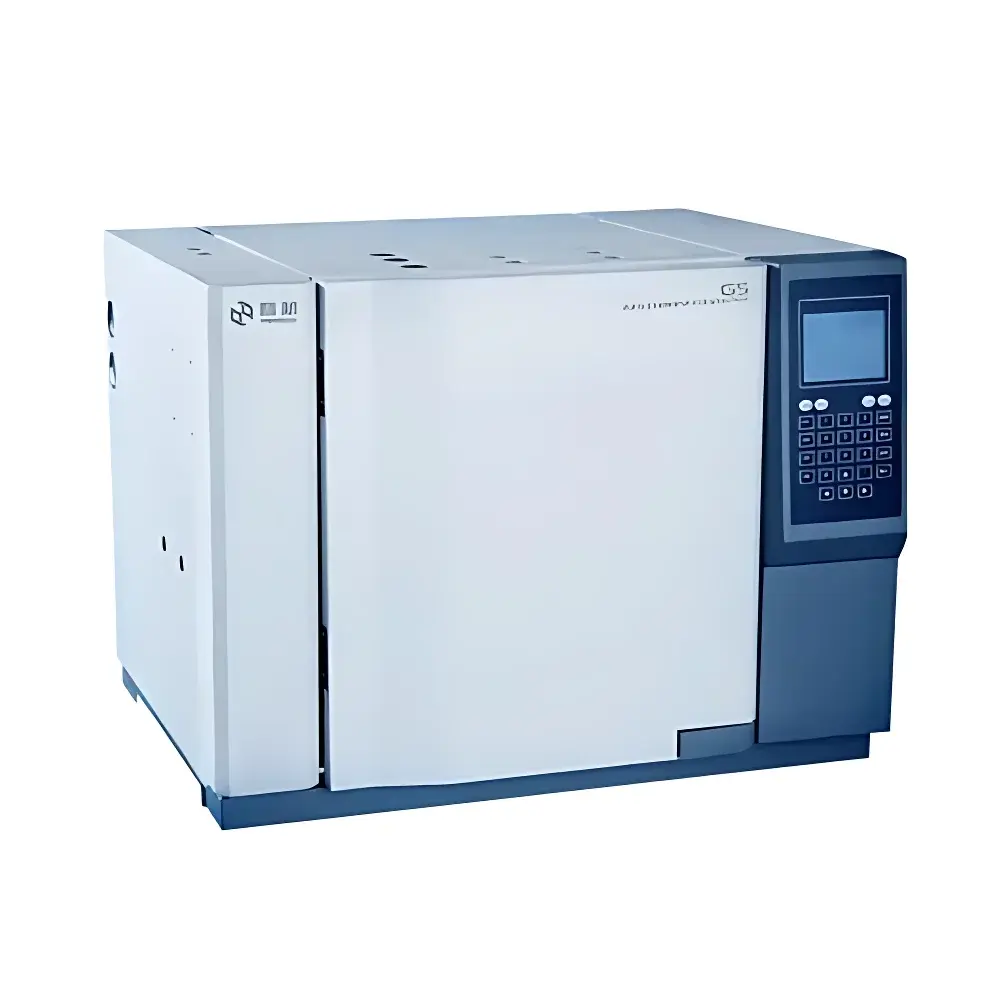
Persee G5 Series Gas Chromatograph
| Brand | Persee |
|---|---|
| Origin | Beijing, China |
| Manufacturer Type | Direct Manufacturer |
| Instrument Type | Laboratory Gas Chromatograph |
| Model | G5 |
| Application Scope | General-Purpose |
| Oven Temperature Range | Ambient +7°C to 400°C |
| Max. Number of Simultaneous Inlet/Detector Mounts | 3 |
| Temperature Program Steps | 10-step |
| Inlet/Detector Configuration Flexibility | Modular |
| Carrier Gas Control | Digital Precision Flow/Pressure Regulation |
| Compliance | Designed to meet core requirements of ISO/IEC 17025, ASTM D3606, USP <621>, and FDA 21 CFR Part 11 for data integrity |
Overview
The Persee G5 Series Gas Chromatograph is a benchtop laboratory gas chromatograph engineered for precision, operational flexibility, and regulatory readiness in routine and method-development environments. Built on a robust dual-column oven architecture with active thermal management, the G5 implements classical gas chromatographic separation principles—based on differential partitioning of volatile and semi-volatile analytes between a mobile phase (inert carrier gas) and a stationary phase (capillary or packed column)—to deliver high-resolution, reproducible retention time profiles. Its modular inlet and detector mounting system supports concurrent operation of up to three independent analytical modules, enabling parallel method execution, method verification, or multi-detector confirmation without hardware reconfiguration. The instrument is purpose-built for laboratories requiring consistent performance across environmental testing, petrochemical QA/QC, food safety screening, pharmaceutical residual solvent analysis, and forensic toxicology workflows.
Key Features
- Dual rear-door cooling mechanism significantly reduces oven cooldown time between runs, improving throughput by up to 35% compared to single-door configurations under identical temperature ramp conditions.
- Digital mass-flow and pressure-controlled gas delivery system with calibrated digital刻度 valves ensures long-term stability and traceable repeatability of carrier gas flow (helium, hydrogen, or nitrogen) across the full operating range—critical for retention time locking and method transfer.
- Column oven accommodates standard 0.1–0.53 mm ID capillary columns up to 60 m in length and supports both split/splitless and cool-on-column injection modes via interchangeable inlet modules.
- Temperature control accuracy of ±0.1°C over the full range (ambient +7°C to 400°C), with programmable 10-stage heating ramps including hold, ramp, and cooling segments per step—enabling complex gradient elution strategies.
- Integrated intelligent workstation provides real-time instrument status monitoring, remote parameter adjustment, and synchronized dual-channel acquisition from independent detectors (e.g., FID + TCD or ECD + PID) within a single acquisition session.
Sample Compatibility & Compliance
The G5 accepts liquid, gaseous, and headspace-derived samples via compatible autosamplers (e.g., Persee AS-3900) or manual syringe injection. It supports common GC-compatible sample preparation techniques—including solid-phase microextraction (SPME), purge-and-trap, and thermal desorption—without modification. All firmware and software components are designed in accordance with ISO/IEC 17025:2017 clause 7.7 (control of data and information management) and incorporate electronic audit trail functionality compliant with FDA 21 CFR Part 11 Subpart B (electronic records) and Subpart C (electronic signatures). The system meets essential design criteria referenced in USP Chromatography and ASTM D3606–22 (determination of benzene and toluene in gasoline), supporting validated method implementation in GLP and GMP-regulated environments.
Software & Data Management
The Persee ChromaLab™ workstation (v3.2+) delivers comprehensive chromatographic control, processing, and reporting capabilities. It features dual-channel synchronous acquisition with independent baseline correction, peak integration using tangent skim and valley-to-valley algorithms, and customizable calibration curve models (linear, quadratic, weighted least-squares). Raw data files (.chd) are stored in vendor-neutral format with embedded metadata (instrument ID, operator, method timestamp, audit log hash). All user actions—including method edits, integration parameter changes, and report generation—are recorded with timestamps, user IDs, and reason-for-change fields. Data export supports CSV, PDF, and XML formats compatible with LIMS integration and third-party statistical packages (e.g., JMP, Minitab).
Applications
- Residual solvent analysis in pharmaceutical intermediates per ICH Q3C guidelines.
- VOC profiling in indoor air and ambient environmental samples (EPA TO-17, TO-14A).
- Fatty acid methyl ester (FAME) quantification in biodiesel per ASTM D6751.
- Pesticide multiresidue screening in fruits and vegetables (EN 15662:2018).
- Hydrocarbon group-type analysis (PIONA) in refinery streams using dual-FID configuration.
- Impurity profiling in polymer-grade ethylene and propylene feedstocks.
FAQ
Is the G5 compatible with third-party columns and consumables?
Yes—the G5 uses standard 1/16″ stainless steel or fused silica tubing connections and accepts all industry-standard GC columns (Agilent, Restek, Thermo Fisher, Shimadzu) without adapter modification.
Does the system support method validation documentation packages?
Yes—ChromaLab™ includes built-in IQ/OQ templates aligned with ASTM E2500 and EU Annex 11, with automated test reports for temperature uniformity, retention time reproducibility, and detector linearity.
Can the G5 be integrated into an existing LIMS environment?
Yes—via HL7 or ASTM E1384-compliant API interface; raw data and processed results can be pushed directly to LIMS with configurable metadata mapping.
What maintenance intervals are recommended for routine operation?
Carrier gas filters: every 6 months; inlet liner and septum: per 100 injections or monthly (whichever occurs first); detector cleaning: quarterly for FID, biannually for TCD; oven seal inspection: annually.
Is remote diagnostics supported?
Yes—optional Persee Remote Assist module enables secure, encrypted technician access for firmware updates, log file retrieval, and real-time instrument health assessment with customer consent.






