
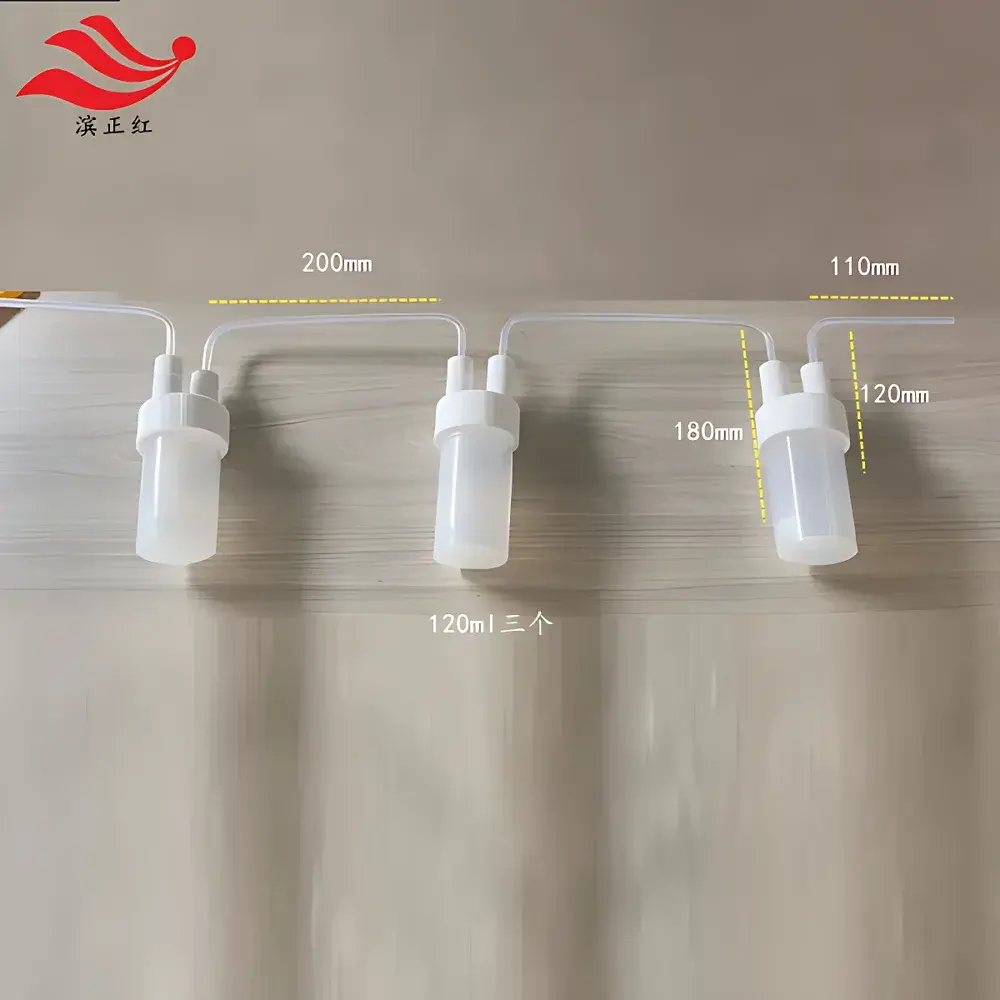
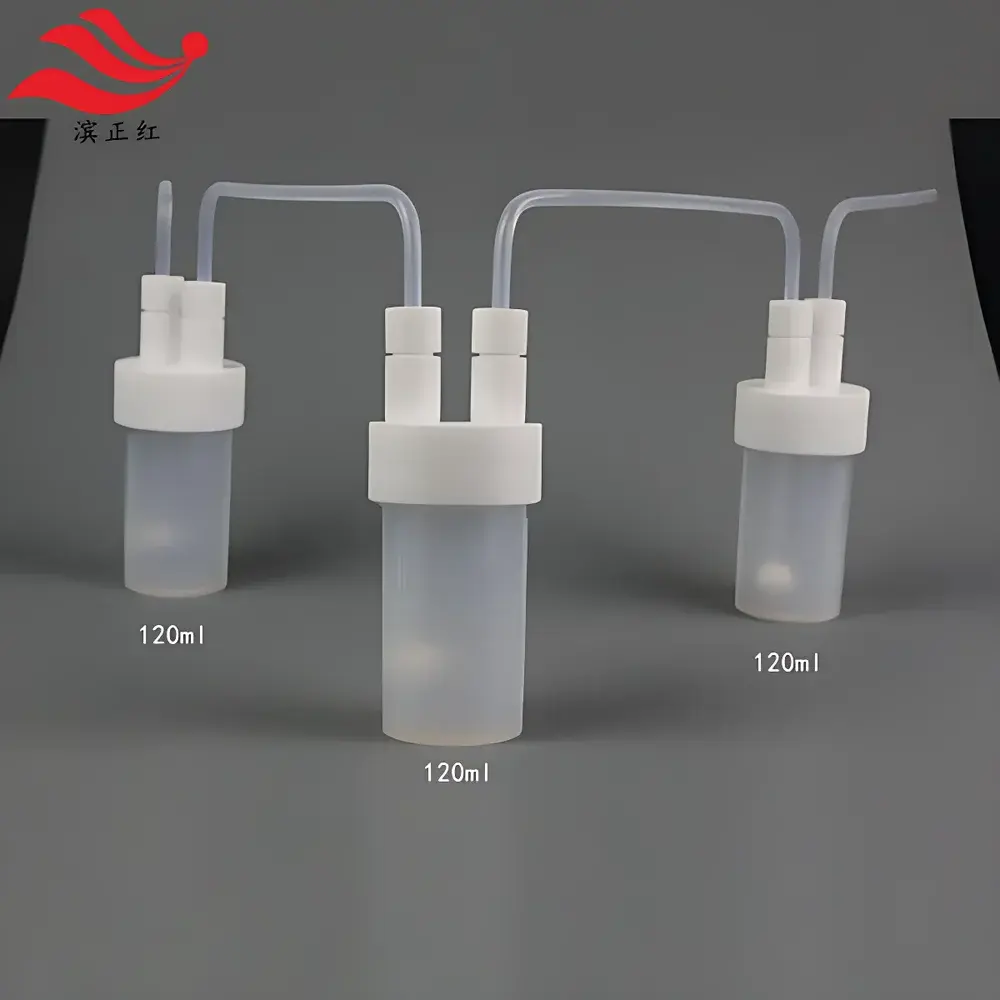
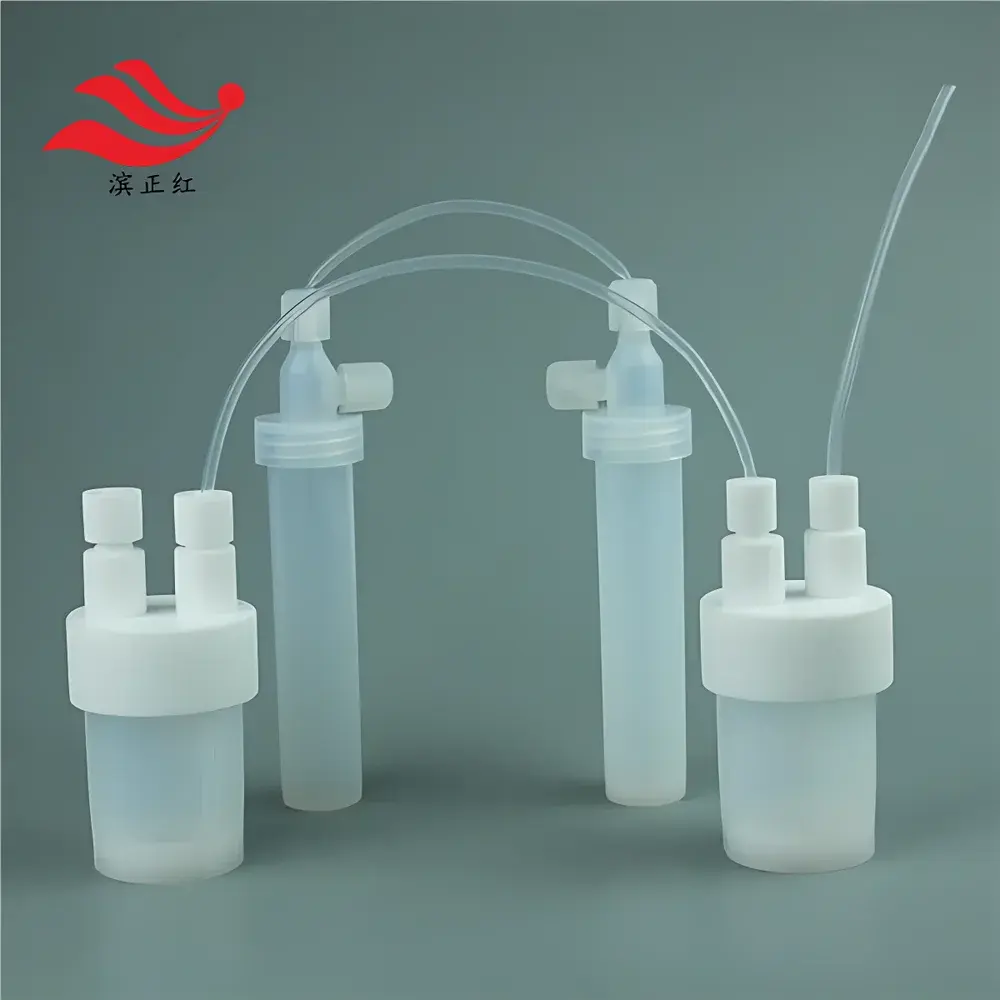
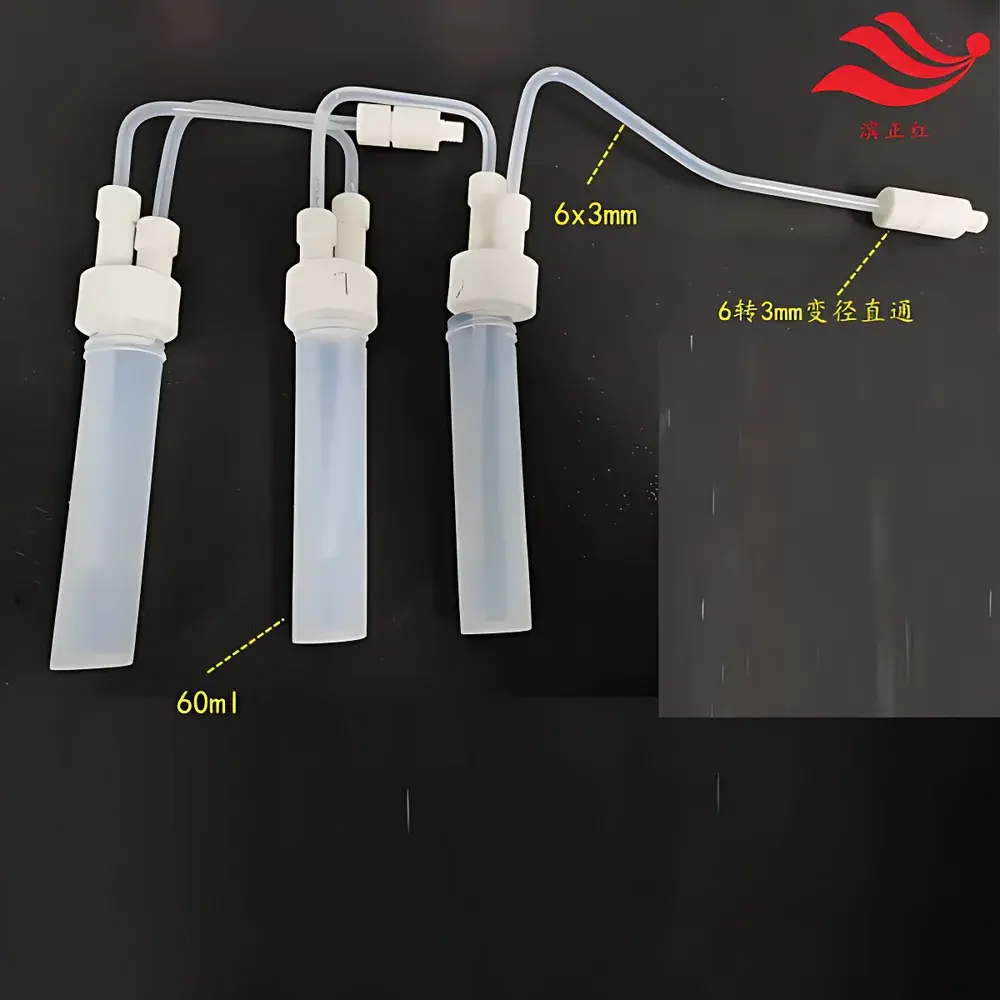
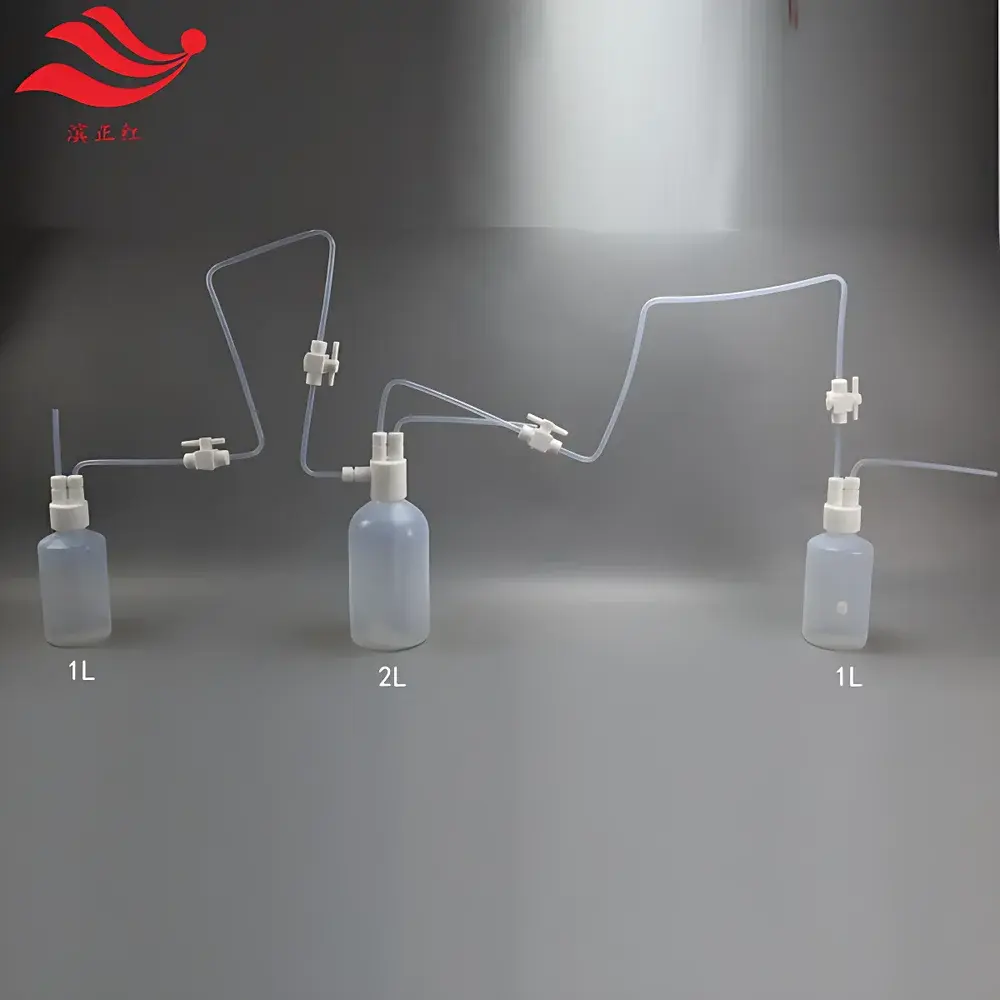
PFA Bubble Absorption Bottle Series – Corrosion-Resistant, Transparent,串联-Style Gas Scrubbing Vessel
| Brand | Binzhenghong |
|---|---|
| Origin | Jiangsu, China |
| Manufacturer Type | OEM/ODM Producer |
| Origin Classification | Domestic (China) |
| Volume Options | 60 mL, 120 mL, 180 mL |
| Pricing | Upon Request |
Overview
The Binzhenghong PFA Bubble Absorption Bottle Series is a precision-engineered laboratory gas scrubbing and absorption system designed for aggressive chemical environments. Constructed entirely from high-purity perfluoroalkoxy alkane (PFA), these串联-style (series-connected) vessels leverage the inertness, thermal stability (–200 °C to +260 °C), and ultra-low extractables profile of PFA to ensure trace-level integrity during gas-phase sampling, acidic/alkaline gas capture, halogenated compound absorption, or reactive species quenching. Each unit operates on the principle of controlled bubble dispersion—gas is introduced via a calibrated fritted glass or PFA sintered disc at the base, generating uniform microbubbles that maximize interfacial contact area with the absorbing liquid (e.g., NaOH for SO₂, H₂O₂ for NOₓ, or KI solution for ozone). The transparent PFA body enables real-time visual monitoring of bubble formation, liquid level stability, and potential foaming or channeling—critical for method validation and GLP-compliant documentation.
Key Features
- Fully fused PFA construction—no adhesives, welds, or metallic components—eliminates leachables and ensures compatibility with HF, fuming nitric acid, aqua regia, and molten alkali metals.
- Modular串联 configuration: Standardized PFA tubing ports (6 mm OD) allow daisy-chaining multiple bottles in series to achieve multi-stage absorption efficiency (>99.9% removal for Cl₂ at 500 mL/min flow).
- Optical clarity: High-transmittance PFA permits direct observation of bubble dynamics, meniscus position, and precipitate formation without compromising chemical resistance.
- Dimensionally stable design: Maintains structural integrity under vacuum (≤10⁻³ mbar) and positive pressure (up to 0.3 MPa), validated per ASTM D3418 for thermal transition behavior.
- Trace-metal-clean manufacturing: Produced in ISO Class 7 cleanrooms; certified heavy-metal content <10 ppt (ICP-MS tested), meeting USP elemental impurities requirements.
Sample Compatibility & Compliance
These absorption bottles are routinely deployed in EPA Method 26A (halogen acid emissions), ISO 14912 (gas analysis calibration), and ASTM D5504 (sulfur compounds in natural gas). Their PFA composition complies with FDA 21 CFR §177.1550 for repeated food-contact use and meets IEC 61241-0 for non-incendive equipment in Zone 2 hazardous locations when used with compatible flow controllers. Each lot undergoes extractables testing per USP , with full CoA provided—including fluoropolymer lot traceability, tensile strength (≥21 MPa), and elongation at break (≥300%). No silicone lubricants or plasticizers are used during assembly, ensuring compliance with semiconductor-grade cleanliness protocols (SEMI F57).
Software & Data Management
While inherently analog, the Binzhenghong PFA absorption system integrates seamlessly into digital lab workflows via optional accessories: calibrated mass flow controllers (MFCs) with RS-485 Modbus output, pressure transducers with 4–20 mA analog signals, and digital manometers traceable to NIST standards. When paired with LIMS-compatible data acquisition platforms (e.g., LabArchives ELN or Thermo Fisher SampleManager), time-stamped flow rate, temperature, and absorption duration parameters can be auto-logged with electronic audit trails compliant with 21 CFR Part 11. Customizable SOP templates—including bubble count verification checklists and post-run residue inspection protocols—are available upon request.
Applications
- Stack emission monitoring: Multi-bottle trains for simultaneous capture of SO₂, NOₓ, HCl, and HF from incinerator flue gas per EN 14792.
- Radiochemistry labs: Trapping volatile radioiodine (¹³¹I) or ⁸⁵Kr using ethanolamine or activated charcoal slurries—PFA prevents radiolytic degradation seen in glass or PVDF.
- High-purity gas purification: Pre-scrubbing of carrier gases (Ar, He, N₂) for ICP-MS and SIMS systems where sub-ppt metal contamination must be excluded.
- Electrochemical cell off-gas treatment: Neutralization of Cl₂ or O₃ byproducts generated during lithium battery electrolyte synthesis.
- Pharmaceutical residual solvent analysis: Capturing ethyl acetate or dichloromethane vapors from lyophilizer exhaust prior to GC-FID quantification.
FAQ
Can these bottles withstand hydrofluoric acid (HF) exposure at elevated temperatures?
Yes—PFA exhibits no measurable etching or weight loss after 72 h immersion in 49% HF at 80 °C, per ASTM D543 test protocol.
What is the maximum recommended gas flow rate for optimal absorption efficiency in the 120 mL model?
For 95%+ capture of SO₂ in 0.1 M NaOH, maintain ≤300 mL/min (linear velocity <0.15 m/s across frit surface); higher flows require staged configurations.
Are custom port configurations (e.g., side-arm inlet, dual outlet) available?
Yes—Binzhenghong offers OEM port machining (threaded NPT, Swagelok®-compatible), integrated PTFE-coated thermowells, and laser-etched volume graduations (±0.5 mL accuracy).
Do you provide validation documentation for GMP-regulated environments?
Each shipment includes a Certificate of Conformance, extractables report, and material certification per ASTM D4894; IQ/OQ protocols available on request.
Is sterilization via autoclaving supported?
No—PFA softens above 260 °C; instead, validated dry-heat sterilization (180 °C for 2 h) or gamma irradiation (25 kGy) is recommended.



