
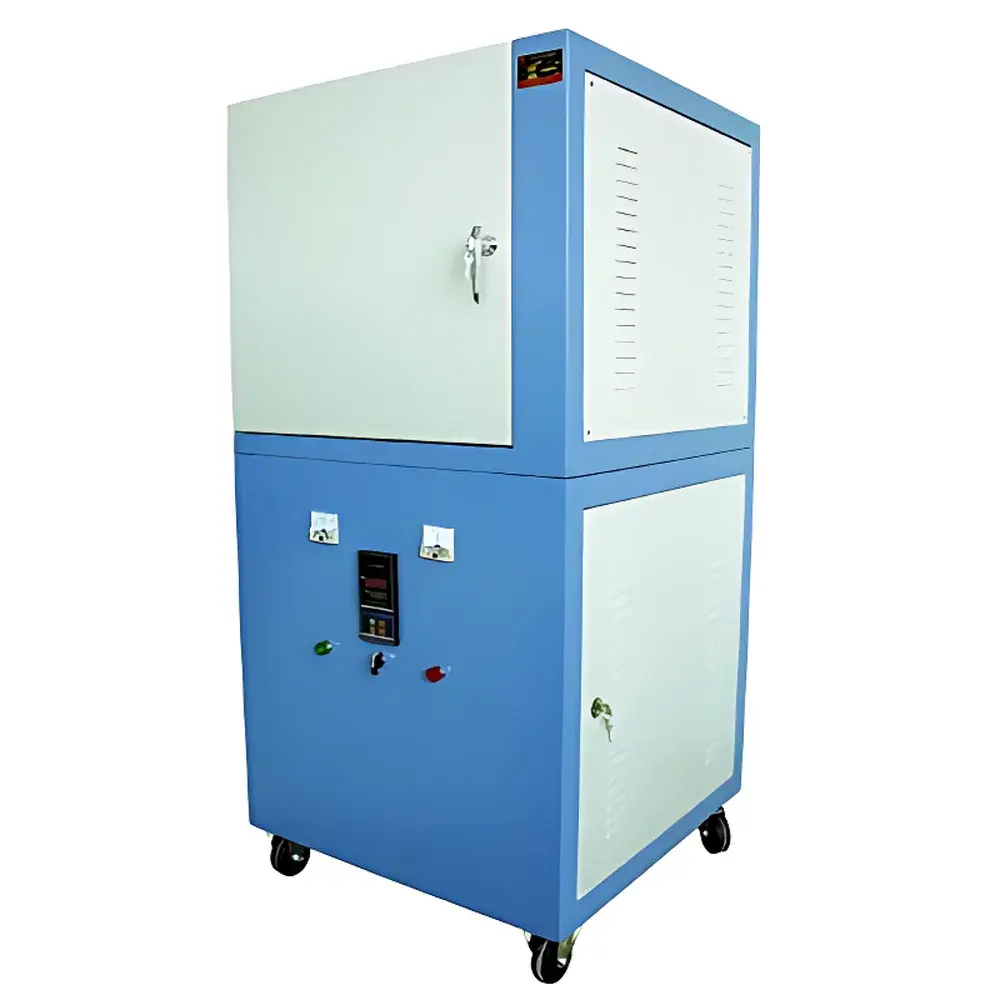
SGM3817 High-Temperature Box-Type Resistance Furnace
| Origin | Henan, China |
|---|---|
| Manufacturer Type | Authorized Distributor |
| Origin Category | Domestic (China) |
| Model | SGM3817 |
| Pricing | Available Upon Request |
| Max Operating Temperature | 1700 °C |
| Temperature Uniformity | ±6 °C |
| Temperature Stability | ±1 °C |
| Heating Rate | 5–20 °C/min |
| Control Accuracy | ±1 °C display resolution |
| Power Efficiency | >50% energy reduction vs. conventional muffle furnaces |
Overview
The SGM3817 High-Temperature Box-Type Resistance Furnace is an engineered thermal processing system designed for precision laboratory and industrial R&D applications requiring stable, repeatable operation at temperatures up to 1700 °C. Built upon a dual-chamber ceramic fiber insulation architecture—developed using proprietary high-purity alumina-silica composite technology—the furnace delivers exceptional thermal efficiency, structural integrity, and long-term dimensional stability. Unlike traditional refractory brick or single-layer fiber furnaces, the SGM3817’s patented double-wall cavity design minimizes radial heat loss while maintaining uniform axial temperature distribution across the working zone. This architecture supports rapid heating (5–20 °C/min), low thermal mass operation, and resistance to sintering-induced degradation—even under prolonged exposure to extreme temperatures. The furnace operates on resistive Joule heating via high-alloy Kanthal A1 or MoSi₂ heating elements (model-dependent), integrated into a thermally balanced chamber geometry optimized for ASTM E1142-compliant thermal uniformity testing.
Key Features
- Dual-chamber ceramic fiber insulation system with >95% thermal reflectivity and zero outgassing below 1700 °C—ensures no contamination of sensitive samples during ashing, calcination, or sintering.
- Modular microprocessor-based temperature controller with 50-segment programmable ramp/soak profiles, supporting complex thermal cycles required for ceramic co-firing, catalyst activation, and metallurgical phase transformation studies.
- PID auto-tuning algorithm with manual/auto seamless switching, real-time temperature deviation compensation, and configurable over-temperature cutoff (±1 °C alarm threshold).
- High-reliability solid-state relay (SSR) power regulation and redundant K-type thermocouple inputs (dual-point monitoring standard on SGM3817F and above models).
- Energy-optimized design achieving ≥50% lower power consumption versus comparable silicon carbide or molybdenum disilicide furnaces operating under identical thermal loads and dwell times.
- Front-loading horizontal chamber configuration with reinforced ceramic fiber door seal and positive-pressure purge port (optional N₂ or Ar compatibility).
Sample Compatibility & Compliance
The SGM3817 accommodates a broad range of inert and semi-reactive sample types—including oxide ceramics, rare-earth phosphors, battery cathode precursors, dental alloys, and geological reference materials—without introducing metallic leaching or carbon residue. Its all-ceramic internal structure complies with ISO 8573-1 Class 4 purity requirements when operated under inert gas purging. The furnace meets general-purpose laboratory safety standards per IEC 61010-1:2010 (Ed. 3) for electrical equipment used in measurement, control, and laboratory use. While not certified for GLP/GMP production environments, its data logging capability (via optional RS485/Modbus RTU interface) supports audit-ready traceability for method validation per USP and ISO/IEC 17025 calibration workflows.
Software & Data Management
The embedded controller supports local parameter configuration via a 4.3-inch TFT-LCD touchscreen with multi-language UI (English, German, French, Spanish). Optional PC connectivity enables remote monitoring and automated data capture through Windows-compatible software compliant with FDA 21 CFR Part 11 Annex 11 requirements—including electronic signature support, audit trail generation, and user role-based access control (Level 1–3 permissions). All temperature profiles, event logs (e.g., door open/close, alarm triggers, power interruptions), and calibration history are timestamped and exportable as CSV or PDF reports. Firmware updates are performed via USB flash drive with SHA-256 signature verification to ensure integrity.
Applications
- Thermal gravimetric analysis (TGA) pre-conditioning and residue quantification in polymer composites and pharmaceutical excipients.
- High-temperature sintering of ZrO₂, Al₂O₃, and SiC-based structural ceramics under controlled atmosphere.
- Ash content determination per AOAC 942.05 and ASTM D3174-22 for coal, biomass, and feedstock materials.
- Heat treatment of tungsten carbide tooling blanks and Ni-based superalloy substrates prior to coating deposition.
- Calibration of secondary temperature sensors (e.g., PtRh/Pt thermocouples, radiation pyrometers) within accredited metrology labs.
- Pre-firing of sol-gel derived thin films and solid-state electrolyte pellets for solid oxide fuel cell (SOFC) development.
FAQ
What is the maximum continuous operating temperature of the SGM3817 series?
The SGM3817 is rated for continuous operation at 1700 °C; intermittent peak exposure up to 1750 °C is permissible for ≤30 minutes per cycle.
Does the furnace support inert or reducing atmospheres?
Yes—standard models include a front-mounted gas inlet/outlet port compatible with N₂, Ar, H₂/N₂ mixtures, and vacuum down to 10⁻² mbar (vacuum flange kit optional).
How is temperature uniformity validated across the working chamber?
Uniformity is measured per ASTM E2203 using nine-point thermocouple mapping at 1700 °C after 60-minute stabilization; reported ±6 °C tolerance applies to the central 70% volume.
Can the controller be integrated into a centralized lab automation network?
Yes—RS485 Modbus RTU and optional Ethernet/IP interfaces enable integration with SCADA systems, LIMS platforms, and PLC-controlled process lines.
Is third-party calibration documentation available?
Factory calibration certificates (NIST-traceable) are provided with each unit; UKAS-accredited calibration services are available upon request for ISO/IEC 17025 compliance.



