
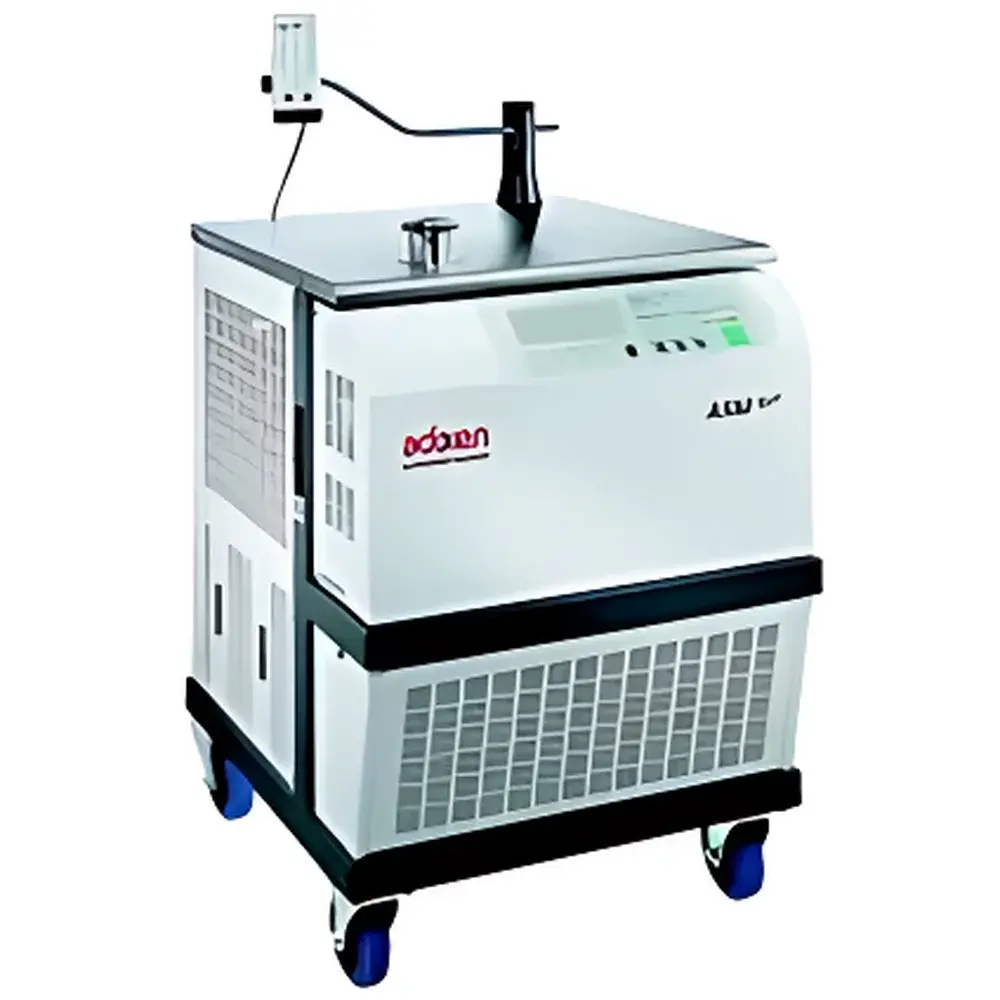
Pfeiffer ASM 192T Helium Mass Spectrometer Leak Detector
| Brand | Pfeiffer Vacuum |
|---|---|
| Origin | Germany |
| Model | ASM 192T |
| Forepump Speed | 20 or 40 m³/h |
| Helium Pumping Speed | 4.4 L/s |
| Minimum Detectable Leak Rate (He) | 5 × 10⁻¹² hPa·L/s |
| Inlet Flange | DN 40 ISO-KF |
| Maximum Inlet Pressure | 6 hPa |
| Detection Modes | Vacuum Mode & Sniffer Mode |
| Warm-up Time | 3 min |
| Power Supply | 200–240 V, 50/60 Hz |
| Dimensions (L×W×H) | 594 × 692 × 933 mm |
| Weight | 125 kg |
| Display | Color Graphical Touchscreen |
| Language Options | Multi-language UI |
Overview
The Pfeiffer ASM 192T Helium Mass Spectrometer Leak Detector is a high-sensitivity, benchtop-integrated leak detection system engineered for precision vacuum integrity verification in industrial and manufacturing environments. Operating on the principle of quadrupole mass spectrometry, the ASM 192T selectively ionizes and separates helium atoms (mass-to-charge ratio m/z = 4) from background gas species, enabling unambiguous identification and quantification of helium tracer gas ingress. Its optimized ion source, high-transmission mass filter, and low-noise electron multiplier detector collectively deliver a minimum detectable leak rate of 5 × 10⁻¹² hPa·L/s — meeting stringent requirements for ultra-high vacuum (UHV) systems, power transmission equipment (e.g., GIS switchgear), hermetic electronic enclosures, and aerospace components. Designed for operational robustness, the ASM 192T features a rigid mechanical architecture with vibration-damping chassis and shock-resistant internal mounting — ensuring stable performance under factory-floor conditions where ambient vibration, thermal fluctuation, and electromagnetic interference are present.
Key Features
- Integrated benchtop configuration with built-in quadrupole mass spectrometer and controller — no external PC required for basic operation
- Selectable forepump configurations: dual-stage rotary vane pumps delivering either 20 m³/h or 40 m³/h pumping capacity, compatible with DN 40 ISO-KF inlet flange
- Helium-specific pumping speed of 4.4 L/s at the analyzer inlet, optimized for rapid response and high signal-to-noise ratio
- Color graphical touchscreen interface with multi-language support (English, German, French, Spanish, Chinese), scalable UI layout, and intuitive workflow navigation
- Dual-mode detection capability: vacuum mode (for pressurized or evacuated test objects) and sniffer (probe) mode for localized leak pinpointing
- Short warm-up time of ≤3 minutes to operational readiness, minimizing downtime during shift transitions or production line checks
- Wide input voltage compatibility (200–240 V, 50/60 Hz) and CE-compliant electrical design for global deployment without local transformer dependency
- Compact footprint (594 × 692 × 933 mm) and 125 kg mass engineered for mobility via integrated casters and reinforced lifting points
Sample Compatibility & Compliance
The ASM 192T supports leak testing of diverse components across vacuum, energy, semiconductor, and automotive sectors. It accommodates test objects ranging from small sealed sensors (10 m³), provided inlet pressure remains ≤6 hPa during vacuum-mode operation. The system complies with ISO 9001 quality management standards and meets essential safety requirements per IEC 61010-1 for electrical equipment used in measurement, control, and laboratory applications. While not inherently 21 CFR Part 11–compliant out-of-the-box, its data logging architecture supports integration with validated third-party software platforms that provide audit trails, electronic signatures, and user access controls required under GMP/GLP frameworks. Calibration traceability follows DIN EN ISO/IEC 17025 guidelines when performed by accredited service providers.
Software & Data Management
The embedded firmware includes real-time leak rate display, trend logging (up to 10,000 data points), and configurable alarm thresholds with visual/audible alerts. Measurement data can be exported via USB 2.0 port in CSV format for post-processing in Excel or statistical analysis tools. Optional Ethernet or RS-232 interfaces enable remote monitoring and integration into SCADA or MES systems using Modbus RTU or TCP protocols. Firmware updates are delivered via secure USB stick; version history and update logs are retained internally for compliance documentation. No cloud connectivity or proprietary cloud services are implemented — all data remains on-device unless explicitly exported by the operator.
Applications
- Gas-insulated switchgear (GIS) commissioning and maintenance in high-voltage substations — detecting SF₆ containment breaches via helium tracer injection
- Leak validation of hermetically sealed lithium-ion battery modules and EV power electronics housings
- Quality assurance of vacuum-jacketed cryogenic piping, superconducting magnet assemblies, and fusion reactor first-wall components
- In-process verification of welded stainless-steel vacuum chambers in semiconductor tool manufacturing
- Compressor housing, motor terminal box, and HVAC heat exchanger integrity testing under production-line conditions
- R&D validation of MEMS packaging, optical sensor cavities, and medical implant encapsulation
FAQ
What vacuum level must the test chamber reach before initiating vacuum-mode leak detection?
The ASM 192T requires the test object’s internal pressure to be ≤6 hPa prior to helium introduction; optimal sensitivity is achieved below 1 hPa.
Can the ASM 192T detect leaks other than helium?
No — it is specifically tuned for helium (m/z = 4) and does not provide quantitative analysis for other gases.
Is calibration required before each use?
A full calibration is not required daily; however, a zero-point verification and sensitivity check using certified helium standard leaks are recommended before critical measurements.
Does the system support automated pass/fail reporting?
Yes — threshold-based pass/fail logic can be configured per test sequence, with results logged and exportable alongside timestamp and operator ID.
What maintenance intervals apply to the quadrupole analyzer and ion source?
Under typical industrial usage, ion source cleaning is advised every 6–12 months; quadrupole alignment verification is recommended annually by qualified Pfeiffer service engineers.





