
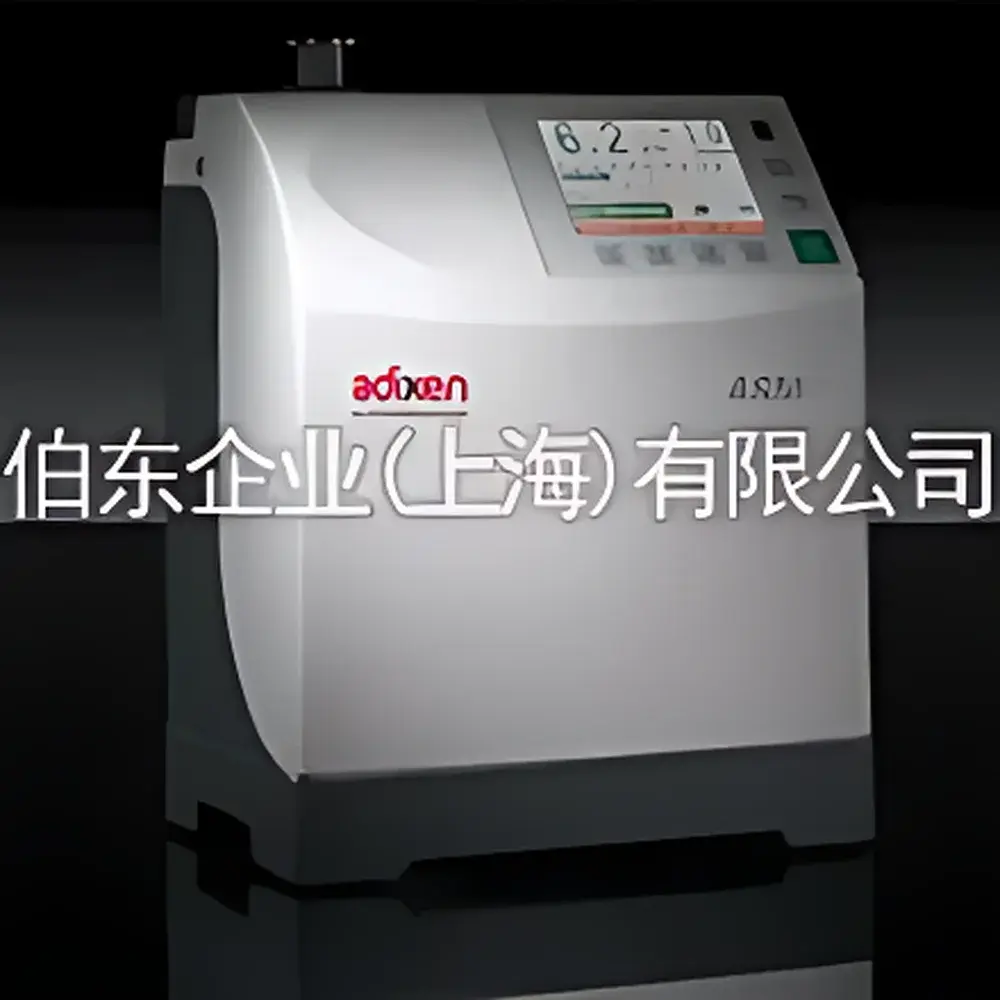
Pfeiffer ASM 310 Portable Helium Mass Spectrometer Leak Detector
| Brand | Pfeiffer Vacuum |
|---|---|
| Origin | France |
| Model | ASM 310 |
| Helium Minimum Detectable Leak Rate (Vacuum Mode) | 5×10⁻¹³ Pa·m³/s |
| Helium Minimum Detectable Leak Rate (Sniffer Mode) | 1×10⁻⁸ Pa·m³/s |
| Helium Pumping Speed | 1.1 L/s |
| Inlet Pressure Limit | 15 hPa |
| Roughing Pump | MVP 020 Diaphragm Pump (1.7 m³/h) |
| Inlet Flange | DN 25 ISO-KF |
| Operating Temperature | 10–40 °C |
| Noise Level | < 45 dB(A) |
| Power Supply | 90–240 V AC, 50/60 Hz |
| Max. Power Consumption | 300 VA |
| Warm-up Time | < 2 min |
| Dimensions (W×H×D) | 350 × 254 × 415 mm |
| Weight | 21 kg |
| Interfaces | RS-232, USB, Digital I/O |
| Display | High-brightness color touchscreen with image function, 10 language options |
| Detection Gases | ⁴He, ³He, H₂ |
| Response Time | < 1 s |
Overview
The Pfeiffer ASM 310 Portable Helium Mass Spectrometer Leak Detector is an engineered solution for high-sensitivity, field-deployable leak detection in ultra-high vacuum (UHV) and high-vacuum (HV) systems. Based on quadrupole mass spectrometry principles, the ASM 310 selectively ionizes and separates helium atoms (mass-to-charge ratio m/z = 4) from background gas species, enabling quantitative detection of helium tracer gas ingress with exceptional specificity and signal-to-noise ratio. Its integrated dry vacuum architecture—comprising a diaphragm roughing pump (MVP 020, 1.7 m³/h) and an ATH-series turbomolecular pump—eliminates oil contamination risks, making it suitable for cleanroom environments, semiconductor tool maintenance, accelerator beamline commissioning, and space-grade cryogenic system validation. With a minimum detectable leak rate of 5×10⁻¹³ Pa·m³/s in vacuum (hard-line) mode and 1×10⁻⁸ Pa·m³/s in sniffer (local) mode, the ASM 310 meets the stringent sensitivity requirements defined in ISO 20485:2017 (leak detection — vocabulary and performance criteria) and ASTM E493-22 (standard test methods for helium leak testing).
Key Features
- Fully integrated oil-free vacuum system: Diaphragm pump + turbomolecular pump ensures zero hydrocarbon backstreaming, critical for UHV applications where surface purity must be preserved.
- Ultra-compact form factor (350 × 254 × 415 mm) and lightweight design (21 kg) with retractable handle and multi-orientation capability—operable horizontally or vertically without performance degradation.
- High-speed helium response (<1 s) and real-time signal processing enable rapid localization and quantification of leaks during dynamic system diagnostics.
- Large, sunlight-readable color touchscreen with built-in image capture functionality supports on-site documentation and traceable reporting; interface language configurable across 10 options including English, German, French, Chinese, Japanese, and Korean.
- Dual-mode operation: Vacuum (pressure-rise or residual gas analysis) and sniffer (helium accumulation at suspected leak sites) modes selectable via intuitive menu navigation.
- Comprehensive digital connectivity: RS-232 serial port for legacy SCADA integration, USB host/device for firmware updates and data export, and opto-isolated digital I/O for external trigger control and alarm signaling.
Sample Compatibility & Compliance
The ASM 310 is designed for compatibility with standard vacuum components used across semiconductor fabrication tools, analytical instrumentation (e.g., electron microscopes, surface analysis chambers), and industrial vacuum systems. Its DN 25 ISO-KF inlet flange allows direct connection to common vacuum manifolds, while optional accessories—including calibrated standard leak devices (e.g., 1×10⁻⁹ Pa·m³/s He), RC 10 remote controller, wheeled trolley, and transport case—facilitate repeatable calibration and mobile deployment. The instrument complies with electromagnetic compatibility (EMC) per EN 61326-1:2013 and safety standards per EN 61010-1:2010. Its dry pumping architecture satisfies ISO 10110-7 (cleanliness requirements for optical components) and supports GLP/GMP-aligned workflows when paired with audit-trail-enabled software.
Software & Data Management
Data acquisition and instrument control are managed through the embedded firmware with configurable logging intervals and timestamped event records. USB export enables CSV-formatted measurement logs (leak rate, time, operator ID, mode) compatible with laboratory information management systems (LIMS). When integrated into larger vacuum infrastructure, the RS-232 and digital I/O interfaces support automated pass/fail decision logic and PLC-triggered leak surveys. While no proprietary PC software is bundled, the device responds to standard SCPI-like command sets, permitting custom scripting for compliance with FDA 21 CFR Part 11 requirements (electronic signatures, audit trails) when deployed in regulated manufacturing environments.
Applications
- Semiconductor lithography equipment: Verification of vacuum integrity in EUV scanner chambers requiring base pressures below 1×10⁻¹¹ Pa, using negative-pressure helium spray techniques.
- Cryogenic detector systems: Leak validation of Mars mission–grade dewars containing infrared sensor arrays, where internal vacuum stability over decades demands leak rates ≤1×10⁻⁸ Pa·m³/s.
- Accelerator mass spectrometry (AMS) facilities: Commissioning of beamline vacuum sections, ion source enclosures, and target chambers under UHV conditions (<10⁻⁷ mbar).
- Industrial vacuum process equipment: In-situ verification of weld integrity, flange seal performance, and valve actuation reliability in power generation turbines, chemical reactors, and thin-film coating systems.
- OEM system integration: Modular incorporation into vacuum system diagnostic subracks or mobile service carts for field service teams supporting analytical instrument manufacturers.
FAQ
What vacuum level is required for optimal performance in vacuum mode?
The ASM 310 achieves its specified sensitivity (5×10⁻¹³ Pa·m³/s) when the test chamber pressure is maintained below 15 hPa at the inlet—typically achieved after initial rough pumping and prior to turbomolecular pump stabilization.
Can the ASM 310 detect gases other than helium?
Yes—it is calibrated for ⁴He and ³He, but also detects hydrogen (H₂, m/z = 2) and deuterium (m/z = 2), though with reduced selectivity due to overlapping mass peaks and lower natural abundance.
Is the instrument suitable for use in cleanrooms?
Yes—the oil-free pumping system eliminates particulate and hydrocarbon emissions, and its noise level (<45 dB[A]) meets ISO Class 5 cleanroom ambient criteria.
Does the ASM 310 support automated calibration routines?
It accepts external standard leaks via its inlet port and records calibration factors in non-volatile memory; however, full automated calibration requires external control via RS-232 or digital I/O triggers.
What is the recommended maintenance interval for the turbomolecular pump?
Under typical usage (≤4 hrs/day, clean environment), Pfeiffer recommends inspection every 12 months and bearing replacement every 24,000 operating hours—documented in the included maintenance logbook and accessible via service mode.
Related Products





