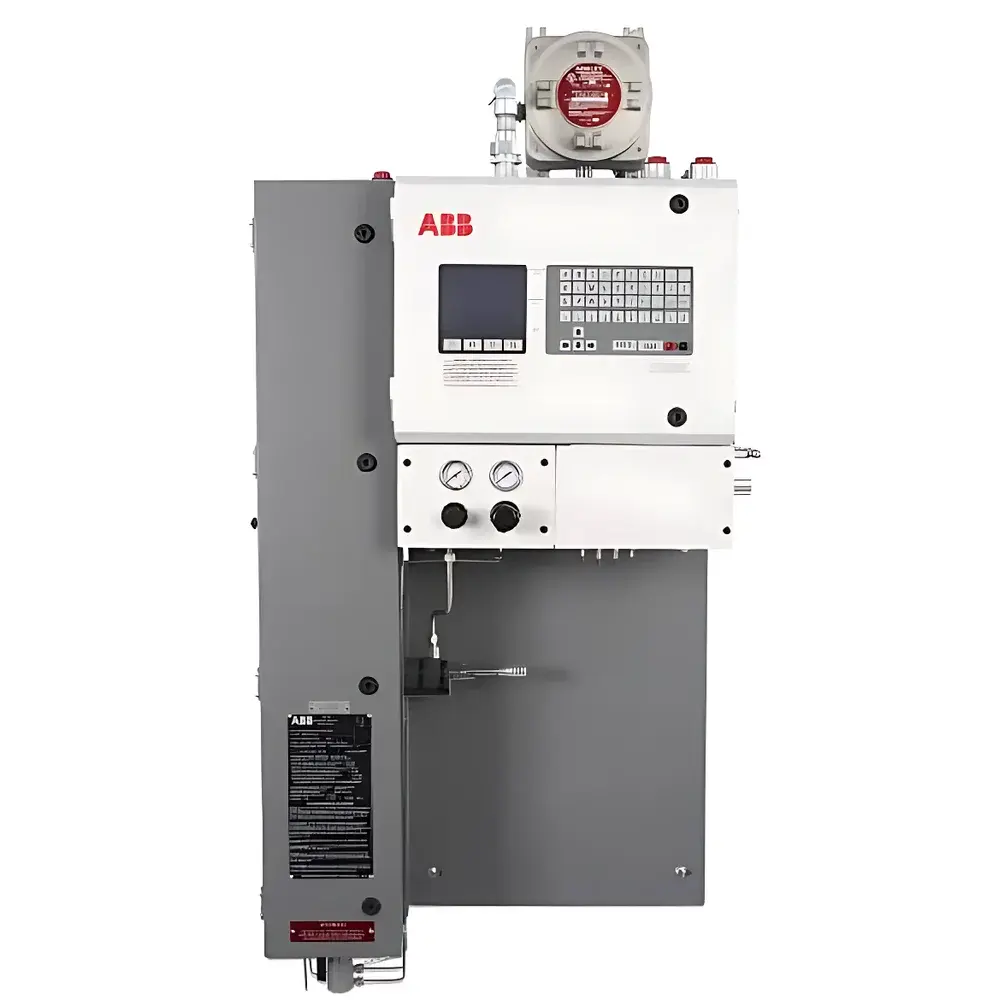
PGC2009 Fast Programmable Temperature Ramp Simulated Distillation Gas Chromatograph
| Origin | USA |
|---|---|
| Manufacturer Type | Authorized Distributor |
| Origin Category | Imported |
| Model | PGC2009 |
| Pricing | Available Upon Request |
Overview
The PGC2009 Fast Programmable Temperature Ramp Simulated Distillation Gas Chromatograph is a purpose-built online analytical instrument engineered for real-time hydrocarbon fractionation in refining and petrochemical process streams. It operates on the principle of programmed temperature gas chromatography (TPGC), where precise, rapid thermal ramping of a directly electrically heated capillary or packed column enables high-resolution separation of complex liquid mixtures—primarily petroleum fractions—based on boiling point distribution. Unlike conventional simulated distillation (SimDis) systems relying on multi-zone ovens or nested column compartments, the PGC2009 employs a monolithic, single-zone heating architecture with integrated resistive column heating. This eliminates thermal lag and significantly reduces cycle time without compromising ASTM-defined resolution criteria. Designed for continuous unattended operation, it interfaces directly with process sample loops via automated liquid sampling valves and delivers quantitative SimDis data compliant with ASTM D3710 (gasoline), ASTM D2887 (diesel), and ASTM D5292 (heavy fuels), making it suitable for integration into closed-loop process control architectures.
Key Features
- Ultra-fast analysis cycles: 4 minutes per run for ASTM D3710 gasoline SimDis; 3 minutes for ASTM D2887 diesel SimDis—more than 4× faster than legacy TPGC systems
- Direct resistive column heating architecture—no oven-based thermal inertia, enabling sub-second temperature ramp rates up to 100 °C/min
- Integrated ABB PGC controller with deterministic real-time scheduling for synchronized valve actuation, column heating, and FID signal acquisition
- Robust liquid-phase sampling system with high-pressure, low-dead-volume injection valve optimized for refinery stream compatibility
- Flame Ionization Detector (FID) with linear dynamic range >10⁷ and <0.1% RSD repeatability across repeated injections
- Patented simplified mechanical layout—no nested column ovens, no auxiliary cooling modules, minimal maintenance footprint
- IP65-rated enclosure with explosion-proof options (Class I, Div 1, Groups B, C, D) for hazardous area deployment
Sample Compatibility & Compliance
The PGC2009 accepts liquid hydrocarbon samples within viscosity ranges typical of naphtha, reformate, gasoline blendstocks, diesel, kerosene, and light gas oils (ASTM D975, D3699). It is validated for use with undiluted or minimally preconditioned feed streams—no derivatization or solvent dilution required. All SimDis calibrations are traceable to NIST SRM 1848 (Hydrocarbon Mixture for Simulated Distillation) and certified against ASTM D3710 Annex A1 precision requirements. The system supports full GLP/GMP audit trails, including electronic signature capability and 21 CFR Part 11–compliant data integrity controls when operated with optional ABB Symphony™ DCS-integrated software modules. It meets CE, UL 61010-1, and ATEX/IECEx certification requirements for industrial installation.
Software & Data Management
Control and data processing are executed through the embedded ABB PGC firmware, supporting both standalone operation and seamless integration with distributed control systems (DCS) via Modbus TCP or OPC UA. Raw chromatograms and calculated SimDis curves (IBP, FBP, T10/T50/T90, % recovered vs. temperature) are exported in ASTM-compliant CSV and XML formats. Optional PGC Analytics Suite provides advanced peak deconvolution, retention time locking, and drift-compensated calibration management. All raw acquisition data—including temperature setpoints, valve timing logs, FID baselines, and detector gain settings—is timestamped and stored with SHA-256 hash integrity verification. Audit logs record user actions, method changes, and calibration events with immutable timestamps—fully aligned with FDA 21 CFR Part 11 and ISO/IEC 17025 documentation standards.
Applications
- Real-time gasoline pool blending optimization using ASTM D3710 IBP/FBP feedback for octane and volatility control
- Closed-loop diesel fractionation monitoring in atmospheric/vacuum distillation units per ASTM D2887
- Feed-forward control of hydrotreater severity based on naphtha cut point shifts
- Quality assurance of reformulated gasoline components prior to tank farm transfer
- On-stream detection of contamination events (e.g., butane carryover into gasoline, diesel dilution in jet fuel)
- Support for refinery-wide digital twin initiatives requiring high-frequency SimDis inputs at ≤5-minute intervals
FAQ
What ASTM methods does the PGC2009 support out-of-the-box?
ASTM D3710 (gasoline), ASTM D2887 (diesel), and ASTM D5292 (heavy distillates) are factory-configured and fully validated.
Can the PGC2009 operate without a DCS connection?
Yes—it functions autonomously with local HMI and stores all data internally for periodic export via Ethernet or USB.
Is column replacement a field-serviceable task?
Yes—column installation requires no tools and takes under 90 seconds due to standardized Swagelok®-compatible fittings and pre-aligned thermal contacts.
How is calibration maintained during extended unattended operation?
The system performs automatic baseline correction and retention time locking using internal reference compounds; scheduled calibrations follow ASTM D3710 Section 9 protocols.
Does the PGC2009 support remote diagnostics and firmware updates?
Yes—via secure TLS-encrypted SSH or HTTPS channels, with version-controlled update packages signed by ABB Digital Certificates.
Related Products