
Phenom FiberMetric Fiber Analysis System
| Brand | Phenom |
|---|---|
| Country of Origin | Netherlands |
| Manufacturer Type | Manufacturer |
| Origin Category | Imported |
| Model | Phenom FiberMetric |
| Pricing | Upon Request |
Overview
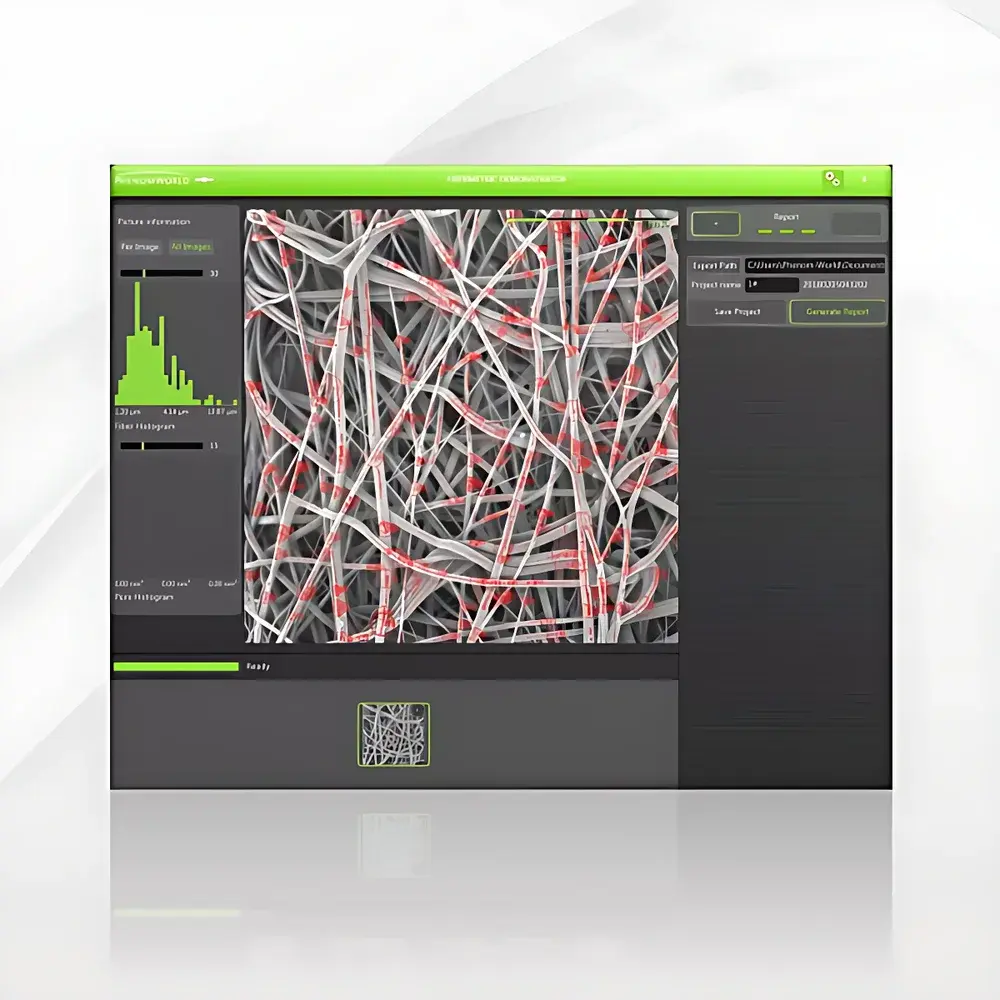
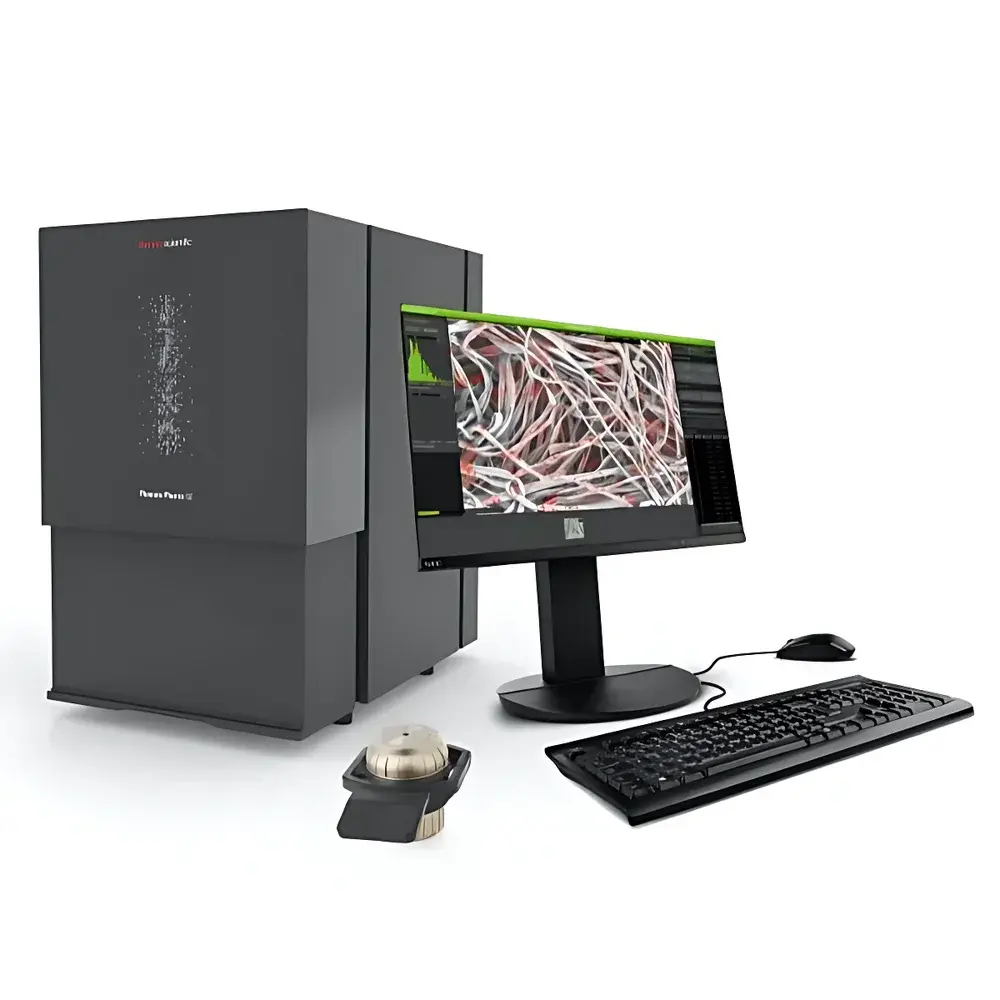
The Phenom FiberMetric Fiber Analysis System is a dedicated, software-integrated accessory designed for high-throughput statistical characterization of fibrous materials in conjunction with Phenom desktop scanning electron microscopes (SEM). Engineered for precision and repeatability, FiberMetric leverages automated image-based metrology grounded in calibrated SEM imaging geometry and sub-pixel edge-detection algorithms. It enables rapid, operator-independent quantification of fiber diameter distributions across the nanoscale to sub-micrometer range (typically 20 nm – 5 µm), supporting rigorous morphological analysis required in advanced materials R&D, filtration science, textile engineering, and biomedical scaffold development.
Key Features
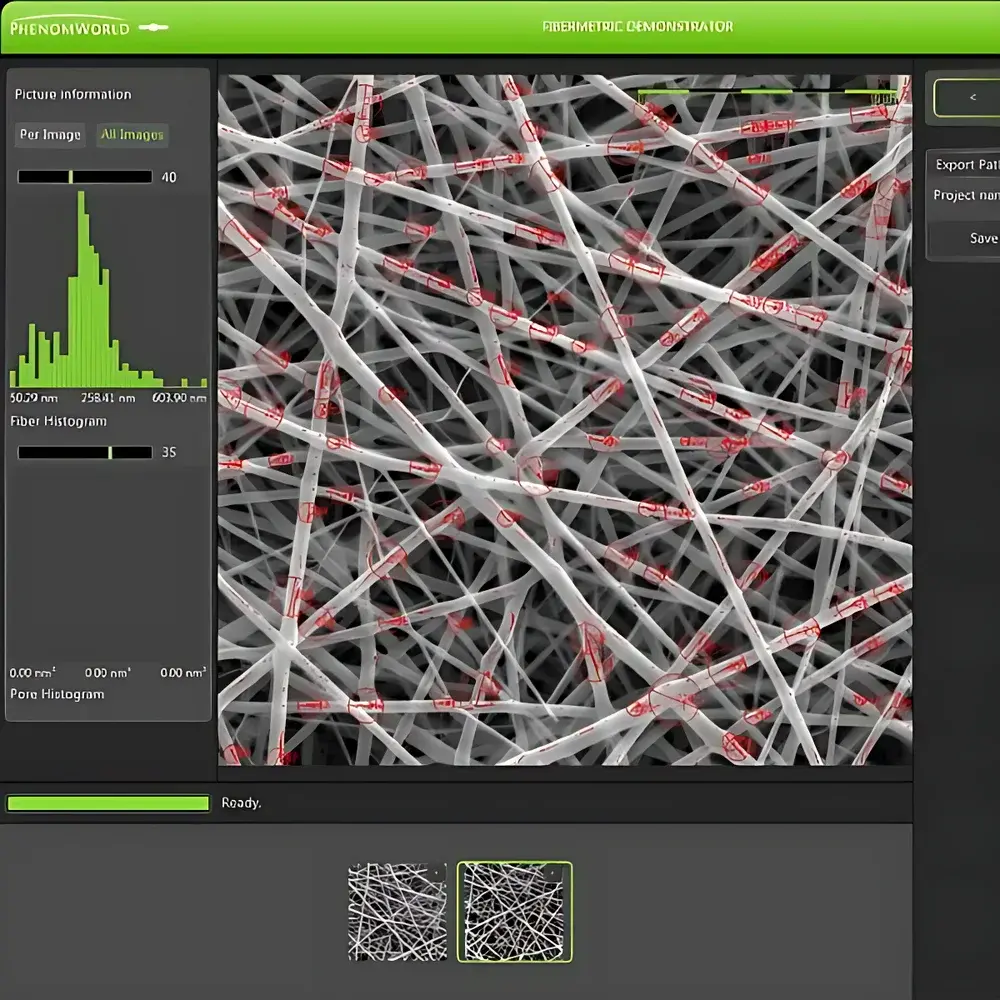
- Automated fiber diameter measurement with real-time acquisition — processes hundreds of individual fibers within seconds per SEM field-of-view
- Robust averaging protocol: each reported diameter value is derived from 50 independent pixel-level measurements along the fiber cross-section, minimizing edge-noise artifacts and enhancing measurement reproducibility
- Integrated calibration traceability: maintains dimensional accuracy via stage- and detector-synchronized magnification referencing, compliant with ISO 16700 (Scanning Electron Microscopy — Measurement of Particle Size)
- Real-time synchronization with Phenom SEM imaging: no post-acquisition image export or manual import required; measurements initiate directly from live or saved SEM frames
- Intuitive graphical interface with one-click histogram generation: automatically computes and visualizes diameter distribution (frequency vs. bin width), mean, median, standard deviation, skewness, and kurtosis
- Export-ready data output: supports CSV, XLSX, and PDF formats containing both raw coordinate data (x/y positions, measured diameters) and summary statistics for audit-trail documentation
Sample Compatibility & Compliance
FiberMetric is optimized for non-woven, electrospun, melt-blown, and natural fiber samples mounted on standard SEM stubs or conductive substrates. It accommodates conductive and non-conductive fibers when imaged under low-vacuum or ESEM-compatible conditions on Phenom systems. The software applies adaptive thresholding and noise suppression to handle variable contrast, charging artifacts, and overlapping fibers — critical for heterogeneous industrial samples. All measurement workflows comply with GLP-aligned documentation standards, and audit logs (including timestamped user actions, calibration events, and parameter changes) are retained for regulatory review. While not certified as a medical device, FiberMetric-generated data meets requirements for ASTM D3377 (Standard Test Method for Measuring Fiber Diameter Distribution) and ISO 9276-2 (Representation of Results of Particle Size Analysis) when used with properly calibrated Phenom hardware.
Software & Data Management
FiberMetric operates as a native module within the Phenom ProSuite software environment. It supports role-based access control, configurable measurement presets (e.g., “Nanofiber Mode”, “Macrofiber Mode”), and version-controlled method templates. Raw image metadata—including kV, WD, dwell time, magnification, and detector type—is embedded in exported datasets. Software updates follow a controlled release cycle with documented change logs. For laboratories operating under FDA 21 CFR Part 11 requirements, optional secure login, electronic signatures, and full audit trail functionality can be enabled through Phenom’s validated software package (subject to separate qualification protocol).
Applications
- Quality control of electrospun nanofiber membranes for air/water filtration media
- Statistical validation of fiber diameter uniformity in tissue engineering scaffolds
- Comparative analysis of melt-blown polypropylene fiber morphology before/after thermal treatment
- Characterization of cellulose nanocrystal (CNC) and bacterial nanocellulose networks
- Research into carbon nanofiber dispersion and alignment in polymer composites
- Regulatory submission support for nanomaterial safety assessments (OECD TG 118, ISO/TS 10993-22)
FAQ
Is FiberMetric compatible with non-Phenom SEM platforms?
No — FiberMetric is a proprietary, hardware-synchronized accessory designed exclusively for integration with Phenom desktop SEM systems (Pro, Pure, and Geo models). It relies on direct API-level communication with the microscope’s imaging engine and stage controller.
Can FiberMetric measure fiber length or orientation?
FiberMetric is optimized for diameter distribution analysis. While it identifies fiber endpoints and centerlines during segmentation, quantitative length and angular distribution metrics are not part of its standard feature set; such analyses require third-party image processing tools or custom scripting using exported coordinate data.
What is the minimum detectable fiber diameter?
Under optimal imaging conditions (e.g., 10 kV, 5 mm WD, backscattered electron detection, high-resolution mode), FiberMetric reliably resolves fibers down to approximately 20 nm in diameter, contingent upon sufficient signal-to-noise ratio and edge contrast in the acquired SEM image.
Does FiberMetric support batch processing of multiple images?
Yes — users may queue multiple SEM images (saved in .tif or .png format) for unattended processing. Each image generates an independent report, and aggregated statistics across batches can be compiled manually or via scriptable export interfaces.
How is system calibration verified?
Calibration is performed using NIST-traceable reference standards (e.g., gold-coated polystyrene nanospheres or certified grating replicas) imaged at identical magnification and working distance as sample acquisitions. Calibration status is logged and can be re-validated at any time through the software’s Calibration Manager module.




