
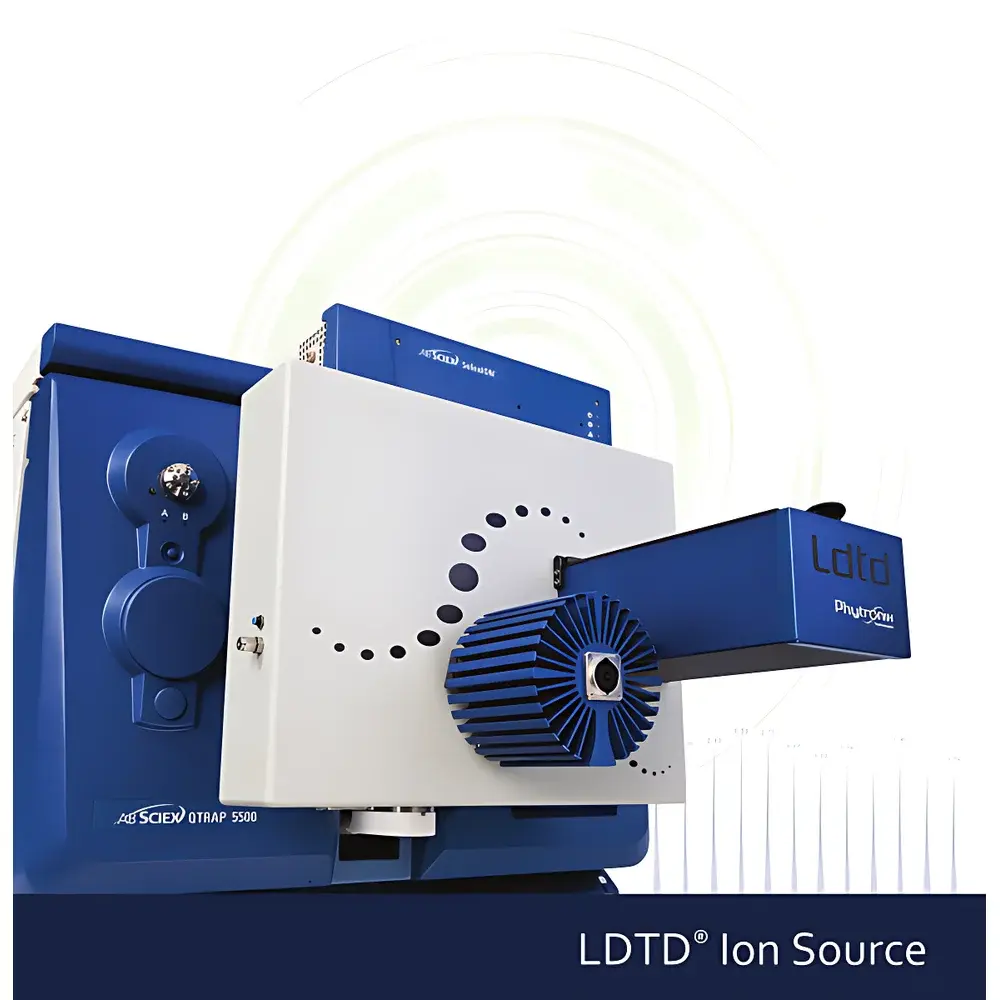
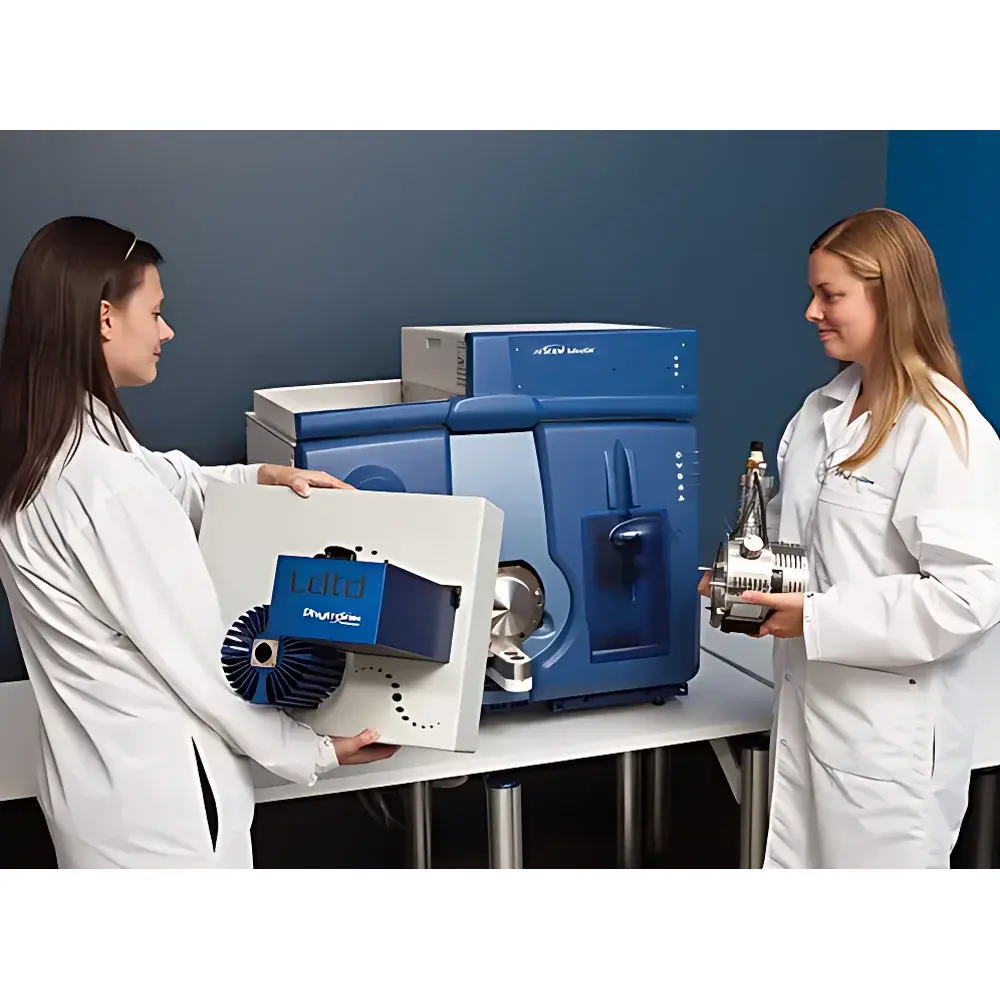
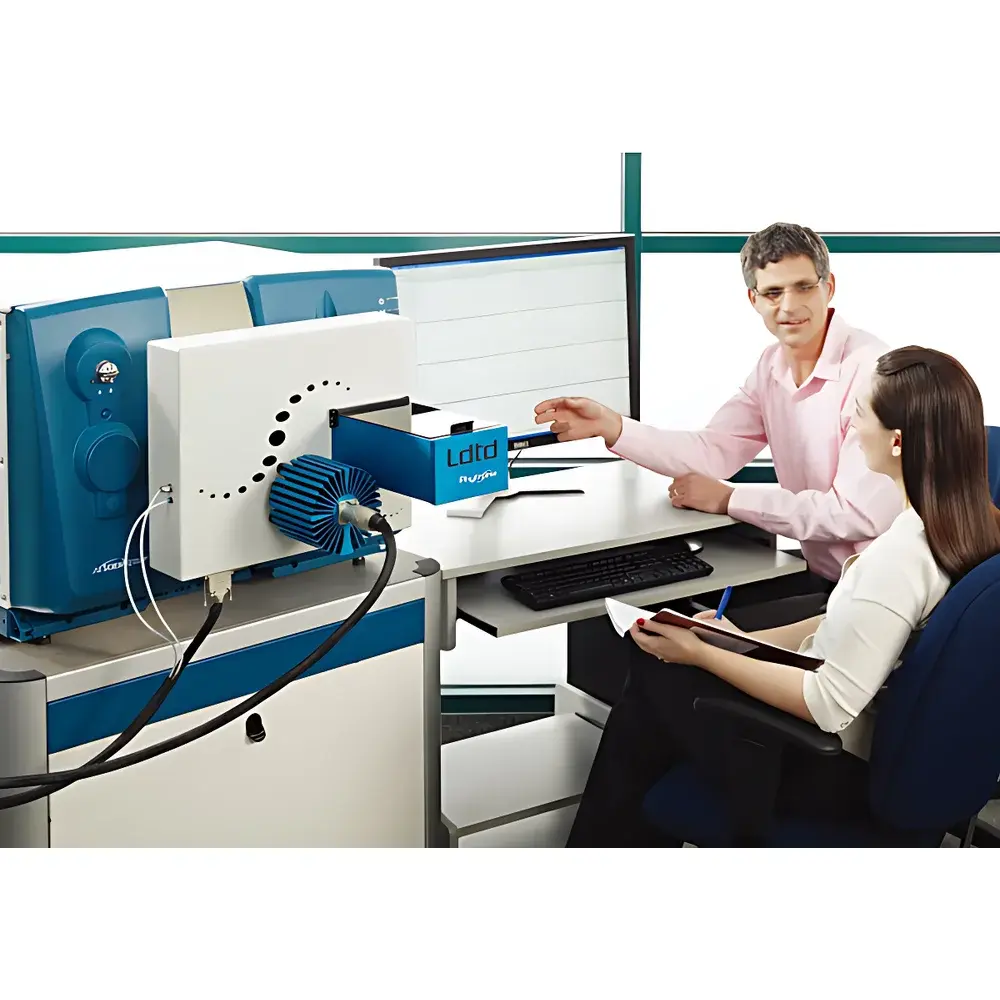
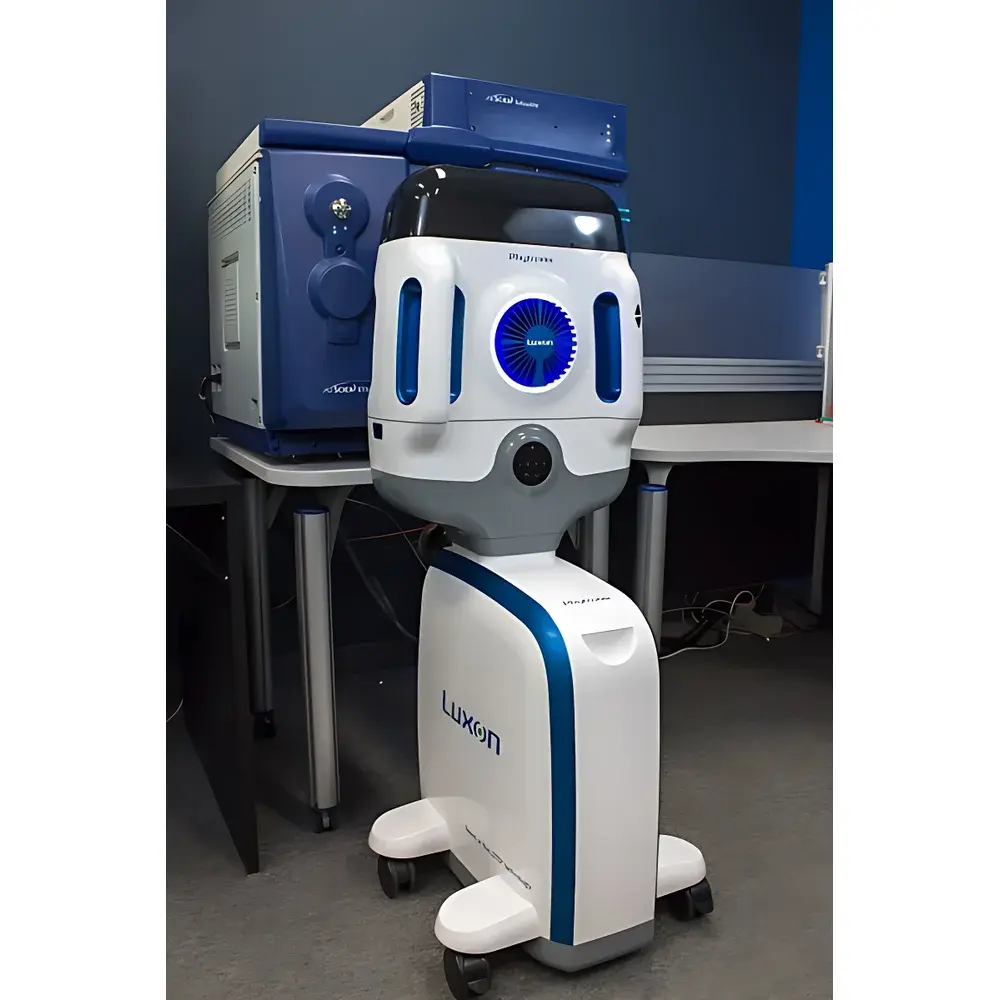
Phytronix LDTD Laser Diode Thermal Desorption Atmospheric Pressure Chemical Ionization Source
| Brand | Phytronix |
|---|---|
| Origin | Canada |
| Model | LDTD, Luxon |
| Instrument Type | Ion Source |
| Sample Introduction Speed | ≤6 s (LDTD), ≤1 s (Luxon), 0.6 s (Luxon-1536) |
| Ionization Mode | Atmospheric Pressure Chemical Ionization (APCI) via Laser-Induced Thermal Desorption |
| Compatibility | Triple Quadrupole (QqQ), Ion Trap, TOF, Q-TOF, Orbitrap, and Hybrid MS Platforms (SCIEX, Thermo Fisher, Shimadzu, Waters) |
| Sample Format | 96-well, 384-well, 1536-well plates (barcoded LazWell™ plates) |
| Carrier Gas | Zero-air (≤3 ppm H₂O) or dried air with VOC scrubber |
| Laser Source | Infrared laser diode array, 20 W max output, power ramp 0–45% in 3 s, hold at 45% for ~2 s, then rapid decay to 0% |
| Sample Volume | 0.5–10 µL (depending on plate format) |
| Residual Carryover | None (no memory effect) |
| Regulatory Compliance | Fully compatible with GLP/GMP workflows |
| Environmental Impact | Solvent-free, column-free, pump-free operation — eliminates LC consumables (mobile phases, columns, tubing, vials, filters) |
Overview
The Phytronix LDTD (Laser Diode Thermal Desorption) and its second-generation successor, the Luxon Ion Source, represent a paradigm shift in ambient ionization for mass spectrometry. Engineered for ultra-high-throughput quantitative analysis, these sources operate on a contactless, solvent-free atmospheric pressure chemical ionization (APCI) principle enabled by precisely controlled infrared laser diode arrays. Unlike conventional electrospray (ESI) or matrix-assisted laser desorption/ionization (MALDI), LDTD and Luxon require no liquid chromatography separation, no matrix addition, and no high-voltage spray emitters. Instead, dried liquid samples — uniformly deposited as nanoscale films on proprietary LazWell™ sample plates — are rapidly heated from the plate’s reverse side using pulsed IR laser irradiation. This thermal desorption releases neutral analytes into a carrier gas stream (zero-air or dried air), which transports them into a corona discharge region where soft APCI occurs, generating predominantly [M+H]⁺ or [M−H]⁻ ions. The resulting ions are efficiently coupled into any commercial mass spectrometer — including triple quadrupole (QqQ), ion trap, time-of-flight (TOF), Q-TOF, and Orbitrap systems — enabling robust MRM, full-scan, neutral loss, and precursor ion scanning without chromatographic delay.
Key Features
- True high-speed ionization: LDTD achieves full qualitative/quantitative MS/MS analysis in 4–6 seconds per sample; Luxon reduces this to ≤1 second; Luxon-1536 delivers 0.6-second cycle time per well.
- Zero carryover and no memory effect: Each sample is thermally desorbed independently from a discrete well; no cross-contamination between adjacent or sequential analyses.
- Solvent- and column-free operation: Eliminates dependence on LC pumps, gradient controllers, analytical columns, mobile phase solvents, and associated maintenance — reducing cost of ownership and environmental footprint.
- Minimal sample consumption: Compatible with 0.5–10 µL volumes across 96-, 384-, and 1536-well formats; ideal for precious biological matrices (e.g., dried blood spots, microdialysates).
- Automated, unattended workflow: Integrated robotic arm handling, barcoded LazWell™ plate recognition, and synchronized MS acquisition enable continuous 24/7 operation — up to >30,000 samples per day with Luxon-1536.
- Modular compatibility: Native interface support for SCIEX API series, Thermo Scientific TSQ, Shimadzu Nexera MX, Waters Xevo TQ-S, and others; also interoperable with ion mobility devices (e.g., SelexION™) for conformational or isomeric resolution.
Sample Compatibility & Compliance
The LDTD/Luxon platform accepts a broad range of sample types following simple drying — including plasma, serum, urine, tissue homogenates, food extracts, environmental water/soil digests, and pharmaceutical formulations. No derivatization, extraction, or cleanup is required for many applications, though protein precipitation or dilution may be applied where necessary. All LazWell™ plates are ISO-compliant (ANSI/SBS standard dimensions), feature integrated 2D barcodes for full traceability, and maintain samples under temperature-controlled, sealed environments prior to analysis. From a regulatory perspective, the system is fully deployable in GLP and GMP environments: when paired with validated instrument control software (e.g., Analyst®, MultiQuant™, or MassHunter), it supports electronic signatures, audit trails, user access controls, and data integrity features aligned with FDA 21 CFR Part 11 and EU Annex 11 requirements. The source contains no radioactive components and emits no ionizing radiation — conforming to IEC 61010-1 and CSA C22.2 No. 61010-1 safety standards.
Software & Data Management
Instrument operation is managed through Phytronix Control Suite — a Windows-based application that provides real-time parameter control (laser power ramp profile, dwell time, carrier gas pressure, plate indexing speed) and synchronization with vendor-specific MS acquisition engines. Method templates support batch processing of multi-plate runs, dynamic re-injection logic, and conditional triggering based on QC flagging. Raw data files retain full metadata (plate ID, well position, laser energy, timestamp, MS acquisition parameters), ensuring traceability for regulatory submissions. Integration with LIMS and ELN platforms is achieved via standardized APIs (RESTful or OPC UA), while peak integration and quantitation leverage established algorithms from major MS software vendors — preserving method continuity during technology transition.
Applications
The LDTD/Luxon platform excels in applications demanding both speed and specificity. In drug discovery and development, it enables rapid ADME/PK profiling — achieving correlation coefficients >0.99 with conventional LC-MS/MS methods while delivering up to 50× higher throughput. It is widely adopted for dried blood spot (DBS) analysis, CYP inhibition assays, P-gp permeability screening, and therapeutic drug monitoring (TDM) of immunosuppressants (e.g., tacrolimus, sirolimus). In forensic toxicology, it supports high-volume screening of opioids, stimulants, and novel psychoactive substances (NPS) directly from oral fluid or whole blood. Food safety labs use it for antibiotic residue detection in honey and dairy (e.g., sulfonamides, fluoroquinolones, β-lactams), while environmental laboratories apply it to persistent organic pollutants (POPs), PFAS, and pesticide metabolites in wastewater and soil extracts. Its ability to handle complex biological matrices without chromatographic interference makes it especially valuable for biomarker verification and clinical assay development.
FAQ
Does LDTD require chromatographic separation?
No. LDTD is a direct-analysis, ambient ionization technique that bypasses LC entirely — relying instead on thermal desorption and APCI for selective ion generation.
Can LDTD be used with high-resolution mass spectrometers?
Yes. The source is fully compatible with TOF, Q-TOF, Orbitrap, and FT-ICR platforms, supporting accurate mass measurement and HRAM-based identification workflows.
What is the typical detection limit for small molecules using Luxon?
Absolute detection limits are instrument-dependent but routinely reach sub-500 fg on triple quadrupole systems operating in MRM mode.
Is method transfer from LC-MS/MS to LDTD straightforward?
Yes — retention time is eliminated, but MRM transitions, declustering potentials, and collision energies remain identical; only sample preparation shifts from injection-ready solutions to dried spots.
How is calibration handled in high-throughput LDTD workflows?
Calibrators and QCs are co-spotted on the same plate; internal standards (isotope-labeled or structural analogs) are added pre-spotting to ensure precision across thousands of wells.
Does Luxon-1536 support 24/7 unattended operation?
Yes — with automated plate stacking, barcode validation, and error-recovery protocols, Luxon-1536 sustains uninterrupted analysis for >72 hours with minimal operator intervention.
Related Products



