
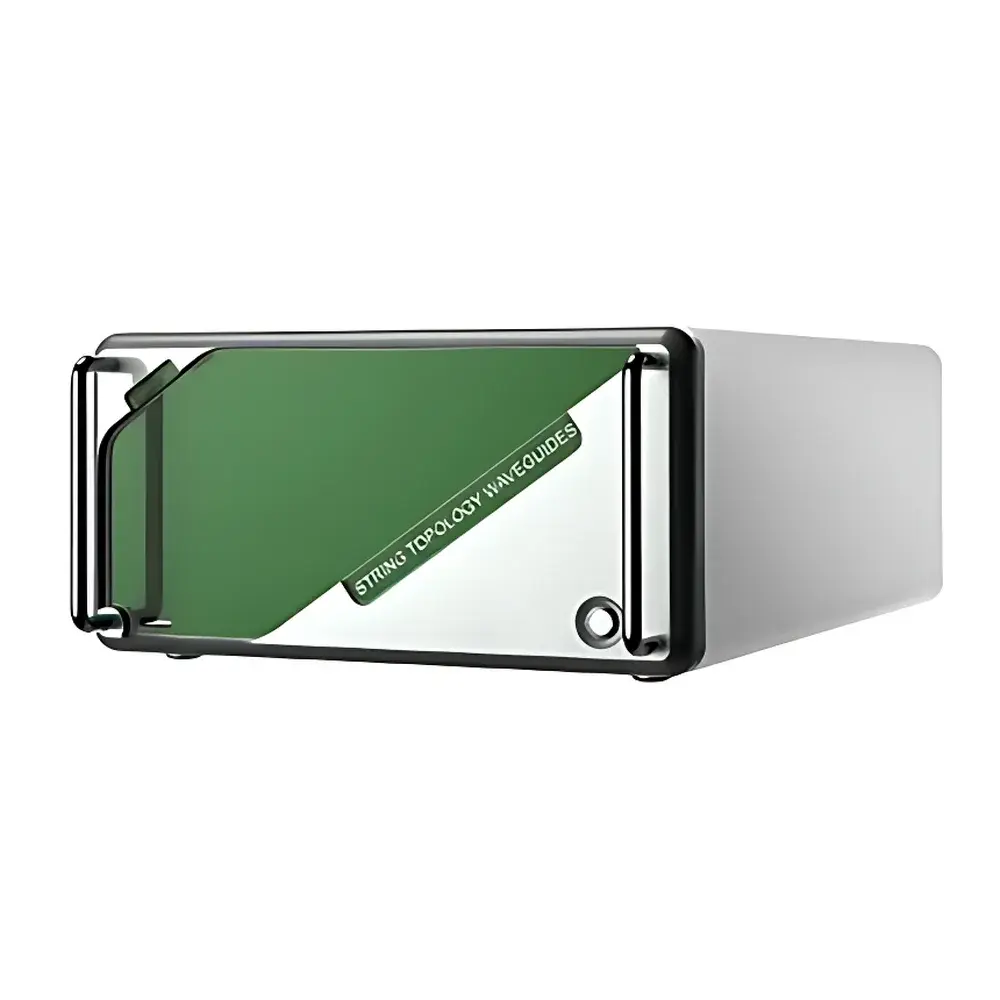
Picarro A0214 Micro-Pyrolysis Module (MPM) for Water Isotope Analysis
| Origin | Beijing, China |
|---|---|
| Manufacturer Type | Authorized Distributor |
| Origin Category | Domestic (China) |
| Model | A0214 |
| Pricing | Available Upon Request |
Overview
The Picarro A0214 Micro-Pyrolysis Module (MPM) is a purpose-built, compact high-temperature pyrolysis unit engineered to eliminate spectral interference from organic compounds during continuous-flow laser absorption spectroscopy–based water isotope ratio measurements (δ²H and δ¹⁸O). Designed exclusively for integration between the Picarro A0211 High-Precision Liquid Water Vaporizer and Picarro cavity ring-down spectroscopy (CRDS) water isotope analyzers—including the L2130-i, L2140-i, and IM-CRDS platforms—the MPM operates on Micro-Pyrolysis Technology™ (MPT), a proprietary nitrogen-purged, oxygen-free thermal decomposition process. Unlike catalytic oxidation or UV-based methods, MPT avoids isotopic fractionation by thermally cracking volatile organic interferents—such as ethanol, monoterpenes, and green leaf volatiles—at temperatures below 900 °C, while preserving intact water molecules, which remain stable up to >2000 °C. This selective thermal cleavage converts interfering organics into non-absorbing species (e.g., H₂, CO, CH₄, elemental carbon) without altering the isotopic integrity of the target H₂O vapor stream.
Key Features
- Compact, field-deployable design: 13 cm depth, 0.4 kg mass, and <25 W power consumption enable battery- or solar-powered operation in remote or mobile laboratories.
- Oxygen-free pyrolysis chamber: Nitrogen-purged reaction zone ensures no oxidative isotopic scrambling; eliminates formation of isotopically labile byproducts (e.g., CO₂, H₂O from combustion).
- Modular Swagelok® interface: 1/4″ stainless-steel compression fitting ensures leak-tight, reproducible integration with the A0211 vaporizer and downstream CRDS analyzer.
- Replaceable carbon-trap reaction cartridge: Integrated consumable cartridge accommodates carbon accumulation from pyrolyzed organics; designed for quick field replacement without system disassembly.
- Low thermal inertia architecture: Precision-heated ceramic core achieves stable operating temperature (typically 750–850 °C) with minimal overshoot and rapid thermal equilibration (<5 min warm-up).
- USB-native communication: Supports real-time status monitoring, temperature logging, and firmware updates via Picarro’s standard USB interface and instrument control software stack.
Sample Compatibility & Compliance
The A0214 MPM is validated for use with aqueous liquid samples containing ≤1% total organic carbon (TOC), including plant extracts, soil leachates, fermentation broths, and natural waters. It effectively suppresses spectral overlaps arising from C–H and O–H vibrational bands of ethanol, isoprene, limonene, and other biogenic VOCs in the 7200–7500 cm⁻¹ region critical for CRDS water isotope detection. The module complies with ISO/IEC 17025:2017 general requirements for competence of testing and calibration laboratories when operated within defined method parameters. While not intrinsically compliant with FDA 21 CFR Part 11, its integration with Picarro’s ChemCorrect™ software—supporting audit trails, electronic signatures, and data integrity protocols—enables deployment in GLP- and GMP-aligned environmental and geochemical laboratories.
Software & Data Management
The A0214 MPM operates transparently within Picarro’s instrument ecosystem. Its thermal state and operational health are reported via the same USB interface used by the host analyzer. When paired with ChemCorrect™ v3.0+, the module enables automated correction of residual baseline drift induced by carbon deposition, applying time-weighted response compensation derived from internal reference gas measurements. All MPM-related metadata—including temperature setpoint, runtime hours, and cartridge swap timestamps—are embedded in Picarro’s native .pic file format and exported alongside isotopic data in CSV/NetCDF formats compatible with MATLAB, Python (xarray/pandas), and LIMS systems. No standalone driver or third-party configuration is required.
Applications
- Stable isotope tracing in ecohydrology: Accurate δ²H and δ¹⁸O quantification in xylem sap, leaf water, or root exudates contaminated with terpenoids or alcohols.
- Biogeochemical cycling studies: Isotopic analysis of porewater from organic-rich sediments or wetland soils where DOC-derived VOCs compromise measurement fidelity.
- Food authenticity and beverage forensics: Mitigation of ethanol interference in wine, beer, or fruit juice water-isotope profiling—though high-ethanol matrices (>5% v/v) require pre-dilution or offline removal.
- Calibration traceability: Enabling long-term stability assessment of CRDS instruments using organic-spiked standards under controlled pyrolysis conditions.
- Field-portable isotope labs: Integration into mobile platforms (e.g., vehicle-mounted or drone-deployed systems) for real-time hydrological monitoring in inaccessible terrain.
FAQ
Does the A0214 MPM alter the isotopic composition of water?
No. Water remains chemically and isotopically stable under MPT conditions (≤850 °C, N₂ atmosphere); experimental validation confirms <±0.05‰ δ²H and <±0.03‰ δ¹⁸O bias versus non-pyrolyzed controls.
Can the MPM remove methane or other small hydrocarbons?
Methane (CH₄) is thermally stable under MPT conditions and passes through unaltered; it does not interfere with Picarro’s water isotope measurement bands but may require separate scrubbing if present at high concentrations.
How often must the reaction cartridge be replaced?
Replacement interval depends on sample matrix: every 200–500 analysis hours for low-TOC natural waters; every 50–100 hours for plant extracts or fermentation samples. Carbon loading is monitored via gradual pressure drop across the module.
Is filtration or pretreatment required before sample introduction?
Yes. Particulate matter >1 µm must be removed via inline PTFE syringe filters; dissolved macromolecules (e.g., tannins, humic acids) should be adsorbed using activated carbon cartridges upstream of the A0211 vaporizer to minimize carbon fouling.
Is the A0214 compatible with non-Picarro vaporizers or analyzers?
The module is mechanically and thermally optimized for Picarro A0211 + CRDS integration only. Non-Picarro interfaces may compromise flow dynamics, thermal coupling, or spectral baseline stability and are not supported.




