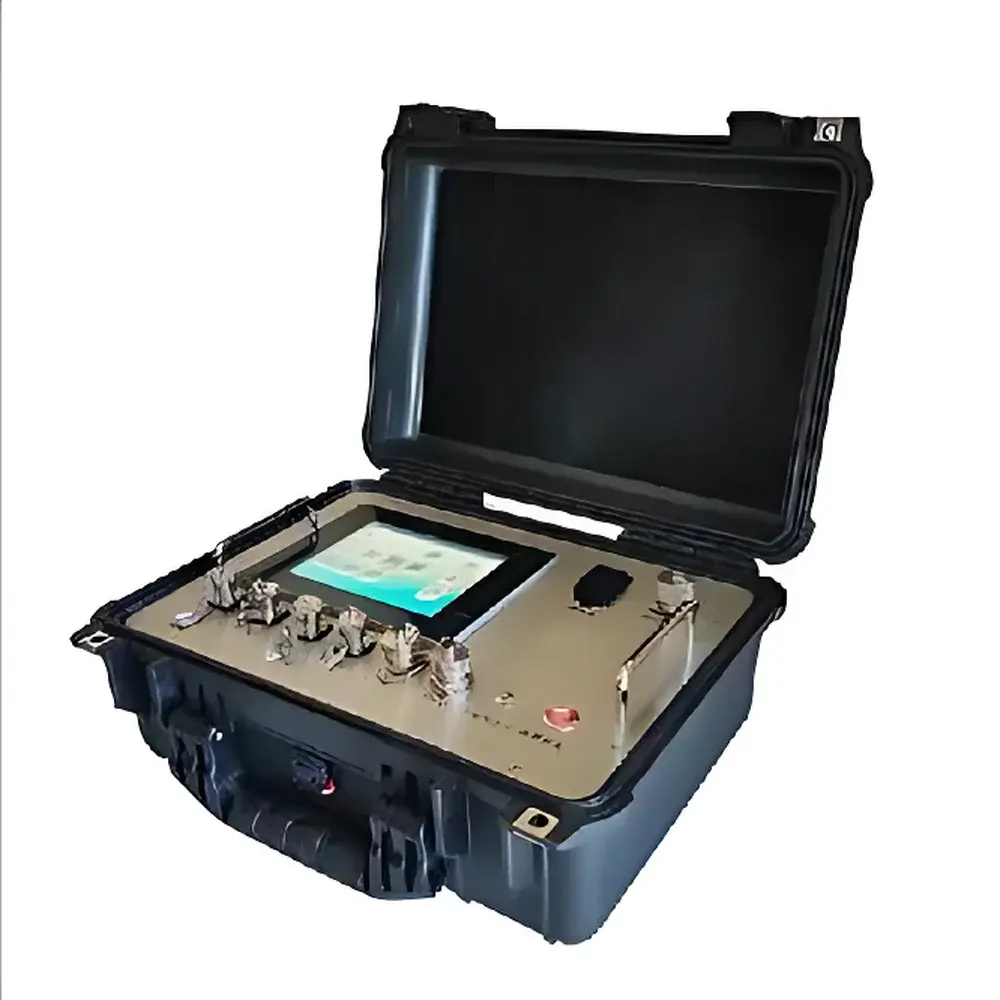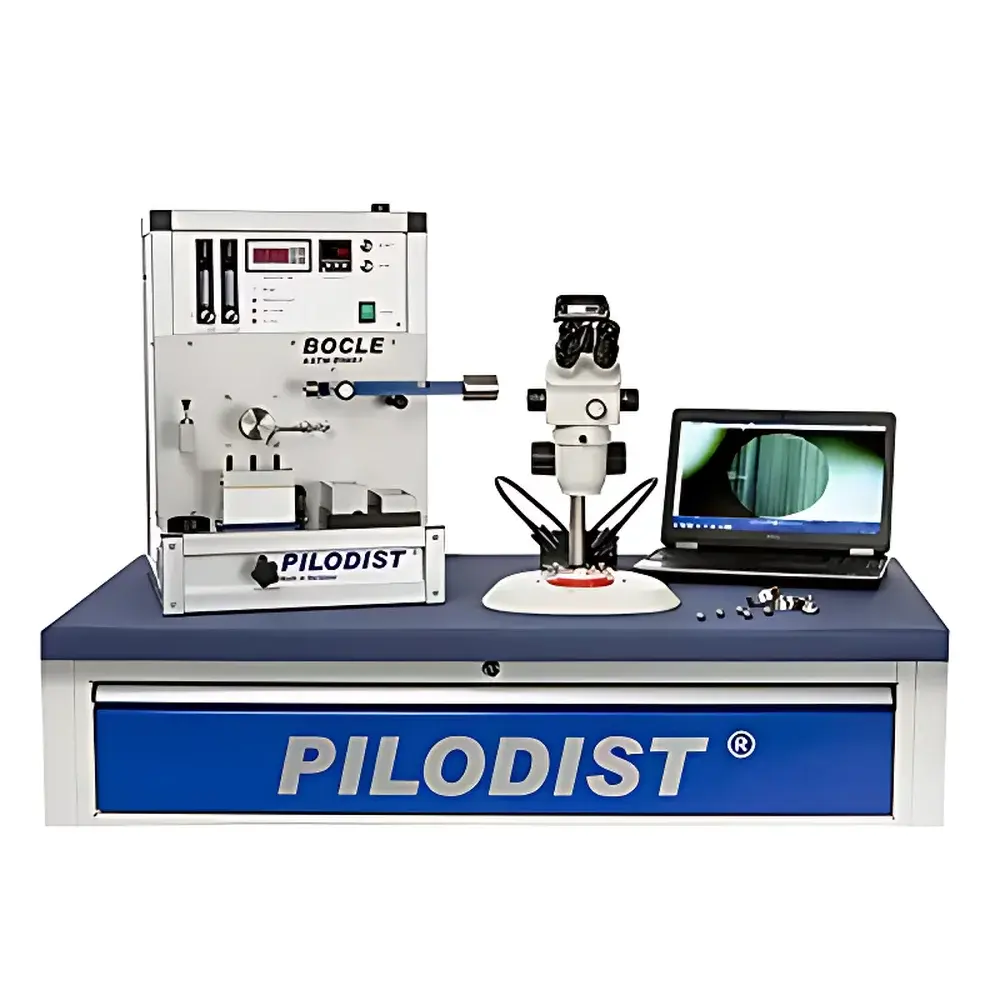
Pilodist BOCLE D5001 Aviation Turbine Fuel Lubricity Tester
| Brand | Pilodist |
|---|---|
| Origin | Germany |
| Model | BOCLE D5001 |
| Standard Compliance | ASTM D5001 |
| Test Duration | 30 min |
| Load | Fixed Ball Load (Standardized per ASTM D5001) |
| Sample Volume | 50 mL |
| Temperature Control | Precision Thermostatic Bath |
| Humidity & Airflow Control | Integrated Environmental Regulation System |
| Measurement Method | Optical Microscopy of Wear Scar Dimensions (Major & Minor Axes) |
Overview
The Pilodist BOCLE D5001 Aviation Turbine Fuel Lubricity Tester is a fully automated, benchtop instrument engineered for precise evaluation of the boundary lubricating properties of aviation turbine fuels and other hydrocarbon-based liquids in strict accordance with ASTM D5001 – “Standard Test Method for Determination of the Lubricity of Aviation Turbine Fuels by the Ball-on-Cylinder Lubricity Evaluator (BOCLE)”. This method quantifies fuel lubricity through controlled tribological interaction between a stationary high-carbon steel ball and a rotating hardened steel cylinder partially immersed in the test fuel. Under defined load, temperature, humidity, and airflow conditions, the system generates a wear scar on the ball surface; its dimensions—specifically the average diameter or orthogonal axes—are measured microscopically to yield a quantitative lubricity index. The BOCLE D5001 implements rigorous environmental control over the test chamber, including thermostatically regulated fuel bath temperature (typically 25 °C ± 0.5 °C), conditioned air supply with adjustable relative humidity (60 ± 2% RH), and laminar airflow rate (1.5–2.5 L/min), all critical parameters specified in ASTM D5001 to ensure inter-laboratory reproducibility.
Key Features
- Fully automated test sequence execution with programmable start/stop, real-time status monitoring, and integrated safety interlocks.
- Precision thermostatic bath with PID-controlled heating/cooling for stable fuel temperature maintenance throughout the 30-minute test cycle.
- Dedicated environmental control module regulating both relative humidity and volumetric airflow above the fuel surface, meeting ASTM D5001 Annex A1 requirements.
- Standardized mechanical configuration: 6.35 mm diameter AISI E52100 steel ball loaded at 392 mN (40 g-force), rotating cylinder speed fixed at 150 rpm, immersion depth precisely maintained.
- Modular sample chamber design enabling rapid cleaning and contamination-free transition between samples.
- Compliance-ready architecture supporting audit trails, user access levels, and electronic record retention when integrated with validated laboratory information management systems (LIMS).
Sample Compatibility & Compliance
The BOCLE D5001 is validated for use with aviation turbine fuels (Jet A, Jet A-1, JP-5, JP-8), synthetic hydrocarbon fuels (e.g., FT-SPK, HEFA-SPK), and other low-sulfur, low-polarity distillate fuels where lubricity performance is critical to prevent wear in fuel system components—including high-pressure fuel pumps and servo-valves. It meets the full technical scope of ASTM D5001 and is compatible with related specifications such as DEF STAN 91-91 (UK MoD), NATO F-34, and AFQRJOS recommendations. Instrument operation supports Good Laboratory Practice (GLP) and quality assurance frameworks aligned with ISO/IEC 17025. When operated with documented procedures and calibrated reference standards (e.g., certified wear scar reference balls), results are admissible for regulatory reporting and fuel certification workflows.
Software & Data Management
The embedded control software provides intuitive touchscreen navigation, preconfigured test methods, and automatic logging of all critical process parameters—including bath temperature, ambient humidity, airflow rate, elapsed time, and system fault codes. Raw data files (CSV format) include timestamps, operator ID, method version, and environmental setpoints. Optional integration with third-party LIMS or ELN platforms is supported via ASTM E1384-compliant data export protocols. Audit trail functionality records all user actions (login/logout, parameter changes, result approvals) with immutable timestamps—enabling compliance with FDA 21 CFR Part 11 requirements when deployed in regulated environments. Calibration logs and maintenance history are stored separately and exportable for internal QA review.
Applications
- Quality control of aviation turbine fuels during refinery production and terminal blending.
- Evaluation of lubricity additives (e.g., FSII – Fuel System Icing Inhibitors with lubricity enhancement) and their stability under thermal and oxidative stress.
- Research into alternative jet fuels (SAF) and their compatibility with legacy fuel system hardware.
- Root-cause analysis of fuel pump wear incidents in ground support equipment and aircraft engines.
- Supporting specification development and revision for national and international fuel standards bodies (ASTM Committee D02, CEN/TC 19, ISO/TC 28).
- Method transfer and interlaboratory comparison studies under proficiency testing programs (e.g., CONCAWE, INTERTANKO).
FAQ
What is the primary measurement output of the BOCLE D5001?
The instrument produces a wear scar diameter (WSD), reported in micrometers (µm), calculated as the average of the major and minor axes measured optically on the test ball surface after completion of the 30-minute test.
Does the system require external microscopy equipment?
Yes — final wear scar measurement requires an optical microscope with calibrated eyepiece graticule or digital imaging system capable of ≥100× magnification and ±1 µm resolution; this is not included but is specified in ASTM D5001 Section 8.
Can the BOCLE D5001 be used for diesel fuel testing?
While ASTM D5001 is specifically written for aviation turbine fuels, some laboratories adapt the method for diesel under internal SOPs; however, ASTM D6079 (HFRR) remains the standard for diesel lubricity assessment.
Is calibration traceable to NIST or equivalent NMIs?
Temperature sensors and humidity transducers are supplied with factory calibration certificates traceable to national metrology institutes; users are responsible for periodic verification using accredited reference standards.
What maintenance is required for routine operation?
Daily cleaning of the cylinder, ball holder, and fuel reservoir; quarterly verification of airflow calibration and humidity sensor drift; annual full system performance qualification per ASTM D5001 Annex B.