
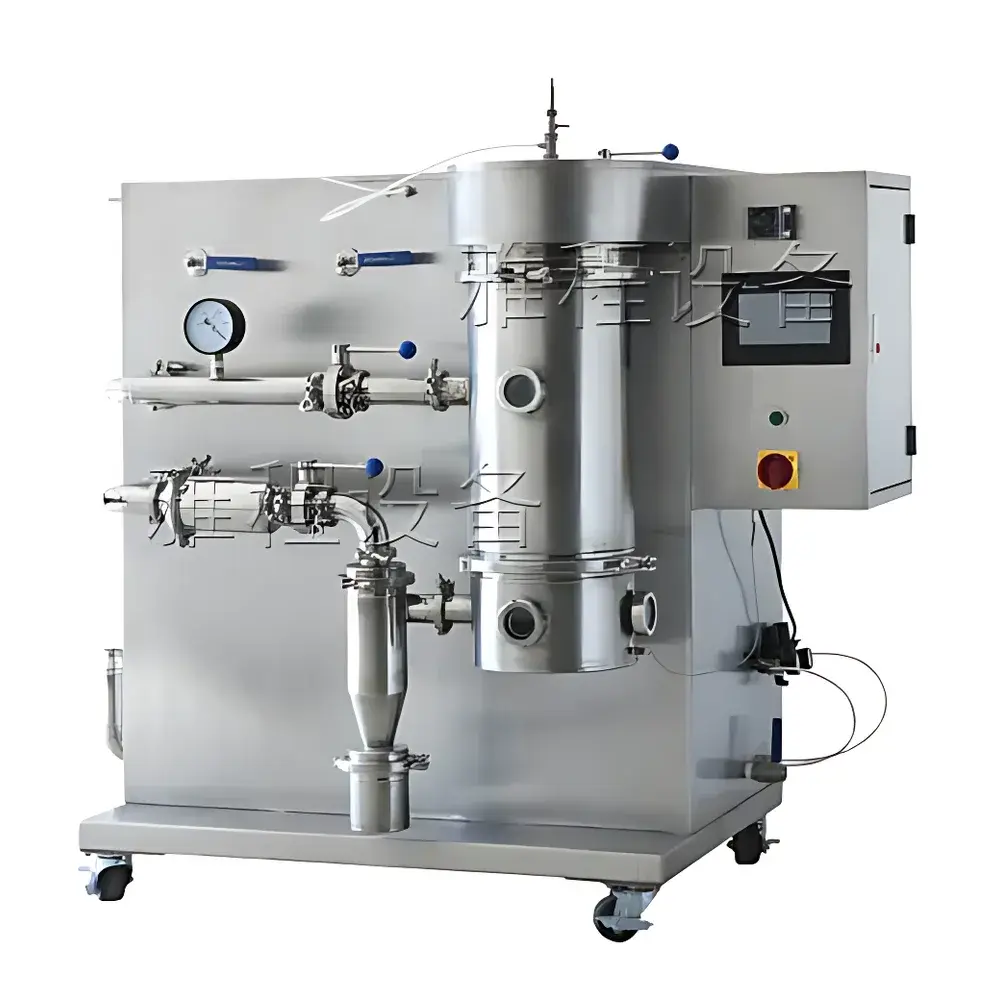
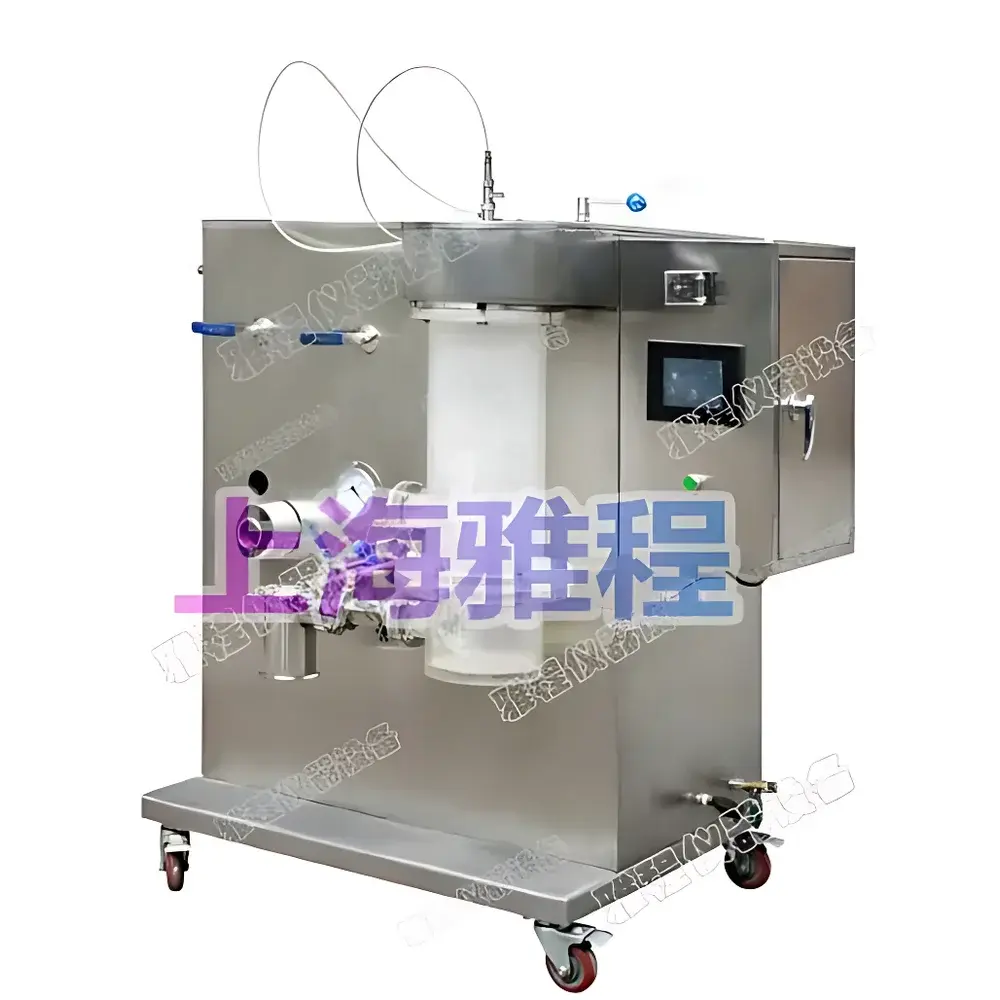
PILOTECH YC-3000 Laboratory Spray Freeze Dryer
| Brand | PILOTECH |
|---|---|
| Model | YC-3000 |
| Origin | Shanghai, China |
| Manufacturer Type | Direct Manufacturer |
| Sample Type | Aqueous solutions only |
| Maximum Batch Capacity | 1.5 L |
| Particle Size Range | 1–100 µm |
| Inlet Spray Temperature | < −50 °C |
| Cold Trap Temperature | ≤ −60 °C |
| Ultimate Vacuum (Empty Chamber) | < 20 Pa |
| Spray Pressure Range | 1–3 bar |
| Compressed Air Flow Rate | 32 L/min |
| Vacuum Pump Power | 2 kW |
| Display | Color LCD touchscreen showing chamber temperature, peristaltic pump speed, fan frequency, needle clearance frequency, and chamber pressure |
Overview
The PILOTECH YC-3000 Laboratory Spray Freeze Dryer is an integrated benchtop system engineered to combine the rapid atomization of spray drying with the structural preservation advantages of lyophilization. Unlike conventional freeze dryers that rely solely on sublimation under vacuum after bulk freezing, the YC-3000 performs real-time cryogenic atomization: aqueous feed solutions are atomized into fine droplets at inlet temperatures below −50 °C, followed immediately by flash-freezing in a controlled low-pressure environment. This process yields uniformly frozen microspheres that undergo primary drying via conductive and radiative heat transfer under vacuum (≤20 Pa), avoiding thermal degradation pathways typical of hot-air spray drying. The result is a free-flowing, microparticulate powder with preserved macromolecular conformation, high reconstitution fidelity, and minimal aggregation—critical for biologics, herbal extracts, probiotics, and polymer dispersions.
Key Features
- Hybrid process architecture integrating cryogenic nozzle-based atomization and vacuum-assisted sublimation drying in a single compact chamber
- Self-contained air-cooled hermetic refrigeration system with cold trap operating at ≤−60 °C, enabling efficient vapor capture without liquid nitrogen dependency
- Digitally controlled peristaltic feed pump with adjustable speed (0–500 rpm) and synchronized anti-clogging needle pulsing mechanism
- Integrated vacuum pump (2 kW, oil-lubricated, dual-stage) with ISO-KF 25 vacuum flange interface and standard sanitary quick-clamp (DIN 11851) connections
- Full-color 7-inch capacitive touchscreen HMI displaying real-time parameters: chamber temperature (±0.5 °C), vacuum pressure (0.1–1000 Pa range), pump speed, fan frequency, and needle actuation cycle
- No external heating elements—drying energy supplied exclusively via controlled ambient air conduction and IR radiation, eliminating localized overheating risks
- Acoustically optimized enclosure (<55 dB(A) during operation) and modular stainless-steel construction compliant with ISO 14644-1 Class 8 cleanroom compatibility
Sample Compatibility & Compliance
The YC-3000 is validated for aqueous-based formulations only, including but not limited to: botanical extracts (e.g., ginseng, turmeric, green tea polyphenols), dairy concentrates (whey protein isolate, casein micelles), microbial cultures (Lactobacillus spp., Saccharomyces cerevisiae lysates), enzyme solutions (lipases, proteases), fruit juice concentrates (pomegranate, acai), and synthetic polymer emulsions (PLGA, chitosan nanoparticles). It excludes organic solvents, high-viscosity non-aqueous suspensions (>500 cP), or suspensions containing >15% w/w solids without pre-dilution. System design conforms to IEC 61000-6-2/6-3 (EMC immunity/emission), CE Machinery Directive 2006/42/EC, and supports audit-ready documentation for GLP and GMP-aligned workflows. While not FDA 21 CFR Part 11–certified out-of-the-box, the HMI firmware supports timestamped event logging, user access levels, and exportable CSV data files required for regulated environments.
Software & Data Management
The embedded control system runs on a deterministic real-time OS with local data storage (16 GB internal flash). All operational parameters—including time-stamped pressure/temperature profiles, pump speed logs, and vacuum ramp sequences—are automatically archived per batch. Data export is supported via USB 2.0 port (FAT32-formatted drive) in comma-separated values (CSV) format, compatible with MATLAB, Python pandas, and LabArchives ELN integration. Optional Ethernet connectivity enables remote monitoring through Modbus TCP protocol (address mapping provided in technical manual), facilitating centralized lab equipment management systems. No cloud upload or third-party telemetry is enabled by default; all data remains resident on-device unless explicitly exported.
Applications
This instrument serves specialized R&D applications where both particle morphology control and biomolecular integrity are non-negotiable. Typical use cases include: formulation screening of oral dispersible powders for pediatric APIs; stabilization of labile mRNA-LNP complexes prior to encapsulation studies; production of inhalable dry powder vaccines with aerodynamic diameter targeting (MMAD 2–5 µm); generation of standardized reference materials for particle size distribution validation (ISO 13320-compliant DLS cross-check); and rapid prototyping of nutraceutical delivery systems (e.g., anthocyanin-loaded maltodextrin microparticles). Its ability to generate spherical, low-density particles with narrow PSD (span <1.8) makes it particularly valuable in downstream tableting and capsule filling development.
FAQ
Can the YC-3000 process organic solvent-based feeds?
No. The system is strictly designed for aqueous solutions only. Organic solvents pose explosion hazards under vacuum and may degrade elastomeric seals or contaminate the cold trap.
What is the typical drying time per 1.5 L batch?
Primary drying duration ranges from 4.5 to 7.5 hours depending on total solids content, viscosity, and target residual moisture (<2.0% w/w verified by Karl Fischer titration).
Is sterilization of the drying chamber possible?
The chamber is constructed from electropolished AISI 316L stainless steel and supports VHP (vaporized hydrogen peroxide) decontamination cycles; autoclaving is not recommended due to integrated sensors and viewport limitations.
Does the system support automated batch reporting?
Yes—each run generates a timestamped .csv report containing all monitored variables and operator ID; custom report templates can be loaded via USB.
What maintenance intervals are recommended?
Vacuum pump oil replacement every 500 operating hours; cold trap defrosting and cleaning every 20 batches; O-ring inspection and lubrication every 6 months per ISO 13485 preventive maintenance checklist.



