
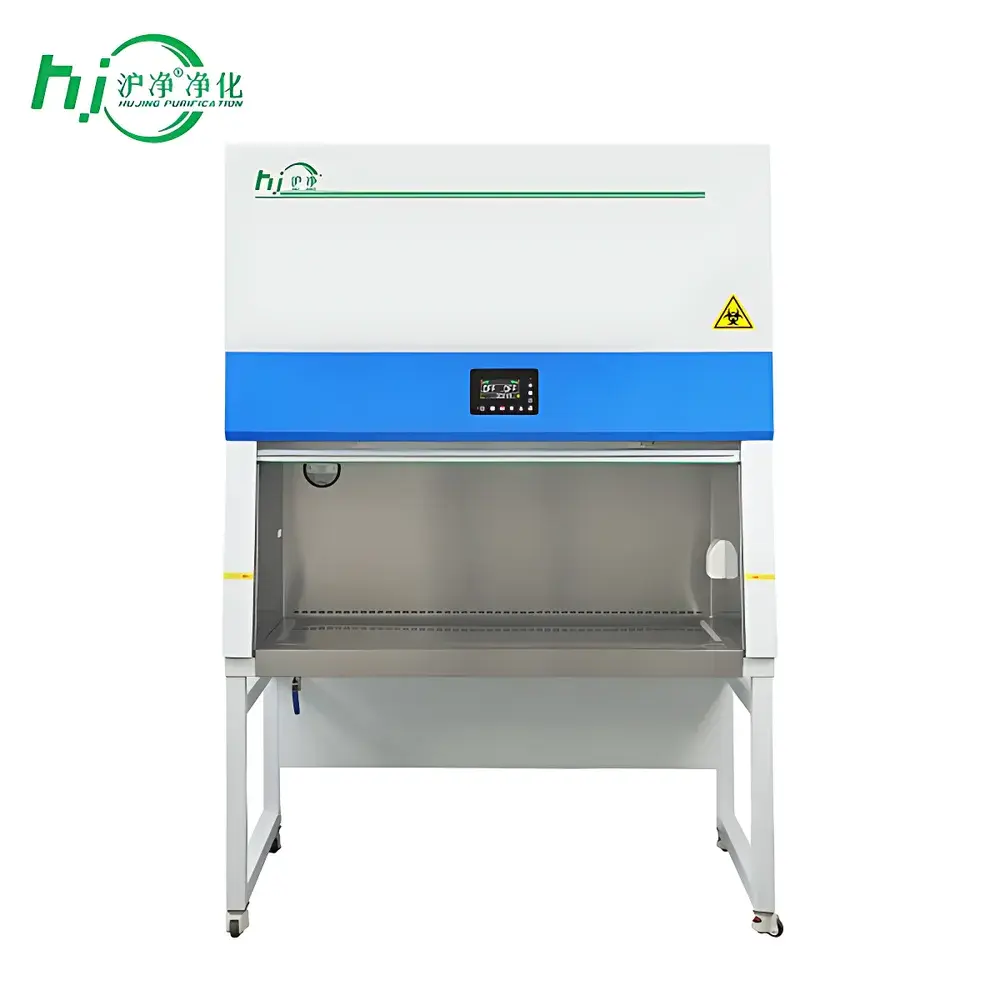
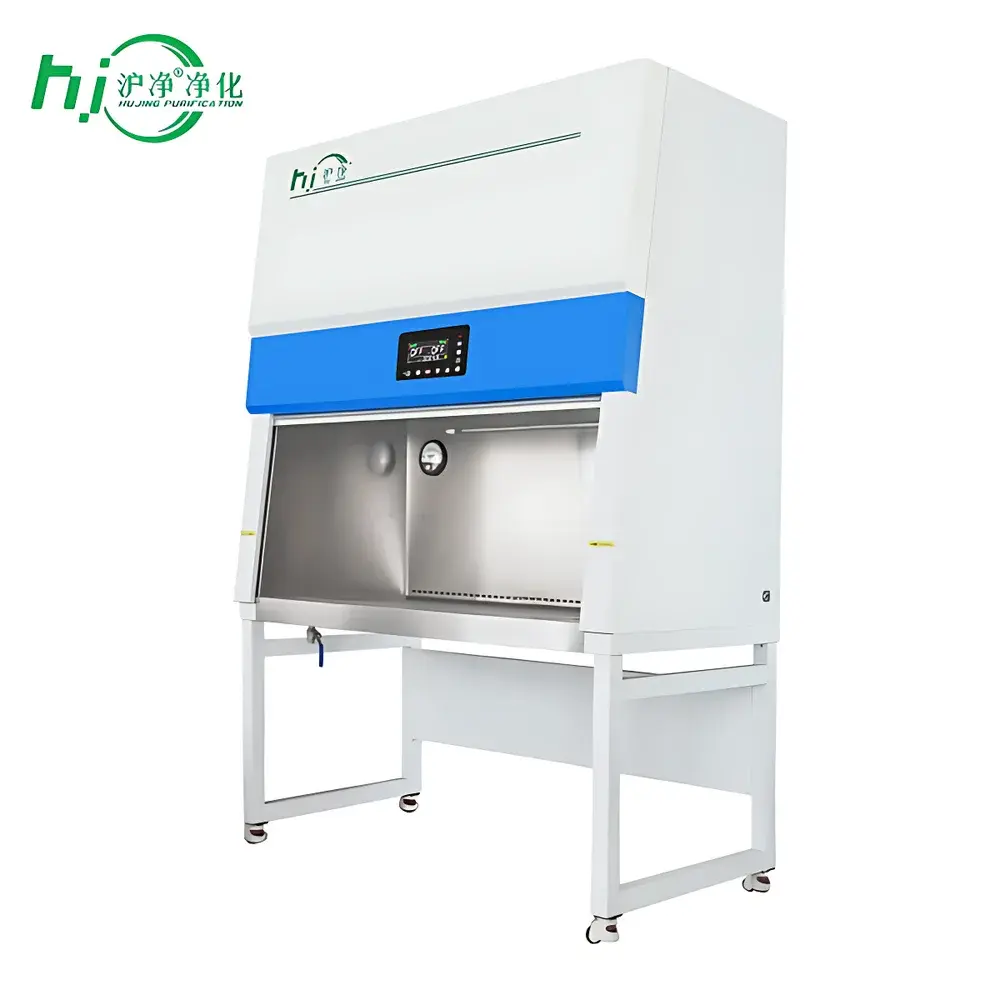
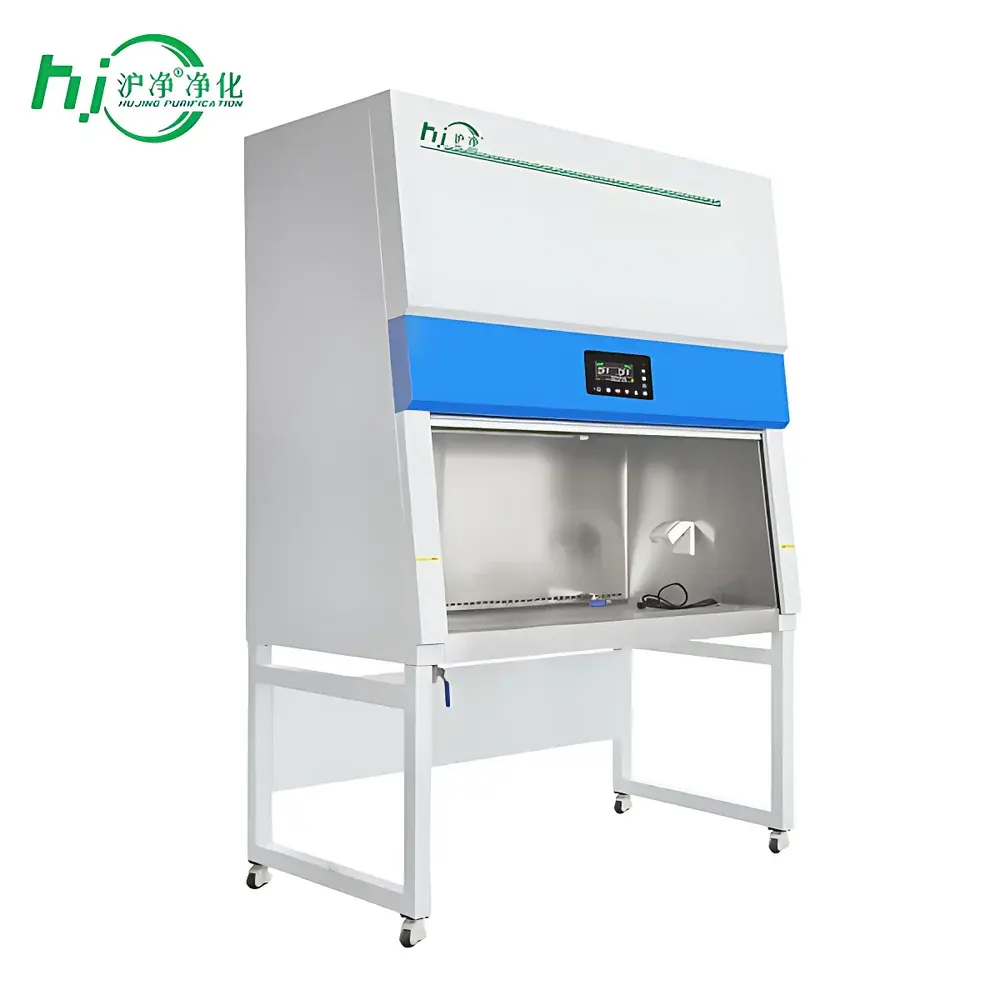
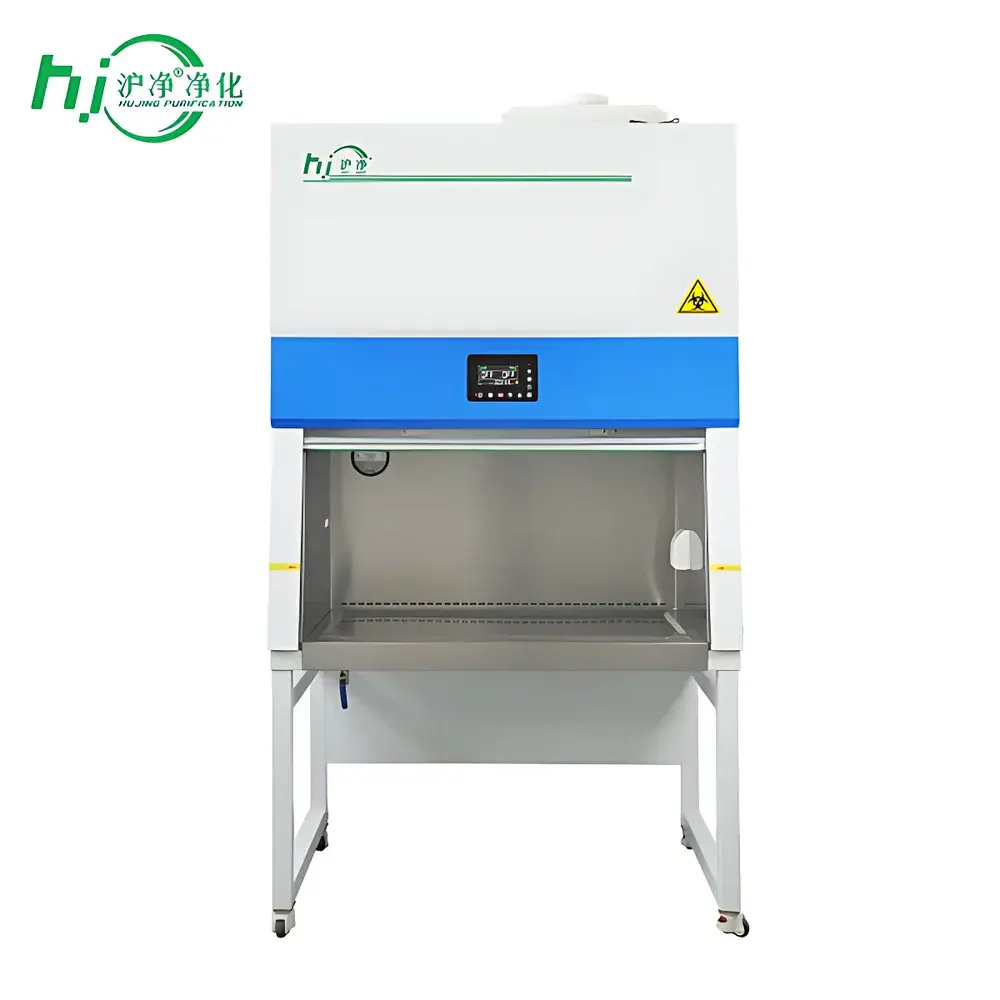
HJ BSC-1600IIA2 Class II Type A2 Biological Safety Cabinet
| Brand | HJ Purification |
|---|---|
| Origin | Shanghai, China |
| Manufacturer | Yes |
| Model | BSC-1600IIA2 |
| External Dimensions (L×W×H) | 1800 × 800 × 2100 mm |
| Internal Dimensions (L×W×H) | 1640 × 700 × 600 mm |
| Filter Efficiency (Particle Capture) | ≥98% @ 0.3 µm (DOP/NaCl challenge) |
Overview
The HJ BSC-1600IIA2 is a certified Class II, Type A2 biological safety cabinet engineered for containment of low- to moderate-risk biological agents (BSL-1 and BSL-2) in research laboratories, clinical diagnostics, and pharmaceutical quality control environments. It operates on the principle of inward airflow (front intake), downward laminar flow (vertical recirculation), and partial exhaust—30% of total airflow is expelled via a dedicated duct or thimble connection, while 70% is recirculated through a dual-stage filtration system comprising a prefilter and a ULPA (Ultra-Low Penetration Air) or HEPA filter (≥99.995% @ 0.3 µm, per EN 1822; note: stated 98% efficiency reflects minimum guaranteed performance under DOP/NaCl challenge per ISO 14644-3). The cabinet maintains negative pressure relative to the laboratory environment and employs an aerodynamic air curtain at the work opening to prevent cross-contamination between operator, sample, and environment.
Key Features
- Aerodynamic air curtain design with adjustable sash (vertical sliding tempered glass), featuring positional memory, height-limit alarm, and full closure capability for UV decontamination cycles.
- Work surface and interior chamber constructed from electropolished 304 stainless steel—seamless, non-porous, corrosion-resistant, and compatible with common disinfectants including 70% ethanol, sodium hypochlorite, and hydrogen peroxide vapor.
- Dual independent airflow systems: supply air passes through a HEPA/ULPA filter before entering the work area; exhaust air undergoes secondary HEPA filtration prior to discharge or recirculation.
- Integrated LED touch-control panel with real-time monitoring of inflow velocity, downflow velocity, and cabinet differential pressure; built-in UV interlock ensures automatic shutoff when sash is raised above safe operating height.
- DOP test port and calibrated manometer included for routine certification and validation per NSF/ANSI 49–2022 and EN 12469 standards.
- Anthropometric 10° forward tilt of front panel reduces operator fatigue during extended use; internal lighting meets IEC 61000-4-2 EMC requirements with uniform illuminance ≥650 lux across work surface.
Sample Compatibility & Compliance
The BSC-1600IIA2 supports handling of cell cultures, microbial suspensions, recombinant DNA constructs, and low-concentration viral vectors. It is not suitable for volatile toxic chemicals or radionuclides without supplemental engineering controls. Certified to NSF/ANSI 49–2022 (Class II, Type A2) and compliant with EN 12469:2000 for microbiological safety performance. Meets ISO 14644-1 Class 5 (formerly Fed Std 209E Class 100) cleanroom air cleanliness requirements within the work area. Designed for GLP-compliant workflows with audit-ready documentation support for installation qualification (IQ), operational qualification (OQ), and performance qualification (PQ).
Software & Data Management
While the cabinet operates via embedded microcontroller-based hardware (no external PC dependency), its control interface logs operational parameters—including sash position, UV exposure duration, filter pressure drop, and alarm events—for manual export via USB or printed report. All data entries are time-stamped and non-erasable, supporting 21 CFR Part 11–aligned recordkeeping when integrated into laboratory information management systems (LIMS) via optional RS-485/Modbus RTU output. Calibration certificates and filter integrity test reports comply with ISO/IEC 17025 requirements when performed by accredited third-party service providers.
Applications
- Aseptic transfer of mammalian and insect cell lines in academic and industrial bioprocessing labs.
- Preparation of diagnostic reagents and clinical specimens under CLIA- and CAP-accredited conditions.
- Handling of genetically modified organisms (GMOs) requiring BSL-2 containment per NIH Guidelines.
- QC testing of sterile pharmaceutical products (e.g., injectables, ophthalmic solutions) per USP and .
- Supporting ISO 13485-certified medical device manufacturing environments where personnel and product protection are jointly mandated.
FAQ
Does this cabinet require external ducting?
Yes—Type A2 cabinets must be connected to a dedicated exhaust system (thimble or hard-ducted) to safely evacuate 30% of total airflow; recirculation-only operation is prohibited.
What filter replacement interval is recommended?
HEPA/ULPA filters should be replaced every 3–5 years depending on usage intensity and particulate load; prefilter replacement is advised every 6 months or per pressure-drop threshold (typically ΔP > 250 Pa).
Can it be validated for ISO 14644-1 Class 5 compliance?
Yes—the internal work area consistently achieves ≤3,520 particles/m³ ≥0.5 µm under steady-state operation, satisfying ISO 14644-1:2015 Class 5 criteria when tested per ISO 14644-3 Annex B.
Is UV lamp operation interlocked with sash position?
Yes—UV irradiation is only enabled when the sash is fully closed and latched, in accordance with IEC 62471 photobiological safety requirements.
What electrical safety standards does it meet?
Complies with IEC 61010-1:2010 for laboratory equipment, including dielectric strength, leakage current, and protective earth continuity testing.





