
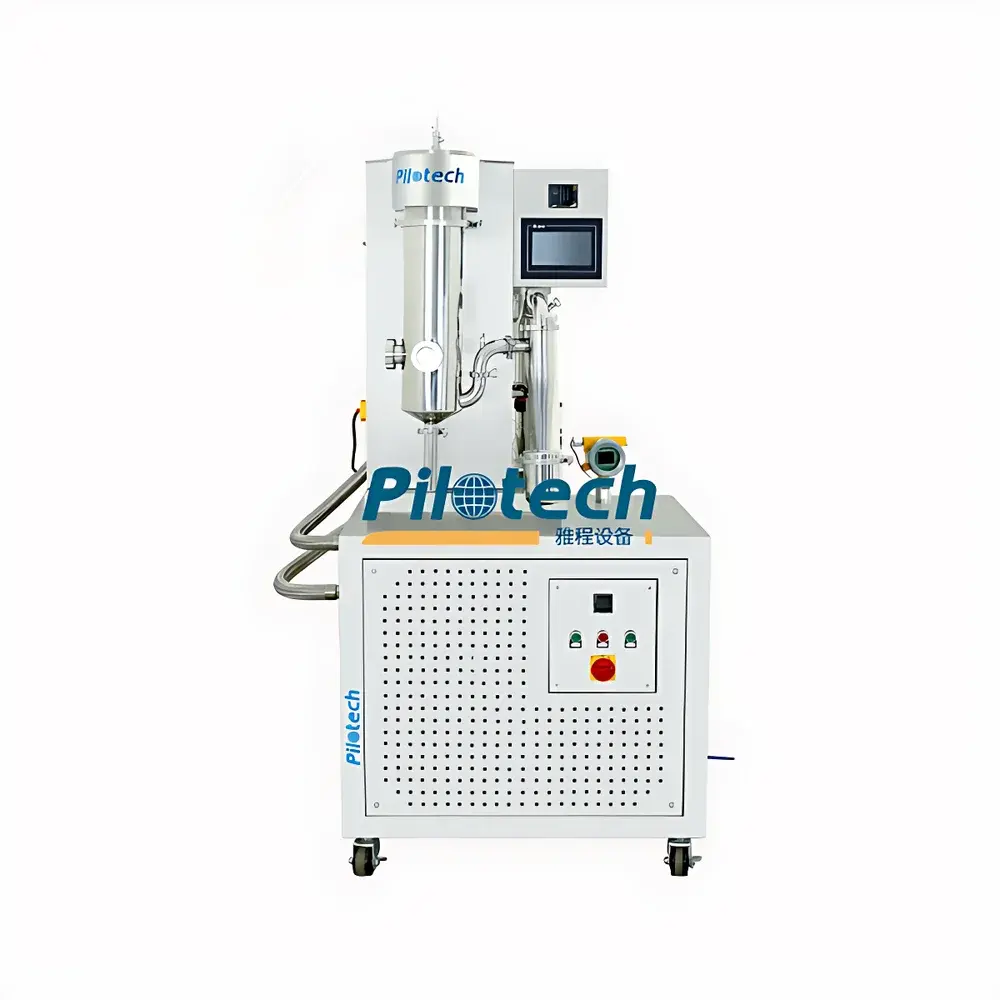
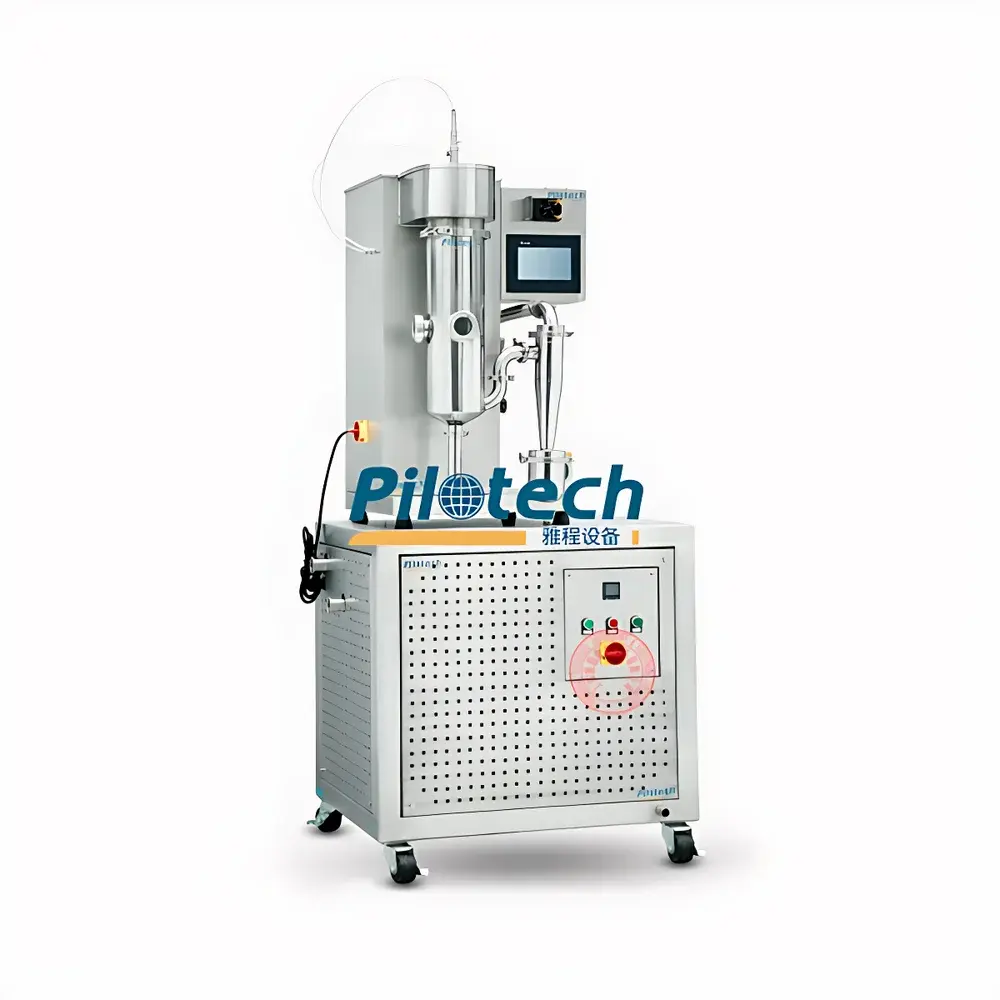
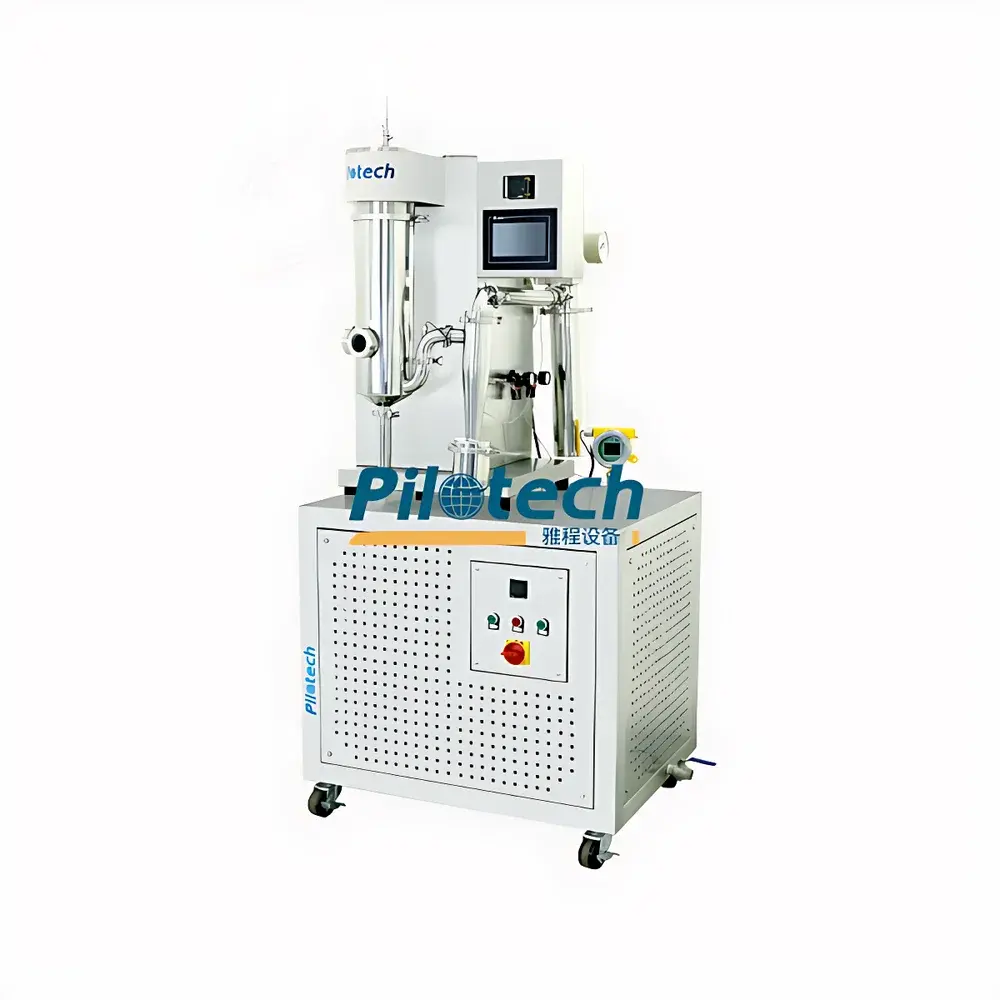
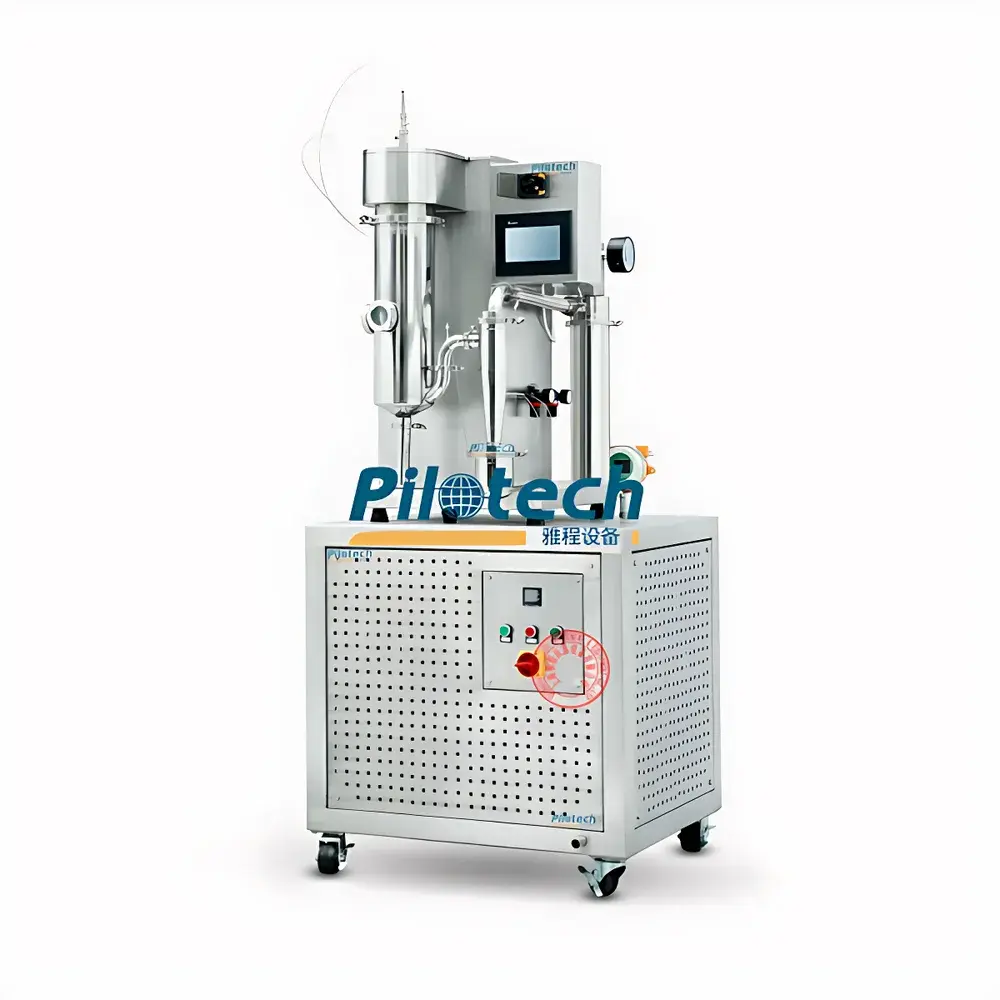
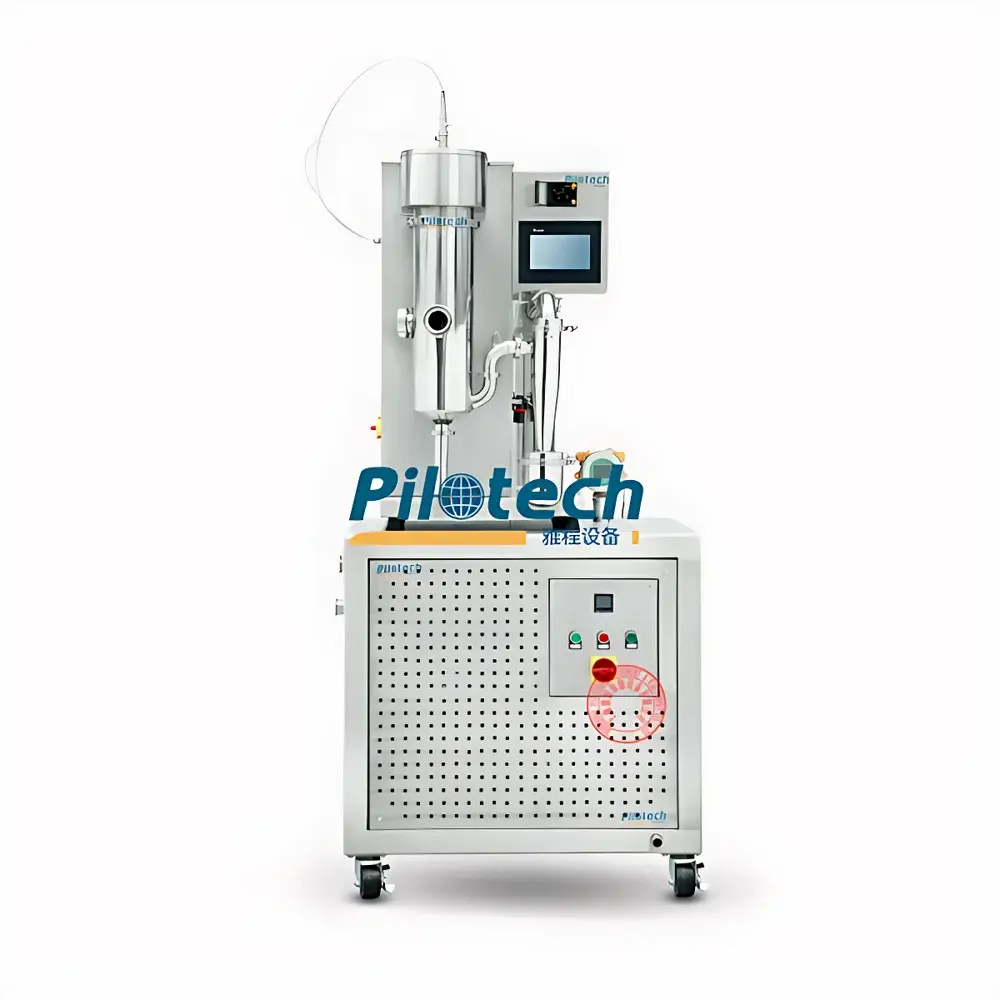
PiloTech YC-501 Benchtop Closed-Cycle Spray Dryer for Organic Solvents
| Brand | PiloTech |
|---|---|
| Origin | Shanghai, China |
| Manufacturer Type | Direct Manufacturer |
| Model | YC-501 |
| Max Feed Rate | 500 mL/h |
| Temperature Range | Up to 200 °C (Inlet), Down to 40 °C (Outlet) |
| Particle Size Range | 1–25 µm |
| Solvent Compatibility | Aqueous and organic solvents (e.g., ethanol, acetone, chloroform, DMF) |
| Inert Gas System | Integrated nitrogen recirculation with O₂ monitoring and cryogenic solvent recovery |
| Construction Material | Full SUS304 stainless steel |
| Touchscreen Interface | 7-inch color LCD with real-time animation and parameter logging |
| Nozzle Type | Coaxial two-fluid nozzle (standard 1.0 mm, optional 0.5/0.8/1.5/2.0 mm) |
| Power Supply | 2.5 kW / 220 V |
Overview
The PiloTech YC-501 is a benchtop closed-cycle spray dryer engineered specifically for the safe, reproducible, and scalable drying of heat-sensitive, oxidation-prone, or flammable feedstocks—including aqueous suspensions, polymer solutions, pharmaceutical emulsions, and organic-solvent-based precursors (e.g., in nanoparticle synthesis or API formulation). Unlike conventional open-loop spray dryers, the YC-501 operates under a fully sealed nitrogen recirculation system, eliminating oxygen exposure and preventing solvent vapor accumulation. Its core principle relies on two-fluid atomization: pressurized nitrogen sheath gas induces fine droplet formation from the liquid feed, followed by rapid convective drying within a heated inert environment. The resulting powder is separated via cyclonic collection, while solvent-laden exhaust passes through a refrigerated condenser—enabling >95% solvent recovery and compliance with occupational health and environmental safety standards (OSHA 29 CFR 1910, EPA 40 CFR Part 63). Designed for laboratory-scale process development—not production—the YC-501 bridges the gap between feasibility screening and pilot-scale transfer, supporting QbD (Quality by Design) workflows in regulated R&D environments.
Key Features
- Integrated nitrogen recirculation loop with real-time O₂ concentration monitoring (0–10% range, ±0.1% accuracy) and automatic purge control to maintain <1% O₂ during operation.
- Coaxial two-fluid nozzle with vertical adjustability: ensures concentric atomization, eliminates wall impingement, and sustains high collection efficiency (>85%) even with viscosities up to 500 cP.
- 7-inch color touchscreen HMI with animated process visualization: displays live curves for inlet/outlet temperature, peristaltic pump speed (0.1–99.9 rpm), needle cleaning frequency (0–30 Hz), and nitrogen flow rate (L/min).
- Cryogenic solvent recovery system: achieves condensation at –20 °C, compatible with low-boiling solvents (e.g., dichloromethane, bp 40 °C) and high-boiling polar aprotic media (e.g., NMP, bp 202 °C).
- Full SUS304 construction including observation viewport, cyclone collector, and insulated drying chamber—designed for corrosion resistance, cleanability, and GLP-compliant documentation.
- Modular architecture: the YC-501 functions as a standalone unit or integrates seamlessly with the YC-500 base platform, enabling cost-effective upgrade from aqueous-only to organic-solvent-capable operation via plug-and-play nitrogen module installation.
Sample Compatibility & Compliance
The YC-501 accommodates a broad spectrum of lab-scale formulations: aqueous colloids (e.g., silica nanoparticles), organic-phase metal-organic precursors (e.g., ZnAc₂ in ethanol), thermolabile biologics (e.g., insulin-loaded PLGA nanospheres), and volatile solvent systems (e.g., THF-based conductive polymer dispersions). All wetted surfaces meet USP Class VI and FDA 21 CFR Part 11 data integrity requirements when paired with optional audit-trail-enabled firmware. The closed-loop design conforms to IEC 60079-0 (Explosive Atmospheres) for Group IIA (propane-class) applications and supports ISO 14644-1 Class 5 cleanroom integration via HEPA-filtered nitrogen supply. Routine validation protocols—including temperature mapping (ASTM E2898), particle size distribution verification (ISO 13320 laser diffraction), and residual solvent quantification (USP )—are fully supported through standardized SOP templates provided with the system.
Software & Data Management
The embedded microprocessor controller logs all operational parameters at 1-second intervals to internal flash memory (≥10,000 records), with export capability to CSV or Excel via USB port. Optional Ethernet connectivity enables remote monitoring and centralized data aggregation into LIMS or ELN platforms (e.g., LabVantage, Benchling). Audit trails record user login/logout events, parameter modifications, and emergency shutdown triggers—fully compliant with 21 CFR Part 11 electronic signature requirements when configured with password-protected role-based access (Admin, Operator, Reviewer). Calibration certificates for temperature sensors (PT100, ±0.3 °C) and flow meters (±1.5% FS) are traceable to NIST standards and supplied with each instrument.
Applications
- Pharmaceutical R&D: Production of amorphous solid dispersions (ASDs) using solvent-based carriers (e.g., HPMCAS in acetone), minimizing thermal degradation and residual solvent carryover.
- Nanomaterial synthesis: Encapsulation of quantum dots or perovskite precursors in inert atmospheres to prevent surface oxidation and halide loss.
- Food science: Stabilization of anthocyanin-rich extracts or omega-3 oils using ethanol or ethyl acetate—preserving antioxidant activity and preventing rancidity.
- Electrode material processing: Drying of LiFePO₄ slurries in NMP without solvent emission or transition-metal reduction.
- Agrochemical formulation: Microencapsulation of pyrethroids or neonicotinoids in biodegradable polymers dissolved in low-toxicity solvents (e.g., limonene).
FAQ
Can the YC-501 handle chlorinated solvents such as chloroform or dichloromethane?
Yes—its stainless-steel wetted path and refrigerated condenser are chemically compatible with halogenated solvents; however, system purging with nitrogen pre- and post-run is mandatory to avoid phosgene formation risks.
Is GMP documentation available for regulatory submissions?
Yes—PiloTech provides IQ/OQ protocol templates, 3Q summary reports, and raw calibration data packages upon request, aligned with EU Annex 15 and FDA Process Validation Guidance.
What maintenance intervals are recommended for the coaxial nozzle and condenser?
Nozzle inspection and ultrasonic cleaning are advised after every 50 hours of operation; condenser coil defrosting and oil drain occur automatically every 8 hours during continuous runs.
Does the system support automated method transfer from benchtop to pilot scale?
Yes—dimensionless numbers (e.g., Weber, Reynolds, and dimensionless drying time τ*) are calculable from YC-501 operating logs, enabling direct scaling to PiloTech’s YC-018 pilot dryer (5 L/h capacity) using geometric and dynamic similarity principles.
Can third-party nitrogen generators be integrated?
Yes—the YC-501 accepts external N₂ supply (purity ≥99.999%, dew point ≤–40 °C) via standard 1/4″ VCR fittings; onboard pressure regulation maintains stable atomization across variable inlet pressures (2–6 bar).
Related Products



