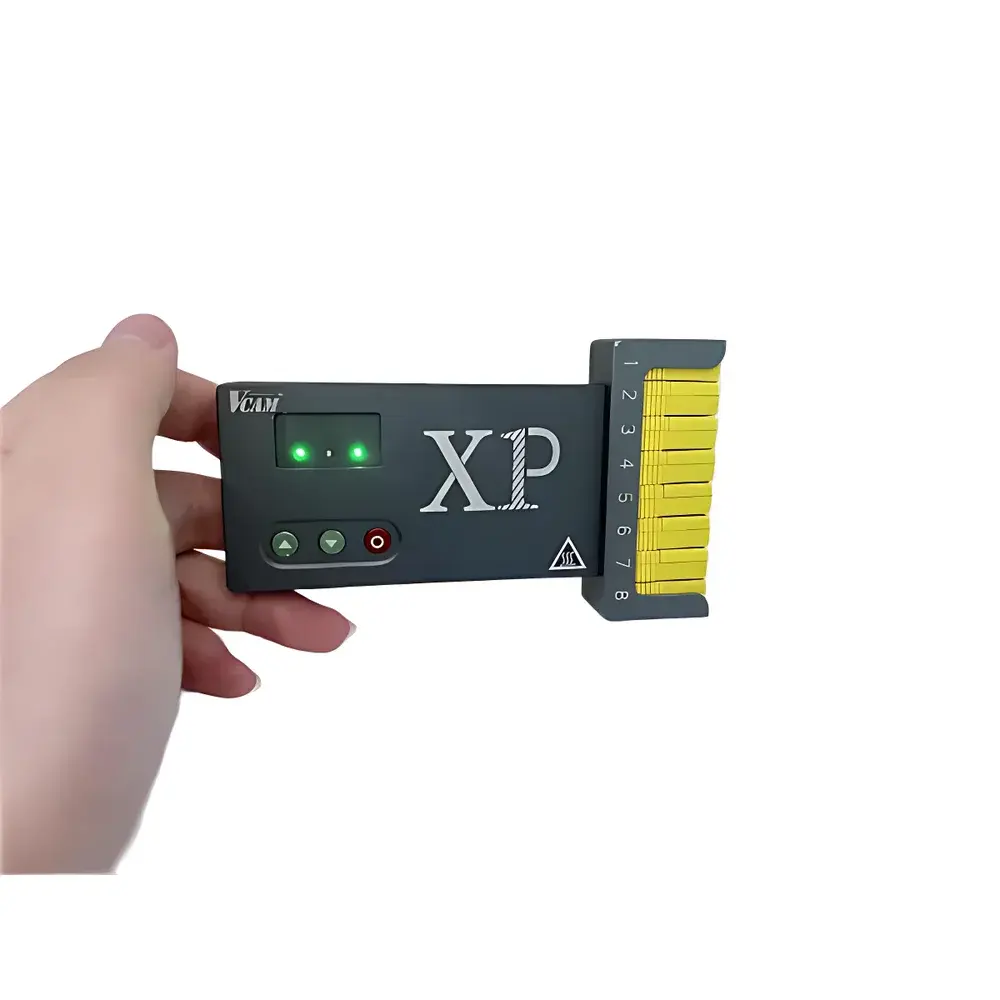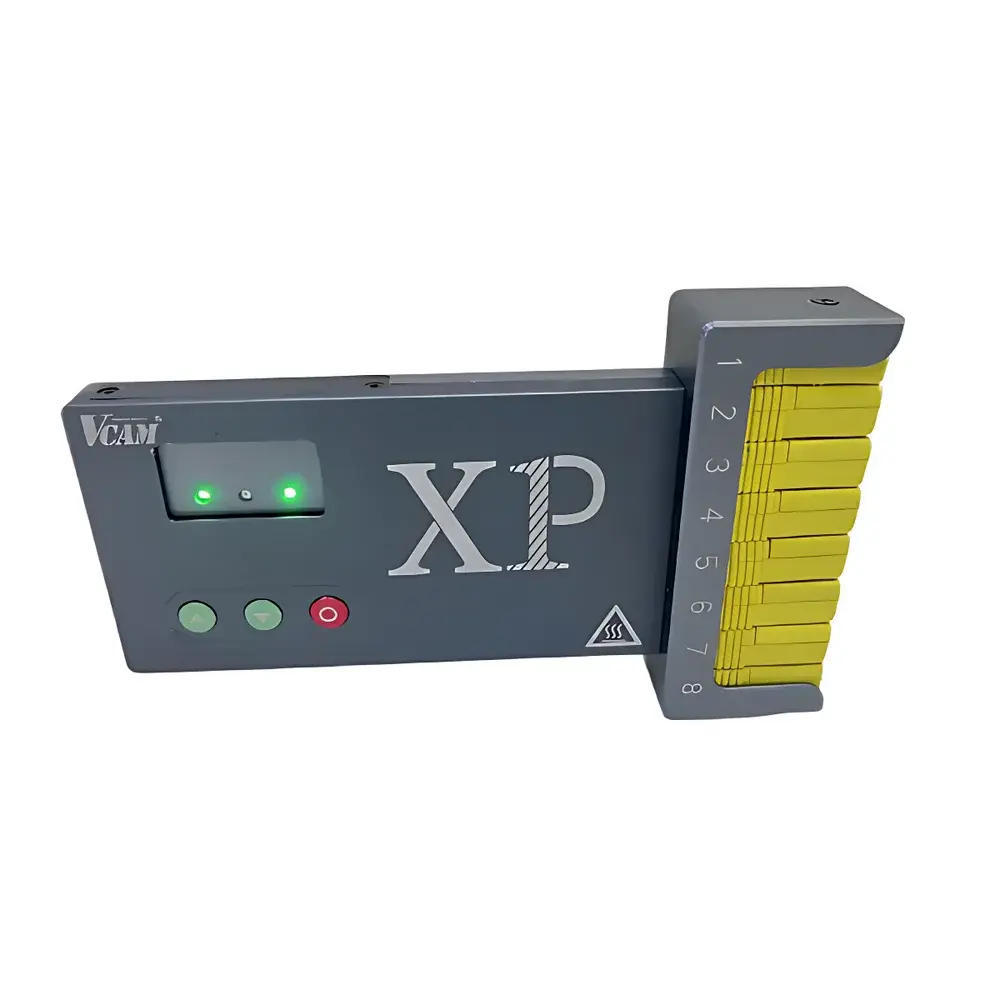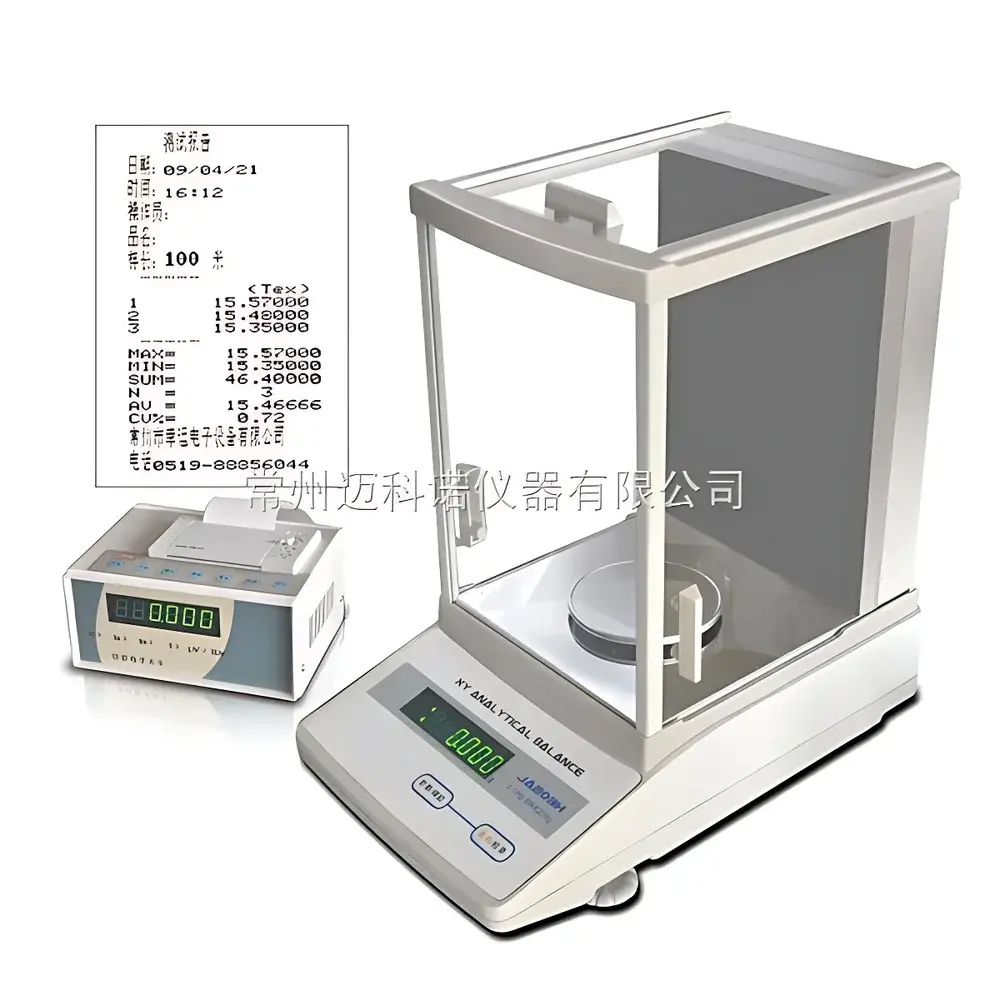
SD Series Automatic Count Electronic Balance (Textile-Specific) – Model 103SD
| Origin | Zhejiang, China |
|---|---|
| Manufacturer Type | Authorized Distributor |
| Product Origin | Domestic (China) |
| Model | 103SD |
| Price Range | USD 1,400–4,200 |
| Balance Type | Textile Count Balance |
| Capacity | 20–100 g |
| Readability | 0.00001 g (10 µg) |
| Pan Diameter | 90 mm |
| Power Supply | AC 220 V, 50 Hz |
| Interface | RS-232C |
| Compliance | ISO 9001, GB/T 26497–2011 (Electronic Balances for Textile Testing) |
Overview
The SD Series Automatic Count Electronic Balance (Model 103SD) is a precision textile-specific weighing instrument engineered for accurate linear density (yarn count) determination in accordance with international textile metrology standards. Unlike general-purpose analytical balances, the 103SD integrates dedicated firmware and unit conversion logic rooted in fiber science fundamentals—specifically calibrated to compute and display yarn count metrics derived from mass-per-unit-length measurements. Its operating principle relies on high-stability electromagnetic force compensation technology, delivering 10 µg readability across its 20–100 g working range. The balance is optimized for standardized test lengths (e.g., 100 m or 1 km skeins) used in Tex, Ne, Nm, Denier, and Oz/yd² calculations—ensuring traceable, repeatable results required for QC labs, spinning mills, and academic textile research facilities.
Key Features
- Seven built-in textile unit conversions: Ounce (oz), Tex, Metric Number (Nm), English Cotton Count (Ne), Denier (D), Grams per Square Meter (g/m²), and Ounces per Square Yard (oz/yd²)
- Programmable test parameters: customizable sample length, date/time stamping, yarn blend code entry, and auto-sequencing for batch testing
- Onboard data memory supporting up to 100 measurement records with selective deletion, resume functionality, and chronological indexing
- Integrated statistical engine computing Max, Min, Average (AV), and Coefficient of Variation (CV%) in real time—output directly to RS-232C-compatible printers or PCs
- Stainless-steel weighing pan (Φ90 mm) with draft shield compatibility; anti-static coating and vibration-damping base for stable operation in industrial environments
- Firmware compliant with GB/T 26497–2011 and aligned with ASTM D1435 (Standard Practice for Yarn Linear Density Measurement) and ISO 2060 (Yarn—Determination of Linear Density)
Sample Compatibility & Compliance
The 103SD accommodates a broad spectrum of textile specimens—including staple-fiber yarns (cotton, wool, polyester), filament bundles, woven fabric swatches (for g/m²), and knitted loop samples. Its 10 µg resolution enables reliable quantification of fine-count yarns (e.g., 120s–300s cotton) where sub-milligram mass differences significantly impact count accuracy. All calibration and verification procedures follow GLP-aligned protocols. The balance supports external calibration with Class E2 weights (certified per OIML R111) and includes audit-trail-ready calibration logs. Regulatory alignment includes ISO/IEC 17025:2017 (for accredited testing labs), USP (for pharmaceutical textile packaging validation), and Chinese National Standard GB/T 26497–2011 for electronic balances in textile applications.
Software & Data Management
Data export is facilitated via standard RS-232C serial interface, compatible with Windows-based laboratory information management systems (LIMS), Excel automation scripts, and custom QA databases. Optional PC software (supplied on USB drive) enables CSV export, trend charting of CV% over time, batch report generation (PDF/Excel), and user-defined template printing—including company header, test ID, operator ID, and ISO-compliant uncertainty statements. All stored records retain metadata: timestamp, sample ID, operator code, environmental temperature/humidity (if connected to optional external sensor), and raw mass value prior to unit conversion. Audit trail functionality meets FDA 21 CFR Part 11 requirements when used with validated software configurations.
Applications
- Quality control of high-count combed cotton and Pima yarns in spinning mills
- Research on fiber blend ratio verification (e.g., 65% polyester / 35% cotton) using differential count analysis
- Validation of fabric weight specifications (g/m²) for technical textiles and geotextiles
- Academic coursework and thesis projects in textile engineering programs requiring ISO-standardized linear density measurement
- Third-party certification testing per OEKO-TEX® Standard 100 or GOTS (Global Organic Textile Standard) material documentation
FAQ
What yarn count units does the 103SD support natively?
The balance computes and displays seven industry-standard units without manual calculation: Tex, Nm, Ne, Denier, oz, g/m², and oz/yd²—all derived from a single mass measurement and user-entered sample length.
Is external calibration required before first use?
Yes. Initial calibration must be performed using certified E2-grade weights traceable to national metrology institutes. Internal calibration is not supported; all adjustments require external reference standards.
Can the 103SD interface with modern LIMS platforms?
Yes—via RS-232C serial output. ASCII-formatted data streams are compatible with LabVantage, Thermo Fisher SampleManager, and custom Python/Node.js middleware using standard Modbus RTU or ASCII framing.
Does the device meet ISO/IEC 17025 requirements for accredited testing?
When operated under documented SOPs—including daily verification with check weights, environmental monitoring, and technician competency records—the 103SD satisfies Clause 6.4 (Equipment) and Clause 6.5 (Measurement Traceability) of ISO/IEC 17025:2017.
What is the recommended maintenance interval?
We recommend biannual verification by an ISO/IEC 17025-accredited service provider, including repeatability testing at 20%, 50%, and 100% of capacity, eccentricity assessment, and sensitivity drift evaluation.