
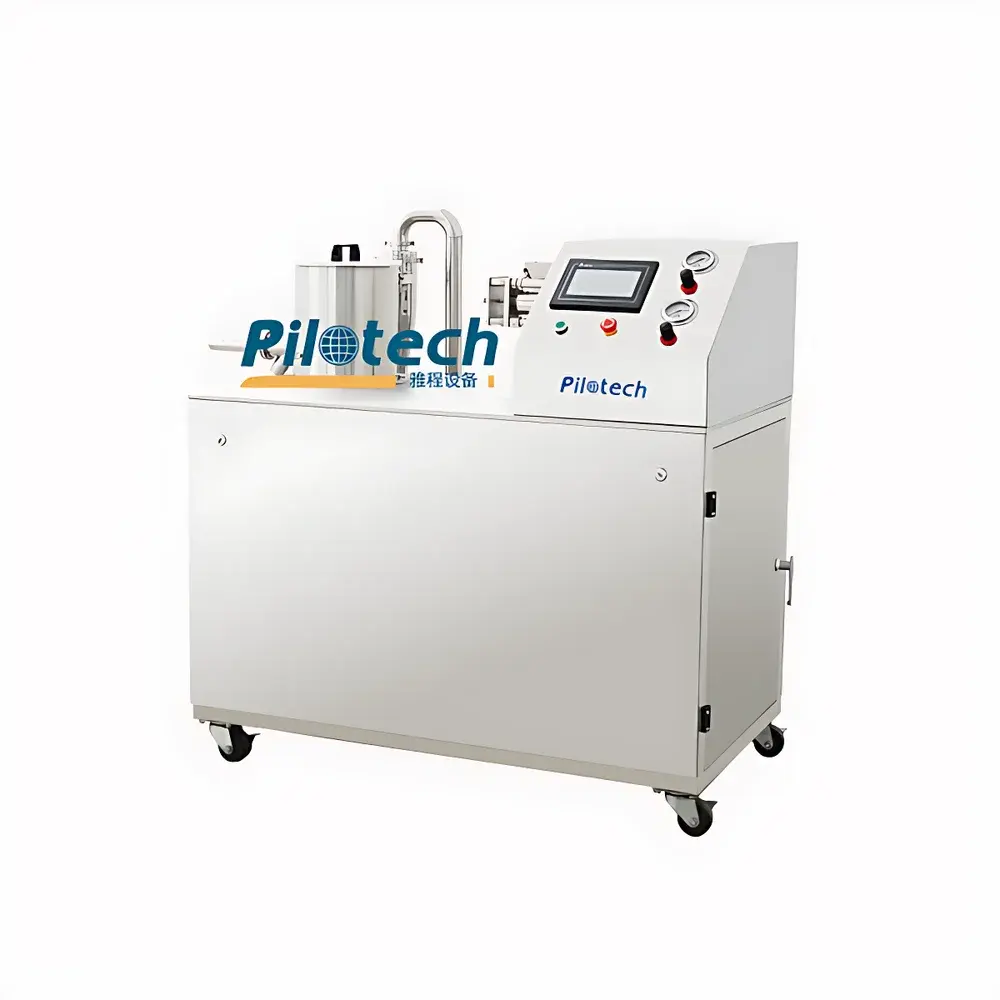
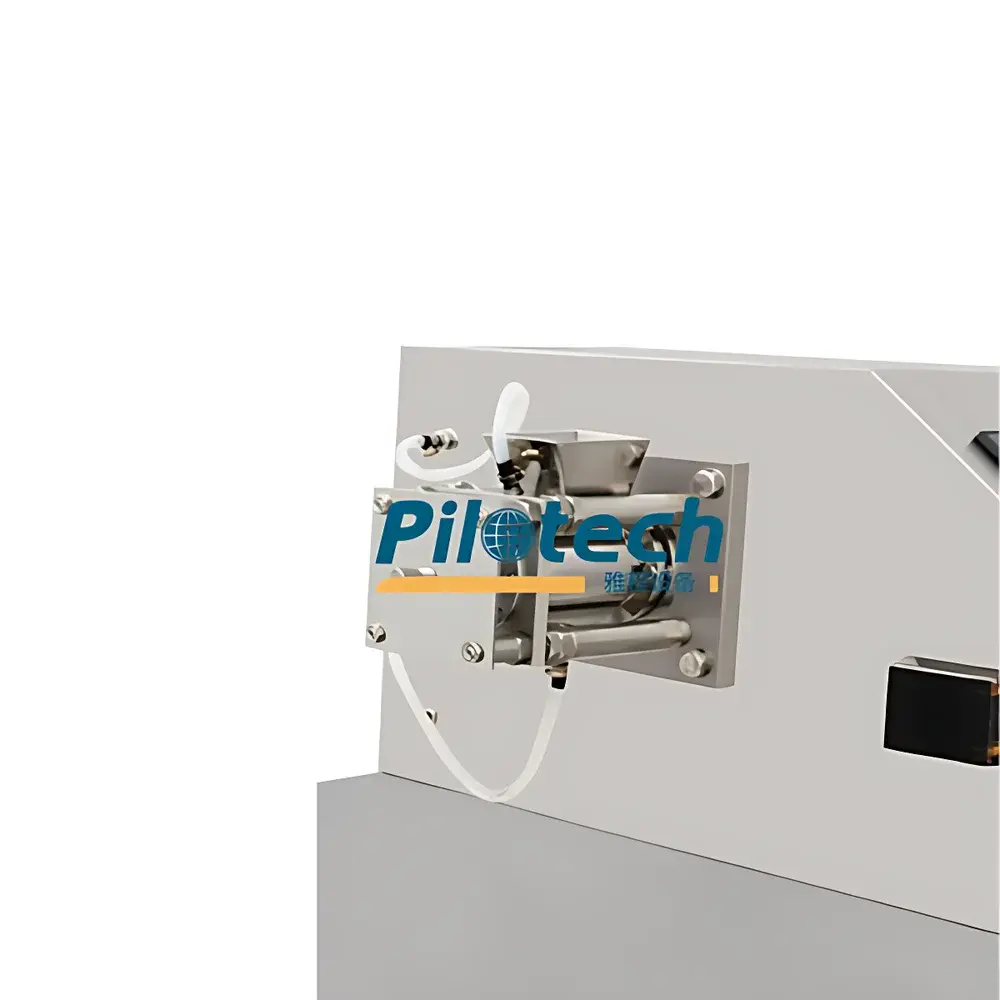
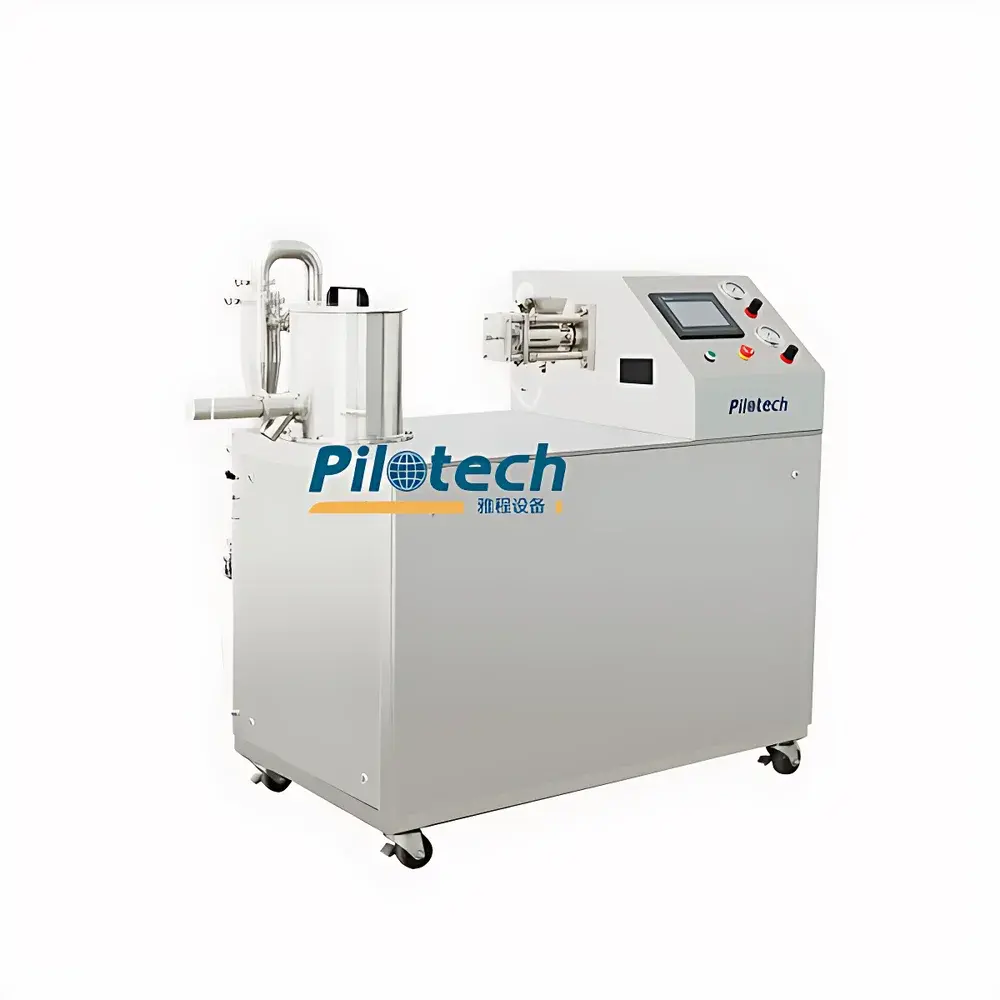
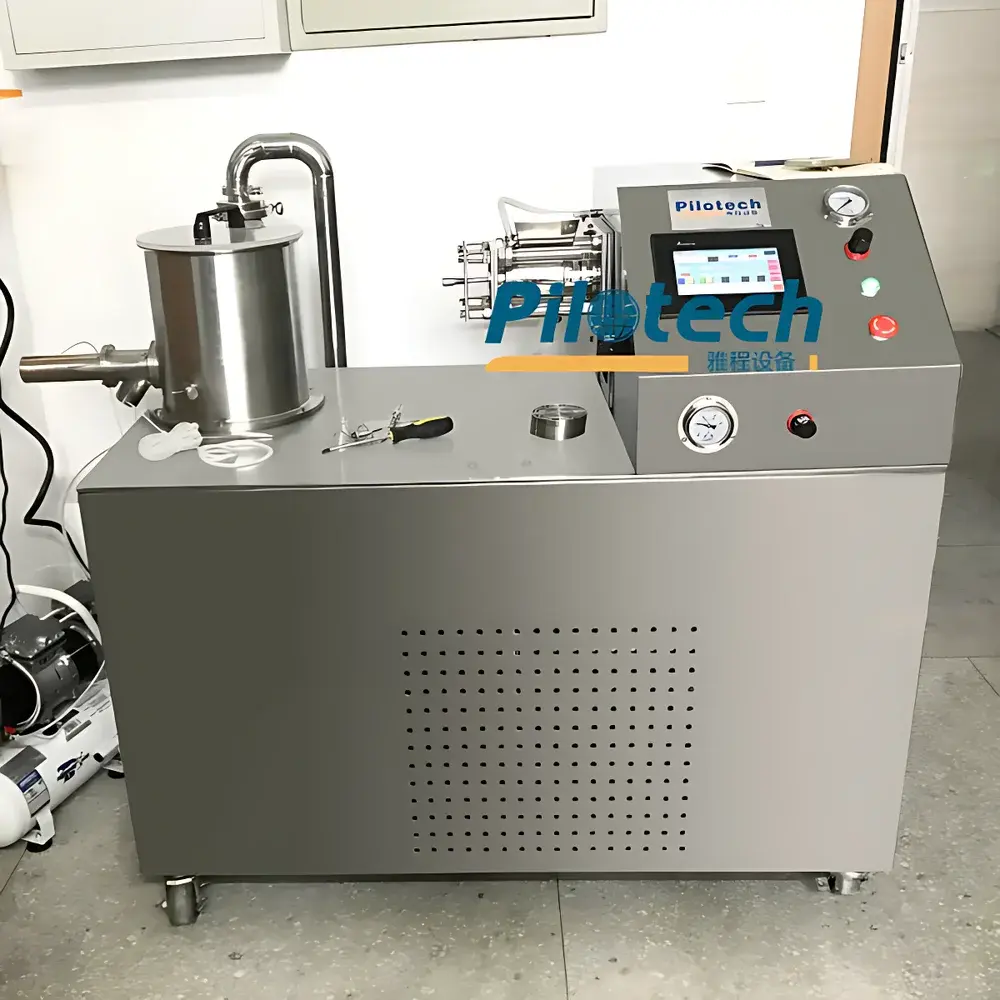
PILOTECH YC-910 Benchtop Extrusion-Spheronization System
| Brand | PILOTECH |
|---|---|
| Model | YC-910 |
| Origin | Shanghai, China |
| Manufacturer Type | Direct Manufacturer |
| Equipment Category | Domestic (China-Made) |
| Throughput | 1–3 kg/hr |
| Extruder Screw Speed | 50 rpm |
| Spheronizer Disc Speed | 1400 rpm |
| Pellet Diameter Range | 0.3–3 mm |
| Disc Diameter | 250 mm |
| Power Rating | 3 kW |
| Compressed Air Requirement | 0.3 m³/h |
| Integrated Cooling System | Built-in Chilled Water Circulation Unit |
| Functionality | Combined Extrusion, Spheronization & Optional Film Coating |
Overview
The PILOTECH YC-910 Benchtop Extrusion-Spheronization System is an integrated, laboratory-scale unit engineered for the continuous production of spherical multiparticulate dosage forms via the extrusion-spheronization process—a well-established, scalable pharmaceutical granulation technique widely referenced in USP , EP 2.9.36, and ICH Q5A guidelines. This system implements a two-stage solid dosage form manufacturing workflow: first, wet mass is conveyed and extruded through a perforated die plate by a rotating screw to generate uniform cylindrical strands; second, those strands are cut and fed into a high-speed rotating disc chamber where centrifugal force, surface friction, and controlled moisture environment induce plastic deformation and progressive spheroidization. The YC-910 incorporates a closed-loop chilled water circulation system directly coupled to both the extruder barrel and feed hopper—ensuring thermal stability during processing and preserving the structural integrity and bioactivity of thermolabile APIs, excipients, or functional food actives.
Key Features
- Integrated dual-function architecture combining extrusion, spheronization, and optional aqueous/organic film coating—eliminating inter-unit transfer and minimizing contamination risk.
- Chilled water jacketing system maintains extruder and feed zone temperatures ≤25 °C under continuous operation, validated for heat-sensitive biologics, peptides, and probiotic formulations.
- Adjustable extrusion screw speed (0–50 rpm) and spheronizer disc rotation (0–1400 rpm) enable precise control over strand morphology and final pellet sphericity.
- Narrow particle size distribution (PSD) with D10–D90 span <1.8, verified by laser diffraction (Malvern Mastersizer 3000), supporting robust downstream fluid-bed drying and high-efficiency Wurster coating.
- GMP-compliant design: stainless-steel 316L contact surfaces, fully traceable component certification, smooth internal welds (Ra ≤0.8 µm), and no dead-leg zones.
- Batch cycle time ≤3 minutes per 1–3 kg wet mass input; typical yield ≥95% without post-spheronization screening—reducing material loss and operational overhead.
- Modular sieve plate options (0.5 mm to 3.0 mm aperture) allow flexible adaptation across formulation development stages—from early feasibility studies to clinical batch support.
Sample Compatibility & Compliance
The YC-910 accommodates a broad spectrum of formulation matrices including direct-compression excipients (microcrystalline cellulose, lactose monohydrate), polymeric carriers (HPMC, Eudragit®), and active substances ranging from low-dose oncology agents (<100 µg/g) to high-load nutraceutical blends (≥30% w/w). Its sealed, dust-free wet-granulation pathway meets ISO 14644-1 Class 7 cleanroom requirements when operated within controlled environments. All electrical components comply with IEC 61000-6-2/6-4 EMC standards; mechanical safety conforms to EN ISO 12100 and EN 60204-1. Documentation packages support FDA 21 CFR Part 11-compliant electronic records when paired with validated third-party LIMS or MES integration.
Software & Data Management
While the base YC-910 operates via intuitive push-button HMI with real-time display of screw RPM, disc RPM, and coolant inlet/outlet temperature, optional Ethernet-enabled PLC upgrade enables full SCADA connectivity. Process parameters—including torque load, motor current draw, and thermal profiles—are logged at 1 Hz resolution and exportable as CSV or PDF reports. Audit trails capture user ID, timestamp, parameter changes, and alarm events—fully aligned with ALCOA+ data integrity principles and suitable for GLP/GMP audit preparation.
Applications
- Preformulation screening of MCC-based matrix systems for sustained-release oral pellets.
- Rapid generation of placebo beads for dissolution method development (USP Apparatus 1/2).
- Manufacture of enteric-coated microspheres for colonic delivery (e.g., budesonide, mesalamine analogues).
- Development of taste-masked pediatric suspensions using polymer-coated spherical granules.
- Functional food encapsulation—e.g., omega-3 oils in gelatin-alginate matrices processed below 30 °C.
- Academic research on particle rheology, binder distribution kinetics, and moisture migration during spheronization.
FAQ
Can the YC-910 produce pellets suitable for fluid-bed coating?
Yes—the resulting pellets exhibit high sphericity (>0.92 Hausner ratio), narrow PSD, and surface roughness conducive to uniform film deposition in standard Wurster or bottom-spray coaters.
Is validation documentation available for GMP use?
IQ/OQ protocols and factory-verified performance qualification (PQ) test reports are provided upon request; site-specific PQ support is available through PILOTECH’s global service network.
What maintenance intervals are recommended?
Screw and die plate inspection every 200 operating hours; chilled water filter replacement every 6 months; full lubrication service annually per ISO 13374 condition monitoring guidelines.
Does the system support nitrogen inerting for oxygen-sensitive compounds?
Yes—optional purge ports and pressure-relief valves can be installed to maintain <0.5% O2 headspace during extrusion and spheronization.
Can the YC-910 be integrated into automated lab platforms?
Standard Modbus TCP and RS-485 interfaces enable seamless connection to robotic sample handlers, auto-weighing stations, and central process control systems.




