
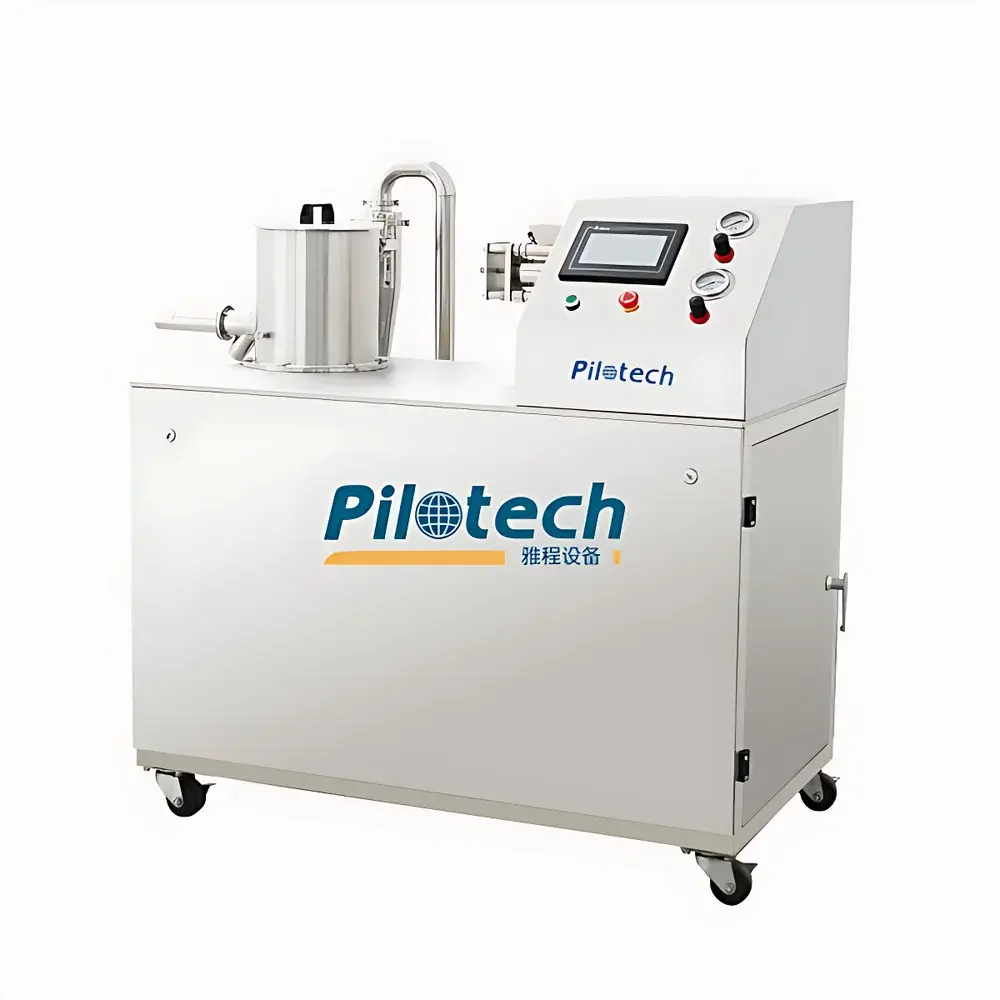
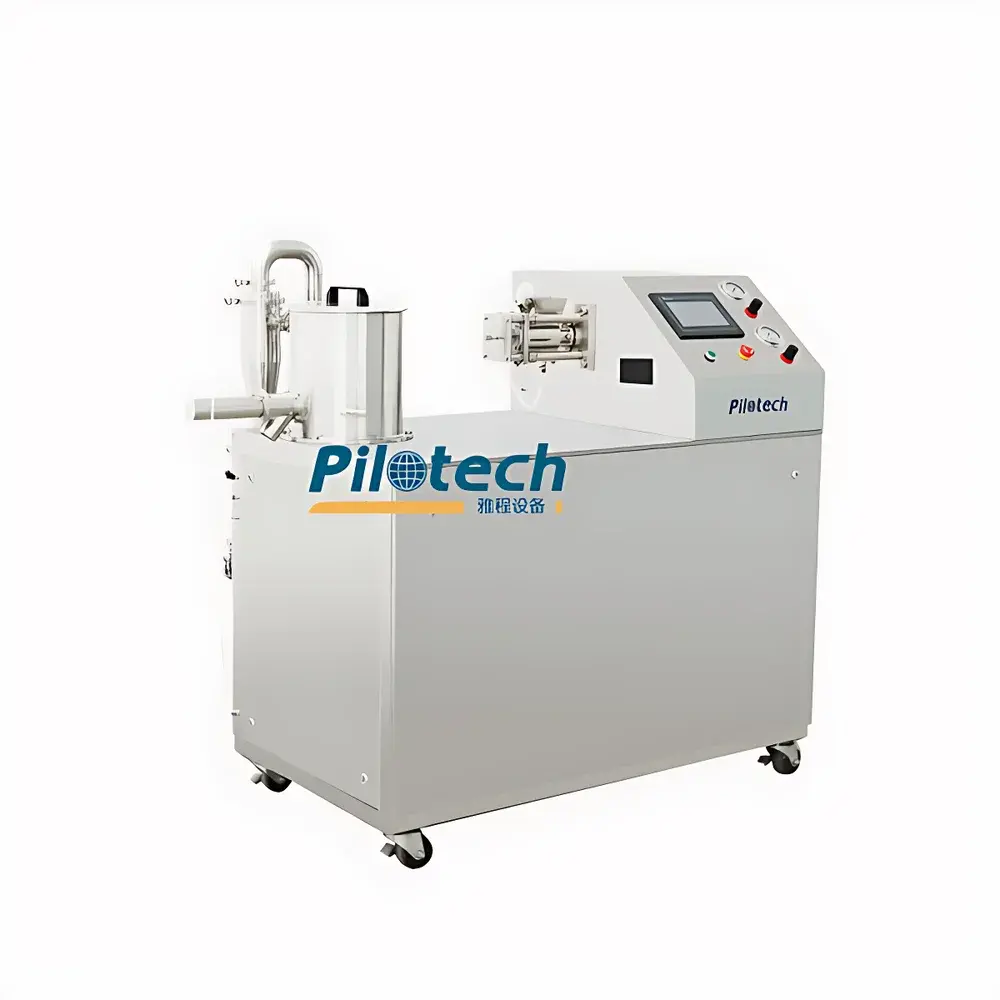
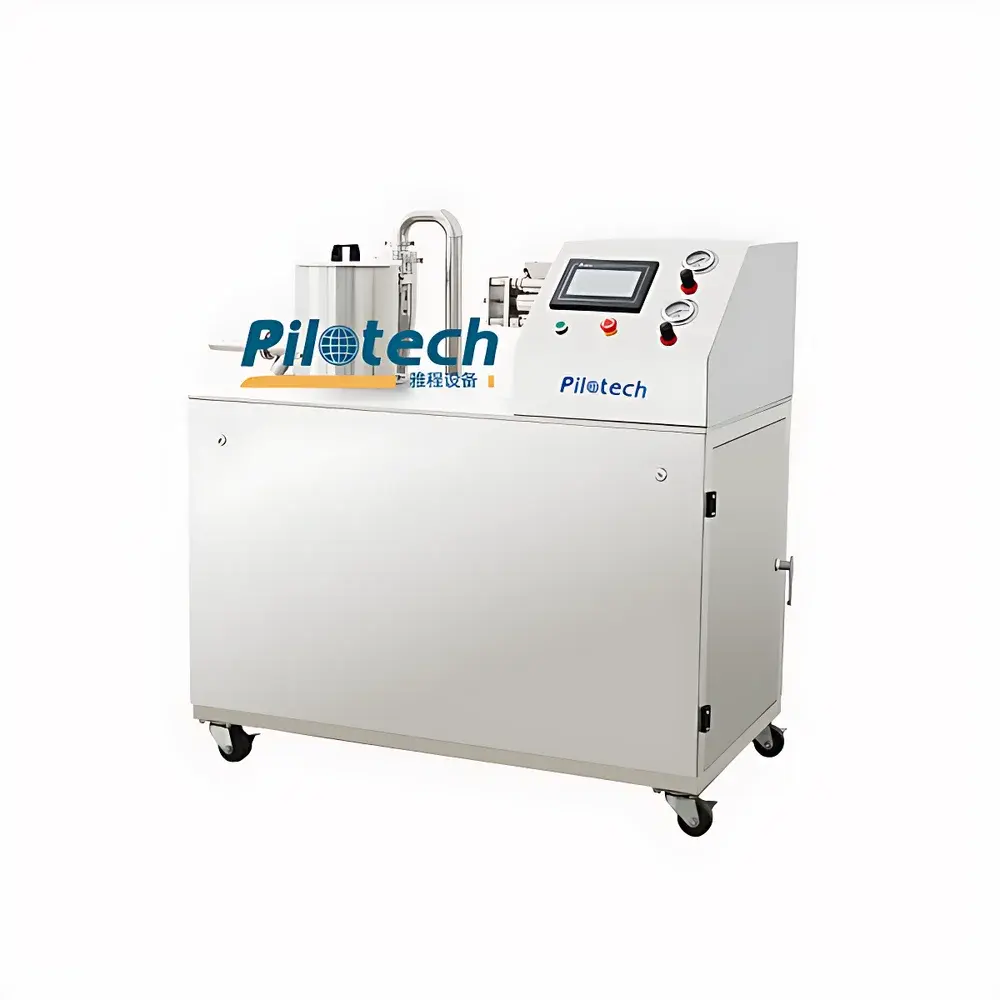
Pilotech YC-910 Benchtop Multi-Function Pelletizer & Coater
| Brand | Pilotech |
|---|---|
| Origin | Shanghai, China |
| Manufacturer Type | Direct Manufacturer |
| Region Classification | Domestic (China) |
| Model | YC-910 |
| Pricing | Upon Request |
| Throughput | 1–3 kg/hr |
| Extrusion Speed | 50 rpm |
| Spheronization Speed | 1400 rpm |
| Pellet Diameter Range | 0.3–3 mm |
| Disc Diameter | 250 mm |
| Power Rating | 3 kW |
| Compressed Air Requirement | 0.3 m³/h |
| Integrated Cooling System | Built-in Chilled Water Circulation Unit |
Overview
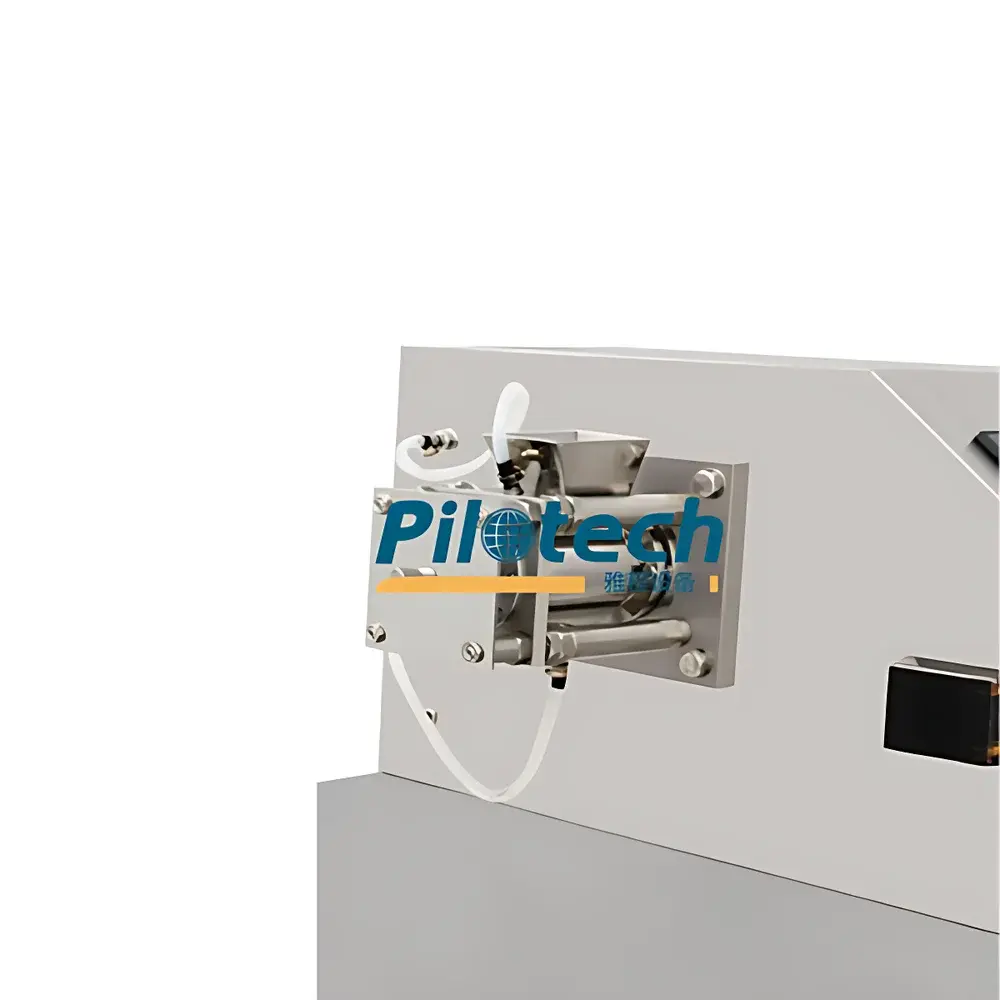
The Pilotech YC-910 Benchtop Multi-Function Pelletizer & Coater is an integrated, laboratory-scale unit engineered for extrusion-spheronization and subsequent film coating of spherical pellets—commonly referred to as microspheres or mini-tablets—in pharmaceutical, nutraceutical, and functional food R&D environments. It operates on the well-established two-step principle of wet extrusion followed by high-speed centrifugal spheronization, enabling precise control over pellet morphology, size distribution, density, and surface uniformity. The system utilizes a twin-function architecture: first, a screw-driven extruder forces moistened powder blends through a perforated die plate to generate cylindrical extrudates; second, these extrudates are fed into a rotating disc chamber where controlled centrifugal force, combined with surface moisture modulation and optional fluidized airflow, induces rapid spheroidization via particle attrition and coalescence. A built-in chilled water circulation system actively cools both the extrusion barrel and feed hopper, maintaining material temperature below critical thresholds—essential for thermolabile APIs, probiotics, enzymes, or heat-sensitive excipients. This thermal management ensures structural integrity, chemical stability, and biological activity retention throughout processing.
Key Features
- Integrated extrusion-spheronization-coating platform in a single compact benchtop footprint—eliminates inter-unit transfer and cross-contamination risk.
- Chilled water cooling circuit (integrated, closed-loop) maintains extruder and feed zone temperatures ≤25 °C during continuous operation—validated for API stability per ICH Q5C guidelines.
- Adjustable extrusion speed (0–50 rpm) and spheronization disc rotation (0–1400 rpm) allow fine-tuning of extrudate aspect ratio and final pellet roundness (sphericity >0.92 per USP ).
- Narrow particle size distribution (PSD): D10–D90 span <1.8, verified by laser diffraction (Malvern Mastersizer) across ≥5 consecutive batches.
- Fluid-assisted spheronization: Clean, filtered air introduced through radial slots beneath the rotating disc enhances particle mobility and minimizes agglomeration—critical for achieving uniform film coating later.
- GMP-compliant wet-processing design: No dry powder handling post-blending; all unit operations occur under controlled humidity and containment—fully aligned with Annex 1 (2022) requirements for non-sterile solid dosage forms.
- High process efficiency: Typical batch cycle time ≤3 minutes for 500 g–1 kg loads; average yield ≥95% without downstream sieving or rework.
Sample Compatibility & Compliance
The YC-910 accommodates a broad spectrum of formulation types—including direct compression blends, high-viscosity hydrocolloid systems (e.g., HPMC, alginate), and multi-component active blends requiring segregation mitigation. It supports both immediate-release and modified-release pellet development (e.g., enteric, sustained, or pH-dependent release). All wet-contact surfaces are electropolished AISI 316L stainless steel (Ra ≤0.4 µm), compliant with ASME BPE-2022 standards. The system meets core elements of FDA 21 CFR Part 11 for electronic records (when paired with validated third-party SCADA), supports full audit trail generation, and is compatible with GLP/GMP documentation workflows. CE marking applies for electrical safety (EN 61000-6-3, EN 61000-6-4); mechanical design adheres to ISO 14155 principles for equipment qualification in clinical trial material manufacturing.
Software & Data Management
While the base YC-910 operates via intuitive tactile HMI with programmable SOP templates (up to 20 stored protocols), optional integration with Pilotech’s P-Link™ LabSuite software enables real-time parameter logging (torque, RPM, temperature, air flow), automated deviation alerts, and CSV/PDF export for regulatory submission packages. All process data—including timestamps, operator ID, and environmental metadata—are timestamped and cryptographically hashed to satisfy ALCOA+ data integrity criteria. Batch reports include statistical summaries (mean diameter, sphericity index, yield %) and trend charts—facilitating DOE analysis and scale-up correlation studies.
Applications
- Early-phase formulation screening: Rapid generation of placebo and API-loaded pellets for dissolution profiling (USP Apparatus 1/2), stability testing, and bioavailability assessment.
- Hot-melt extrusion (HME) pellet finishing: Post-HME spheronization of brittle strands to improve flow and coating uniformity.
- Multi-layer pellet development: Sequential layering of incompatible actives (e.g., acid-labile + alkaline-stable compounds) via discrete spheronization-coating cycles.
- Nutraceutical encapsulation: Microencapsulation of omega-3 oils, vitamins, or botanical extracts using gelatin or starch-based matrices.
- Academic and contract research: Teaching labs and CROs leverage its reproducibility and ease of cleaning for method transfer and tech transfer support.
FAQ
Can the YC-910 produce pellets suitable for fluid-bed coating?
Yes—the spheronized pellets exhibit excellent sphericity (>0.92), narrow PSD, and low friability (<2% at 25 rpm, 10 min, Erweka KEF), making them fully compatible with standard Wurster and top-spray fluid-bed coaters.
Is validation support provided for GMP use?
Pilotech supplies IQ/OQ protocol templates, FAT/SAT documentation, and material traceability records. Full PQ support requires site-specific performance qualification conducted by qualified users or authorized service partners.
What sieve sizes are available for optional granule sizing?
Interchangeable stainless-steel mesh inserts (0.3 mm, 0.5 mm, 0.8 mm, 1.2 mm, 2.0 mm) enable precise control over extrudate diameter prior to spheronization—critical for targeting specific release profiles.
Does the system meet cleanroom compatibility requirements?
Yes—the unit is designed for Class D (ISO 8) environments; all external surfaces are smooth, non-porous, and wipe-cleanable. Optional HEPA-filtered recirculation mode minimizes ambient air intake.
Can it handle highly viscous or fibrous formulations?
With appropriate binder selection (e.g., PVP K30, HPC SSL) and pre-hydration optimization, the YC-910 successfully processes cellulose derivatives, chitosan gels, and herbal paste blends—though viscosity >5000 cP may require pre-shearing or dilution.






