PIV Field Experiment Service by Bt Fluid – Particle Image Velocimetry On-Site Measurement Support
| Key | Brand: Bt Fluid (exclusive distributor of ILA GmbH, Germany) |
|---|---|
| Origin | Germany |
| Manufacturer Type | Authorized Distributor |
| Instrument Type | Particle Image Velocimetry (PIV) System |
| Rental Model | Daily rental |
| Minimum Rental Duration | 1 week |
| Pricing | USD $2,800–$7,200 per week (quoted case-by-case) |
| Deposit | None |
| Lead Time | 3 weeks |
| Payment Terms | 100% advance payment |
| Compliance | Fully compliant with ISO/IEC 17025-aligned measurement practices and GLP documentation standards |
Overview
Bt Fluid’s PIV Field Experiment Service delivers turnkey, on-site particle image velocimetry (PIV) measurement capability for academic, industrial, and governmental research laboratories requiring high-fidelity, time-resolved velocity field data—without capital investment in complex optical instrumentation. As the exclusive Chinese representative of ILA GmbH (Germany), Bt Fluid deploys metrologically traceable, factory-calibrated PIV systems engineered for precision fluid dynamics characterization under real-world experimental conditions. The service is grounded in cross-correlation-based optical flow analysis: dual-pulse laser illumination generates two sequential images of seeded tracer particles within a thin light sheet; sub-pixel displacement between corresponding particle patterns is computed to reconstruct instantaneous 2D or stereo 3D velocity vectors with spatial resolution down to ~10–50 µm/pixel and temporal resolution governed by inter-frame delay (as low as 100 ns). This principle enables quantitative mapping of laminar/turbulent structures, vorticity, strain rate, and Reynolds stress in gas, liquid, and multiphase flows—critical for validation of CFD simulations, aerodynamic design iteration, and fundamental turbulence research.
Key Features
- Full-Service On-Site Execution: End-to-end support—from pre-experiment feasibility assessment and optical layout planning to synchronized acquisition, raw data delivery, and post-processing report generation.
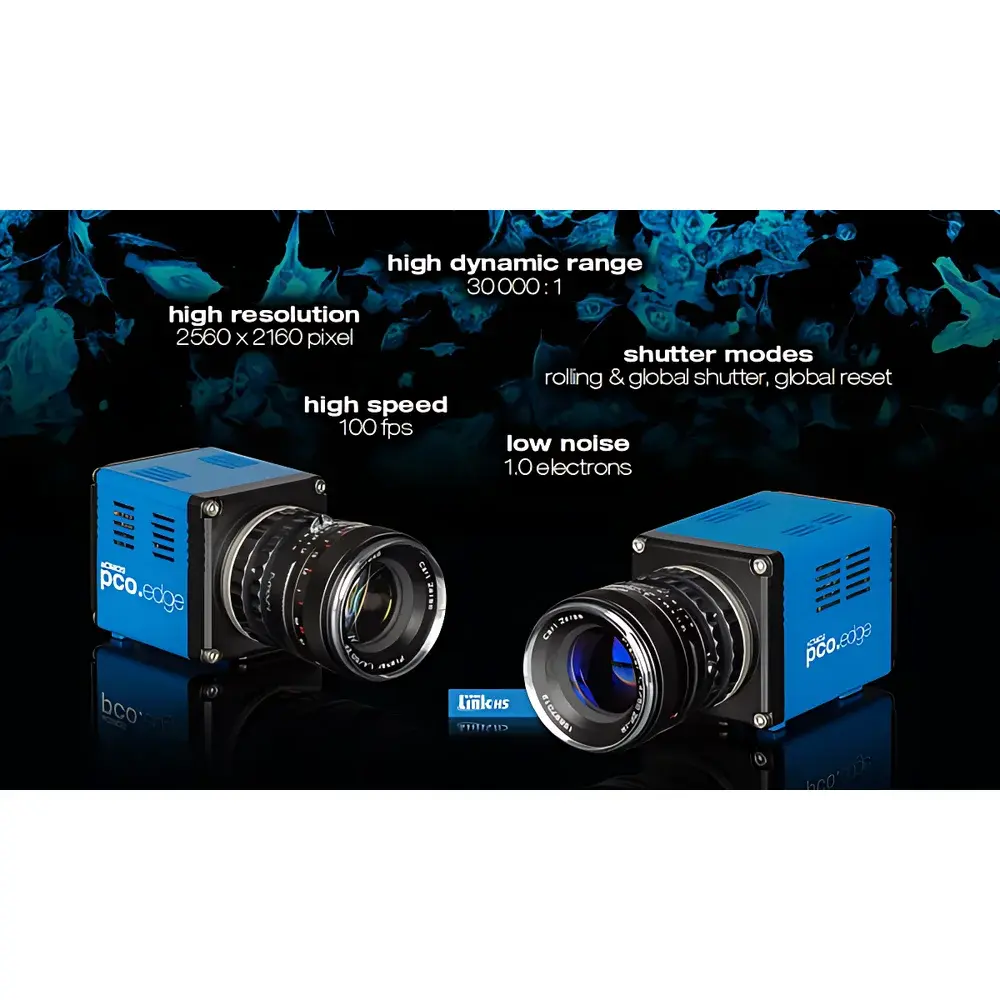
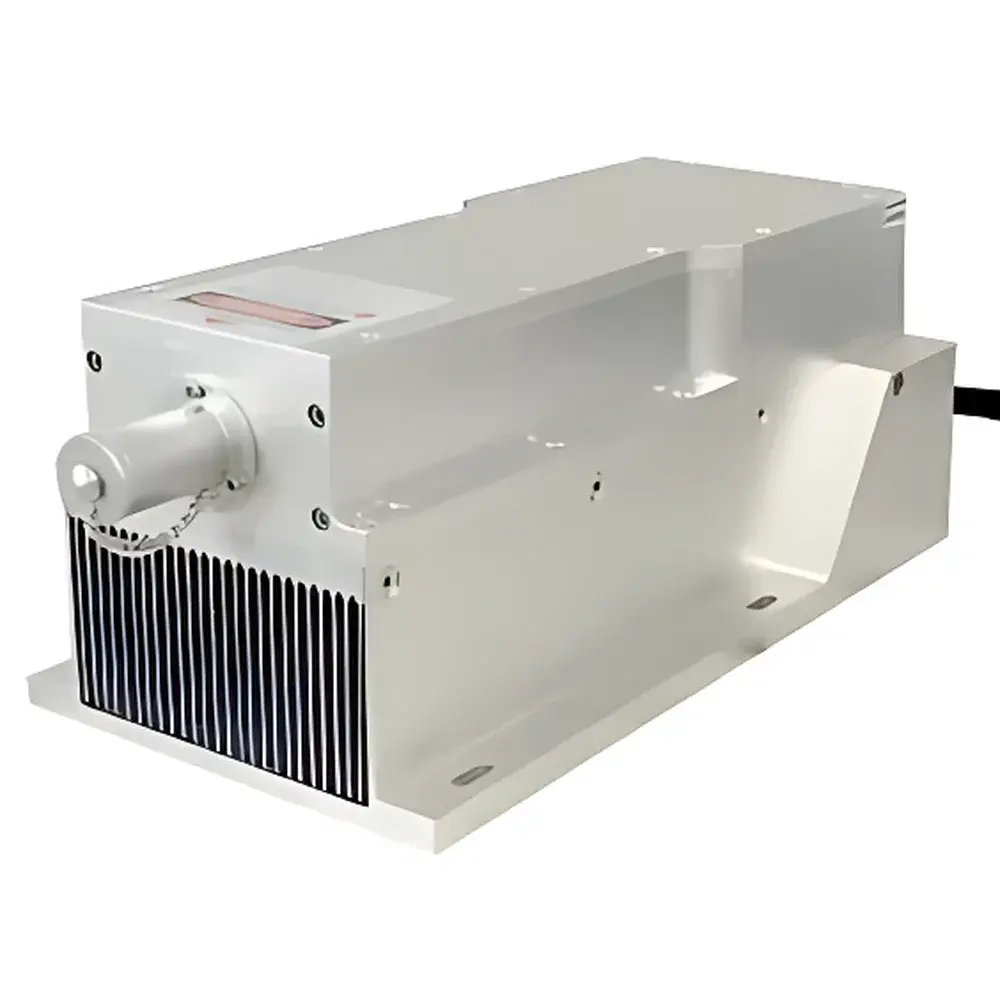
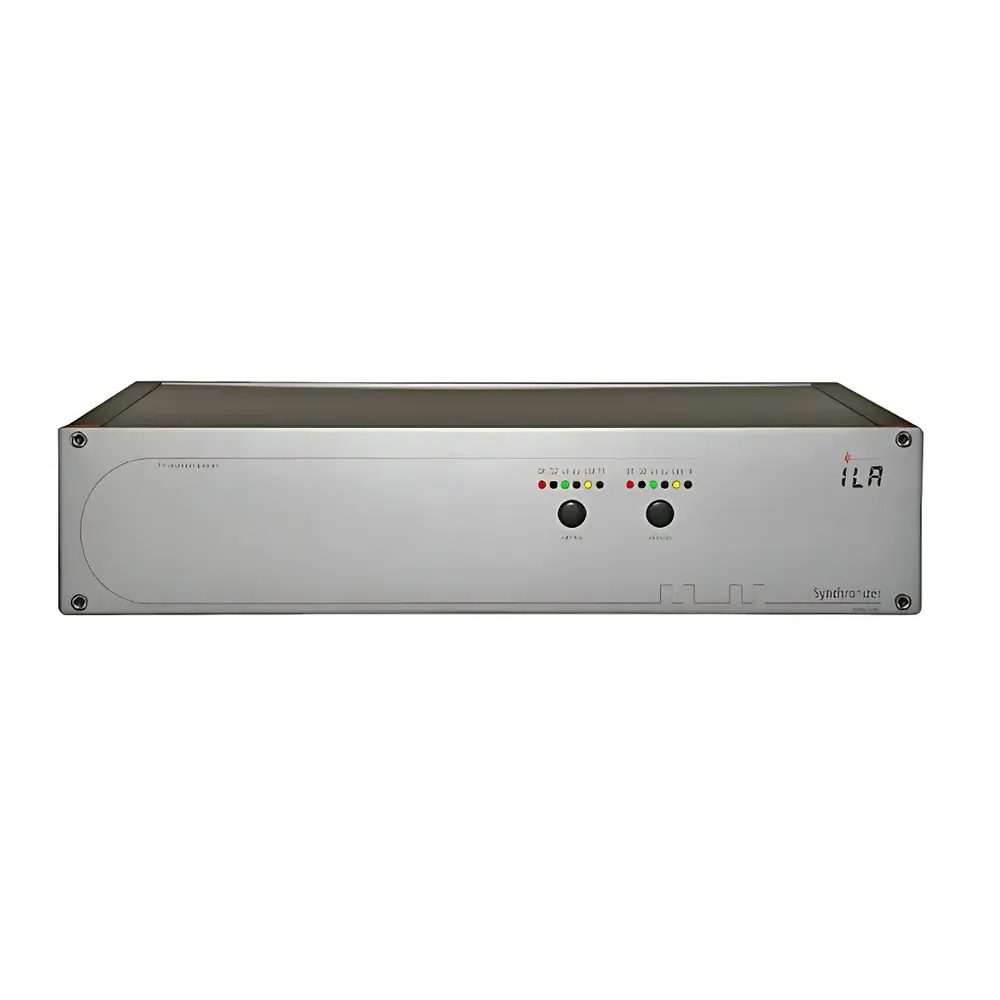
- ILA-Grade Hardware Stack: Includes dual-cavity pulsed Nd:YAG lasers (532 nm, 200 mJ/pulse, 0–15 Hz), PCO edge 5.5M (2560 × 2160, 16-bit, 1e⁻ read noise) and PCO Dimax CS1 (1296 × 1024, 3 kHz full-res) high-speed cameras, nanosecond-precision synchronizers (1 ns timing resolution, 6 programmable outputs), and continuous-wave 532 nm lasers (0–2 W, <1% power drift).
- Multiphase & Extreme-Environment Adaptation: Specialized configurations for supersonic flows (shock-boundary layer interaction), combustion diagnostics (flame-resistant camera housings + 532 nm narrowband filtering + liquid crystal shutters), rotating machinery (shaft encoder/Hall sensor phase-locking), and gas–liquid flows (fluorescent seeding + 550 nm high-pass filtering to suppress bubble glare).
- Traceable Calibration & Documentation: All systems undergo pre-deployment verification per ILA’s internal SOPs; raw image sequences are delivered with metadata (laser energy, exposure time, inter-frame delay, synchronization log); final reports include uncertainty estimates aligned with ISO 5725 guidance.
Sample Compatibility & Compliance
The service accommodates diverse fluid media—including air, water, oil, combustion gases, and two-phase mixtures—across Reynolds numbers from laminar (10⁶). Tracer particle selection (solid: polystyrene, hollow glass; liquid: dioctyl sebacate) is optimized for Stokes number matching (Stk ≈ 0.1–1.0) and refractive index contrast. All optical components comply with IEC 60825-1:2014 Class 4 laser safety requirements; operational protocols adhere to institutional biosafety and fire safety policies. Data integrity meets GLP audit readiness: raw TIFF/B16 files retain bit-perfect fidelity; acquisition logs timestamp every trigger event; no proprietary compression or lossy conversion is applied.
Software & Data Management
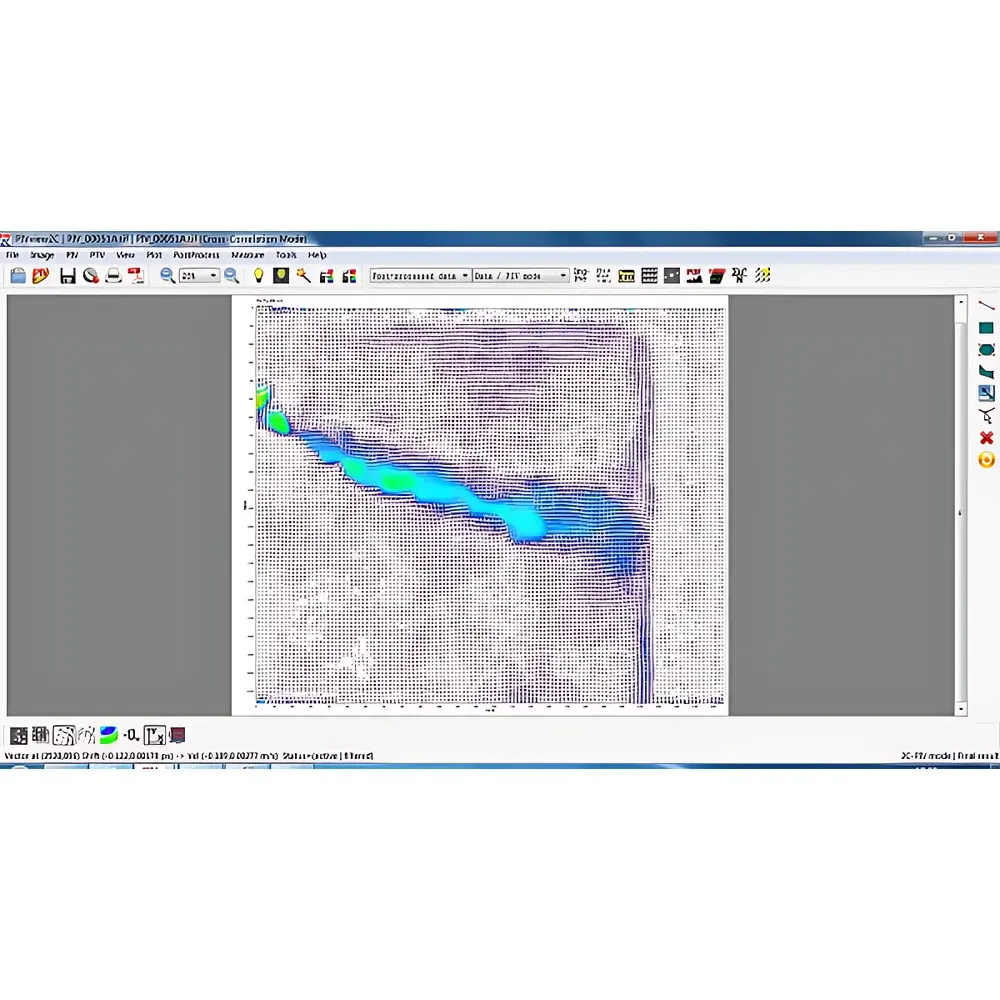
PIV data processing utilizes PIVview—a validated, peer-reviewed software platform consistently ranked Tier-1 in international PIV Challenge benchmarks. It implements both direct cross-correlation and multi-pass iterative interrogation with adaptive window deformation, supports linear/non-linear image distortion correction, and exports vector fields in HDF5, ASCII, and Tecplot-compatible formats. Batch processing scripts automate quality control metrics (signal-to-noise ratio, correlation peak ratio, outlier fraction) across hundreds of frames. All processed datasets include metadata headers conforming to the PIV community’s “PIV-ML” schema. For regulated environments (e.g., aerospace qualification or pharmaceutical process validation), optional 21 CFR Part 11-compliant audit trails and electronic signatures can be implemented upon request.
Applications
- Turbomachinery Flow Analysis: Phase-locked PIV mapping of blade passage vortices, tip leakage flow, and secondary flow structures in axial/centrifugal compressors and turbines.
- Combustion Diagnostics: Velocity–scalar coupling in premixed and diffusion flames, flame stabilization mechanisms, and soot-laden jet dynamics under elevated temperature/pressure.
- Aerodynamic Development: Boundary layer transition detection, separation bubble characterization, and wake topology analysis in wind tunnel models (NACA airfoils, UAV configurations, automotive bluff bodies).
- Environmental & Biomedical Flows: Sediment transport in flumes, microfluidic mixing efficiency, and pulsatile blood flow in anatomically accurate vascular phantoms.
FAQ
What is the minimum required lead time to schedule an on-site PIV experiment?
Three weeks from formal purchase order confirmation, allowing for system configuration, travel logistics, and site-specific safety briefing.
Can you support stereo or tomographic PIV measurements?
Yes—stereo PIV using dual-camera setups is standard; tomographic PIV (Tomo-PIV) requires prior feasibility review due to computational and optical alignment complexity.
Do you provide raw image data and processing scripts?
Yes—uncompressed TIFF or B16 image sequences, full acquisition logs, and documented PIVview processing workflows are delivered with every project.
Is remote supervision available during the on-site campaign?
Real-time remote monitoring via secure VNC is supported; however, all critical acquisition decisions (e.g., laser alignment, seeding density, timing parameters) are made by on-site Bt Fluid engineers to ensure measurement validity.
How do you handle data confidentiality and intellectual property?
All data remain the sole property of the client; Bt Fluid signs NDAs and retains no copies post-delivery unless explicitly authorized for archival under GLP-compliant storage protocols.