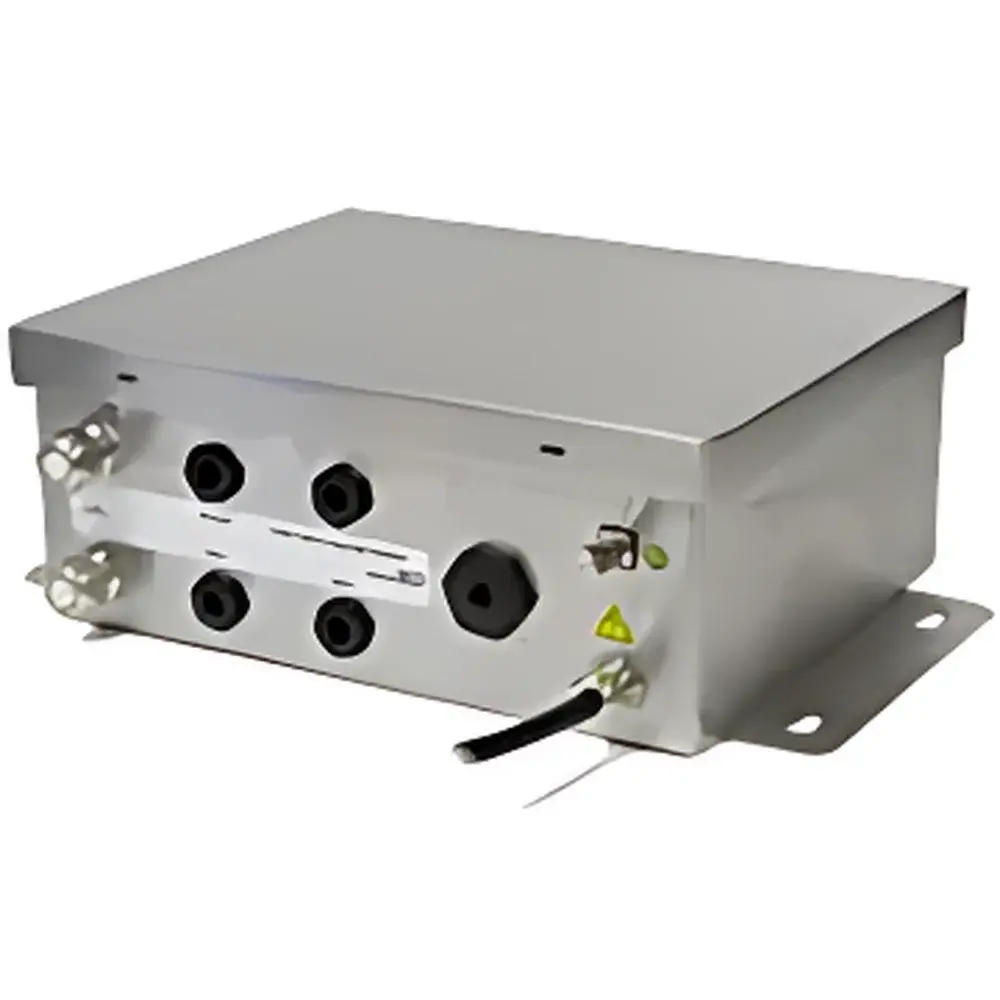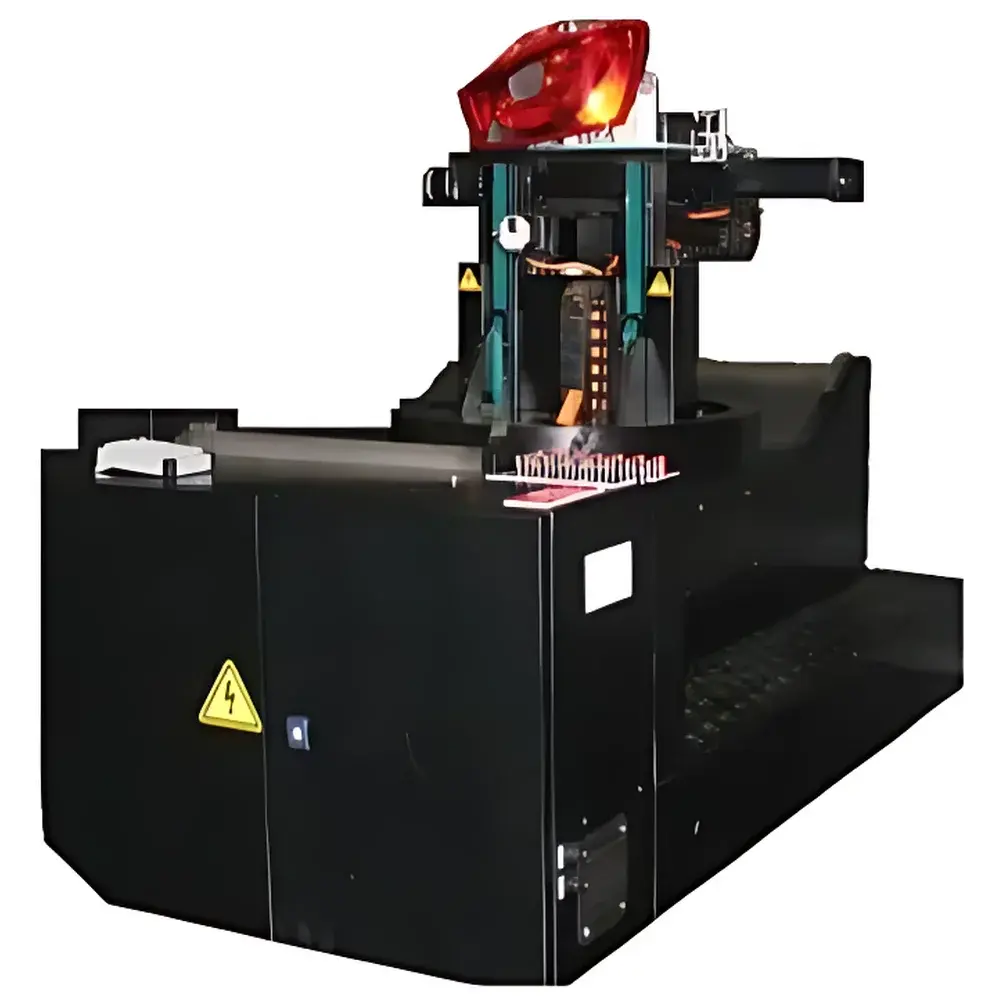
Pleiades GES Series Automotive Photometric Goniometer System
| Brand | Pleiades |
|---|---|
| Origin | France |
| Manufacturer Type | Authorized Distributor |
| Origin Category | Imported |
| Model | GES |
| Pricing | Available Upon Request |
Overview
The Pleiades GES Series Automotive Photometric Goniometer System is a laboratory-grade, fully motorized photometric measurement platform engineered for precise angular luminous intensity distribution characterization of automotive lighting and signaling devices. Operating on the fundamental principle of goniophotometry—where a light source (DUT) remains stationary while a calibrated photodetector rotates along precisely defined spherical coordinate axes—the GES system captures spatial photometric data in full 3D angular space (typically C-γ and B-β configurations). It is designed to comply with internationally recognized regulatory frameworks including UNECE Regulation No. 112 (headlamps), No. 7 (front position lamps), No. 50 (stop lamps), No. 99 (LED modules), as well as SAE J1383, J575, J1757-1, and Japanese JIS D 5501 standards. The system’s dual-axis gimbal architecture—comprising high-precision azimuth (C-axis) and elevation (γ-axis) rotation stages—enables continuous, repeatable positioning across ±180° in C and −10° to +120° in γ, with optional third-axis translation (X/Y/Z) for DUT alignment and optical path optimization.
Key Features
- Fully automated goniophotometric measurement with programmable scan sequences compliant with ECE, SAE, and JIS test protocols
- Modular configuration options: GES_S (signal lamp testing), GES_L (headlamp testing), GES_SL (dual-purpose headlamp & signal lamp), and GES-ORM (retroreflector measurement)
- High-stability mechanical architecture featuring low-backlash harmonic drives and temperature-compensated angular encoders (resolution ≤ 0.01°)
- Expandable multi-unit architecture supporting up to five independent measurement stations within a single control environment
- Integrated optical path optimization accessories: collimating projection panels, regulated DUT power supplies (DC/AC, 0–30 V / 0–10 A), and field-reducing optical lenses for compact laboratory integration
- Real-time photometric data acquisition using NIST-traceable silicon photodiodes with spectral correction for V(λ) luminosity function conformity
Sample Compatibility & Compliance
The GES platform accommodates a comprehensive range of automotive optical components under standardized mounting and thermal stabilization conditions. Tested device categories include: rear lamps (tail, stop, reversing, side marker), front lamps (position, daytime running, fog), headlamps (low-beam, high-beam, adaptive driving beam modules), and retroreflective devices (ORS-type reflectors, warning triangles per ECE R3, ISO 20471 Class 2/3). All measurements are performed under controlled ambient temperature (23 ± 2°C) and humidity (50 ± 10% RH) per ISO 80000-3 and CIE S 010/E:2022 requirements. Data output formats adhere to ECE Annex 7, SAE J1383 Appendix A, and JIS D 5501 Annex B reporting structures—including tabulated candela values at specified angular grid points, isolux/isocandela contour plots, and photometric tolerance zone overlays.
Software & Data Management
The GES system is operated via Pleiades’ proprietary GoniSoft v5.x application, a Windows-based platform supporting both manual operation and script-driven batch testing. The software implements audit-trail functionality compliant with GLP and FDA 21 CFR Part 11 requirements—including electronic signatures, user access levels (admin/operator/viewer), and immutable log records of all measurement parameters, calibration events, and data exports. Raw photometric datasets are stored in standardized IESNA LM-63 and EULUMDAT (.ldt) formats, with optional export to CSV, XML, or PDF reports containing pass/fail status against regulatory limits. Calibration management includes scheduled reminders for photometer verification (using reference standard lamps traceable to LNE or PTB), axis position validation, and dark-current drift compensation routines.
Applications
The GES Series serves critical functions across the automotive lighting development lifecycle: pre-compliance verification during LED module design; type-approval submission support for homologation laboratories; production line QA sampling for OEM Tier-1 suppliers; and failure analysis of photometric deviations linked to thermal lensing, phosphor degradation, or optical misalignment. Its adaptability to both steady-state and pulsed (PWM-modulated) sources enables evaluation of modern adaptive driving beam (ADB) systems and dynamic turn signal sequences. Additional use cases include R&D validation of micro-optic arrays, freeform reflector surfaces, and holographic diffusers used in next-generation lighting architectures.
FAQ
What regulatory standards does the GES system support out-of-the-box?
The system includes pre-configured test templates for UNECE R112, R7, R50, R99; SAE J1383, J575, J1757-1; and JIS D 5501, with automatic report generation aligned to each standard’s annex requirements.
Can the GES accommodate headlamps with complex ADB or matrix beam patterns?
Yes—via synchronized shutter control and time-resolved acquisition mode, enabling frame-by-frame photometric capture of dynamic beam segments during programmed activation sequences.
Is third-party calibration documentation included with delivery?
Each system ships with a full factory calibration certificate (traceable to national metrology institutes), including angular position accuracy, photometric linearity, and spectral responsivity verification data.
How is thermal stabilization managed during extended photometric scans?
DUT thermal management is supported through optional integrated thermocouple monitoring, programmable dwell times between angular steps, and environmental chamber synchronization interfaces.
Does the software support automated pass/fail evaluation against regulatory limits?
Yes—GoniSoft allows definition of custom tolerance bands per angular point or zone, with visual flagging and summary statistics for non-conforming measurements in compliance reports.