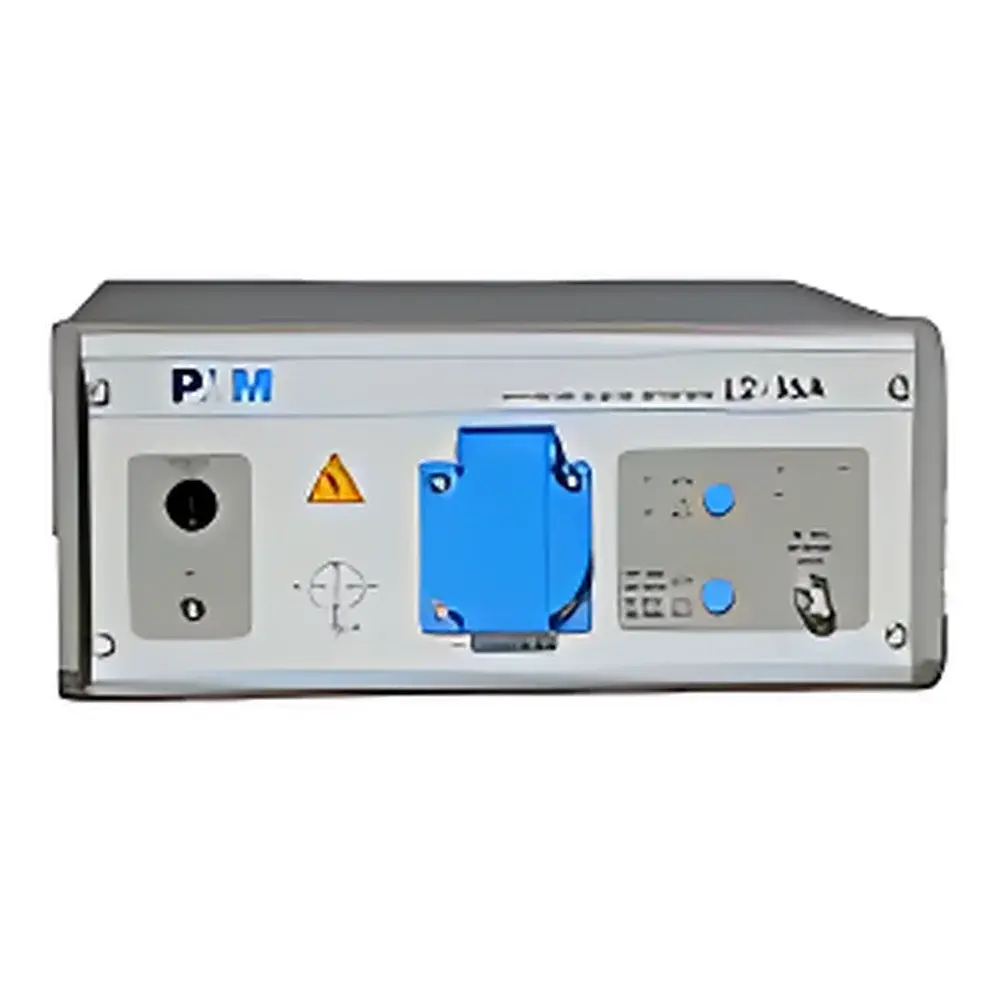
PMM ASN & LISN Series Artificial Supply Networks
| Origin | Italy |
|---|---|
| Manufacturer Type | Authorized Distributor |
| Origin Category | Imported |
| Model Series | ASN / LISN |
| Pricing | Available Upon Request |
| Current Ratings | 2 A to 500 A |
| Impedance Configurations | 50 Ω // (1 Ω + 5 µH), 50 Ω // (5 Ω + 50 µH), 150 Ω, and ISO 7637-2 compliant variants |
| Standards Compliance | CISPR 22, CISPR 25, ISO 7637-2, MIL-STD-461G (CE102, CS101, CS106), EN 55032, EN 55035 |
Overview
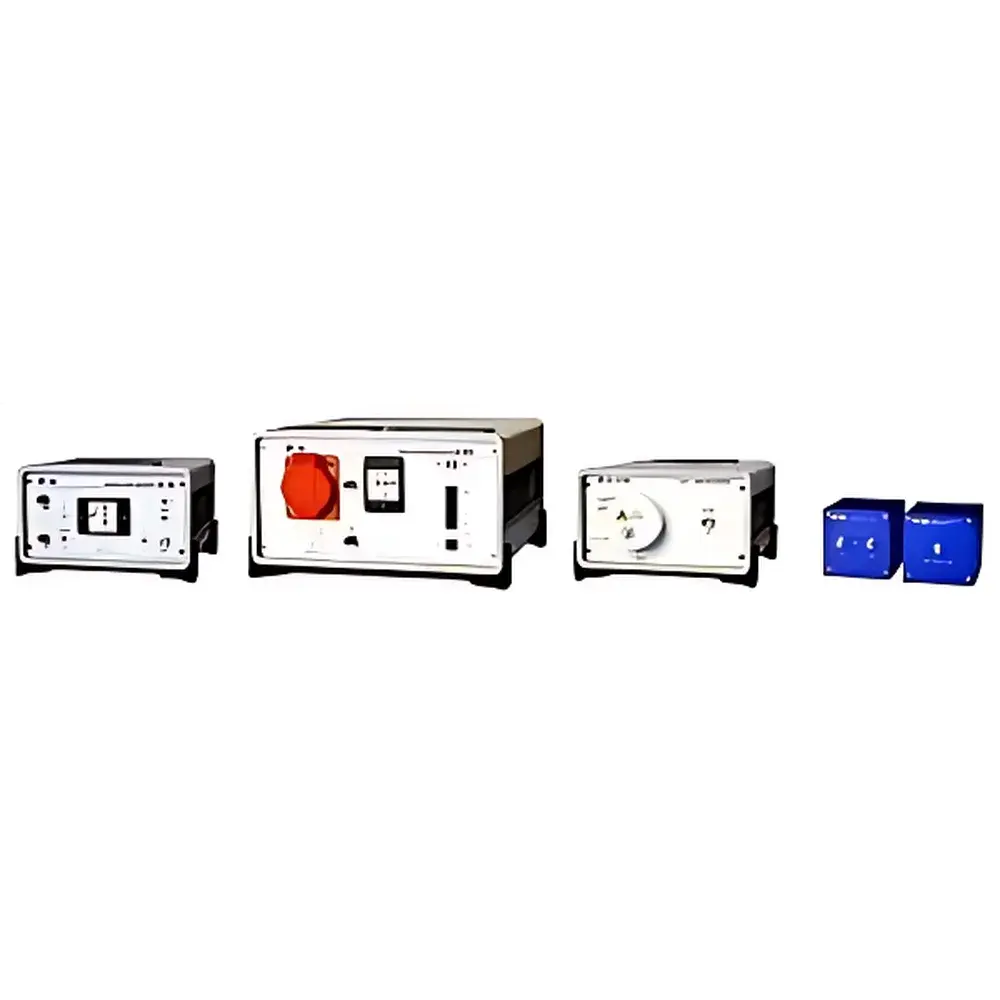
The PMM ASN and LISN Series Artificial Supply Networks are precision-engineered passive RF impedance stabilization devices designed to provide a repeatable, standardized 50 Ω (or 150 Ω) measurement interface between the equipment under test (EUT) and electromagnetic compatibility (EMC) receivers or spectrum analyzers. Operating on the fundamental principle of decoupling conducted emissions from the mains supply while presenting a defined impedance to the EUT across the frequency range of 9 kHz to 30 MHz (and up to 1 GHz for certain high-bandwidth variants), these networks ensure metrologically traceable, inter-laboratory comparable emission measurements in accordance with international EMC standards. Each unit integrates calibrated RF voltage sampling ports, robust line filtering, and galvanic isolation to suppress common-mode noise from auxiliary power sources—enabling accurate assessment of differential-mode and common-mode conducted disturbances without influence from variable grid impedance.
Key Features
- Multi-current-capability architecture: Select from eight standardized configurations—from low-current telecom Delta-LISN (L2-D, 2 A, 150 Ω) to high-power industrial three-phase units (L3-500, 350 A, 50 Ω // 5 Ω + 50 µH)—ensuring optimal impedance matching and thermal stability across load conditions.
- Automated phase switching capability when integrated with PMM-compatible EMC receivers (e.g., PMM 9010, 9030 series), enabling unattended sequential measurement across L1/L2/L3/N lines per CISPR 25 Clause 6.4.3 and ISO 7637-2 Annex B requirements.
- Thermally stable, low-inductance winding design using silver-plated copper conductors and toroidal magnetic cores, minimizing insertion loss deviation (< ±0.3 dB) and phase shift across the full CISPR bandwidth.
- Integrated overvoltage protection (8 kV/1.2 × 50 µs impulse) and transient surge suppression compliant with IEC 61000-4-5 Level 3, safeguarding sensitive measurement front-ends during automotive or industrial EUT testing.
- Modular mechanical construction with IP2X-rated enclosure, removable grounding lugs, and standardized BNC/SMA RF output connectors conforming to IEC/CISPR 16-1-2:2023 mechanical interface specifications.
Sample Compatibility & Compliance
These Artificial Supply Networks support a broad spectrum of EUT types including automotive ECUs, industrial PLCs, consumer power supplies, medical device AC adapters, and aerospace avionics subsystems. All models are fully compliant with the impedance and performance requirements specified in CISPR 16-1-2:2023 (for general EMC), CISPR 25:2021 (for vehicle components), ISO 7637-2:2011 (transient immunity and emission testing), EN 55032/55035 (multimedia equipment), and MIL-STD-461G CE102 (conducted emissions, 10 kHz–10 MHz) and CS101/CS106 (conducted susceptibility). Units designated with “-1-01” suffix (e.g., L5-100-1-01) incorporate enhanced broadband filtering specifically validated for ISO 7637-2 pulse generator coupling network applications. Traceable calibration certificates (including amplitude and phase response data from 9 kHz to 300 MHz) are supplied with each unit, supporting GLP/GMP audit readiness and ISO/IEC 17025 accredited laboratory workflows.
Software & Data Management
When used with PMM’s EMCO software suite (v5.2+), the ASN/LISN series enables automated test sequencing—including auto-recognition via embedded EEPROM identifiers, real-time current monitoring, and dynamic LISN selection based on configured test plan parameters (e.g., selecting L3-64 for a 400 VAC/64 A motor drive test per CISPR 25 Ed. 4). The software logs all hardware configuration states (line assignment, current rating, impedance mode) alongside raw spectral data, ensuring full 21 CFR Part 11-compliant audit trails—including electronic signatures, user access controls, and immutable record retention. Export formats include CISPR-compliant .CSV, .S1P (touchstone), and XML-based EMC report templates aligned with EN 55016-2-1 reporting conventions.
Applications
- Pre-compliance and certification-level conducted emissions testing per CISPR, FCC Part 15, and EN standards in accredited EMC laboratories.
- Automotive component validation against ISO 7637-2 pulses (P1–P5b) and steady-state RF noise limits in OEM-tier supplier labs.
- Design-stage troubleshooting of switching power supply noise injection paths using time-domain reflectometry (TDR)-assisted LISN port analysis.
- Conducted immunity pre-scan setup where LISNs serve as controlled impedance injection points for CDN-based test configurations.
- Calibration reference standards for LISN verification per ANSI C63.4-2022 Annex G and CISPR 16-1-2 Clause 6.2.2.
FAQ
What is the difference between an ASN and a LISN?
An Artificial Supply Network (ASN) is the generic term defined in CISPR 16-1-2; a Line Impedance Stabilization Network (LISN) is a functional subset of ASN—specifically designed to stabilize line impedance for conducted emission measurements. All PMM units function as LISNs per standard definitions.
Do these LISNs support three-phase delta configurations?
Yes—the L2-D model provides 150 Ω delta termination for telecom/data line testing, while custom-configured L3-series units can be ordered with delta-connected internal impedance networks upon request and validation.
Is calibration required before first use?
Each unit ships with a factory calibration certificate covering impedance magnitude/phase deviation, insertion loss, and RF port directivity up to 300 MHz. Periodic recalibration every 12 months or after 500 operational hours is recommended for ISO/IEC 17025 compliance.
Can the LISN be used for conducted immunity testing?
While primarily designed for emission measurements, select models (e.g., L3-100, L5-100-1-01) are qualified for use as coupling/decoupling networks (CDNs) in conducted immunity setups per IEC 61000-4-6, provided external current clamps or coupling transformers meet required insertion loss and VSWR specifications.
Are mechanical drawings and mounting templates available?
Yes—dimensional CAD files (STEP, DWG) and panel-cutout templates are provided in the technical documentation package, compliant with EN 61000-4-6 mounting guidelines for minimal ground loop induction.
Related Products