
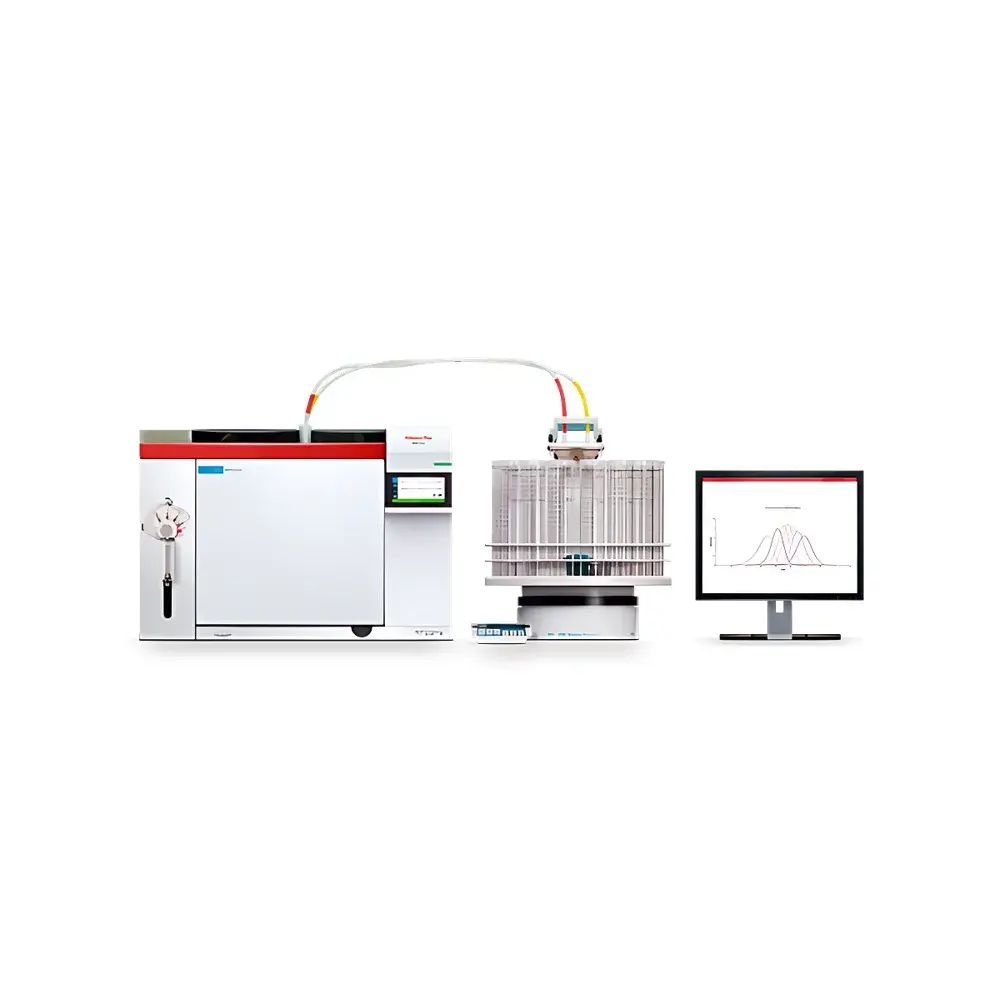
Polymer Char PREP mc2 Automated Polymer Fractionation System
| Brand | Polymer Char |
|---|---|
| Origin | Spain |
| Manufacturer Type | Authorized Distributor |
| Origin Category | Imported |
| Model | PREP mc2 |
| Pricing | Upon Request |
Overview
The Polymer Char PREP mc2 Automated Polymer Fractionation System is an integrated, benchtop platform engineered for high-precision, reproducible fractionation of polyolefin resins based on either molecular weight distribution (MWD) or compositional heterogeneity—specifically crystallinity and chemical composition gradients—as resolved by Temperature Rising Elution Fractionation (TREF) or Crystallization Analysis Fractionation (CRYSTAF). Unlike conventional manual or semi-automated fractionation methods, the PREP mc2 implements a fully closed-loop solvent-handling architecture with programmable temperature ramps, precise fraction collector triggering, and real-time system diagnostics. It operates on the principle of selective solubilization and sequential elution under controlled thermal conditions: in TREF mode, crystalline fractions precipitate upon cooling and redissolve incrementally during programmed heating; in CRYSTAF mode, crystallization kinetics are monitored via infrared detection to define fractionation cut points. This enables quantitative isolation of fractions differing in short-chain branching content, comonomer incorporation, or lamellar thickness—critical parameters for correlating microstructure with end-use performance in LLDPE, HDPE, PP, and ethylene–propylene copolymers.
Key Features
- Fully automated operation from sample dissolution through fraction collection and system cleaning—completed in ≤24 hours per run
- Dual-sample capability: simultaneous processing of two independent polymer samples, each yielding up to 8 discrete fractions (16 total per batch)
- Configurable fractionation capacity: supports sample masses from 2 g to 20 g, optimized for both R&D screening and quality control workflows
- Two orthogonal fractionation modes: TREF for crystallinity-based separation and CRYSTAF for kinetic crystallization profiling—both compliant with ASTM D7275 and ISO 16014-4
- Optional cryogenic module enabling temperature control down to –20 °C, essential for resolving low-crystallinity ethylene–octene copolymers and plastomers
- Integrated remote monitoring and diagnostic interface via Ethernet/IP, supporting predictive maintenance alerts and secure firmware updates
- Solvent-free operator exposure: all solvent handling—including dissolution, filtration, elution, and waste transfer—is fully enclosed and pneumatically actuated
Sample Compatibility & Compliance
The PREP mc2 is validated for polyolefins including homopolymers (HDPE, LDPE, PP), random and block copolymers (e.g., ethylene–propylene, ethylene–butene), and metallocene-catalyzed resins. It accommodates standard analytical-grade solvents (e.g., 1,2,4-trichlorobenzene, o-dichlorobenzene) and complies with IEC 61000-6-3 (EMC) and IEC 61010-1 (safety). Fraction purity and recovery are traceable per GLP requirements, with audit-ready logs capturing temperature profiles, pump cycles, fraction weights, and system status timestamps. Data integrity conforms to FDA 21 CFR Part 11 when operated with validated software configurations.
Software & Data Management
Control and analysis are executed via Polymer Char’s proprietary Fractionator™ software—a Windows-based application featuring intuitive workflow wizards, customizable method templates, and embedded calibration management. All raw data (temperature, flow rate, detector signals, fraction timing) are stored in HDF5 format with SHA-256 checksums. Export options include CSV, Excel, and ASTM-compliant XML for seamless integration with third-party analytical platforms (e.g., NMR, FTIR, DSC). Audit trails record user actions, parameter changes, and instrument events with immutable timestamps—fully supporting GMP documentation standards.
Applications
- Correlating branch distribution (via 13C NMR of isolated fractions) with mechanical properties in film-grade LLDPE
- Quantifying catalyst heterogeneity by mapping comonomer gradient profiles across TREF fractions
- Validating reactor-grade resin consistency prior to scale-up using CRYSTAF-derived crystallization onset temperatures
- Supporting patent litigation through forensically reproducible fractionation of competitor resins
- Enabling structure–property modeling by feeding fraction-specific DSC melting enthalpies into multi-phase crystallinity models
FAQ
What solvent systems are supported?
The system is optimized for 1,2,4-trichlorobenzene (TCB) and o-dichlorobenzene (o-DCB); alternative high-boiling solvents may be qualified upon request.
Can fractions be collected directly into NMR tubes?
Yes—fraction collector vials are compatible with standard 5 mm NMR tubes; optional tube-holding adapters are available.
Is method validation support provided?
Polymer Char supplies IQ/OQ documentation packages and assists with site-specific PQ protocols aligned with ISO/IEC 17025 laboratory accreditation requirements.
How is carryover between fractions minimized?
Each fraction path includes dedicated solvent rinse cycles, pressure-pulsed line purging, and gravimetric verification of residual mass before next collection.
Does the system meet environmental safety regulations for solvent use?
All solvent containment meets EU Directive 2010/75/EU (IED) standards; optional activated carbon exhaust scrubbers are available for full VOC abatement.






