
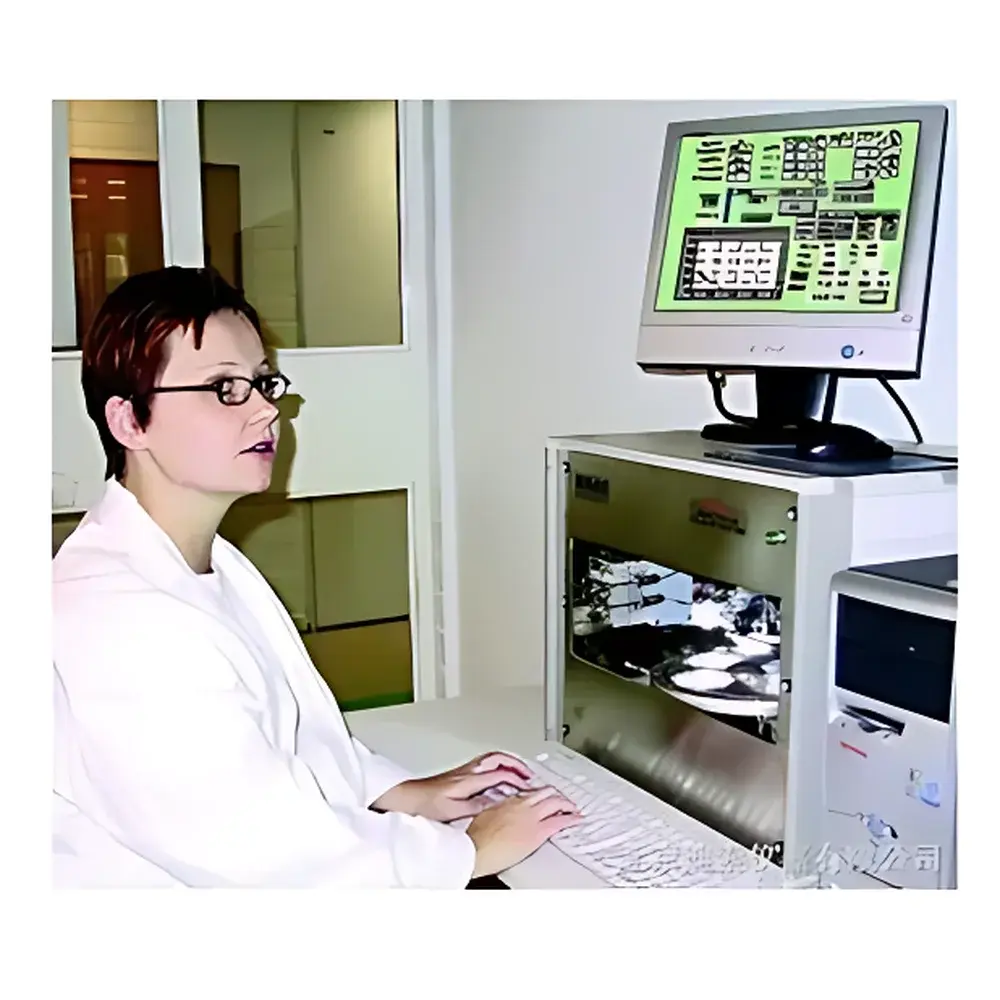
PORLA Petroleum Stability and Compatibility Analyzer
| Origin | Finland |
|---|---|
| Manufacturer Type | Authorized Distributor |
| Origin Category | Imported |
| Model | PORLA |
| Pricing | Upon Request |
Overview
The PORLA Petroleum Stability and Compatibility Analyzer is an engineered laboratory instrument designed for quantitative assessment of asphaltene stability and solvency compatibility in heavy crude oils, residual fuels, and refinery process streams. Based on the standardized colloidal instability index (CII) methodology aligned with ASTM D7112, the analyzer determines the P-value—a dimensionless parameter representing the critical solvent-to-oil ratio at which asphaltene flocculation initiates—and the Solvent Equivalence Value (SEV), which expresses asphaltene solvation capacity relative to reference aromatic solvents (e.g., xylene or toluene). The system operates via automated titration of paraffinic solvent into a pre-mixed oil–aromatic solvent solution while continuously monitoring optical transmittance or turbidity onset. This principle enables precise, reproducible detection of the first irreversible colloidal destabilization event without requiring pre-filtration or centrifugation—critical for maintaining native sample integrity in high-asphaltene-content feeds.
Key Features
- Full compliance with ASTM D7112 for petroleum stability evaluation, supporting regulatory reporting and internal quality control protocols
- Automated dual-parameter measurement: simultaneous determination of P-value (range: 1–7) and Solvent Equivalence Value (SEV) in a single 5-minute assay
- Integrated heated sample carousel accommodating four positions, each independently temperature-controlled from 20 °C to 80 °C
- No pre-filtration required: accepts raw samples of 20–40 g, preserving native asphaltene dispersion state and eliminating operator-induced bias
- Flexible solvent compatibility: supports customizable combinations of aromatic solvents (xylene, toluene, 1-methylnaphthalene, tetralin) and paraffinic solvents (n-heptane, isooctane, n-decane, n-hexadecane)
- Advanced titration kinetics control: maintains addition rate below colloidal reaction threshold to ensure thermodynamic equilibrium during measurement
- Comprehensive output suite including Po (oil solvency power), Pa (asphaltenes’ inherent solubility), FR5/1, Xylene/Toluene Equivalent, FRmax, and Xmin, all derived via linear regression across three titration points
Sample Compatibility & Compliance
The PORLA Analyzer is validated for use with untreated heavy crudes, vacuum residues, deasphalted oils, coker feedstocks, and blended crude slates. Its design eliminates filtration-related artifacts—ensuring representative measurement of real-world asphaltene aggregation behavior. All operational parameters, data acquisition logic, and calibration traceability meet requirements for GLP-compliant laboratories. The instrument’s software architecture supports Audit Trail functionality per FDA 21 CFR Part 11 when deployed in regulated refining QC environments. Method validation documentation—including precision (repeatability RSD < 2.1%), intermediate precision, and robustness testing—is available upon request for integration into internal SOPs.
Software & Data Management
Powered by proprietary software co-developed with Institut Français du Pétrole Énergies Nouvelles (IFPEN), the interface provides real-time titration curve visualization, automatic regression fitting, correlation coefficient display (R² ≥ 0.998), and export-ready PDF reports containing numerical results, full titration plots, and metadata (operator ID, timestamp, ambient conditions, solvent lot numbers). Data files are stored in vendor-neutral CSV format for seamless import into LIMS or statistical process control (SPC) platforms. User permissions, electronic signatures, and version-controlled method templates ensure alignment with ISO/IEC 17025 and API RP 99 documentation standards.
Applications
- Optimization of visbreaking and hydrocracking feed selection to minimize fouling in reactors and transfer lines
- Crude assay and blend planning to prevent in-tank sedimentation and pipeline deposition during transportation and storage
- Performance screening of asphaltene dispersants and stabilizer additives (e.g., GE specialty chemicals)
- Refinery-wide stability mapping for feedstock flexibility assessment under changing crude slates
- R&D support for developing new upgrading catalysts and solvent-assisted extraction processes
- Technical due diligence in M&A involving heavy oil assets or residue conversion facilities
FAQ
What does the P-value represent, and how is it used in refinery operations?
The P-value quantifies the minimum volume ratio of paraffinic solvent required to induce asphaltene precipitation in a defined aromatic diluent matrix. A low P-value (<3) indicates poor colloidal stability and higher risk of fouling; refineries use this metric to set upper limits on residuum blending ratios or adjust hydrogen partial pressure in hydroprocessing units.
Can PORLA replace manual ASTM D7112 testing entirely?
Yes—the instrument automates the entire procedure described in ASTM D7112, including reagent delivery, mixing, endpoint detection, and calculation. It delivers identical metrological traceability with improved repeatability and reduced analyst dependency.
Is temperature control essential for accurate P-value determination?
Absolutely. Asphaltene solubility is highly temperature-dependent. The built-in heating system ensures consistent thermal equilibration across all four sample positions, eliminating inter-run drift caused by ambient fluctuations.
How does PORLA support compliance with ISO 8217 for marine fuel stability?
While ISO 8217 specifies the “spot test” for stability assessment, PORLA-derived P-values correlate strongly with spot test outcomes and provide quantitative, predictive insight—enabling proactive specification management beyond pass/fail binary classification.
What maintenance is required for long-term analytical reliability?
Routine maintenance includes quarterly verification of syringe pump accuracy, annual optical path cleaning, and biannual gravimetric calibration of solvent dispensing modules—all documented in the included service logbook and supported by certified field engineers in EMEA and North America.




