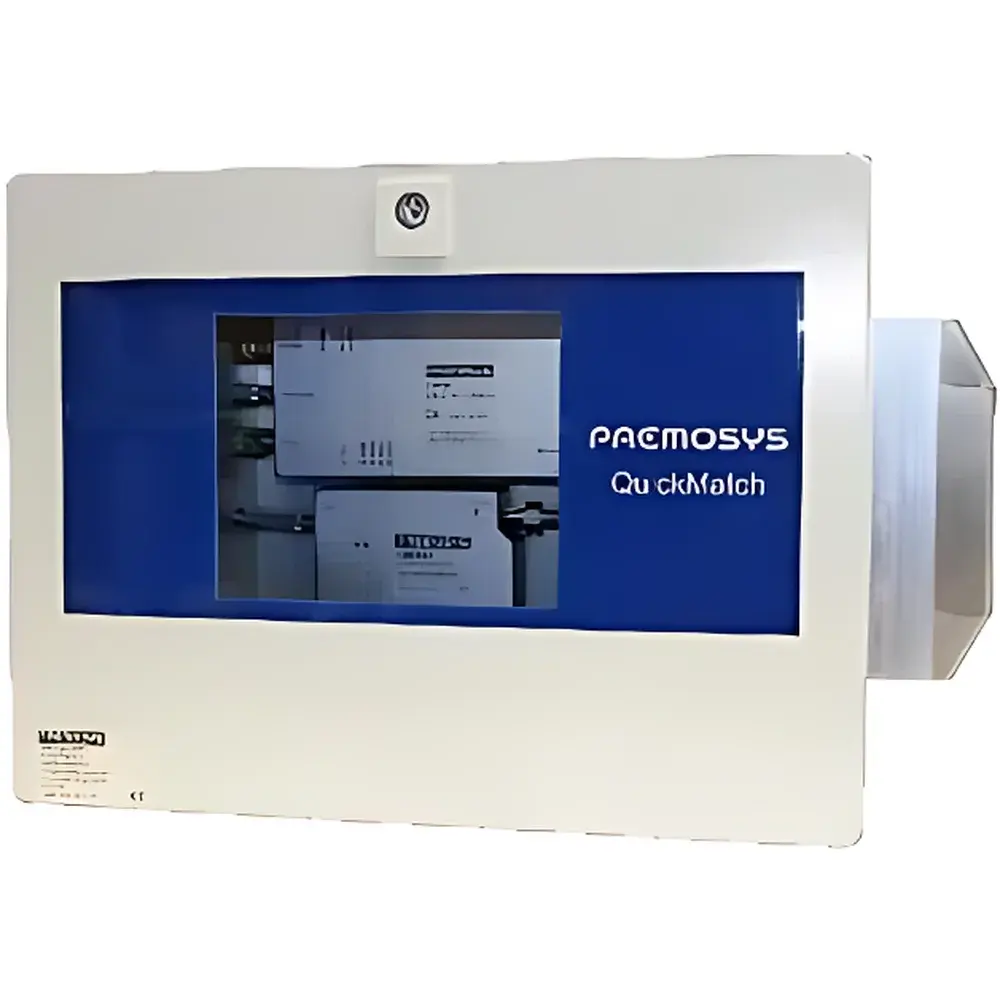
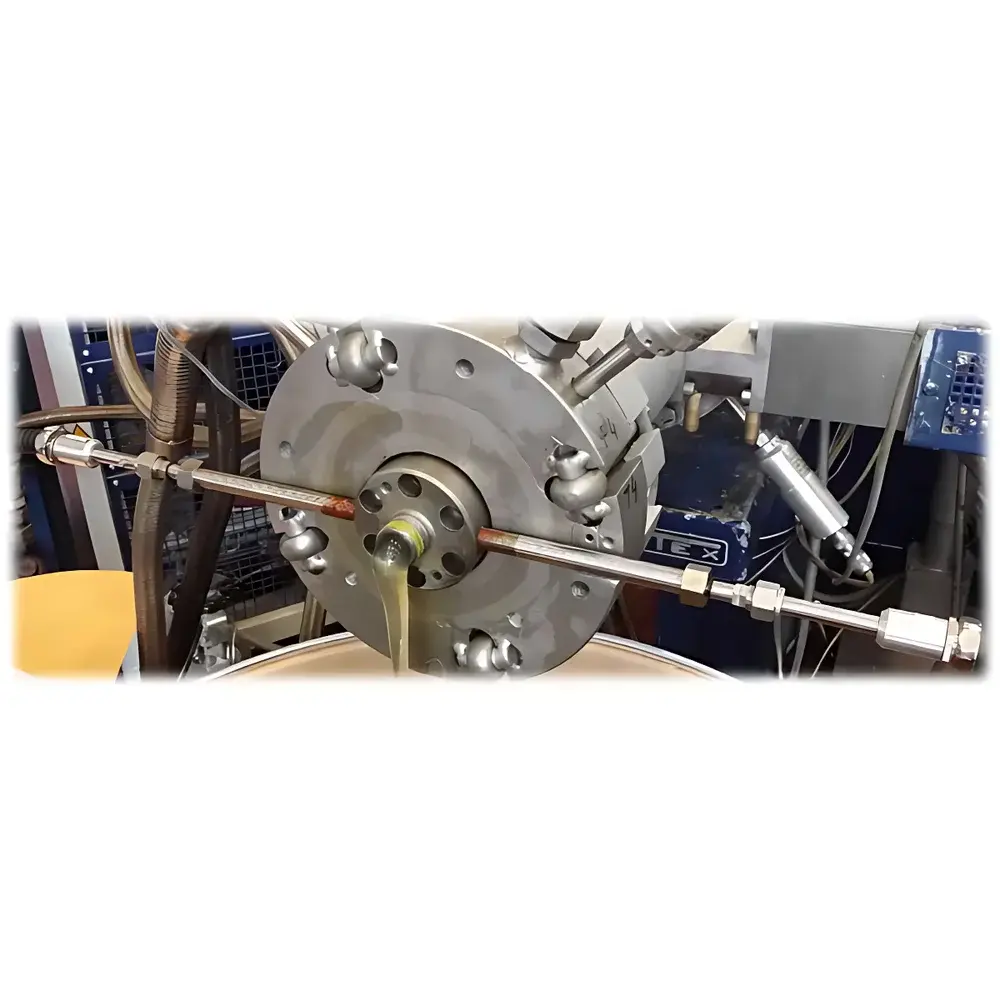
PREMOSYS QuickMatch High-Temperature In-Line Color Control System
| Brand | PREMOSYS |
|---|---|
| Origin | Germany |
| Model | QuickMatch |
| Operating Temperature | Up to 400 °C |
| Measurement Principle | Reflectance/Transmittance Spectrophotometry (400–700 nm) |
| Sampling Rate | 2 kHz |
| Color Resolution | <0.1 ΔE |
| Repeatability | <0.2 ΔE |
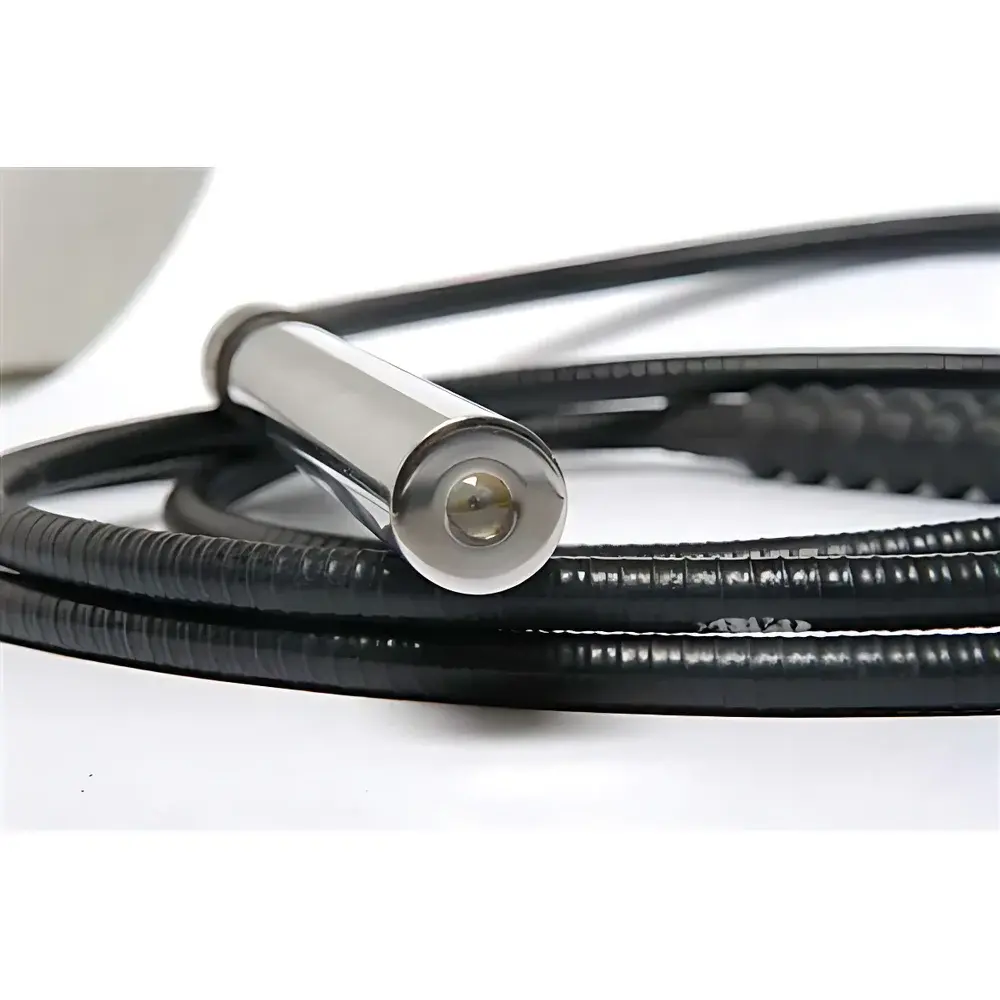
| Optical Interface | Sapphire-tipped probe with configurable lens options |
| Output Interface | 100 Mbps Ethernet (UDP), RS-232, WIN32 DLL |
| Power Supply | 24 V DC |
| Compliance | FDA-compliant probe materials available (food-grade variant), CE-marked |
Overview
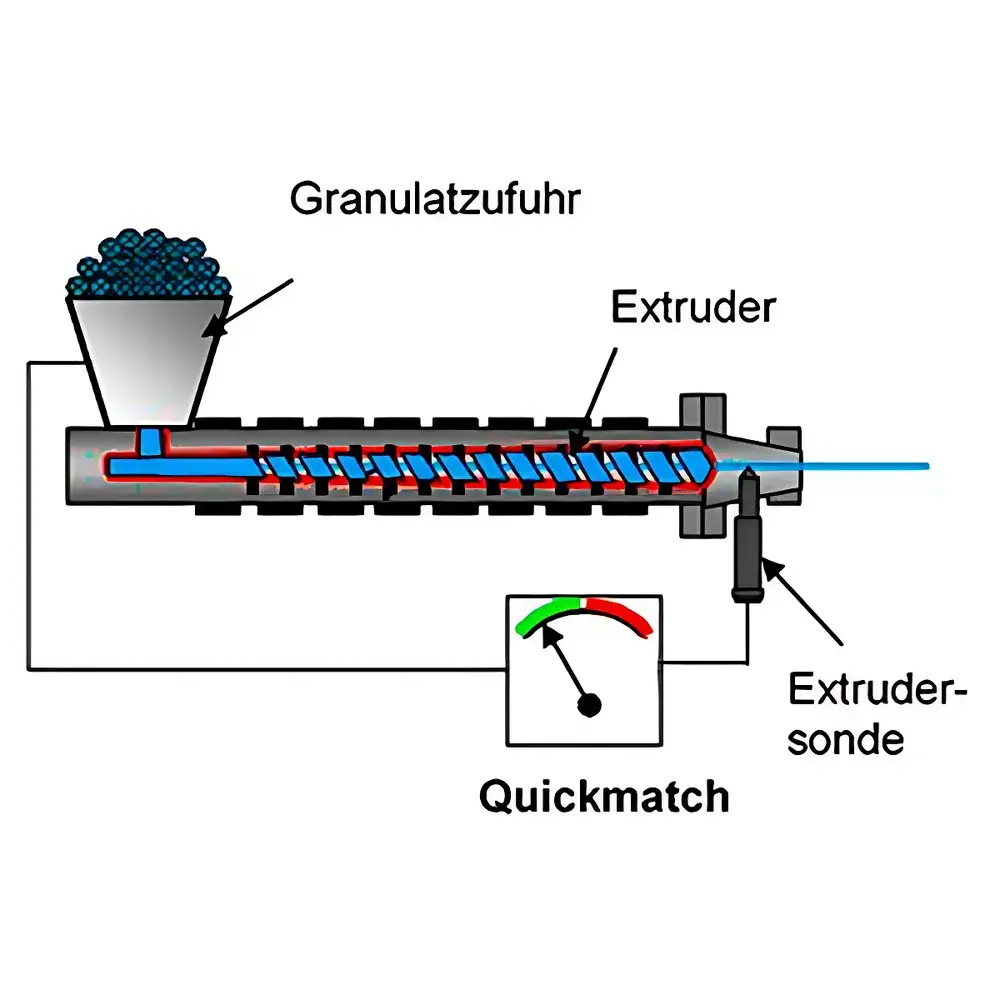
The PREMOSYS QuickMatch High-Temperature In-Line Color Control System is an industrial-grade spectrophotometric measurement platform engineered for real-time color and homogeneity monitoring of molten, liquid, and powdered process streams at elevated temperatures—up to 400 °C. Unlike conventional laboratory-based colorimeters, QuickMatch operates directly in-line during extrusion, injection molding, or continuous mixing processes, applying reflectance and transmittance photometry across the visible spectrum (400–700 nm) to quantify CIE L*a*b* coordinates continuously. Its core function is not merely endpoint verification but closed-loop process insight: detecting formulation drift, pigment dispersion inconsistencies, or thermal degradation effects before they manifest as off-spec product. The system’s architecture integrates a high-stability LED light source, fiber-optic coupling, a sapphire-windowed high-temperature probe, and a synchronized spectral detection module—all calibrated to deliver sub-0.1 ΔE color resolution under dynamic thermal and mechanical stress. This enables quantitative correlation between Lab-value stability and melt homogeneity, supporting statistical process control (SPC) frameworks aligned with ISO 9001 and IATF 16949 requirements.
Key Features
- High-temperature sapphire probe rated for continuous operation up to 400 °C, compatible with standard nozzle ports on extruders and injection molding machines
- Dual-mode optical configuration: selectable reflectance or transmittance geometry, optimized for opaque melts (e.g., PVC, engineering thermoplastics) or semi-transparent media (e.g., food pastes, polymer solutions)
- 2 kHz spectral sampling rate ensures temporal resolution sufficient to capture transient color shifts during start-up, grade change, or feedstock transition
- 16-bit per channel analog-to-digital conversion with 11-step programmable gain control, enabling robust signal integrity across varying opacity and surface reflectivity
- Active ambient light compensation algorithm mitigates interference from plant lighting, furnace glow, or operator flashlights
- FDA-compliant probe variants available for food-grade applications, constructed from 316L stainless steel and USP Class VI-certified elastomers
- Real-time Lab-value trending with user-definable upper/lower control limits; alarm triggers exportable via UDP or RS-232 for integration into PLC or DCS systems
Sample Compatibility & Compliance
QuickMatch supports heterogeneous media including thermoplastic melts (PP, PE, ABS, PC), hot asphalt emulsions, chocolate mass, dough intermediates, and ceramic slurries. Probe insertion depth, optical path length, and lens focal distance are configurable to accommodate viscosity-dependent flow profiles and shear-thinning behavior. All hardware meets CE Directive 2014/30/EU (EMC) and 2014/35/EU (LVD). For pharmaceutical or nutraceutical manufacturing, optional probes conform to USP and standards for material biocompatibility and extractables profiling. Data acquisition logs—including timestamps, Lab values, gain settings, and ambient light offset—are structured to support 21 CFR Part 11 audit trails when deployed with validated software environments.
Software & Data Management
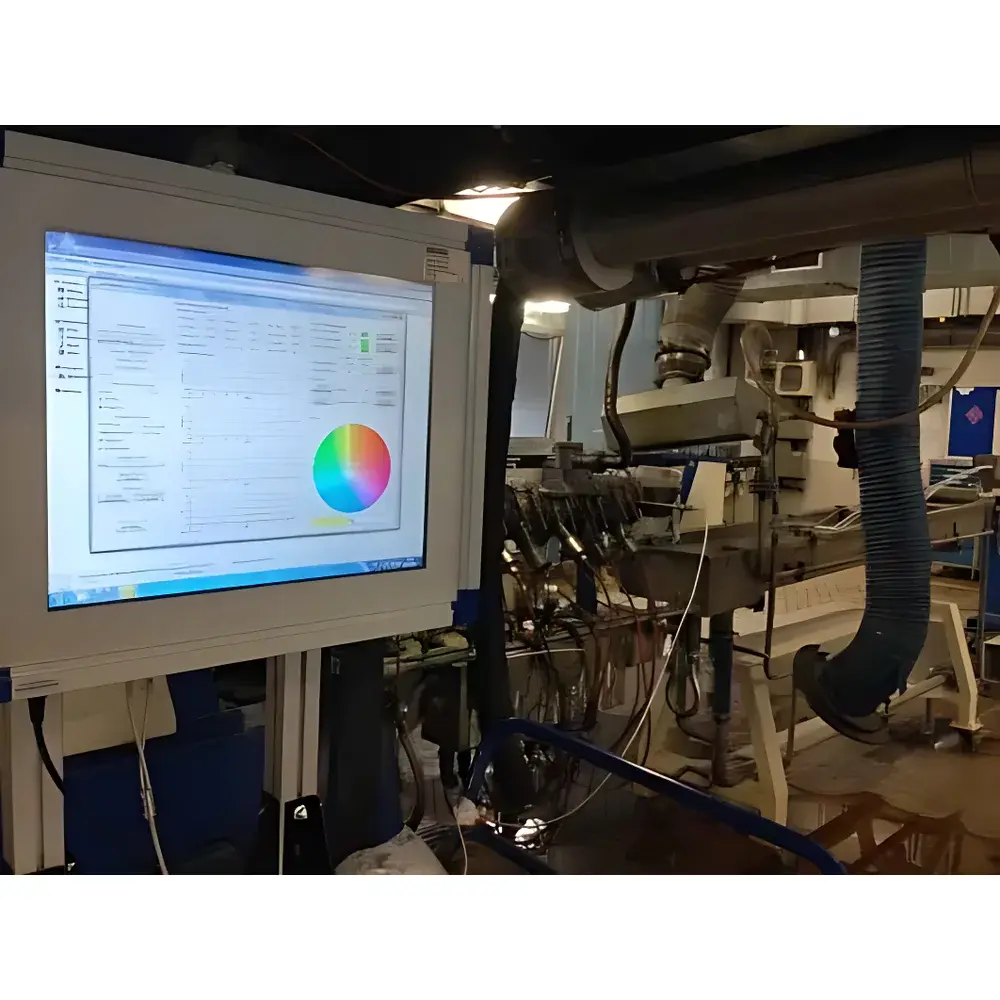
The QuickMatch control software provides a deterministic Windows-based interface for real-time visualization, limit setting, and historical replay. Each measurement timestamp is synchronized via internal hardware counter, eliminating clock drift across distributed nodes. Raw spectral data (31 channels × 400–700 nm) and derived Lab vectors are stored in HDF5 format, enabling interoperability with MATLAB, Python (via h5py), or MES platforms such as Siemens Opcenter or Rockwell FactoryTalk. Batch export supports CSV and XML schemas compliant with ASTM E2916-21 (Standard Guide for Validation of Software Used in Analytical Chemistry). Optional OPC UA server module allows seamless integration into Industry 4.0 architectures without custom middleware development.
Applications
- Real-time color deviation correction in polymer compounding lines, reducing scrap during grade transitions
- Monitoring pigment dispersion stability in masterbatch production, correlating Δa* drift with screw speed and barrel temperature profiles
- Ensuring batch-to-batch consistency in confectionery extrusion, where caramelization kinetics affect b* values
- Quantifying starch gelatinization uniformity in ready-to-eat meal production via L*-value stabilization trends
- Validating coating thickness and pigment loading in coil coating lines using transmittance-derived chromaticity ratios
- Supporting Design of Experiments (DoE) in new formulation development by logging Lab trajectories against feed ratio, residence time, and shear history
FAQ
Can QuickMatch operate reliably in environments with intense infrared radiation from adjacent heaters or ovens?
Yes—the sapphire window exhibits minimal thermal emissivity above 1000 nm, and the detector’s spectral response is strictly limited to 400–700 nm. Combined with active ambient light subtraction, the system rejects >98% of broadband IR interference.
Is calibration traceable to NIST or PTB standards?
Factory calibration uses CR-400/410 reference tiles certified by PTB (Physikalisch-Technische Bundesanstalt); end-user recalibration kits include traceable ceramic standards with uncertainty budgets per ISO/IEC 17025.
How does the system handle air bubbles or unmelted particles in the melt stream?
The 2 kHz sampling rate enables statistical outlier rejection; multiple consecutive readings are median-filtered before Lab conversion, minimizing transient artifacts from heterogeneity.
Does the software support automated reporting for quality audits?
Yes—preconfigured report templates generate PDF or XLSX outputs containing shift summaries, alarm logs, control chart SPC indices (Cp/Cpk), and raw spectral archives, all digitally signed and time-stamped.
What is the typical installation lead time for integration into an existing extrusion line?
Mechanical mounting requires ≤2 hours; electrical and communication integration (Ethernet/RS-232) typically completes within one additional hour, assuming standard DIN rail power distribution and accessible nozzle port geometry.