
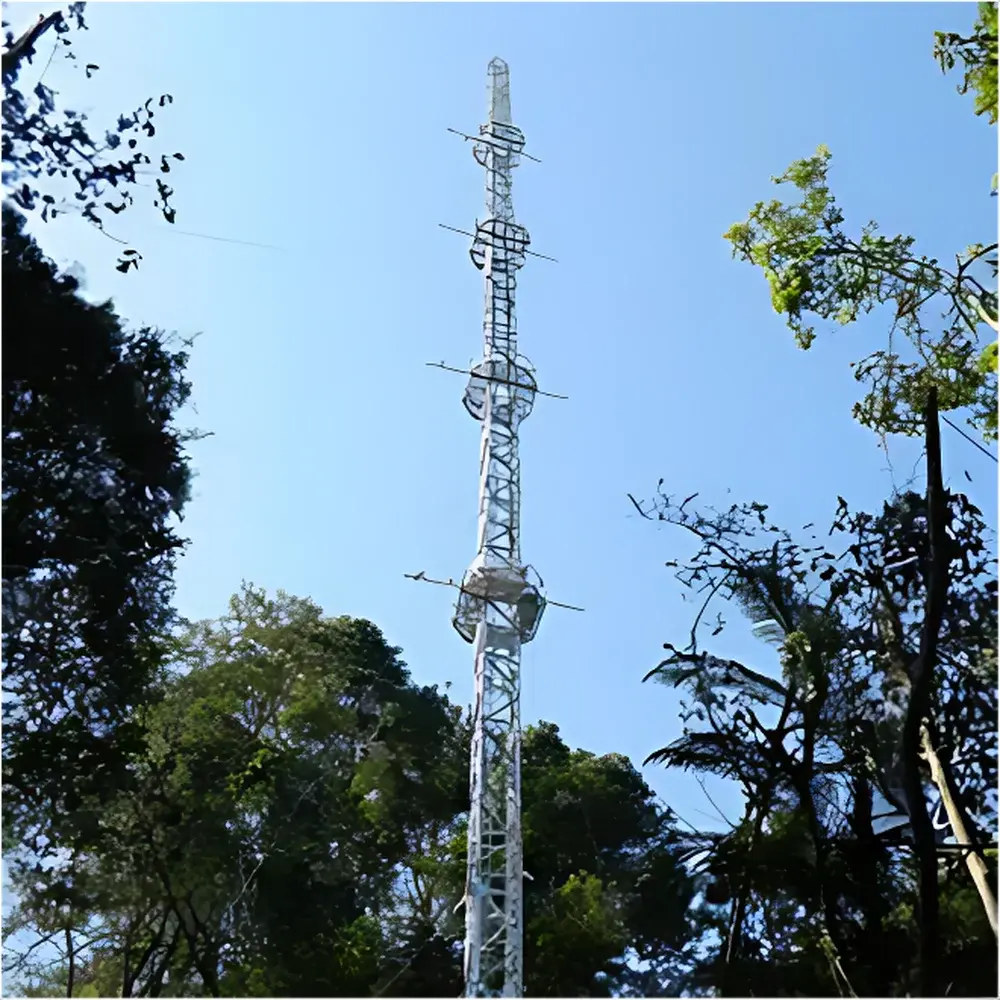
Pri-eco METLOG Scientific-Grade Gradient Meteorological Observation System
| Brand | Pri-eco |
|---|---|
| Origin | Beijing, China |
| Manufacturer Type | Manufacturer |
| Origin Category | Domestic |
| Model | METLOG |
| Instrument Type | Portable Weather Station |
| CPU | 32-bit, 300 MHz |
| Data Storage | 64 MB (expandable to 32 GB) |
| Ultrasonic Anemometer | Wind Speed 0–60 m/s, Accuracy ±0.2% |
| Relative Humidity | 0–100 % RH, Accuracy ±2 % (0–90 %), ±3 % (90–100 %), Resolution 1 % RH |
| Air Temperature | −80 to +75 °C, Accuracy ±0.1 °C |
| Atmospheric Pressure | 500–1200 hPa, Accuracy ±0.3 mbar |
| Global Solar Radiation | Calibration Uncertainty ±5 %, Sensitivity ~90 µA/(1000 W·m⁻²), Linearity <1 % up to 3000 W·m⁻², Response Time 10 µs |
| Soil Temperature | −50 to +50 °C, Accuracy ±0.2 °C |
| Soil Volumetric Water Content | 0–100 %, Accuracy ±3 % |
| Rainfall | Resolution 0.25 mm, Accuracy <1.0 % at 50.8 mm/h, Orifice Diameter 15.4 cm |
| Soil Heat Flux | Sensitivity ~50 µV/(W·m⁻²), Nominal Resistance 2 Ω, Range ±2000 W·m⁻², Temp. Dependence <0.1 %/°C |
| Infrared Surface Temperature Sensor | Range −40 to +70 °C, FOV Half-Angle 22°, Accuracy ±0.2 °C (−10 to +65 °C), ±0.5 °C (full range) |
Overview
The Pri-eco METLOG Scientific-Grade Gradient Meteorological Observation System is an engineered solution for high-fidelity, multi-level atmospheric and surface boundary-layer monitoring. Built around a proprietary 32-bit data logger with 300 MHz processing capability and industrial-grade environmental hardening, the system implements gradient-based measurement principles—capturing vertical profiles of wind, temperature, humidity, radiation, and soil energy fluxes across multiple heights and depths. This architecture enables rigorous quantification of turbulent exchange, sensible and latent heat transfer, and surface-atmosphere coupling—core requirements in micrometeorology, eddy covariance studies, climate model validation, and ecosystem-scale biogeochemical research. Designed for unattended operation in extreme conditions—including Arctic tundra, alpine permafrost zones, coastal salt-spray environments, and tropical high-humidity forests—the METLOG platform integrates galvanic isolation per channel, lightning surge protection, IP65-rated enclosure sealing, and extended-range sensor electronics to ensure long-term data integrity under thermal cycling, condensation, and corrosive exposure.
Key Features
- Modular gradient architecture supporting configurable sensor tiers (e.g., 3–7-level wind/temperature/humidity profiles)
- Embedded RJ45 Ethernet interface enabling direct TCP/IP connectivity for remote data retrieval and firmware updates without local gateways
- Digital signal isolation on every analog input channel to eliminate ground-loop interference and improve noise immunity in electrically noisy field deployments
- Onboard 64 MB non-volatile memory (expandable to 32 GB via microSD) with timestamped, ring-buffered storage and power-fail-safe write protocols
- Ultra-low-power sleep mode (<1.2 mA) with programmable wake-up triggers (time, event, or threshold-based) to extend battery life in solar-powered configurations
- Real-time clock with temperature-compensated crystal oscillator (TCXO), drift <±2 ppm/year, traceable to NIST time standards
- Pre-calibrated, NIST-traceable sensors supplied with individual calibration certificates (including uncertainty budgets per ISO/IEC 17025)
Sample Compatibility & Compliance
The METLOG system supports full compliance with international observational standards for climate and ecological research. Sensor outputs adhere to WMO Guide to Instruments and Observing Methods (CIMO Guide, Chapter 8 & 12), ASTM E1912 (Standard Practice for Solar Radiation Measurements), and ISO 9060:2018 (Classification of Solar Radiometers). Data logging firmware implements UTC-synchronized sampling with sub-second precision, satisfying temporal resolution requirements for eddy covariance (EC) systems (e.g., 10–20 Hz for ultrasonic anemometry, 1 Hz for slow-response parameters). The hardware design conforms to IEC 61326-1 (EMC for measurement equipment) and IEC 61000-4-5 (surge immunity up to 4 kV line-to-earth). For regulated applications, audit trails, user access control, and electronic signature support can be enabled to align with 21 CFR Part 11 and GLP/GMP documentation frameworks.
Software & Data Management
Pri-eco provides METLOG Manager—a cross-platform desktop application (Windows/macOS/Linux) for configuration, real-time telemetry visualization, and raw binary file decoding. All data are stored in open, self-describing formats: CSV (with header metadata) and NetCDF-4 (CF-1.8 compliant), ensuring interoperability with Python (xarray, netCDF4), R (ncdf4), MATLAB, and GIS platforms. The system supports MQTT publishing for integration into cloud-based IoT infrastructure (e.g., AWS IoT Core, Azure IoT Hub) and includes RESTful API endpoints for programmatic access to status, configuration, and buffered datasets. Firmware updates are delivered via signed binary packages with SHA-256 verification; rollback capability ensures system recoverability after failed updates.
Applications
- Micrometeorological flux tower networks requiring co-located gradient measurements for Monin–Obukhov similarity theory parameterization
- Permafrost and cryosphere studies monitoring active layer dynamics via multi-depth soil temperature and moisture gradients
- Agricultural meteorology for evapotranspiration modeling using surface energy balance (SEBAL, METRIC) inputs
- Urban climate research assessing canopy-layer turbulence and heat island intensity through vertical profiling
- Renewable energy site assessment, particularly for small-wind feasibility where low-level wind shear characterization is critical
- Long-term ecological research (LTER) sites needing ruggedized, low-maintenance instrumentation for decadal-scale records
FAQ
Is the METLOG system compatible with third-party sensors?
Yes—via analog voltage (0–5 V, 0–10 V, ±5 V), current loop (4–20 mA), SDI-12, RS-485 Modbus RTU, and pulse counting interfaces. Custom driver integration is supported under NDA.
What is the typical deployment lifetime in harsh environments?
With proper mounting and maintenance, field units routinely operate >5 years in −40 °C to +70 °C ambient ranges and >95 % RH without condensation-related failure, validated by accelerated life testing per IEC 60068-2-30.
Can the system operate autonomously on solar power?
Yes—integrated power management supports 12 V DC input with MPPT charge controller compatibility; average system draw is 120 mA @ 12 V in continuous logging mode.
Are calibration certificates provided with each sensor?
Yes—each factory-calibrated sensor ships with a traceable certificate including as-found/as-left data, uncertainty analysis, and environmental test conditions per ISO/IEC 17025 requirements.
Does the system support remote diagnostics and firmware updates?
Yes—SSH and HTTPS access enable secure remote diagnostics; over-the-air (OTA) firmware updates are cryptographically signed and verified prior to installation.







