
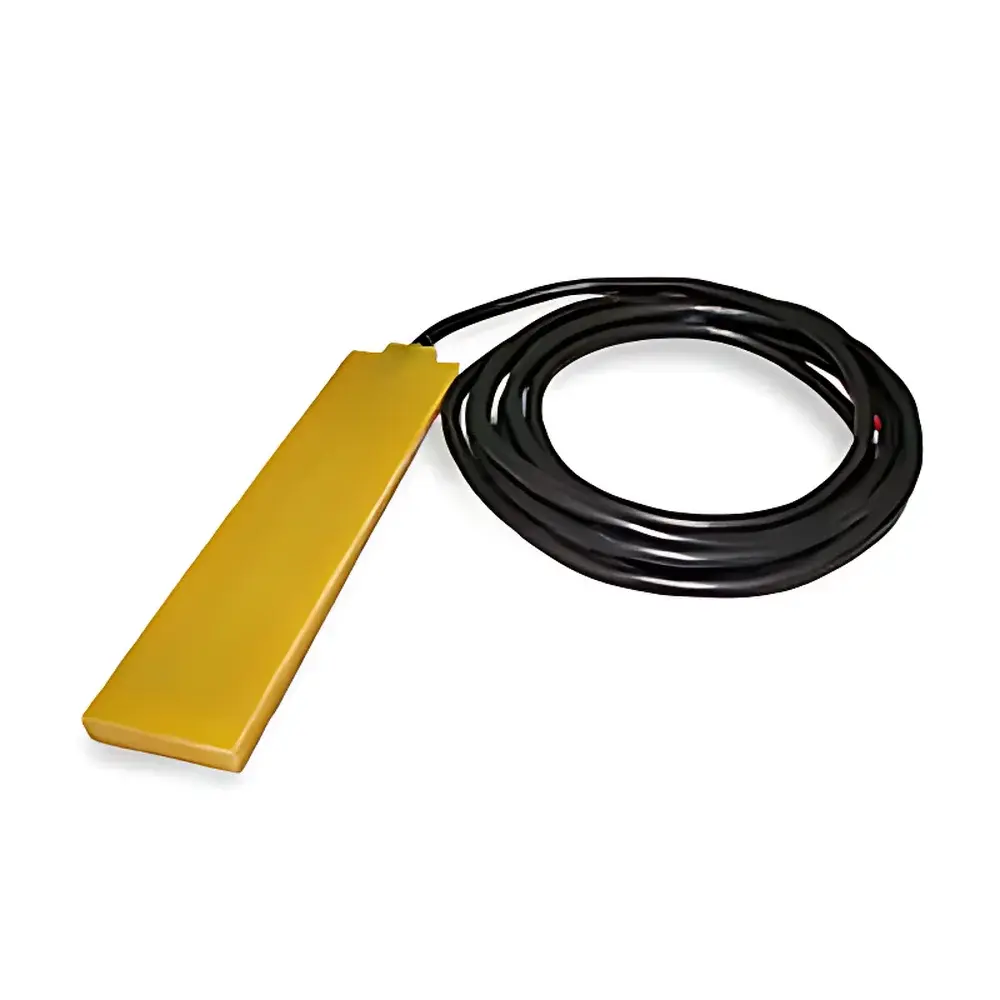
PRI-eco PRI-330 Soil Heat Flux Sensor
| Brand | PRI-eco |
|---|---|
| Origin | Beijing, China |
| Manufacturer Type | Original Equipment Manufacturer (OEM) |
| Country of Origin | China |
| Model | PRI-330 |
| Pricing | Available upon Request |
Overview
The PRI-eco PRI-330 Soil Heat Flux Sensor is a precision thermopile-based instrument engineered for continuous, in-situ measurement of vertical heat flux density across soil profiles. It operates on the fundamental principle of the Seebeck effect: a thermal gradient across dissimilar metal junctions within a calibrated thermopile generates a proportional microvolt-level electromotive force (EMF). This EMF is linearly related to incident heat flux (W·m⁻²), enabling quantitative assessment of conductive energy transfer through unsaturated and saturated soils. Designed for long-term field deployment in eddy covariance systems, micrometeorological networks, and ecosystem carbon–water coupling studies, the PRI-330 delivers high-fidelity data essential for surface energy balance modeling (e.g., residual calculation of latent and sensible heat), soil thermal property inversion (e.g., thermal conductivity estimation via Fourier’s law), and validation of land surface models (LSMs) used in climate simulation frameworks.
Key Features
- Thermopile transducer with dual-junction architecture ensures intrinsic linearity and minimal zero drift over extended operation.
- Hermetically sealed, IP67-rated housing provides full protection against dust ingress, rain, condensation, and transient submersion—enabling reliable performance in unsheltered outdoor environments.
- Low thermal mass and optimized thermal contact geometry minimize sensor-induced disturbance to natural soil temperature gradients.
- Passive operation requiring no internal amplification or excitation voltage—only a stable 12 V DC supply for optional signal conditioning or data logger interface.
- Wide operational envelope: functional across −40 °C to +85 °C ambient temperature and 0–100 % RH humidity, with non-operational storage tolerance up to +125 °C.
- Stable calibration traceable to NIST-traceable reference standards; sensitivity certified at 50 µV·W⁻¹·m² with ±3 % full-scale accuracy under ISO 9060:2018 Class C conditions.
Sample Compatibility & Compliance
The PRI-330 is compatible with mineral soils, organic soils (e.g., peat, humus), and mixed-texture profiles when installed using standard auger-driven or trenching protocols. Its flat, low-profile design (typical dimensions: 100 mm × 100 mm × 6 mm) allows seamless burial at multiple depths (e.g., 2 cm, 5 cm, 10 cm) to resolve vertical flux divergence. The sensor complies with ASTM D5334–22 (“Standard Test Method for Determination of Thermal Conductivity of Soil and Soft Rock Using Thermal Needle Probes”) for auxiliary thermal parameter derivation, and supports GLP-compliant data acquisition when integrated with audit-trail-enabled data loggers meeting FDA 21 CFR Part 11 requirements. All materials—including the anodized aluminum body and polyurethane encapsulant—are inert to common soil electrolytes, CO₂-rich pore gas, and ambient NOₓ/SO₂ concentrations typical of agricultural and forested sites.
Software & Data Management
The PRI-330 outputs a raw analog voltage signal (±75 mV full scale for ±1500 W·m⁻² range) suitable for direct digitization by Campbell Scientific CR-series, Onset HOBO RX3000, or Decagon EM50G data loggers. PRI-eco provides documented calibration coefficients and SI-unit conversion scripts (Python/MATLAB) for automated flux computation. When deployed in networked observatories, time-synchronized measurements integrate natively into FluxNet, AmeriFlux, and ICOS metadata frameworks. Firmware-agnostic data streams support CF-1.8 NetCDF formatting and adhere to FAIR principles (Findable, Accessible, Interoperable, Reusable), including embedded geotagging, sensor-specific uncertainty propagation fields, and ISO 19115-compliant metadata headers.
Applications
- Surface energy partitioning analysis in flux towers and boundary-layer meteorology campaigns.
- Soil thermal diffusivity and volumetric heat capacity estimation via harmonic regression of multi-depth temperature–flux phase lags.
- Validation of coupled hydrothermal models (e.g., HYDRUS-1D, Simultaneous Heat and Water model) under diurnal and seasonal forcing.
- Long-term monitoring of permafrost active layer dynamics and thaw-front progression.
- Calibration and ground-truthing of satellite-derived land surface temperature (LST) and evapotranspiration (ET) products (e.g., MOD16A2, SSEBop).
- Carbon sequestration project verification where soil respiration heat signatures correlate with microbial activity.
FAQ
What is the recommended installation depth for the PRI-330 in mineral soils?
Typical deployment depths are 2–5 cm below the soil surface to capture near-surface conductive flux while minimizing radiative interference from litter or crust layers.
Can the PRI-330 be used in flooded or saturated conditions?
Yes—the IP67 rating and corrosion-resistant construction permit short-term inundation; however, prolonged submersion may affect long-term zero stability and requires post-deployment recalibration verification.
Does the sensor require periodic recalibration?
Annual laboratory recalibration is recommended for research-grade applications; field drift remains <±1.5 % per year under typical temperate conditions as verified by intercomparison with guarded hot-plate references.
Is the output signal compatible with SDI-12 or RS-485 interfaces?
No—the PRI-330 provides only a passive analog mV output; external signal conditioning (e.g., 24-bit differential ADC with programmable gain) is required for digital integration.
How is thermal contact resistance minimized during installation?
Use thermal paste (e.g., Arctic Silver Ceramique) or compacted native soil slurry to eliminate air gaps; avoid gravel or coarse sand layers directly beneath the sensor surface.
Related Products







