Pri-eco QCL2 500 Low-Noise Quantum Cascade Laser Driver
| Brand | Pri-eco |
|---|---|
| Origin | Beijing, China |
| Manufacturer Type | Direct Manufacturer |
| Country of Origin | China |
| Model | QCL2 500 |
| Pricing | Available Upon Request |
| Current Noise Density | ≤928 nA<sub>p-p</sub> (0.1–10 Hz) |
| RMS Noise | 36.7 nA/√Hz (1 Hz–100 kHz) |
| Output Current Range | 0–500 mA |
| Short-Term Stability | 310 ppm (after 1 h warm-up) |
| Long-Term Stability | 820 ppm (24 h after 1 h warm-up) |
| Temperature Coefficient | 6–15 ppm/°C |
| Output Voltage Compliance | ±24 VDC |
| Rise/Fall Time | 3.6 µs / 2.6 µs (RL = 36 Ω, 10%–90%) |
| Slew Rate | 160 A/ms |
| Leakage Current | ≤500 µA |
| Supply Voltage | ±18 to ±25 VDC |
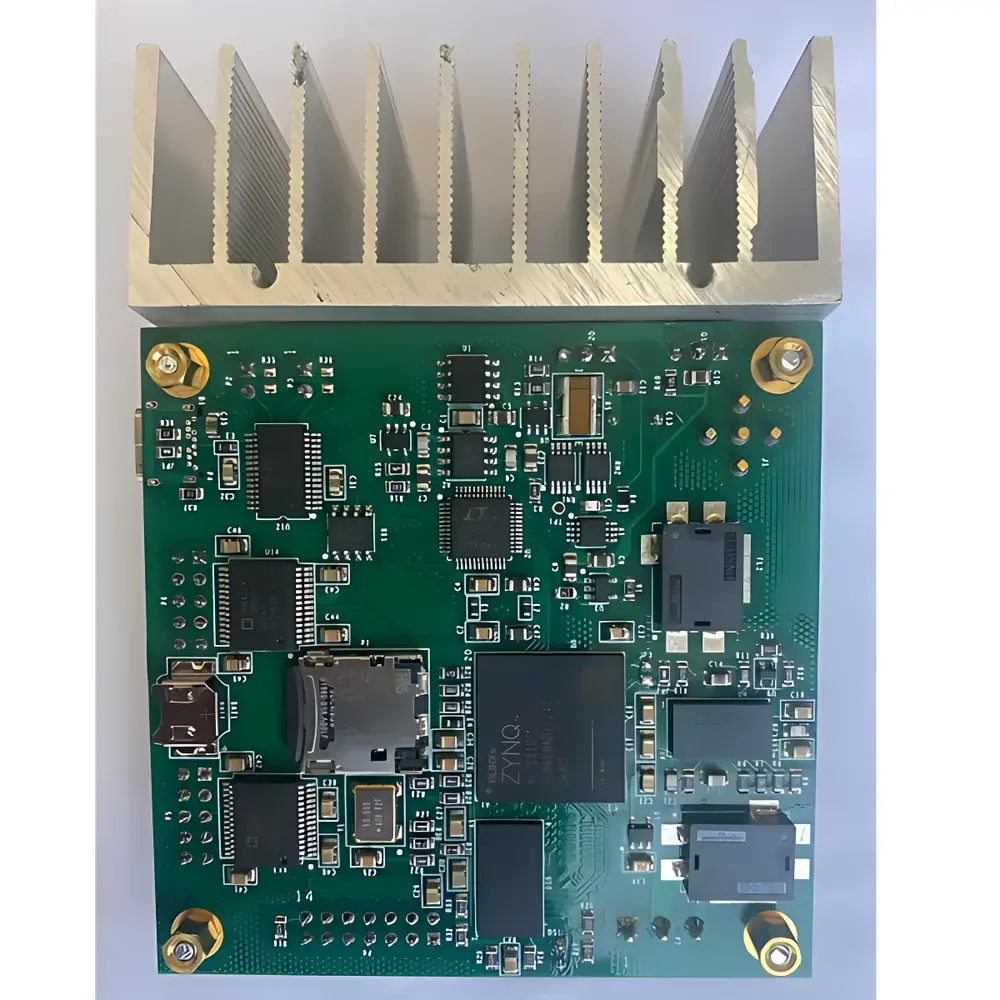
| Dimensions | 78 × 108 × 40 mm |
| Weight | 0.13 kg |
Overview
The Pri-eco QCL2 500 is a high-stability, ultra-low-noise current source engineered specifically for precision biasing and modulation of quantum cascade lasers (QCLs) and other low-noise-sensitive mid-infrared laser diodes. Unlike generic laser drivers, the QCL2 500 employs a proprietary low-noise analog architecture with optimized feedback topology and multi-stage filtering to suppress both broadband and low-frequency current fluctuations—critical for applications demanding high spectral resolution and signal-to-noise ratio (SNR), such as tunable diode laser absorption spectroscopy (TDLAS), photoacoustic gas sensing, and high-fidelity molecular fingerprinting. Its design complies with fundamental requirements for metrological-grade optical excitation: minimal current-induced wavelength jitter, negligible amplitude modulation (AM) sidebands, and thermal drift mitigation via active temperature compensation and low-TC components. The driver operates in constant-current mode with fully isolated analog control inputs, enabling seamless integration into automated test benches and OEM spectroscopic platforms.
Key Features
- Sub-nA-level low-frequency noise performance: Achieves ≤928 nAp-p (0.1–10 Hz) and 36.7 nA/√Hz (1–100 kHz), meeting stringent demands for high-resolution QCL-based trace gas detection and cavity-enhanced absorption measurements.
- Integrated arbitrary waveform generator: Onboard function generator supports user-defined trapezoidal, ramp, and pulse profiles with programmable t₀, t₁, t₂, I₀, I₁, and I₂ parameters—enabling precise scan waveform synthesis without external signal sources.
- Comprehensive protection architecture: Real-time overcurrent detection with fast shutdown (<10 µs response), thermal foldback, reverse polarity protection, and output current limiting up to 500 mA ensure robust operation under transient load conditions and accidental miswiring.
- Compact OEM-ready form factor: 78 × 108 × 40 mm footprint and 0.13 kg mass facilitate integration into space-constrained portable analyzers, airborne sensors, and benchtop spectrometers without compromising thermal or electromagnetic integrity.
- High dynamic fidelity: 3.6 µs rise time and 2.6 µs fall time (at 500 mA into 36 Ω) support kHz-range modulation for rapid-scan TDLAS; slew rate of 160 A/ms enables distortion-free current transients essential for frequency-agile QCL operation.
- Stability-optimized analog design: Short-term stability of 310 ppm (1 h post warm-up) and long-term stability of 820 ppm (24 h) are achieved through low-drift op-amps, precision thin-film resistors, and thermally balanced layout—validated per ASTM E2586-21 guidelines for instrumentation repeatability.
Sample Compatibility & Compliance
The QCL2 500 is compatible with standard TO-3, HHL, and butterfly-packaged QCLs requiring up to ±24 V compliance voltage and 500 mA drive capability. It supports both CW and pulsed operation modes and interfaces directly with common analog control systems (0–5 V or ±5 V input scaling). From a regulatory standpoint, the unit adheres to IEC 61000-6-3 (emission) and IEC 61000-6-2 (immunity) for industrial environments. Its analog signal path meets GLP-compliant traceability requirements when used in validated analytical workflows (e.g., EPA Method 320 or ISO 14687 for ambient air monitoring). While not FDA-cleared as a medical device, its stability and noise specifications align with ISO 13485-2016 design controls for in-vitro diagnostic instrument subsystems.
Software & Data Management
The QCL2 500 operates in analog-controlled mode only—no embedded firmware, USB interface, or proprietary software stack. This architecture eliminates digital switching noise, reduces failure points, and ensures deterministic real-time response critical for closed-loop spectroscopic feedback systems. All operational parameters—including current setpoint, limit threshold, and waveform timing—are configured via front-panel potentiometers or external analog voltages with 16-bit equivalent resolution (via optional DAC interface). For audit-trail compliance in regulated labs, users may log analog control signals using calibrated DAQ systems compliant with FDA 21 CFR Part 11 (when paired with electronic signature-capable acquisition software and secure storage protocols).
Applications
- Mid-infrared TDLAS systems for ppb-level detection of CO, NO, NH₃, CH₄, and volatile organic compounds (VOCs) in environmental and industrial emission monitoring.
- Photoacoustic spectroscopy (PAS) platforms requiring ultra-stable current excitation to minimize baseline drift and enhance acoustic signal coherence.
- FTIR-QCL hybrid systems where precise current ramp linearity directly impacts interferogram fidelity and wavenumber calibration accuracy.
- OEM integration into handheld or drone-mounted gas analyzers where size, weight, power (SWaP), and low EMI are mission-critical constraints.
- Fundamental laser physics research involving linewidth broadening analysis, gain-switching dynamics, and carrier lifetime studies in intersubband devices.
FAQ
Does the QCL2 500 support digital communication protocols (e.g., RS-232, USB, or Ethernet)?
No. It is an analog-only current source designed to eliminate digital noise coupling into sensitive QCL bias paths.
What is the maximum capacitive load the output can drive without oscillation?
The output is stable up to 100 pF with proper PCB layout and local decoupling; larger capacitances require external isolation or compensation per application note AN-QCL2-01.
Can it be used with interband cascade lasers (ICLs) or lead-salt lasers?
Yes—within its voltage compliance (±24 V) and current range (0–500 mA); verify laser datasheet for reverse-bias tolerance and thermal management requirements.
Is the current noise specification guaranteed over the full 0–500 mA range?
Yes—the 928 nAp-p (0.1–10 Hz) and 36.7 nA/√Hz (1–100 kHz) values are measured at 500 mA into a 36 Ω load and scale linearly down to lower currents.
How is warm-up time defined, and why is it specified as “1 h” before stability metrics apply?
Warm-up time reflects thermal equilibrium of internal reference circuits and current-sense shunts; stability metrics comply with IEEE Std 100-2000 definitions for precision analog instrumentation.
Related Products