
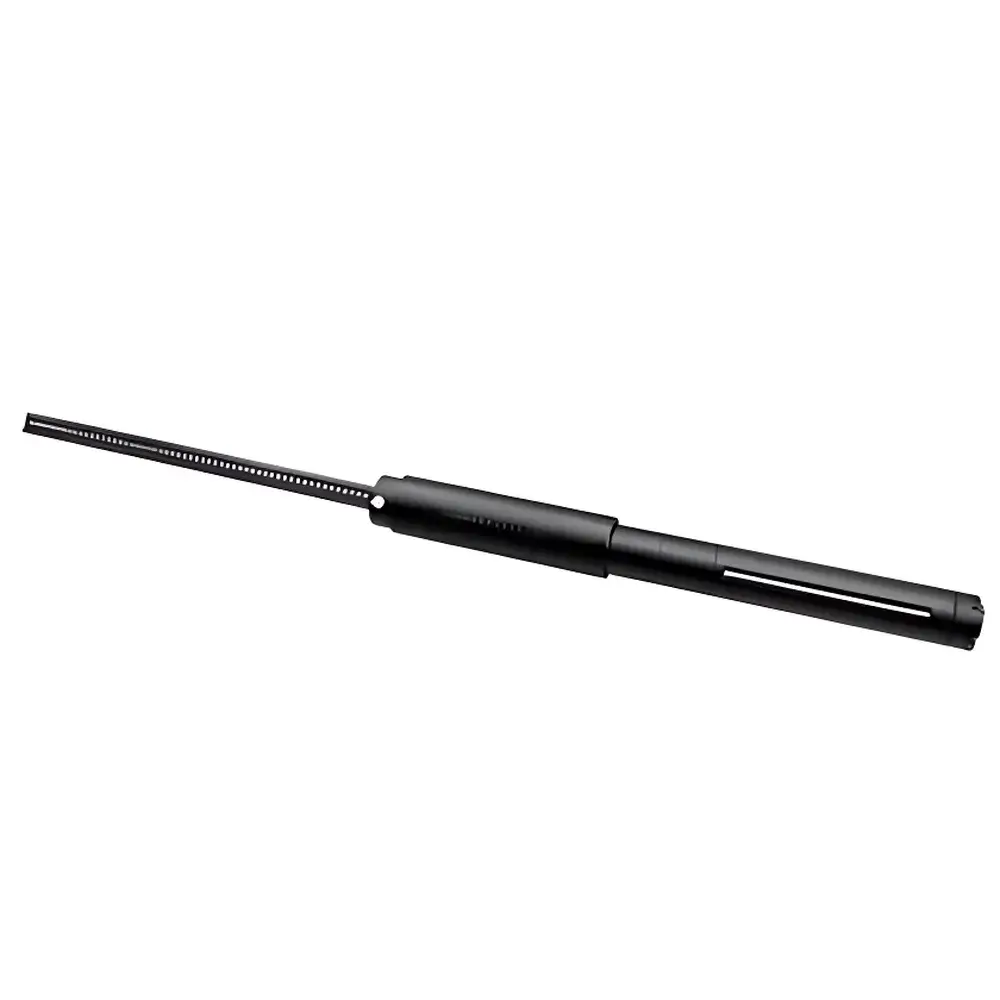
Pri-eco RhizoScan In Situ Root Imaging System
| Brand | Pri-eco |
|---|---|
| Origin | Beijing, China |
| Manufacturer Type | Direct Manufacturer |
| Region | Domestic (China) |
| Model | RhizoScan |
| Price Range | USD 42,000 – 70,000 |
| Scanning Angle | 360° Full-Circle |
| Optical Resolution | 1200 DPI |
| Max Scan Width | 212 mm |
| Image Color Depth | True Color (24-bit) |
| Onboard Storage | 32 GB microSD |
| Scan Time per Rotation | ~20 s |
| Wireless Connectivity | Integrated Wi-Fi 802.11n |
| Power Supply | Rechargeable Lithium-ion Battery (6200 mAh) |
| Operational Runtime | Up to 12 h per full charge |
| Scanner Body Diameter | 47 mm or 62 mm |
| Compatible Minirhizotron Tube Dimensions | OD/ID = 55/49 mm or 70/64 mm |
| Tube Length | Customizable |
| Software Interface | Web-based (HTML5), compatible with iOS, Android, Windows, and macOS browsers |
| Data Export Formats | JPEG, TIFF, CSV (root metrics) |
| Root Parameter Quantification | Total root length, surface area, tip count, diameter class distribution, live/dead root discrimination |
Overview
The Pri-eco RhizoScan In Situ Root Imaging System is a non-invasive, high-resolution minirhizotron imaging platform engineered for long-term, in situ monitoring of fine root dynamics in natural and experimental soil environments. Utilizing a rotating optical scanning head housed within a sealed, corrosion-resistant cylindrical probe, the system captures full 360° circumferential images of root–soil interfaces inside transparent minirhizotron tubes. Unlike destructive excavation or time-limited static imaging, RhizoScan operates on the principle of continuous optical sectioning—where a precision stepper motor rotates the imaging module at fixed angular increments while a high-sensitivity CMOS sensor acquires sequential sub-millimeter-resolved frames. These are stitched algorithmically into seamless, distortion-corrected panoramic images. The absence of external cabling, combined with integrated Wi-Fi and onboard lithium-ion power, enables truly autonomous deployment in remote field sites or controlled growth chambers—supporting unattended acquisition schedules over weeks or months. Its design conforms to internationally recognized minirhizotron standards (e.g., CID Bio-Science and Bartz Technology tube specifications), ensuring compatibility with legacy infrastructure and cross-study data interoperability.
Key Features
- 360° continuous rotational scanning with zero blind zones—eliminates manual repositioning and ensures complete tubular coverage per acquisition cycle
- 1200 DPI optical resolution enables reliable detection of roots ≥100 µm in diameter, supporting quantitative analysis of fine-root architecture and phenological transitions
- Fully wireless operation: integrated 802.11n Wi-Fi module allows real-time image preview, remote scan initiation, and parameter adjustment via any HTML5-compliant browser on smartphones, tablets, or laptops
- Modular mechanical design with dual guide wheels at both ends of the scanning head minimizes lateral contact pressure against tube walls—preserving optical clarity and preventing micro-scratches that compromise longitudinal image fidelity
- Field-deployable power architecture: 6200 mAh rechargeable Li-ion battery supports up to 12 hours of continuous scanning; three batteries included for uninterrupted multi-day campaigns
- Two standard probe diameters (47 mm and 62 mm) accommodate widely used minirhizotron tube inner diameters (49 mm and 64 mm), with custom tube-length options available upon request
Sample Compatibility & Compliance
RhizoScan is validated for use with standard acrylic or quartz minirhizotron tubes (OD/ID: 55/49 mm or 70/64 mm), meeting dimensional tolerances specified in ASTM D7928-21 (Standard Guide for Minirhizotron Installation and Imaging). It supports both portable handheld operation and permanent in situ installation with programmable auto-acquisition intervals (e.g., daily, weekly, or event-triggered capture). The system’s optical path is calibrated for minimal chromatic aberration across visible wavelengths (400–700 nm), ensuring consistent color fidelity critical for differentiating live (turgid, cortical fluorescence) versus dead (collapsed, discolored) root segments. All firmware and embedded software comply with IEC 62304 Class B medical device software lifecycle requirements—providing traceable version control, secure boot integrity, and audit-ready operational logs suitable for GLP-compliant ecological research protocols.
Software & Data Management
Data acquisition and visualization are managed through a responsive web interface accessible via local network IP address—no proprietary desktop client required. Each scan generates geotagged JPEG/TIFF panoramas alongside structured CSV metadata files containing timestamp, GPS coordinates (if enabled via external GNSS module), battery level, and environmental sensor readings (optional add-on). Root morphology quantification is performed offline using open-format image stacks compatible with established root analysis platforms including WinRHIZO Tron, EZ-Rhizo, and the open-source RootNav pipeline. All image exports retain EXIF metadata and embedded calibration markers, facilitating reproducible morphometric recalibration across laboratories. Audit trails—including user login history, scan command logs, and firmware update records—are stored locally and exportable in ISO/IEC 27001-aligned encrypted archives for regulatory review.
Applications
- Long-term phenological tracking of fine root turnover, branching dynamics, and mortality in forest, grassland, and agroecosystem studies
- Evaluation of root architectural plasticity under drought, nutrient limitation, or elevated CO2 treatments in climate change experiments
- Validation of root growth models (e.g., R-SWMS, ROOTMAP) with empirically resolved spatiotemporal data
- Monitoring mycorrhizal colonization patterns and hyphal interaction zones via contrast-enhanced imaging protocols
- Supporting FAO-recommended soil health indicators—particularly “Root Length Density” and “Live Root Fraction”—for sustainable land management reporting
FAQ
Is RhizoScan compatible with existing minirhizotron tube installations from other manufacturers?
Yes—RhizoScan supports standard tube dimensions used by CID Bio-Science and Bartz Technology, including 55/49 mm and 70/64 mm OD/ID configurations. Mechanical alignment is ensured via adjustable guide wheel spacing.
Can image acquisition be scheduled automatically without on-site presence?
Yes—when installed in fixed-position mode, the system accepts cron-style scheduling via its embedded Linux-based controller. Acquisition intervals can be set from 1 hour to 30 days, with images uploaded to a designated FTP or cloud endpoint.
What root traits can be extracted directly from RhizoScan output files?
Raw images are compatible with third-party root analysis software. Quantifiable traits include total root length, projected surface area, tip count, average diameter distribution (binned in 0.1 mm classes), and binary classification of live/dead segments based on grayscale thresholding and edge continuity metrics.
Does the system meet regulatory requirements for long-term ecological monitoring networks?
RhizoScan complies with CE marking directives for electromagnetic compatibility (2014/30/EU) and low-voltage safety (2014/35/EU). Its data provenance model—including immutable timestamps, firmware-signed logs, and SHA-256 checksummed image archives—supports adherence to ISO 17025 and USGS National Phenology Network data submission standards.




