
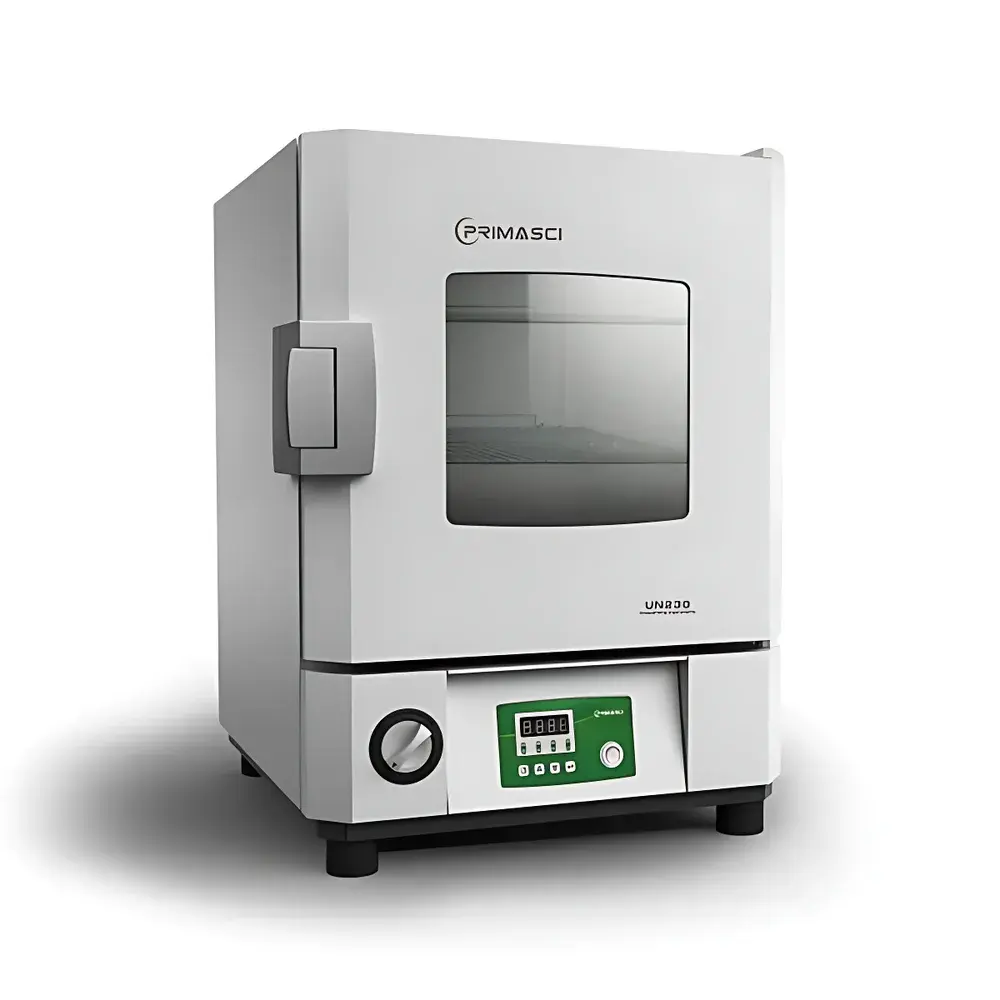
Prima UN Series High-Temperature Forced-Air Drying Oven
| Brand | PRIMA |
|---|---|
| Origin | Shanghai, China |
| Model | UN65 / UN130 / UN230 / UN400 / UN700 |
| Temperature Range | +5 °C to 300 °C |
| Temperature Uniformity | ±1.5% of setpoint |
| Temperature Stability | ±0.25 °C |
| Display Resolution | 0.1 °C |
| Chamber Material | Stainless Steel (AISI 304) |
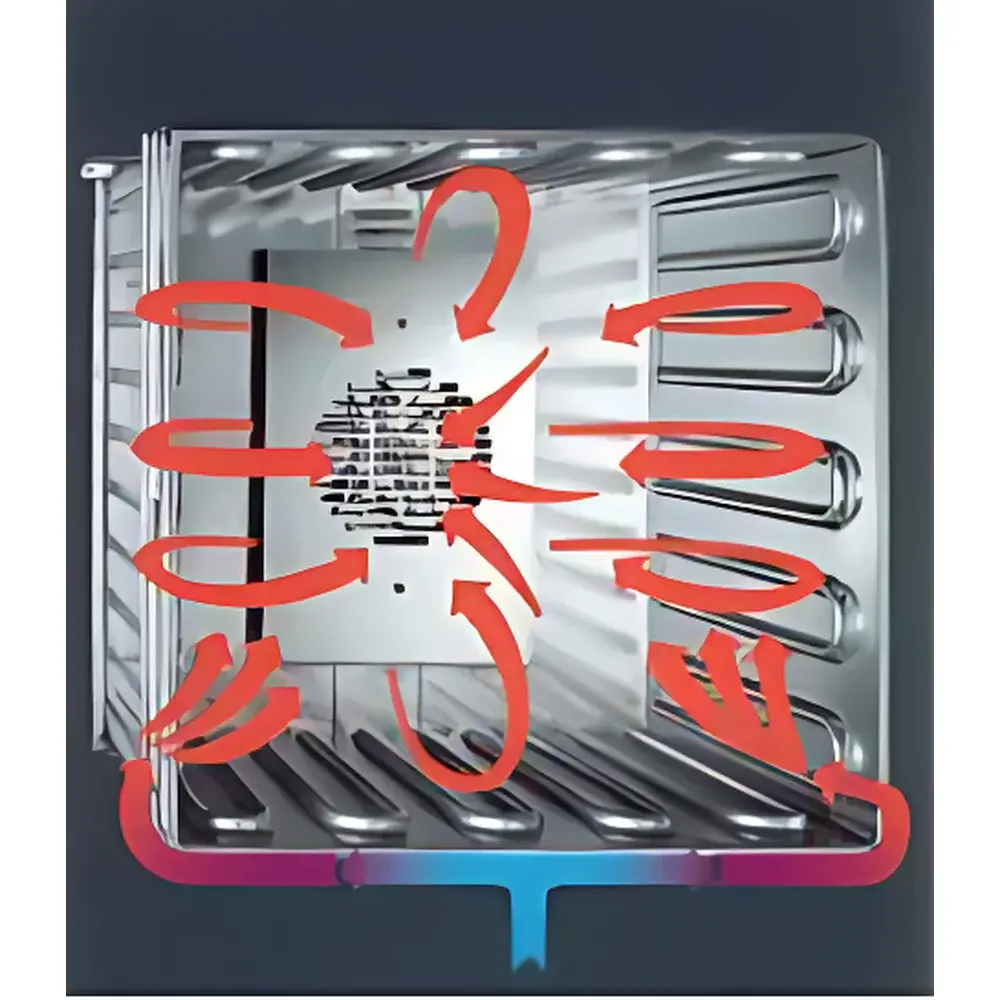
| Heating Method | Forced-air convection with APT.line preheating technology |
| External Dimensions (W×H×D, mm) | 750×1000×760 (UN400 reference) |
| Internal Dimensions (W×H×D, mm) | 630×600×600 (UN400 reference) |
| Chamber Volume | 65–700 L |
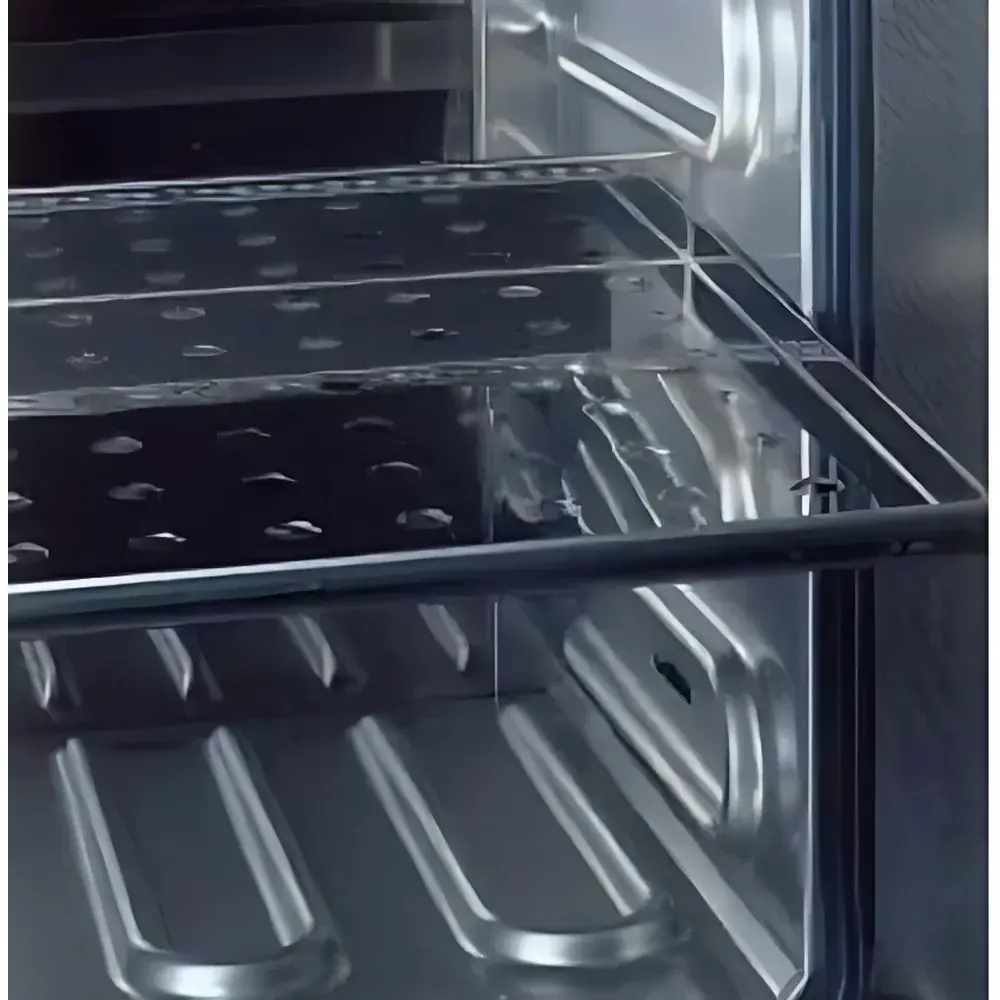
| Max. Shelf Capacity | 4–9 stainless steel shelves (standard: 2–5) |
| Power Consumption | 1000–2500 W |
| Safety Features | Triple overtemperature protection, door-open alarm, sensor fault detection (open/short circuit), leakage current protection, programmable ventilation control |
| Optional | RS232/RS485 interface, temperature programming, test port, printer output module |
Overview
The Prima UN Series High-Temperature Forced-Air Drying Oven is an engineered solution for precise, repeatable thermal processing in research laboratories, quality control environments, and industrial R&D facilities. Built upon the APT.line™ preheating chamber architecture, this series employs forced-air convection with four-directional heating elements to achieve rapid thermal equilibration and exceptional spatial uniformity across the entire working volume. The ovens operate within a calibrated temperature range of +5 °C to 300 °C — with standard models rated to 260 °C and Plus variants extending to 300 °C — making them suitable for applications requiring extended dwell times at elevated temperatures, including moisture removal from hygroscopic materials, thermal aging of polymers, pre-baking of electronic components, and residual solvent evaporation in pharmaceutical intermediates. All units comply with IEC 61010-1 for laboratory equipment safety and incorporate dual-wall insulation with high-density mineral fiber to minimize external surface temperature rise and energy consumption.
Key Features
- APT.line™ preheating chamber technology ensures rapid, homogeneous heat distribution and reduces temperature overshoot during ramp-up phases.
- Four-sided heating configuration with independently controlled zones minimizes vertical and horizontal gradients; measured uniformity remains within ±1.5% of setpoint at steady state (per DIN 12880).
- Full AISI 304 stainless steel interior — seamless welded corners and radius-formed edges — supports ISO 14644-compliant cleaning protocols and resists corrosion from acidic or alkaline vapors.
- PID-based microprocessor controller with integrated 0–100 hour timer, real-time deviation display, and digital temperature calibration offset function (±10.0 °C range).
- Triple-stage overtemperature protection: independent mechanical safety thermostat, electronic cut-off relay, and software-enforced upper limit lockout.
- Active ventilation system with adjustable fresh-air inlet and exhaust outlet enables controlled atmosphere exchange — critical for volatile organic compound (VOC) management and oxygen-sensitive drying protocols.
- Tempered glass observation window with double-glazed construction maintains thermal integrity while enabling non-intrusive process monitoring.
Sample Compatibility & Compliance
The UN Series accommodates a broad spectrum of sample formats: petri dishes, crucibles, glassware, PCB assemblies, metal coupons, polymer films, and ceramic substrates. Its chamber geometry — optimized for laminar airflow patterns — avoids localized hot spots that may degrade thermally sensitive biomolecules or accelerate oxidation of metallic specimens. Units meet EN 60529 (IP20), CE marking requirements, and are designed for use in GLP and GMP-regulated environments where audit-ready documentation is required. Optional RS232/RS485 interfaces support integration into centralized lab data systems compliant with FDA 21 CFR Part 11 when paired with validated firmware and electronic signature modules.
Software & Data Management
Standard operation requires no external software; all parameters are configured via front-panel keypad with intuitive menu navigation and password-protected access levels (operator / engineer / administrator). Optional communication modules enable bidirectional data exchange with SCADA platforms or LIMS using ASCII protocol over serial connection. Temperature logging intervals (1 s to 60 min), alarm event timestamps, and setpoint change history are stored in non-volatile memory for up to 30 days. When equipped with the optional printer interface, users may generate hard-copy reports with configurable headers, including operator ID, batch number, and environmental conditions.
Applications
- Moisture content determination per ASTM D229, ISO 758, and USP .
- Thermal stability testing of adhesives, coatings, and composite laminates under accelerated aging conditions (ISO 11358, ASTM D3826).
- Drying of filter papers, gravimetric analysis crucibles, and ashing trays prior to quantitative residue measurement.
- Curing of epoxy encapsulants and solder paste reflow simulation in electronics manufacturing QA labs.
- Pre-conditioning of humidity-sensor elements and calibration standards in metrology departments.
- Stabilization of reference materials and storage of temperature-sensitive reagents requiring inert, low-humidity ambient conditions.
FAQ
What is the maximum allowable operating temperature for the UN700 model?
The UN700 Plus variant is rated for continuous operation up to 300 °C; standard UN700 units are certified to 260 °C.
Does the oven support validation protocols such as IQ/OQ/PQ?
Yes — all UN Series ovens ship with factory calibration certificates traceable to NIST standards; optional IQ/OQ documentation packages and temperature mapping services are available upon request.
Can the ventilation rate be adjusted during operation?
Yes — the fresh-air inlet damper and exhaust valve are manually adjustable and remain stable across the full temperature range without requiring recalibration.
Is the stainless steel chamber electropolished or passivated?
Chambers are mechanically polished and passivated per ASTM A967 to ensure optimal corrosion resistance and cleanability in aggressive chemical environments.
Are shelf positions fixed or adjustable?
Shelves are mounted on continuously slotted side rails, allowing infinite vertical positioning within the chamber; load capacity per shelf is 15 kg (uniformly distributed).



