
Princeton Instruments NIRvana 640 Short-Wave Infrared (SWIR) Scientific Imaging Camera
| Brand | Princeton Instruments |
|---|---|
| Origin | USA |
| Model | NIRvana 640 |
| Effective Resolution | 640 × 512 pixels |
| Pixel Size | 20 µm |
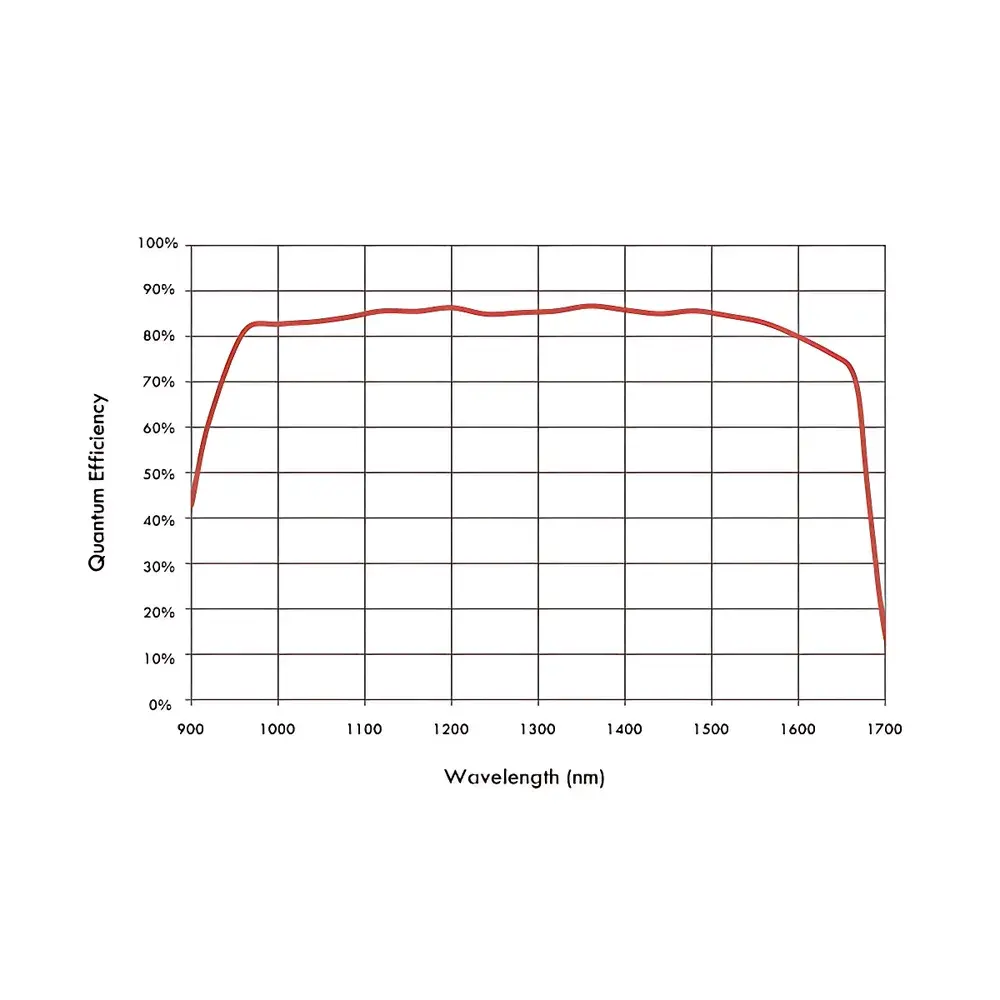
| Spectral Range | 900–1700 nm |
| Dark Current | <40 e⁻/p/s |
| Cooling Temperature | −80 °C (guaranteed), −85 °C (typical with air cooling + 15 °C liquid circulation) |
| Frame Rate | 22 fps @ 2 MHz, 55 fps @ 5 MHz, 110 fps @ 10 MHz |
| Max Exposure Time | >10 minutes |
| Readout Modes | Conventional and Non-Destructive Readout (NDR) for ultra-long exposures |
Overview
The Princeton Instruments NIRvana 640 is a high-performance, deep-cooled scientific short-wave infrared (SWIR) imaging camera engineered for quantitative, low-light detection in the 900–1700 nm spectral window—encompassing the biologically critical NIR-II region. Built upon a back-illuminated, InGaAs-based sensor architecture, it leverages proprietary vacuum-sealed cryogenic cooling to achieve stable sensor temperatures down to −85 °C without liquid nitrogen, enabling ultra-low dark current (<40 e⁻/p/s) and sub-electron read noise performance. Its design addresses fundamental challenges in SWIR bioimaging and quantum optics: thermal background suppression, photon-starved signal integration, and temporal stability over extended acquisition windows. Unlike conventional cooled InGaAs cameras limited by thermoelectric or hybrid cooling constraints, the NIRvana 640 sustains its specified operating temperature for hours—critical for applications requiring multi-minute integrations, such as in vivo fluorescence lifetime mapping, single-photon correlation spectroscopy, or time-resolved SWIR microspectroscopy.
Key Features
- Back-illuminated InGaAs sensor with 640 × 512 active pixels and 20 µm pitch—optimized for high quantum efficiency (>85% from 950–1500 nm) and photon collection efficiency.
- Proprietary dual-stage thermoelectric cooler coupled with hermetically sealed vacuum housing—ensures long-term thermal stability and zero-maintenance operation over the instrument’s lifetime.
- Dedicated cold shield integrated directly into the sensor dewar—minimizes stray thermal radiation from ambient and optical path components, significantly improving contrast in low-signal SWIR imaging.
- Multi-gain, multi-speed readout architecture supporting 22–110 fps at full resolution (640 × 512), with selectable clock rates (2/5/10 MHz) and non-destructive readout (NDR) mode for exposures exceeding 60 minutes.
- High dynamic range (>76 dB) and linear response across the full exposure range—from microseconds to >10 minutes—validated per ASTM E1548 and ISO 15739 standards for scientific imaging linearity assessment.
Sample Compatibility & Compliance
The NIRvana 640 is compatible with standard C-mount and F-mount optical interfaces, enabling seamless integration with inverted and upright microscopes, FTIR spectrometers, monochromators, and custom optical benches. It supports both free-space and fiber-coupled configurations for micro-area spectral imaging of biological tissues, nanomaterials, and semiconductor heterostructures. The system complies with IEC 61000-6-3 (EMC emission limits) and IEC 61000-6-2 (immunity requirements), and meets RoHS 2015/863/EU directive specifications. Data integrity workflows align with GLP/GMP documentation practices; metadata embedding (exposure time, temperature, gain, timestamp) supports audit-ready traceability under FDA 21 CFR Part 11 when used with compliant acquisition software.
Software & Data Management
Acquisition and analysis are fully supported through Princeton Instruments’ LightField® 6.5 software—a modular, scriptable platform certified for Windows 10/11 (64-bit) and compatible with MATLAB®, Python (via PyVISA and NumPy), and LabVIEW™ APIs. LightField provides real-time dark frame subtraction, flat-field correction, photon counting mode calibration, and NDR sequence reconstruction. All acquired datasets are saved in vendor-neutral TIFF or HDF5 formats with embedded EXIF-like metadata, ensuring interoperability with ImageJ/Fiji, Python-based scikit-image pipelines, and commercial analysis suites such as MATLAB’s Image Processing Toolbox. Audit trails—including user login, parameter changes, and file export events—are logged automatically for regulatory-compliant environments.
Applications
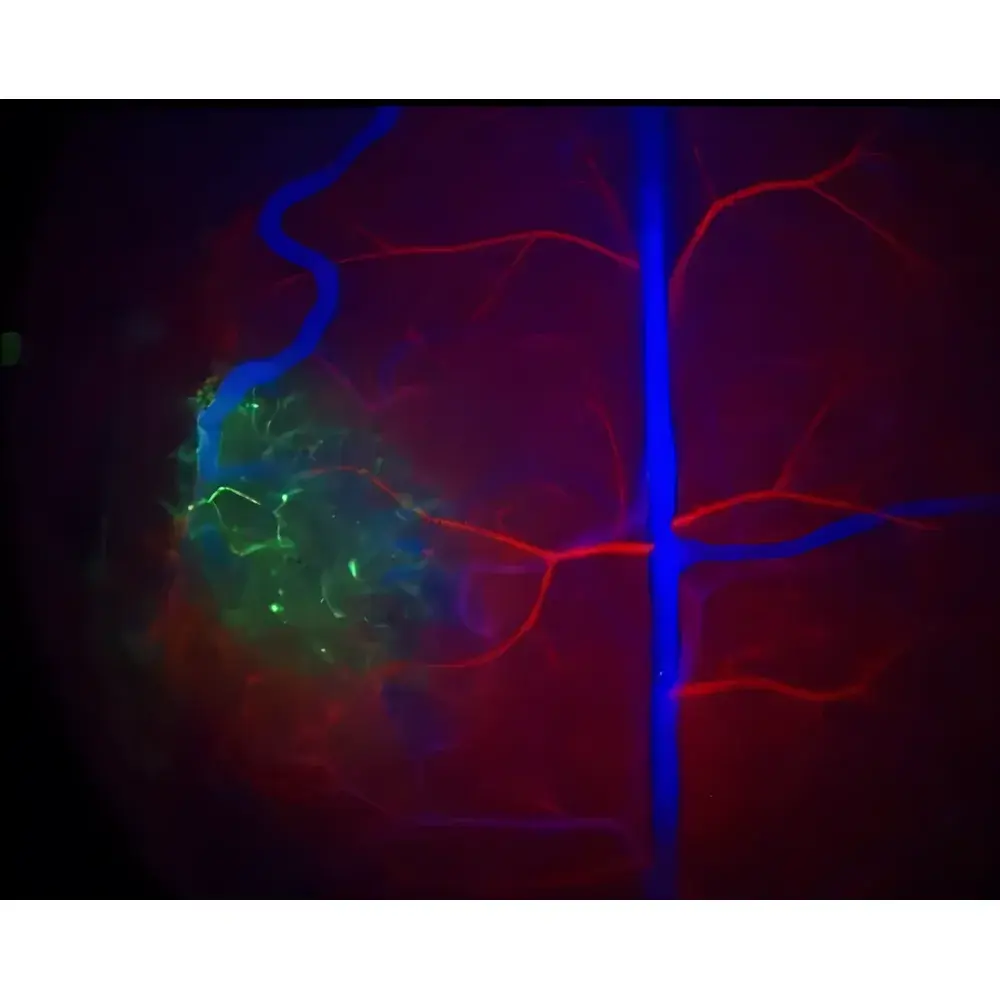
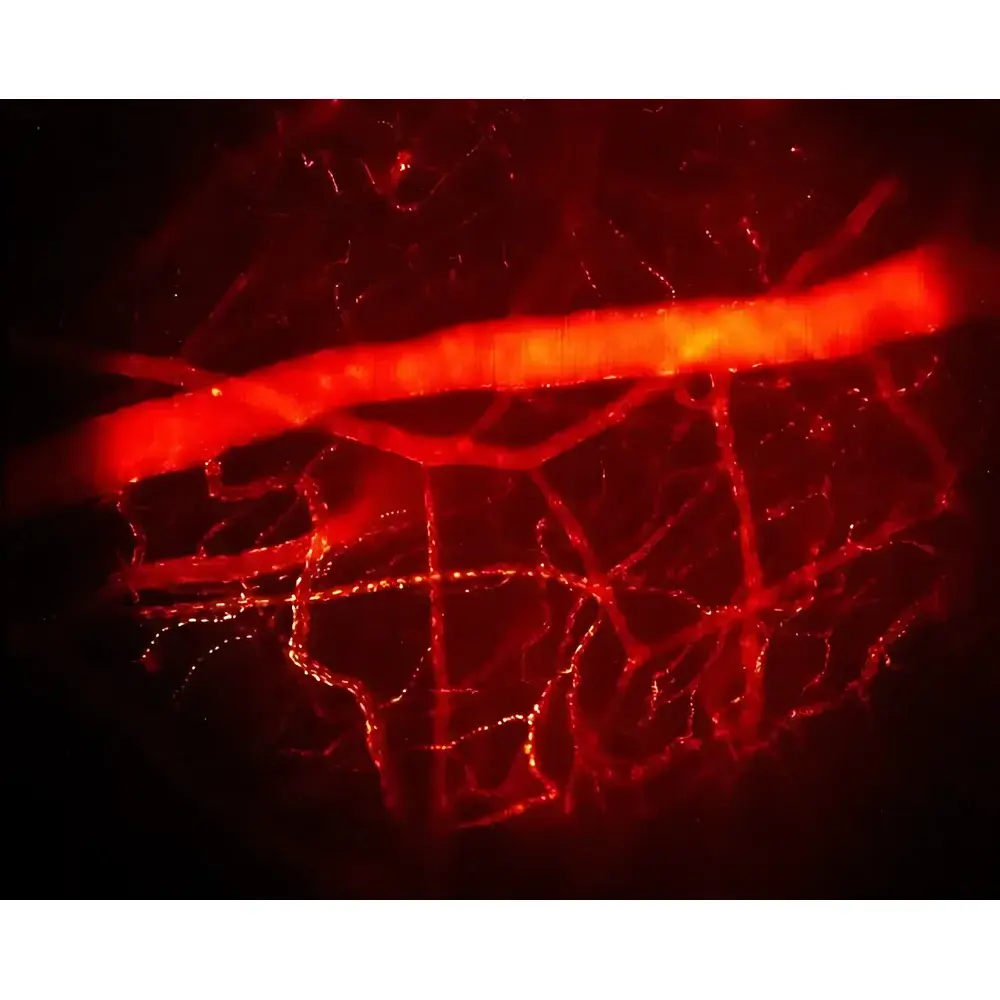
- In vivo NIR-II fluorescence imaging: Tracking tumor-targeted probes (e.g., Ag₂S QDs, single-walled carbon nanotubes) with sub-millimeter spatial resolution and enhanced tissue penetration depth beyond 5 mm.
- Quantum optics experiments: Single-photon detection and Hanbury Brown–Twiss interferometry in the telecom band (1310/1550 nm), supporting entanglement verification and boson sampling setups.
- Time-resolved SWIR microspectroscopy: Mapping carrier recombination dynamics in perovskite solar cells and 2D transition metal dichalcogenides with microsecond temporal resolution.
- Non-invasive metabolic imaging: Label-free monitoring of cytochrome c oxidase redox states in brain slices and perfused organ models using intrinsic NIR-II absorption contrast.
- Femtosecond frequency comb vernier spectroscopy: Enabling absolute wavelength calibration and high-fidelity spectral reconstruction in dual-comb SWIR systems.
FAQ
What is the guaranteed minimum sensor operating temperature?
The NIRvana 640 guarantees −80 °C sensor temperature under standard air-cooling conditions; with optional 15 °C liquid circulation, typical operation reaches −85 °C.
Does the camera support hardware triggering and synchronization with external lasers or pulse generators?
Yes—it features TTL-compatible input/output trigger ports with programmable delay (10 ns resolution) and supports master/slave timing modes for pump-probe and gated imaging applications.
Is non-destructive readout (NDR) available at full resolution?
NDR mode is implemented across the entire 640 × 512 array and enables continuous on-chip signal accumulation without readout noise penalty—ideal for exposures >10 minutes.
Can the NIRvana 640 be calibrated for absolute radiometric units (e.g., W/cm²/nm)?
Yes—NIST-traceable spectral responsivity calibration kits are available, and LightField supports user-defined calibration curves for quantitative radiance mapping.
What maintenance is required for the vacuum cooling system?
None—the hermetically sealed vacuum dewar is designed for lifetime operation with no scheduled maintenance or re-pumping intervals.





