
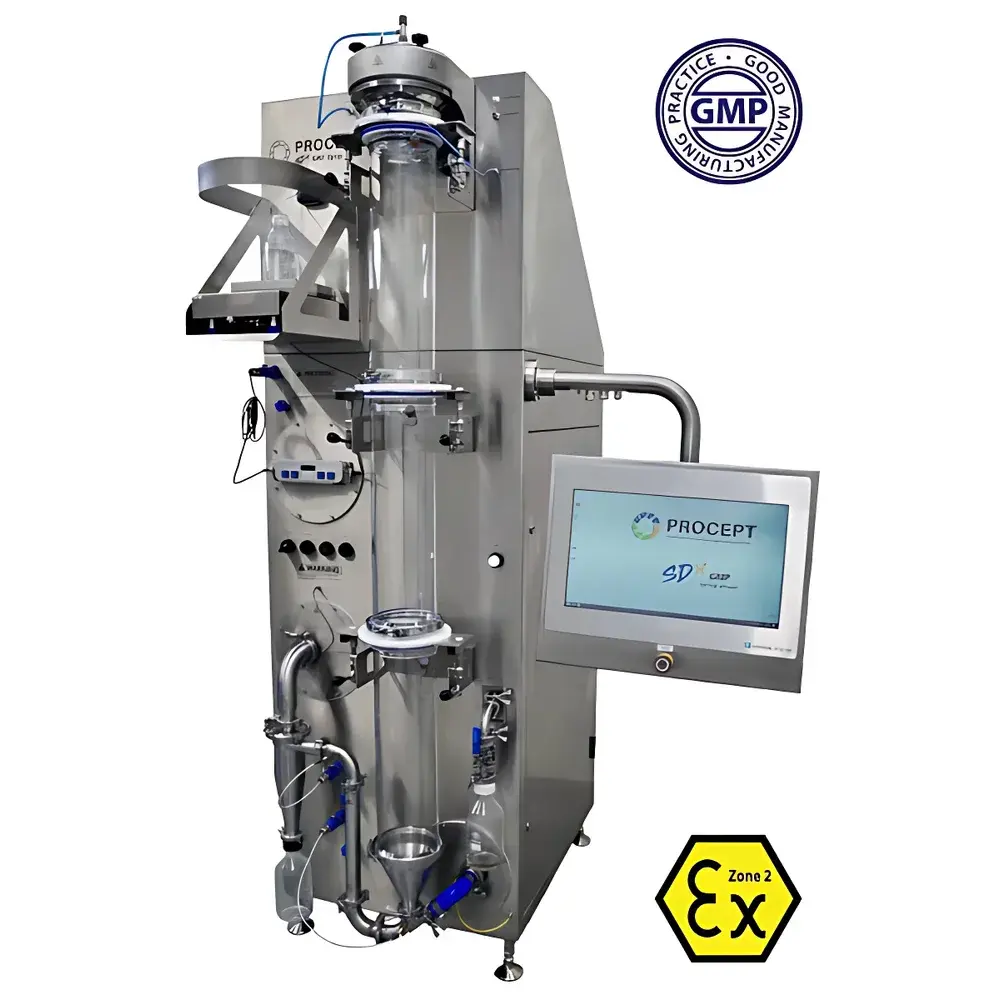
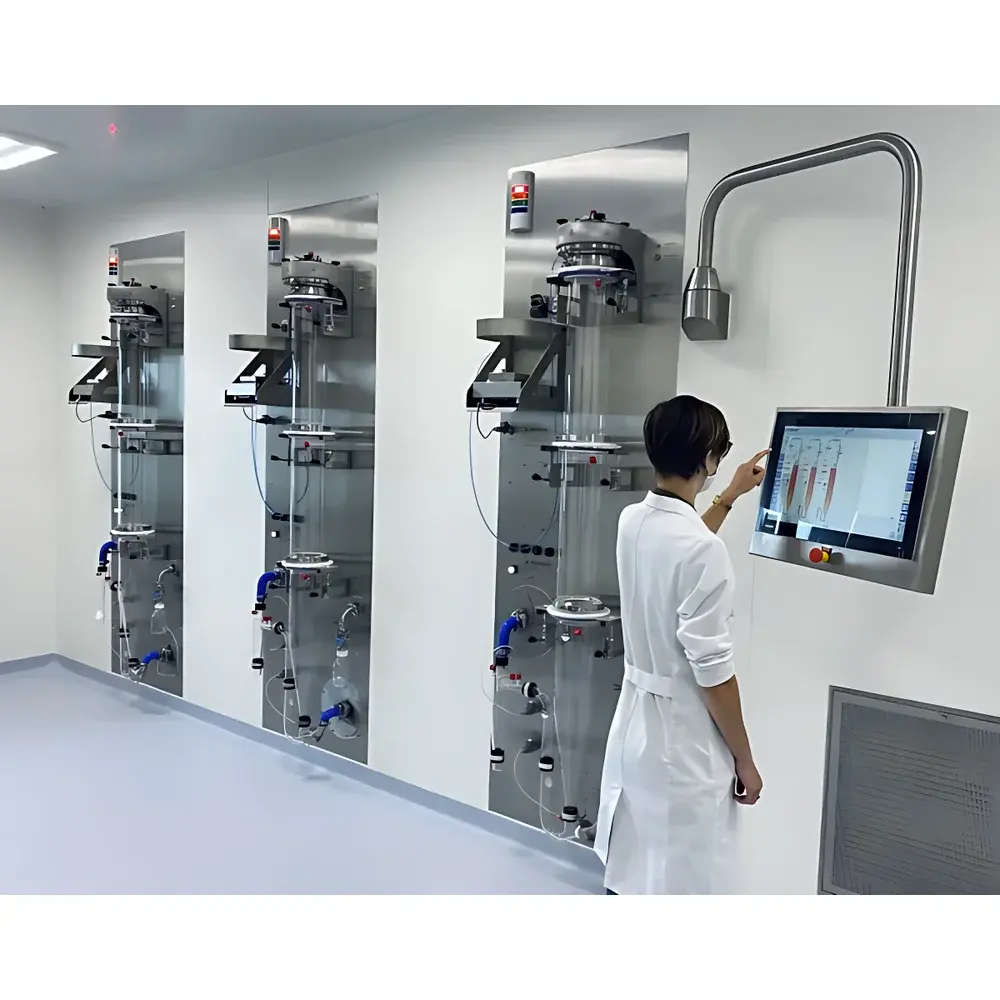
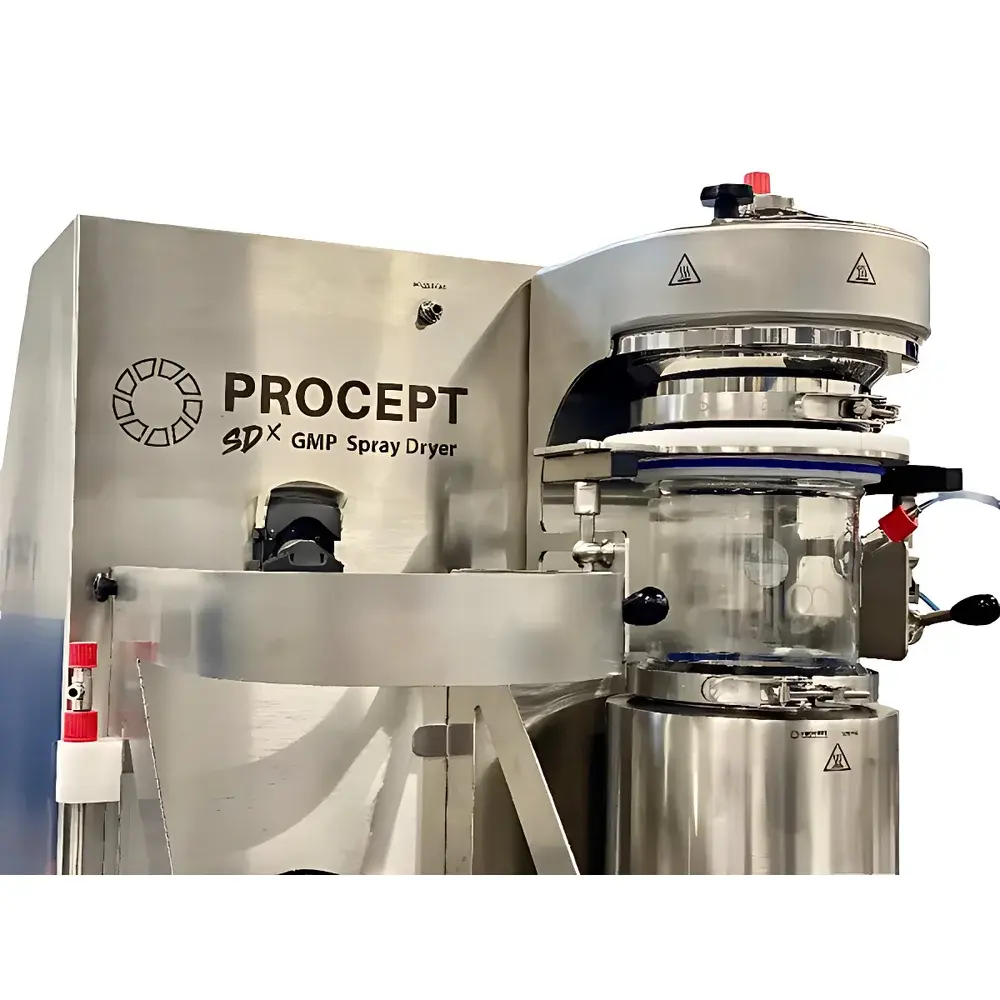
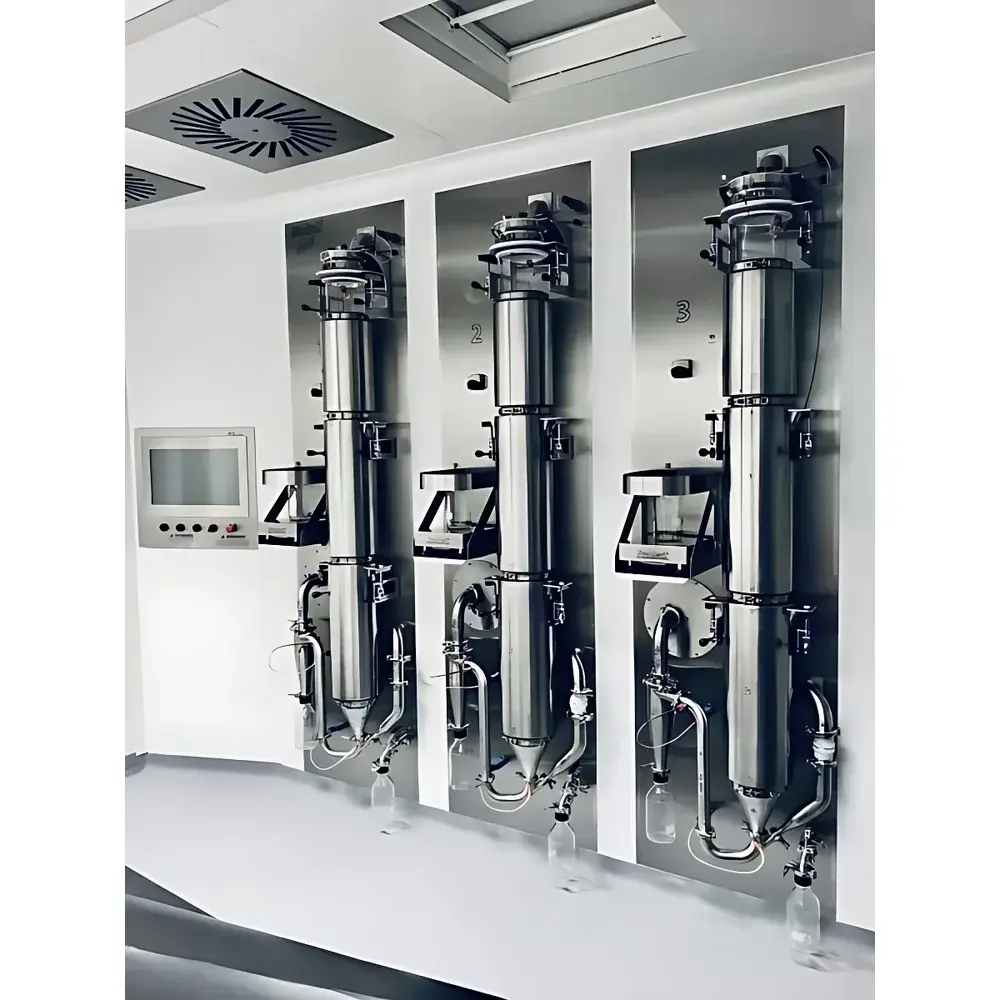
PROCEPT GMP-Scale Spray Dryer / Spray Cooler / Spray Congealer
| Brand | PROCEPT (Belgium) |
|---|---|
| Origin | Belgium |
| Model | GMP Spray Dryer |
| Sample Types | Aqueous & Organic Solvents |
| Max Throughput | 120 L/h |
| Temperature Range | −10 °C to 190 °C |
| Particle Size Range | 1–350 µm |
Overview
The PROCEPT GMP-Scale Spray Dryer / Spray Cooler / Spray Congealer is an integrated, modular process platform engineered for seamless technology transfer from lab-scale development to clinical and early commercial manufacturing under Good Manufacturing Practice (GMP) conditions. Unlike conventional scale-up approaches, this system operates on a parallel processing architecture—enabling direct replication of process parameters established on PROCEPT’s R&D spray systems without empirical re-optimization. Its core functionality leverages controlled atomization, rapid solvent evaporation (spray drying), heat extraction (spray cooling), or phase transition in cryogenic environments (spray congealing), depending on nozzle configuration and thermal management. The system supports both open-air and fully closed nitrogen-loop operation, making it suitable for handling flammable organic solvents in compliance with ATEX Zone 2 requirements. Designed for installation in ISO Class 5–8 cleanrooms, it accommodates wall-mounted penetration or mobile floor-standing configurations—minimizing facility modification while ensuring full environmental segregation.
Key Features
- Parallel multi-chamber design: Centralized control of up to four independent drying/congealing chambers, enabling simultaneous batch processing or process parameter screening
- Nitrogen-closed loop solvent recovery system: Integrated condensation, pressure regulation, and O₂ monitoring for safe handling of ethanol, acetone, dichloromethane, and other Class I/II solvents
- Multi-mode atomization capability: Interchangeable nozzles—including two-fluid, three-fluid, chilled/heated ultrasonic, and vibrating mesh—supporting aqueous, organic, waxy, polymeric, and hydrocarbon-based formulations
- GMP-compliant automation: Touchscreen PC-based HMI with audit-trail-enabled software compliant with FDA 21 CFR Part 11, including electronic signatures, user role management (via LDAP integration), and OPC-UA connectivity for MES/SCADA interfacing
- Flexible chamber construction: Optional all-glass process train (drying chamber, transfer duct, cyclone, collection vessel) for visual process monitoring; alternatively, insulated stainless-steel construction (AISI 316L) with surface finish Ra ≤ 0.4 µm for enhanced cleanability and corrosion resistance
- Precision thermal control: Independent regulation of inlet gas temperature (−10 °C to 190 °C), chamber wall temperature, and product collection zone—critical for thermolabile APIs, proteins, and low-Tg polymers
Sample Compatibility & Compliance
The system processes a broad spectrum of feed materials, including aqueous suspensions, organic solutions, molten waxes (e.g., carnauba, stearic acid), polymer melts (PLGA, PVP, Eudragit®), and lipid-based formulations. It meets key regulatory expectations for pharmaceutical process equipment: adherence to ISO 14644-1 (cleanroom classification), ASME BPE-2022 surface finish standards, and EU GMP Annex 1 (2022) requirements for contamination control. All wetted parts are electropolished and passivated per ASTM A967. The nitrogen loop includes real-time oxygen monitoring (<1% v/v) and automatic purge sequencing to maintain inert atmosphere integrity throughout drying, cooling, or congealing cycles.
Software & Data Management
The embedded control software provides real-time logging of all critical process parameters—including inlet/outlet gas temperature, atomization gas pressure, feed pump flow rate, chamber differential pressure, and dew point—with timestamped, tamper-evident records stored in encrypted SQL databases. Data export conforms to CDISC SDTM and CSV formats for regulatory submission. Full electronic batch record (EBR) functionality supports structured workflow execution, deviation logging, and automated report generation (PDF/Excel). Audit trails are immutable, time-stamped, and include operator ID, action type, and pre-/post-value changes—fully satisfying ALCOA+ principles and inspection readiness for FDA, EMA, and PMDA audits.
Applications
This platform serves formulation scientists and process engineers developing advanced drug delivery systems requiring precise particle engineering. Validated use cases include: preparation of inhalable dry powders with aerodynamic diameter 60%; stabilization of peptides and monoclonal antibodies via amorphous solid dispersion; enhancement of bioavailability for BCS Class II/IV compounds through nanocrystal embedding or lipid matrix encapsulation; taste-masking of pediatric APIs via polymer-coated microparticles; and production of sustained-release wax-matrix granules for oral solid dosage forms. It further supports non-pharma applications such as catalyst carrier synthesis, food-grade encapsulation (vitamins, probiotics), and battery electrode material drying.
FAQ
Can process parameters from the PROCEPT R&D spray dryer be directly transferred to this GMP system?
Yes—the system uses identical nozzle hydraulics, thermal mass balance models, and residence time distribution profiles, enabling true linear scale-up without re-development.
Is the nitrogen loop certified for Class I, Division 1 environments?
No—it is rated for ATEX Zone 2 (equivalent to NEC Class I, Division 2), suitable for intermittent solvent exposure during normal operation.
What level of particulate control is achieved in the collection system?
The integrated high-efficiency cyclone and optional HEPA-filtered bag filter achieve >99.99% capture efficiency for particles ≥0.3 µm, meeting ISO 14644-1 Class 5 requirements for downstream handling.
Does the system support PAT integration?
Yes—RS-485, analog I/O, and OPC-UA interfaces enable real-time connection to NIR spectrometers, laser diffraction analyzers, and gravimetric feed monitoring systems.
Can the system handle feed slurries with >30% w/w solids content?
Yes—when equipped with high-shear homogenizing feed preparation modules and pressure-assisted two-fluid nozzles, it reliably processes viscosities up to 500 cP.



